

How Do Rhinos Communicate With Their Dung?
Rhinos genuinely use shared communal dung piles, called middens, as a kind of physical bulletin board, and by dragging their hind feet through the pile after defecating, they pick up individual scent signatures that get spread along their entire territory as they walk, turning a simple bathroom habit into one of the more sophisticated communication systems documented among large African mammals.
What a Midden Actually Is and Why It Forms
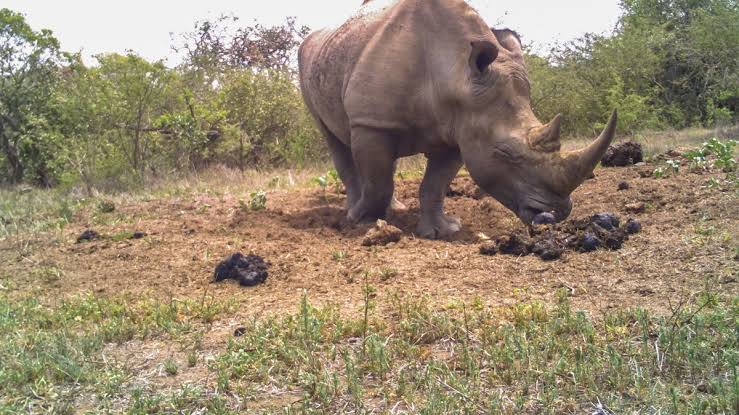
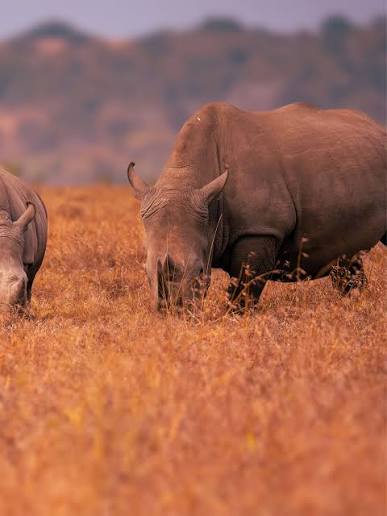
A midden is a shared defecation site that multiple rhinos within an overlapping territory return to repeatedly rather than dispersing dung randomly across the landscape, and over months or years of consistent use, these sites genuinely build up into substantial mounds sometimes metres across, visible landmarks that both rangers and rhinos themselves come to recognise as fixed reference points within a home range. Both black and white rhino use middens, though the behaviour is generally more pronounced and better documented in white rhino given their somewhat more social nature.
Why Rhinos Drag Their Feet Through the Pile
After defecating at a midden, a rhino will genuinely scrape and drag its hind feet through the fresh dung before walking away, a deliberate action that coats the feet in scent-carrying material the animal then deposits in smaller amounts at each subsequent footstep across the territory. This foot-dragging behaviour effectively turns the midden into a scent-distribution hub, letting one visit to a shared site broadcast an individual’s presence considerably more widely than the midden location alone ever could.
What Information a Midden Genuinely Communicates
Researchers analysing rhino scent-marking behaviour believe middens convey genuinely detailed information beyond simple territorial presence, including an individual’s identity, reproductive status, and how recently they passed through, information other rhinos reading the same midden can use to avoid unnecessary confrontation, time their own movement to avoid or seek out a specific individual, or, for males monitoring a female’s reproductive cycle, track her approach toward oestrus without needing direct visual contact.
How Male Territorial Rhinos Use Middens Differently Than Females
Dominant territorial males genuinely visit and mark middens within their territory considerably more frequently than females or younger males passing through, reinforcing ownership of the ground through repeated, consistent scent deposit rather than a single mark being sufficient, and a male’s visitation frequency at a given midden is one of the clearer behavioural signals researchers use to map the actual boundaries of his territory rather than relying on visual sighting data alone.
Why Middens Also Function as Information Exchange, Not Just Marking
Because multiple rhinos genuinely use the same midden over time rather than each individual maintaining private sites, a midden functions less like a simple “keep out” sign and more like a shared community noticeboard, where an individual arriving at the pile can assess who else has recently passed through before adding their own information to the same accumulating record, a genuinely two-way communication system rather than one-directional territorial marking alone.
Horn and Foot Structure Suited to This Specific Behaviour
A rhino’s genuinely broad, three-toed foot is well suited to the scraping and dragging motion central to midden use, spreading dung across a wider surface area per step than a narrower hoof would achieve, an anatomical detail that, combined with the behaviour’s consistency across both African rhino species, suggests midden marking has been a genuinely important part of rhino social structure for a considerable evolutionary period.
Where to Observe Midden Sites in East Africa
Rangers and guides at destinations with strong resident rhino populations, including Lake Nakuru and Ol Pejeta Conservancy, can often point out active midden sites during a guided drive or dedicated rhino tracking activity, offering a genuinely different behavioural insight beyond simply photographing a resting or grazing rhino.
Best Time of Year for Rhino Viewing
Rhinos are visible year-round given resident populations across East Africa’s protected sanctuaries. See our regional best-time guide for how East Africa’s seasonal patterns generally affect wider game viewing.
Photographing Rhino Behaviour at a Midden
Capturing the foot-dragging motion itself offers a genuinely different behavioural photograph than a standard rhino portrait, though it requires patience given how briefly the specific action takes. See our camera gear guide for broader equipment recommendations.
What to Pack for Rhino-Focused Safaris
Standard game drive gear – neutral clothing, sun protection, and binoculars – covers most of what rhino viewing requires. If your wider itinerary includes gorilla trekking, our gorilla trekking packing list covers that portion separately.
Why Understanding This Behaviour Matters for Conservation Tracking
Rangers monitoring rhino populations for anti-poaching purposes genuinely use midden activity as one indirect method of confirming an individual’s continued presence and movement pattern within a protected area, since consistent, fresh marking at known sites offers a useful supplementary data point alongside direct sighting and camera trap records.
Why Middens Sometimes Sit at Genuinely Strategic Locations
Researchers mapping midden sites across rhino territories have found they’re rarely scattered randomly, instead clustering near territory boundaries, water sources, or well-used travel paths, locations where the scent trail left by foot-dragging is most likely to be encountered by other rhinos passing through, suggesting the sites themselves are positioned, whether through deliberate choice or accumulated habit, to maximise how many other individuals actually pick up the deposited information.
Urine Marking as a Genuinely Separate but Related Signal
Alongside dung deposits, male rhinos also spray urine in a genuinely distinctive backward, horizontal jet specifically along territory boundaries and paths, a separate marking behaviour from midden use that researchers believe carries its own scent information layered on top of the dung-based signals, meaning a territorial male’s full communication system genuinely combines at least two distinct marking behaviours working together rather than relying on dung alone.
How Younger Rhinos Learn Midden Behaviour
Calves accompanying their mother genuinely observe and eventually begin practising midden visitation and foot-dragging well before they hold any territory of their own, learning the specific locations of significant sites within their mother’s range through repeated exposure, another example of behaviour transmitted through direct observation within East African megafauna rather than emerging as pure instinct the moment an individual reaches maturity.
Why Poaching Pressure Has Disrupted Midden Networks
Given how severely rhino populations have declined across much of Africa, many historical midden networks that once supported regular information exchange between numerous individuals across a landscape have genuinely become sparser or abandoned entirely as local population density dropped below the threshold needed to sustain regular multi-individual use, meaning population recovery efforts at sites like Ol Pejeta aren’t just restoring rhino numbers but potentially restoring a genuinely functional communication system that requires a certain population density to actually work as intended.
Comparing Rhino Middens to Other African Scent-Marking Systems
Similar communal marking behaviour appears among hyena clans and some antelope species, though rhino middens are considered among the most physically substantial and long-lasting examples given how large a well-used site can grow over years of repeated visits, making them genuinely visible landscape features in a way most other species’ scent-marking sites, typically far more subtle, simply aren’t.
Why Guides Point Out Middens During Rhino Tracking
Given how much a midden’s activity level and freshness tells an experienced tracker about an individual’s recent movement, guides leading dedicated rhino tracking activities genuinely check known sites first, using dung freshness to estimate how recently a specific rhino passed through before committing to a longer follow-up search across a wider territory on foot.
A Genuinely Overlooked Detail Worth Asking About
Because middens themselves are static and easy to walk past without explanation, they’re one of the more genuinely overlooked behavioural details on a standard rhino safari, worth specifically asking your guide to point out and interpret rather than assuming there’s nothing more to learn beyond the rhino sighting itself.
Combining Midden Tracking With a Wider Big Five Circuit
Rhino tracking pairs naturally with a broader Kenya itinerary covering the full Big Five checklist, giving travelers genuine behavioural depth alongside the standard sighting.
Frequently Asked Questions
What is a rhino midden?
A shared communal dung pile that multiple rhinos within overlapping territory return to repeatedly, functioning as a scent-based communication hub.
Why do rhinos drag their feet through dung?
To coat their feet in scent-carrying material, effectively spreading their individual signature across the wider territory with each subsequent step.
What information does a midden actually communicate?
Likely identity, reproductive status, and how recently an individual passed through, letting other rhinos read and respond without direct contact.
Do both black and white rhino use middens?
Yes, though the behaviour is generally more pronounced and better documented in the somewhat more social white rhino.
Where can I see this behaviour on safari?
Lake Nakuru and Ol Pejeta Conservancy in Kenya both offer genuine opportunities to observe active midden sites with a knowledgeable guide.
Ready to Plan Your Kenya Safari?
Whether observing rhino behaviour firsthand, the full Big Five, or a complete Kenya itinerary is your priority, our team can build a trip matched to your interests. Get in touch with our team below today and let’s start planning your complete Kenya safari itinerary together.



No comment