
Rothschild’s giraffe were introduced to Lake Mburo National Park as part of a deliberate conservation translocation, and today the park’s small but genuinely thriving population adds another distinctive large mammal to a park already known for hosting Uganda’s only zebra, eland, and impala populations within a single compact reserve.
How Giraffe Came to Lake Mburo
Unlike Murchison Falls, where Rothschild’s giraffe occur as part of the park’s historic natural range, Lake Mburo’s population was deliberately introduced through translocation as part of a wider Uganda Wildlife Authority effort to establish additional secure populations of this critically endangered subspecies. This conservation strategy spreads risk across multiple protected areas, reducing the chance that a single localised threat could jeopardise the subspecies’ entire Uganda population.
Where to Find Giraffe in Lake Mburo
Giraffe range across Lake Mburo’s open grassland and acacia woodland, often visible alongside the park’s zebra and eland populations during standard game drives. Their considerable height makes them among the more straightforward Lake Mburo species to locate, even within the park’s varied terrain.
Why Rothschild’s Giraffe Matter So Much to Conservation
Rothschild’s giraffe are among the most endangered giraffe subspecies in Africa, with the total wild population numbering only in the low thousands, concentrated in a handful of protected areas across Uganda and Kenya. Lake Mburo’s introduced population, though smaller than Murchison Falls’ larger group, represents a genuinely important additional stronghold contributing to the subspecies’ overall survival prospects.
Giraffe Behaviour and Social Structure
Giraffe form loose, fluid herds with individuals moving relatively freely between groups rather than maintaining a rigid, permanent social structure, a pattern that gives Lake Mburo giraffe sightings a genuinely dynamic character from one game drive to the next. Adult males occasionally engage in “necking,” a slow-motion sparring behaviour used to establish dominance, that offers a genuinely compelling behavioural sighting when observed.
Lake Mburo’s Unique Wildlife Combination
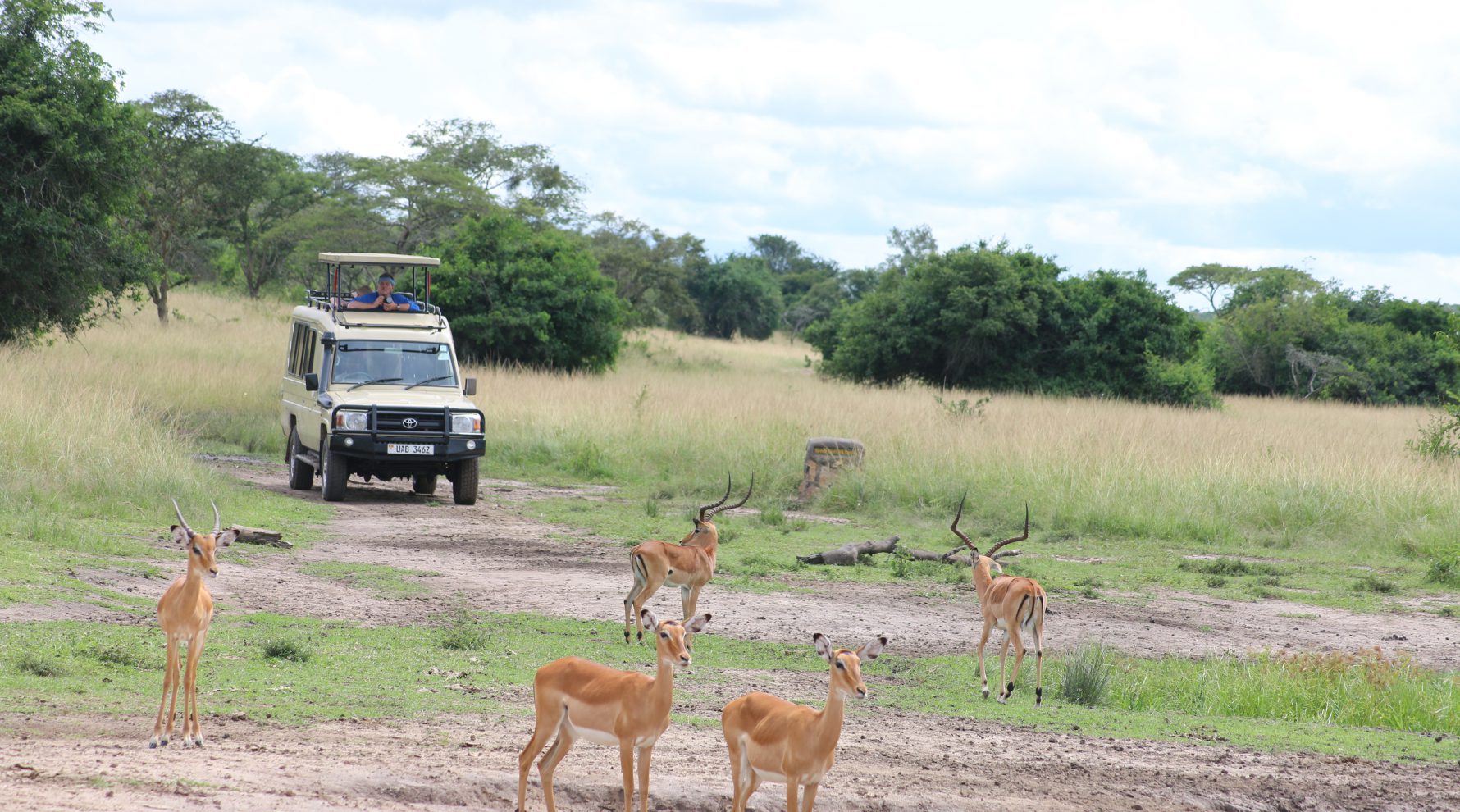
Beyond giraffe, Lake Mburo holds Uganda’s only population of plains zebra, alongside genuinely healthy eland and impala numbers, making the park a distinctly different wildlife experience from Uganda’s larger, more forested national parks. This combination of species found nowhere else in the country is part of why Lake Mburo has become such a popular stopover en route to gorilla trekking further southwest.
Activities Unique to Lake Mburo for Giraffe Viewing
Lake Mburo permits activities not available in Uganda’s larger parks given the absence of lion and reduced elephant presence, including guided walking safaris and mountain biking through giraffe and zebra territory, genuinely unique ways to observe these animals up close from outside a vehicle. Boat cruises on Lake Mburo itself add a different perspective on the wider park ecosystem.
Best Time of Year for Giraffe Sightings
Giraffe are visible in Lake Mburo year-round given their resident, non-migratory status, and the park’s relatively small size means seasonal variation matters less here than in Uganda’s larger, more dispersed parks. See our Uganda best-time guide for how the country’s broader dry and wet seasons still affect wider trip planning.
Self-Drive vs Guided Safaris in Lake Mburo
Lake Mburo’s compact size and good road network make self-driving genuinely feasible here compared to Uganda’s larger, more remote parks, though a guided safari still adds real value for spotting and identifying giraffe among the park’s other resident species. Most visitors combine a guided game drive with the park’s unique walking safari or boat cruise options.
Photographing Lake Mburo’s Giraffe
Giraffe browsing among acacia trees against the park’s rolling grassland offer genuinely striking photographic opportunities, particularly at sunrise or sunset when the low light complements the species’ tall, elegant silhouette. A mid-range zoom covers most sightings comfortably, similar to the gear recommended in our camera gear guide.
What to Pack for a Lake Mburo Safari
Standard game drive gear – neutral clothing, sun protection, and binoculars – covers most of what the park requires, and comfortable walking shoes are worth packing given the park’s unique walking safari option. If your wider itinerary includes gorilla trekking, our gorilla trekking packing list covers that portion separately.
Combining Giraffe Viewing With Gorilla Trekking
Given its position en route to Bwindi, Lake Mburo pairs naturally with gorilla trekking, letting travelers break up the long drive south with a genuinely worthwhile wildlife stop rather than treating the journey as pure transit time. This combination has become one of the more popular ways to add extra value to a standard gorilla trekking itinerary.
Getting to Lake Mburo National Park
Lake Mburo sits conveniently along the main road between Kampala and Bwindi Impenetrable National Park, roughly three to four hours from the capital, making it a natural stopover for travelers heading toward gorilla trekking rather than a dedicated separate trip.
Comparing Lake Mburo’s Giraffe to Murchison Falls
While Murchison Falls holds Uganda’s larger, historically established Rothschild’s giraffe population, Lake Mburo’s smaller introduced group offers a genuinely more intimate viewing experience within the park’s compact terrain, and its position en route to gorilla trekking makes it a convenient additional giraffe-viewing stop for travelers who won’t otherwise reach Murchison.
How Giraffe Sleep and Rest
Giraffe sleep remarkably little compared to most large mammals, often just a few hours total across a full day, and rarely lie down fully given how vulnerable the position leaves them to predators despite their height and powerful kick. Most rest happens standing, with brief, genuinely light periods of drowsiness rather than the deep, extended sleep typical of many other savannah herbivores, a trait worth watching for during a Lake Mburo walking safari where close, quiet observation is genuinely possible.
Why Translocation to Lake Mburo Made Ecological Sense
Lake Mburo’s open grassland and acacia woodland closely mirror the habitat Rothschild’s giraffe naturally favour, making the park a genuinely sound choice for establishing a new population beyond Murchison Falls. Conservation planners specifically selected Lake Mburo given its protected status, suitable vegetation, and relative absence of the larger predator pressure found in Uganda’s bigger parks, all factors that improve translocated giraffe’s long-term survival odds.
The Broader Rothschild’s Giraffe Recovery Strategy
Uganda’s approach to Rothschild’s giraffe conservation deliberately spreads the subspecies across multiple protected areas, including Murchison Falls and Lake Mburo, reducing the risk that disease, habitat loss, or another localised threat at a single site could jeopardise the subspecies’ entire national population. This multi-site strategy reflects genuinely careful, forward-thinking conservation planning rather than a single concentrated effort.
Necking Behaviour and Male Dominance Contests
Adult male giraffe occasionally engage in “necking,” a slow-motion sparring behaviour used to establish dominance within a local population, swinging their long necks and heads against a rival in a display that can range from a relatively gentle test to a more serious, occasionally injurious contest. Witnessing this behaviour during a Lake Mburo game drive or walking safari offers a genuinely compelling glimpse into giraffe social dynamics rarely captured in typical wildlife photography.
Combining Giraffe Viewing With a Wider Uganda Circuit
Beyond its role as a stopover en route to Bwindi, Lake Mburo also works as part of a longer circuit including Murchison Falls or Kibale’s chimp trekking, giving travelers a genuinely varied Uganda experience spanning giraffe and zebra, Big Five wildlife, and forest primates within a single well-planned trip.
Best Lodges for Giraffe-Focused Visits
Properties positioned near the park’s main game-viewing circuit genuinely simplify logistics for travelers specifically prioritising giraffe and wider wildlife viewing, cutting down on drive time before and after game drives. Discussing lodge location directly with your operator, alongside current information on recent herd movement, is genuinely worth doing before finalising your complete Lake Mburo itinerary.
Why First-Time Visitors Are Often Surprised
Many travelers arrive at Lake Mburo unaware giraffe are even present, having associated the species more strongly with Murchison Falls or Kenya’s larger parks, and are genuinely pleased to discover this additional wildlife highlight within a park often scheduled primarily as a convenient stopover en route to gorilla trekking further south.
Frequently Asked Questions
Are giraffe native to Lake Mburo?
No, they were deliberately introduced through conservation translocation as part of a wider effort to establish additional secure Rothschild’s giraffe populations in Uganda.
What subspecies of giraffe lives in Lake Mburo?
Rothschild’s giraffe, the same critically endangered subspecies found at Murchison Falls, identifiable by distinctive white “socks” below the knee.
Can I see giraffe alongside Lake Mburo’s zebra?
Yes, both species share much of the same open grassland habitat, making it possible to see them within a single game drive.
Is Lake Mburo worth visiting on the way to gorilla trekking?
Genuinely yes – its position directly on the route to Bwindi makes it an efficient, worthwhile stop rather than a detour.
What’s the best time of year to see giraffe in Lake Mburo?
Year-round given their resident, non-migratory status, making seasonal timing genuinely less critical than for other Uganda wildlife.
Ready to Plan Your Lake Mburo Safari?
Whether the park’s introduced giraffe population, Uganda’s only zebra herds, or a stop en route to gorilla trekking is your priority, our team can build an itinerary matched to your interests. Get in touch with our team below today and let’s start planning your complete Uganda safari itinerary together.

No comment