
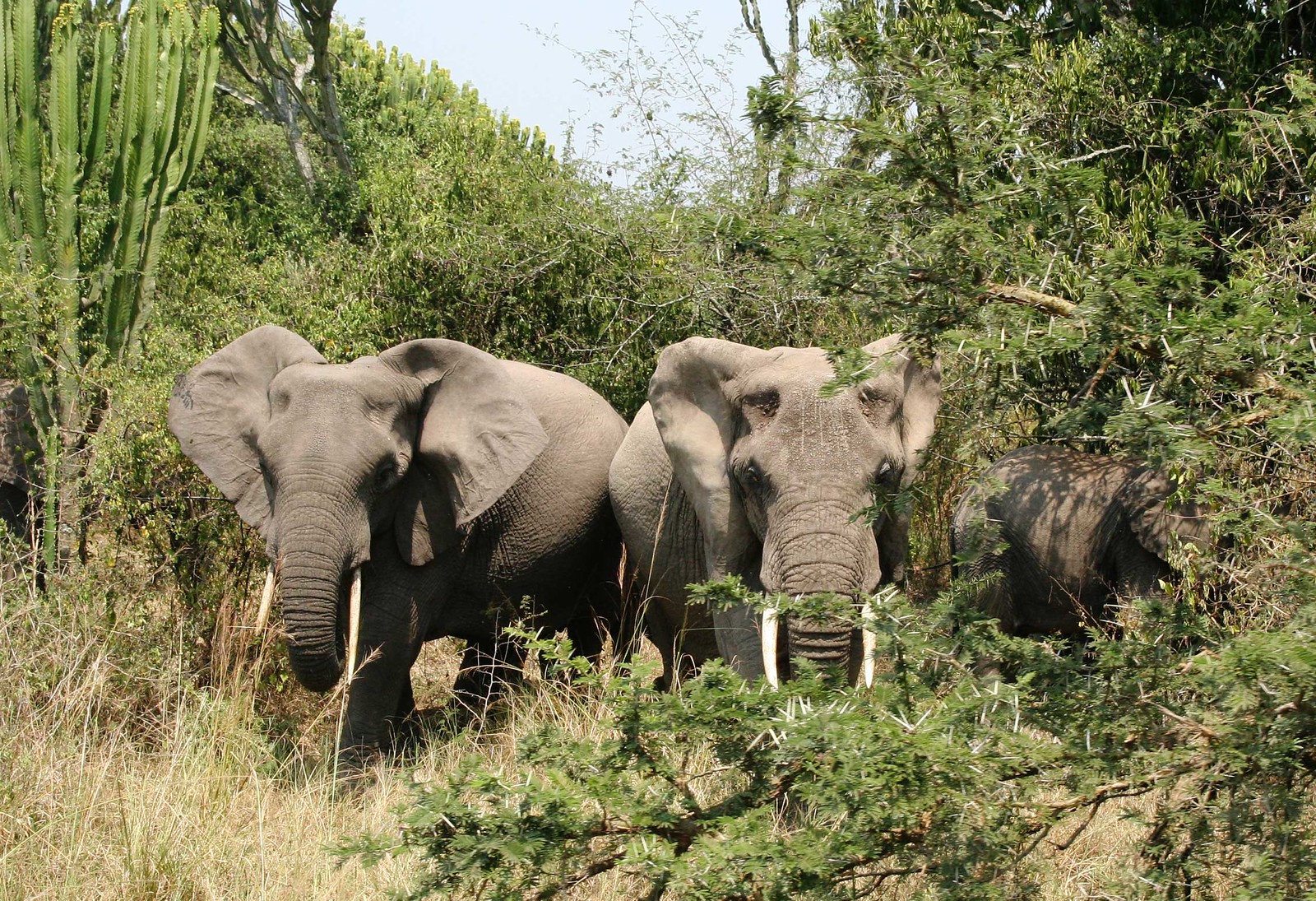
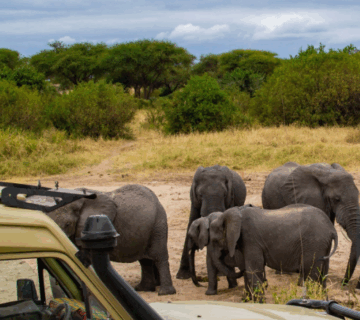
Elephants in Ngorongoro Crater are almost exclusively large bulls, genuinely impressive individuals that descend into the crater during the day to feed and drink before returning to the surrounding highland forest at night, a distinctive pattern that sets crater elephant viewing apart from anywhere else in Tanzania.
Why Ngorongoro’s Elephants Are Mostly Bulls
Female elephant herds with young calves generally avoid the crater floor, favouring the surrounding highland forest instead, likely due to the crater’s more limited grazing capacity relative to its resident predator density and the genuine difficulty young calves would face navigating the steep crater walls. This pattern means visitors touring the crater floor typically encounter large, solitary or loosely grouped bulls rather than full family herds.
Where to Find Elephants on the Crater Floor
Elephant bulls favour the crater’s swampy areas and Lerai Forest, where water and denser vegetation offer both grazing and shade, particularly during the heat of the day. These same areas overlap significantly with the crater’s other wildlife concentrations, making a single game drive through this section genuinely productive across multiple species.
Ngorongoro’s Big Tuskers
Some of Ngorongoro’s crater-floor bulls carry genuinely impressive tusks, a testament to both individual age and the crater’s relatively well-protected status compared to areas that suffered heavier historical poaching pressure. Spotting one of these older, larger-tusked bulls remains a genuine highlight for experienced guides and repeat visitors who know which specific areas these individuals tend to favour.
Ngorongoro’s Full Big Five Picture
Elephant is one of five species making Ngorongoro Crater one of the very few places in Africa where a genuine Big Five day is realistically achievable, alongside rhino, lion, buffalo, and leopard concentrated within the same compact crater floor. See our Ngorongoro Big Five overview for how the crater’s unique geography makes this possible in a single day.
The Crater’s Unique Geological Formation
Ngorongoro Crater, technically a caldera rather than a true crater, formed when a massive volcano estimated to have once stood taller than Kilimanjaro collapsed inward on itself roughly two to three million years ago. This geological event created the world’s largest inactive, intact, and unfilled volcanic caldera, concentrating elephant bulls and the crater’s other wildlife within a genuinely contained, easily covered landscape.
Best Time of Year for Elephant Sightings
Elephant bulls are visible on the crater floor year-round given the reliable water supply within the caldera itself, making Ngorongoro one of the more consistent elephant destinations in Tanzania regardless of season. This consistency is part of what makes the crater such a reliable choice for travelers specifically prioritising elephant viewing within a limited timeframe.
How Ngorongoro Compares to Tarangire for Elephant Viewing
Tarangire offers considerably larger elephant numbers and genuine family herds given its much larger overall size, while Ngorongoro’s crater floor concentrates sightings of large, impressive bulls within a genuinely compact, efficiently covered area alongside the rest of the Big Five.
Self-Drive vs Guided Safaris in Ngorongoro
Self-driving on the crater floor is not permitted for independent tourists without a licensed guide, given the area’s protected status and the value of coordinated vehicle movement in such a compact, wildlife-dense space. A guided safari is essentially mandatory here, and experienced guides know specific areas where crater-floor bulls are most reliably found.
Photographing Ngorongoro’s Elephant Bulls
The crater’s open grassland and dramatic rim backdrop offer genuinely strong photographic conditions for elephant sightings, particularly in the soft light of early morning game drives before the crater floor’s famous afternoon cloud cover sets in. A telephoto zoom in the 100-400mm range covers most sightings well, since crater-floor bulls often allow reasonably close, unobstructed viewing.
Combining Elephant Viewing With a Serengeti Extension
Most Tanzania itineraries pair Ngorongoro with the neighbouring Serengeti, given the two parks’ close proximity and complementary wildlife highlights, giving travelers both the crater’s concentrated bull sightings and the Serengeti’s vast, open-plains family herds within a single well-planned trip.
Crater Descent and Logistics
Access to the crater floor is via a single steep descent road, with vehicles typically spending a full day exploring before ascending again in the afternoon, a logistical structure that shapes how most Ngorongoro visits are planned. Most visitors stay at a lodge along the crater rim, offering genuinely spectacular views over the crater floor below.
What to Pack for a Ngorongoro Safari
Standard game drive gear – neutral clothing, sun protection, and binoculars – covers most of what the crater requires, and a warm layer is worth packing given how cool mornings along the crater rim can feel at this altitude. If your wider East Africa itinerary includes gorilla trekking, our gorilla trekking packing list covers that portion separately.
The Maasai and Ngorongoro Conservation Area
Unlike a standard national park, Ngorongoro Conservation Area permits Maasai pastoralist communities to graze cattle within its boundaries, a genuinely unique multi-use conservation model that coexists alongside the crater’s protected wildlife, including its elephant bulls. This arrangement reflects a deliberate balance between conservation and the traditional land rights of the Maasai people who have inhabited the wider region for generations.
Elephant Population History in Ngorongoro
Like much of Tanzania, Ngorongoro’s elephant population suffered significant losses during the poaching crisis of the 1970s and 80s, before Tanzania’s ivory trade ban and intensified anti-poaching efforts helped numbers recover substantially in subsequent decades. Today’s crater-floor bulls represent a genuine conservation recovery story, though the population remains smaller than the crater’s carrying capacity might otherwise support given the area’s overall protected status.
Bull Behaviour and Social Structure
Male elephants typically leave their natal family herd around adolescence, ranging independently or in loose bachelor groups for much of their adult life, a pattern that explains why Ngorongoro’s crater floor sees so many solitary or small-group bull sightings rather than large family herds. Watching these bulls interact, sometimes testing dominance through mock sparring, offers genuine insight into elephant social dynamics beyond the more commonly observed matriarchal family structure.
The Crater’s Wider Wildlife Beyond Elephants
Beyond its Big Five draw, Ngorongoro Crater holds an exceptional density of wildlife overall, including large flamingo flocks on the crater’s soda lake, healthy wildebeest and zebra populations, and one of Africa’s highest lion densities per square kilometre. This overall wildlife concentration is part of why a single crater floor day so reliably produces memorable sightings across virtually every species present, elephant bulls included.
Elephant Research and Monitoring
Ongoing monitoring tracks Ngorongoro’s elephant population’s health and movement patterns, contributing to broader understanding of how male elephants use a genuinely contained, resource-limited environment compared to the vast, open ranges typical of Tanzania’s larger parks. This research helps inform conservation management not just within Ngorongoro itself but across the wider protected area network linking it to the Serengeti.
Getting to Ngorongoro Crater
Most visitors reach Ngorongoro by road from Arusha, a journey of roughly three to four hours, often combined with the drive onward to the Serengeti given the two parks’ close proximity. Lodges along the crater rim offer the most convenient access to the single descent road used for crater floor game drives each morning.
Combining Elephant Viewing With a Wider Tanzania Circuit
Beyond the Serengeti, many longer Tanzania itineraries also combine Ngorongoro with Tarangire’s larger elephant herds or a Serengeti balloon safari, giving travelers a genuinely comprehensive picture of Tanzania’s different elephant-viewing experiences within a single well-sequenced trip.
Best Lodges for Elephant Viewing
Properties along the crater rim offer the most convenient access to the single descent road used each morning, minimising pre-dawn transfer time before a full day exploring the crater floor. Discussing lodge location and typical departure timing directly with your operator is worth doing if an early start and maximum crater floor time are genuine priorities for your visit.
Visiting Responsibly: Supporting Ongoing Conservation
Every visitor to Ngorongoro contributes directly to the crater’s ongoing conservation funding through park fees and guided activity costs, supporting the same ranger patrols and monitoring programmes that protect elephant bulls and the crater’s wider wildlife. Choosing a reputable local operator who works closely with conservation area management further ensures your visit genuinely supports this ongoing protection effort.
Elephant Bulls and the Crater’s Predator Population
Adult elephant bulls face genuinely little predation risk even from Ngorongoro’s dense lion population, given their size and strength, though young or sick individuals occasionally face real vulnerability. Watching how the crater’s lion prides and elephant bulls coexist within such a compact shared space offers real insight into the practical realities of predator-prey dynamics at close quarters.
Frequently Asked Questions
Why are Ngorongoro’s elephants mostly male?
Female herds with calves generally avoid the crater floor, favouring the surrounding highland forest instead, leaving crater-floor sightings dominated by large, solitary bulls.
Can I drive myself around the crater floor?
No, a licensed guide is required for crater floor access, both for conservation reasons and to navigate the area’s coordinated vehicle movement system.
Is Ngorongoro or Tarangire better for elephant viewing?
Tarangire offers larger numbers and genuine family herds, while Ngorongoro provides concentrated sightings of impressive bulls alongside the rest of the Big Five in a single day.
Can I see the full Big Five in one day at Ngorongoro?
Yes, this is one of the very few places in Africa where a genuine Big Five day is realistically achievable within a single crater floor visit.
Is Ngorongoro worth combining with the Serengeti?
Genuinely yes – the two parks sit close together and offer complementary wildlife experiences, making the combination one of the most popular Tanzania itineraries.
How does Ngorongoro’s elephant viewing compare to Uganda’s parks?
Genuinely different – see our Murchison Falls elephant guide and Queen Elizabeth elephant guide for how family-herd viewing differs from Ngorongoro’s bull-dominated crater floor.
Can I see rhino alongside elephants in the crater?
Yes, rhino sightings are also genuinely reliable within the same compact crater floor, making both species part of the same efficient single-day Big Five circuit.
Ready to Plan Your Ngorongoro Safari?
Whether Ngorongoro’s impressive elephant bulls, a full Big Five day, or a combination with the Serengeti is your priority, our team can build a Tanzania trip matched to your time and interests. Get in touch with our team below today and let’s start planning your safari together.

No comment