
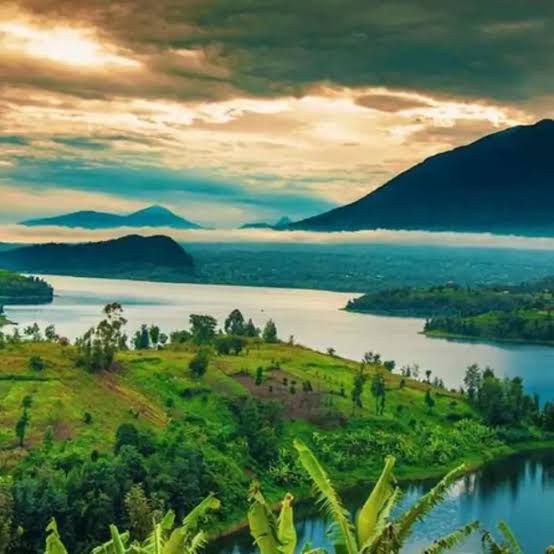
Twin Lakes Burera and Ruhondo: Rwanda’s Quiet Northern Escape
Most travellers heading to Musanze for gorilla trekking never realise a genuinely spectacular pair of lakes sits just 20 to 30 minutes from town, framed by volcano views that rival anything the more famous trekking circuit offers. The Twin Lakes of Burera and Ruhondo reward the short detour with boat rides, hiking, birdwatching and a quieter, more contemplative counterpoint to a trekking-focused itinerary.
Key Highlights
- Two adjoining lakes, Burera and Ruhondo, sitting at the base of Mount Muhabura near Rwanda’s border with Uganda
- Formed by volcanic lava flows that historically blocked the Nyabarongo River’s original channel
- Roughly 20 to 30 minutes by car from Musanze town, with a bumpy final approach on some routes
- Activities include canoeing, birdwatching, hiking, visiting local farms and islands, camping and fishing
- A hike to a local “Top of the World” viewpoint offers panoramic views of all five Virunga volcanoes
- Dry season, roughly June to August, offers the clearest volcano views
How Volcanic Activity Created Two Lakes From One River
Burera and Ruhondo owe their existence to the same volcanic forces that built the Virunga chain towering above them: historical lava flows blocked the original channel of the Nyabarongo River, damming its flow and creating these two adjoining lake basins rather than the single continuous river that once ran through this landscape. That shared volcanic origin is part of why the two lakes sit so close together, effectively twins born from the same geological event rather than two unrelated bodies of water that simply happen to neighbour each other.
What There Is Actually to Do
The lakes support a genuinely varied activity list for a relatively compact area: canoeing across the calm water, birdwatching along the lush hillside shores, hiking trails connecting viewpoints and local farms, visits to small lake islands, camping for travellers wanting an overnight stay, and fishing for those inclined toward a quieter, more solitary pursuit. This range means a single day at Burera and Ruhondo can be structured around almost any pace or interest level, from an active, activity-packed visit to a genuinely restful one.
The Top of the World Viewpoint
A hike to the appropriately named “Top of the World” viewpoint delivers a panoramic payoff distinct from almost anywhere else in the region: a single vantage point taking in all five Virunga volcanoes at once, alongside the twin lakes themselves spread out below. It’s a genuinely rewarding hike for travellers who’ve already done gorilla trekking and want one more, less strenuous physical activity that still delivers a serious scenic reward.
Visiting the Lake Islands
Several small islands dot both Burera and Ruhondo, some home to small farming communities working the fertile volcanic soil that surrounds the lakes, and boat trips out to these islands offer a genuine window into rural life in this part of Rwanda’s Northern Province. Unlike more staged cultural tourism experiences, a visit here tends to feel more incidental and observational, farmers going about ordinary daily work rather than a performance arranged specifically for visitors, which some travellers find a genuinely more authentic form of cultural encounter.
The Terraced Hillsides Surrounding the Lakes
The steep hillsides rising from both lakeshores are extensively terraced for agriculture, a landscape feature that’s become almost as visually distinctive as the lakes and volcanoes themselves, reflecting generations of careful hillside farming adapted to this specific volcanic terrain. Photographing the interplay between the terraced green slopes, the calm lake water, and the volcanic peaks beyond is one of the more rewarding aspects of a visit here for travellers with any interest in landscape photography.
Birdlife Around the Twin Lakes
The lakes’ combination of open water, papyrus-fringed shoreline and surrounding agricultural land supports a genuinely varied bird population, drawing birders alongside the more general sightseeing crowd. Water-associated species dominate the immediate shoreline, while the wooded and cultivated areas nearby add further variety for visitors willing to spend time scanning beyond the water’s edge itself.
Fishing Traditions on the Twin Lakes
Local fishing communities have worked Burera and Ruhondo’s waters for generations, using traditional methods adapted to these specific highland lakes rather than the techniques common on Rwanda’s larger, lower-altitude water bodies. Watching or joining a local fishing outing, arranged through a community-based guide, offers a genuinely different angle on the lakes than the more visitor-focused canoeing and hiking activities, connecting directly to the everyday economic life of the communities living along the shore.
What’s Actually Caught in These Waters
The twin lakes support a modest but genuinely important local fishery, sustaining household food security and small-scale trade for surrounding communities even as the lakes have simultaneously developed into a tourism destination. This dual role, working fishery and scenic attraction simultaneously, is worth keeping in mind as a reminder that Burera and Ruhondo aren’t purely a backdrop for visitor activities but a genuinely lived-in landscape supporting real livelihoods.
A Quieter Counterpoint to Gorilla Trekking
Where Volcanoes National Park’s gorilla trekking is inherently structured, permitted, and built around a strict one-hour visitor window, a visit to Burera and Ruhondo offers something deliberately looser and more self-paced, no permit system, no fixed schedule, just a genuinely scenic landscape to explore at whatever pace suits you. For travellers who found gorilla trekking day genuinely demanding, physically or emotionally, the twin lakes make an excellent lower-key follow-up day.
Planning Your Visit
Getting There From Musanze
The drive from Musanze town runs roughly 20 to 30 minutes, mostly on reasonable roads though the final approach to the lakeshore itself can include some genuinely bumpy sections, worth factoring into expectations if you’re driving yourself rather than using a guided transfer. Our Musanze town guide covers the wider area this lake visit branches off from.
Best Time to Visit
The dry season, roughly June through August, offers the clearest volcano views and the most reliable conditions for both the boat activities and the Top of the World hike specifically, though the lakes remain accessible and scenic year-round for travellers visiting during wetter months.
Where to Stay
Accommodation directly on the lakeshore remains relatively limited compared to the more developed lodging around Musanze town itself, with most visitors basing themselves in Musanze and treating Burera and Ruhondo as a day trip rather than an overnight destination in its own right. A small number of guesthouses and community-run lodging options do exist closer to the lakes for travellers specifically wanting to wake up to the view, worth arranging in advance given the limited capacity.
What to Pack
Layered clothing suits the temperature swing between a warm midday and cooler mornings and evenings at this elevation, and sturdy footwear matters for the hiking trails and terraced farmland paths around the lakeshore. A reasonable camera or phone with decent zoom capability rewards the volcano-and-lake views particularly well, and binoculars add real value for the area’s birdlife.
Frequently Asked Questions
Can I visit Burera and Ruhondo as a half-day trip from Musanze?
Yes, a half-day comfortably covers a boat ride and a shorter hike; a full day allows time for the Top of the World viewpoint hike alongside other activities without rushing.
Can I combine a visit here with the golden monkey trek at Mgahinga or Volcanoes National Park?
Yes, both lakes sit close enough to the wider Musanze area that a golden monkey trek and a Burera and Ruhondo day can realistically fit into the same broader stay without excessive additional travel between activities.
Is swimming safe in the twin lakes?
Check current local guidance before swimming, since conditions and advice can vary; canoeing and boat-based activities are the more commonly recommended way to experience the water itself.
Do I need a guide to visit, or can I explore independently?
A guide adds genuine value for navigating hiking trails and arranging boat activities, particularly for the Top of the World hike, though independent exploration of the lakeshore area itself is entirely possible for confident travellers.
How does this pair with gorilla trekking in Volcanoes National Park?
Very naturally — both are accessed from the Musanze area, making it easy to add a Burera and Ruhondo day either before or after your trekking day without significant additional travel.
What’s the water temperature like for swimming or canoeing?
Given the highland elevation, both lakes run noticeably cooler than Rwanda’s lower-lying waters like Lake Kivu, refreshing rather than warm, worth factoring in if swimming specifically is a priority for your visit.
Are the two lakes actually connected, or fully separate bodies of water?
They sit immediately adjacent to one another, separated by a narrow strip of land in most areas, close enough that both are commonly visited together on the same outing rather than requiring separate trips.
Is this destination suitable for travellers without a car or driver?
A private vehicle or arranged transfer is the practical way to reach the lakes given the distance and road conditions from Musanze; public transport options are limited and less convenient for most visitors’ schedules, and a guided transfer also handles the bumpier final stretch of road more comfortably than a self-drive rental typically would.
Recommended Safaris
The Twin Lakes pair naturally with gorilla trekking based out of Musanze. Our Musanze town guide covers the wider area and logistics for this part of Rwanda. Ready to build a Burera and Ruhondo day into your own Rwanda itinerary, alongside gorilla trekking further into Volcanoes National Park? Reach our team through our Book Now page and we’ll plan it around your dates.

No comment