
The Kigali Convention Centre and Rwanda’s Modern Architecture
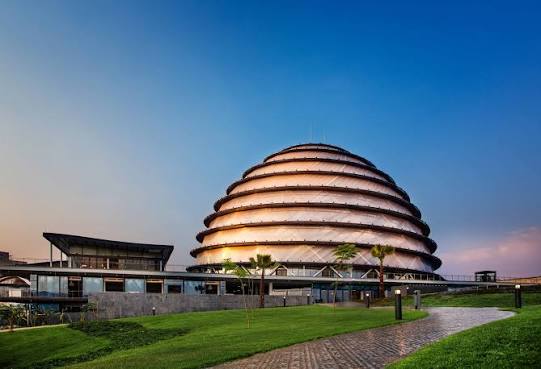
Kigali’s most recognisable landmark isn’t a historical monument but a building barely a decade old: a 40-metre glowing steel dome that dominates the capital’s skyline after dark and appears on the country’s own banknotes. The Kigali Convention Centre represents modern Rwanda’s architectural ambition distilled into a single, deliberately symbolic structure, one that reaches directly back into the country’s own architectural traditions rather than importing a generic international convention-centre design.
Key Highlights
- Officially opened in July 2016, combining a convention centre with the Radisson Blu Hotel Kigali
- The signature dome stands 40 metres tall, built as a support-less, walkable steel spiral structure
- Its shape deliberately references traditional Rwandan royal architecture, specifically the King’s Palace in Nyanza
- At night, the dome’s translucent surface displays programmable, colour-changing illumination visible across much of the city
- The complex has appeared on the Rwandan 5,000-franc banknote since September 2024
- The building won Best Architectural Design and Best Hotel Development at the Africa Property Investment Summit
A Dome Rooted in Rwandan Architectural Tradition
Rather than adopting a generic glass-and-steel international convention centre template, the Kigali Convention Centre’s designers deliberately built its signature dome as a direct architectural reference to traditional Rwandan royal residences, specifically echoing the form of the King’s Palace in Nyanza. Our piece on the King’s Palace Museum in Nyanza covers that historical royal architecture directly, and seeing the connection between the two, one preserving Rwanda’s pre-colonial past, the other reinterpreting it in a thoroughly modern civic landmark, adds genuine depth to visiting both.
Traditional Form, Modern Engineering
The dome’s ascending, helical spiral shape draws on traditional rural Rwandan settlement structures and construction logic, but its actual engineering is entirely contemporary: a 40-metre steel structure built without internal support columns, walkable and structurally self-supporting in a way traditional building materials never could have achieved. This combination, traditional form realised through modern structural engineering, is precisely what earned the building its international design recognition.
The Engineering Challenge Behind a Support-Less Dome
Building a 40-metre steel dome without internal support columns required genuinely advanced structural engineering, a project that involved international engineering expertise working through the specific challenge of making a large, walkable, translucent structure both visually striking and structurally sound under Kigali’s climate conditions. The result stands as one of the more technically ambitious pieces of contemporary architecture anywhere in East Africa, not simply an attractive facade but a genuine engineering achievement in its own right.
Materials Chosen for Both Form and Function
The dome’s translucent outer skin was specifically selected to support the nighttime lighting displays that have become the structure’s signature feature, while the underlying steel framework needed to balance genuine structural strength against the visual lightness the helical spiral design was meant to convey. This combination of material science and symbolic architectural intent reflects a level of design ambition well beyond what a purely functional convention centre would typically require.
A Beacon Across the City After Dark
The dome’s translucent outer surface functions as a genuine light installation once darkness falls, illuminated with programmable colour bands that shift and change, visible from a considerable distance across Kigali’s hilly terrain. It’s become one of the city’s most photographed features precisely because of this nighttime transformation, a building that reads completely differently after sunset than it does under daylight.
A Feature of Kigali’s Rooftop Bar Scene
Several of the rooftop bars that anchor Kigali’s nightlife scene offer direct sightlines to the illuminated dome, making it a genuine visual centrepiece for an evening out rather than something visitors need to seek out separately. Our piece on Kigali’s nightlife covers the rooftop bar scene where this view is often best appreciated.
National Recognition: On the Currency Itself
Since September 2024, the Kigali Convention Centre has appeared on Rwanda’s 5,000-franc banknote, a genuinely significant marker of how thoroughly the building has been absorbed into Rwanda’s national self-image in less than a decade since opening. Few modern buildings anywhere achieve currency recognition this quickly, and its inclusion reflects the structure’s role as a deliberate symbol of contemporary Rwandan ambition and development, not just a functional piece of conference infrastructure.
A Symbol of Kigali’s Broader Development Push
The Convention Centre didn’t rise in isolation; it anchors a wider push of modern development across Kigali’s central districts, part of a deliberate, sustained government strategy to position the capital as a serious destination for international conferences, business tourism and major regional events. The building’s completion in 2016 marked a genuine turning point in Kigali’s ability to host large-scale international gatherings that previously would have gone to more established regional hubs like Nairobi or Addis Ababa.
Hosting Major International Events
Since opening, the Convention Centre has hosted a range of significant international gatherings, from major continental summits to business and technology conferences, cementing Kigali’s reputation as a genuinely capable host city for events that carry real diplomatic and economic weight. Each major hosted event has further reinforced the building’s symbolic role as proof of Rwanda’s institutional capacity and ambition on the international stage.
What the Complex Actually Offers Visitors
Beyond its architectural significance, the complex functions as a genuinely major international conference and events venue, paired directly with the Radisson Blu Hotel Kigali, giving the building real ongoing civic and economic function rather than existing purely as a landmark. Travellers can view the exterior and dome freely as a city sightseeing stop, and the attached hotel and its own rooftop and dining facilities are accessible to non-guests for meals or drinks with a view.
Planning Your Visit
Best Time to See It
Sunset and the hours immediately after offer the best combination of daylight architectural detail and the beginning of the dome’s nighttime illumination display, giving visitors both registers of the building’s appearance in a single visit.
Getting There
The Convention Centre sits centrally within Kigali, easily reached by taxi or ride-hailing app from most parts of the city, making it a straightforward addition to any Kigali sightseeing itinerary rather than requiring dedicated separate planning.
Comparing the Dome to Rwanda’s Other Landmark Architecture
The Convention Centre’s dome sits alongside a small but growing collection of contemporary Rwandan landmarks deliberately designed with cultural symbolism in mind, part of a broader architectural trend that resists purely imported international design language in favour of forms that carry genuine local meaning. This deliberate approach distinguishes Kigali’s newer landmark buildings from the more generic glass-tower development seen in many rapidly growing African capitals, giving the city’s modern skyline a distinctly Rwandan visual identity rather than an interchangeable global one, and giving visitors something genuinely specific to photograph rather than a skyline indistinguishable from a dozen other growing cities worldwide.
Why This Design Philosophy Matters
Choosing to root a major international convention centre’s design in traditional royal architecture, rather than a neutral, culturally unmarked form, represents a genuine statement of confidence in Rwandan cultural identity as something worth building modern national infrastructure around rather than setting aside in favour of a more conventionally “international” aesthetic. Visitors who understand this context tend to appreciate the building considerably more than those who see only an attractive dome without grasping the deliberate cultural reasoning behind its shape.
Frequently Asked Questions
Can I go inside the Convention Centre as a tourist?
General public access to the convention areas themselves depends on whether an event is in progress; the attached Radisson Blu Hotel’s public areas, including dining and rooftop spaces, are more consistently accessible to visitors.
Is photography of the dome allowed?
Yes, exterior photography is entirely standard and, given the building’s status as a genuine city landmark, actively common among both visitors and locals.
How does the dome’s lighting system actually work?
The dome’s translucent material is fitted with a programmable LED lighting system capable of displaying various colour combinations and patterns, typically most active and visible after sunset through the evening hours.
Is the Convention Centre within walking distance of Kigali’s nightlife districts?
It’s reasonably central, though a short taxi ride rather than a walk is the more practical way to combine a Convention Centre visit with an evening in Kimihurura or Kisementi.
What does the dome specifically symbolise about Rwandan architecture?
The dome’s helical, ascending spiral form draws on the layout and construction logic of traditional rural Rwandan settlements and royal residences, translating a historically significant architectural language into a genuinely contemporary structure rather than a purely decorative gesture.
How does the Convention Centre compare to other landmark buildings in East Africa?
Few structures in the wider East African region combine this scale of engineering ambition with such deliberate cultural symbolism, giving the Kigali Convention Centre a genuinely distinctive place among the region’s contemporary landmark buildings rather than simply competing on height or size alone.
Is there an entry fee to view the dome?
No, viewing the exterior and the illuminated dome is free and unrestricted, accessible to anyone in the surrounding public areas of the city.
Recommended Safaris
The Kigali Convention Centre pairs naturally with a wider Kigali city stay. Our pieces on the King’s Palace Museum in Nyanza and Kigali’s nightlife scene both connect directly to this landmark’s story and setting. Ready to build Kigali city sightseeing, including a sunset view of the dome, into your own Rwanda itinerary? Reach our team through our Book Now page and we’ll plan it around your dates.





No comment