
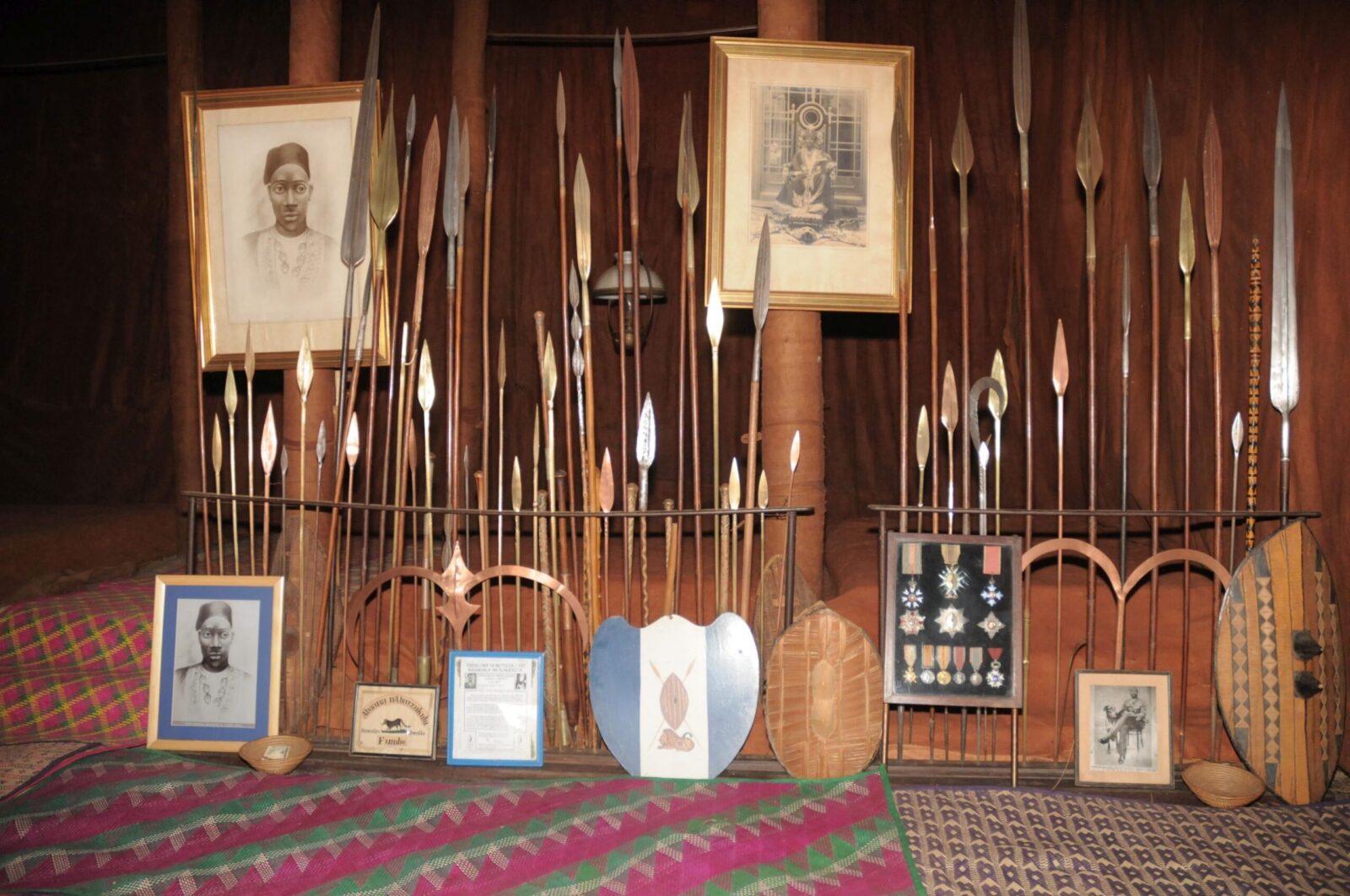
Long before Rwanda’s modern history dominated most visitors’ understanding of the country, it was ruled for centuries by a monarchy whose royal court once kept cattle so revered they were adorned with jewellery and sung to by name. The King’s Palace Museum in Nyanza preserves that world in genuinely tangible form, part historical reconstruction, part living tradition, centred on a royal residence and a herd of cattle still trained to respond to poetry the way they did generations ago.
Key Highlights
- Located in Nyanza, in Rwanda’s Southern Province, on the former royal palace complex of King Mutara III Rudahigwa
- Officially launched as a museum in 2008, covering Rwanda’s monarchical period from the 15th century through 1961
- Three main sections: a reconstructed traditional royal palace, a modern art deco palace built 1930-1933, and the site’s living Inyambo royal cattle
- Inyambo cattle, descended from Ankole stock, are long-horned animals historically associated with royal wealth, prestige and power
- Trained keepers still decorate the cattle with beaded necklaces and headbands and recite traditional poetry and songs to them, a genuinely preserved living tradition
- A natural stop on the same southbound route from Kigali that passes through Huye
A Monarchy Spanning Five Centuries
Rwanda’s monarchy governed the country from roughly the 15th century until 1961, when the country transitioned away from monarchical rule, and the King’s Palace Museum specifically preserves the legacy of this final royal era centred on King Mutara III Rudahigwa’s residence in Nyanza. Officially opened as a formal museum in 2008, the site gives visitors a rare, tangible connection to a centuries-long period of Rwandan history that predates and sits alongside the country’s better-known 20th-century story.
Two Palaces, Two Eras
The museum complex includes a carefully reconstructed traditional royal palace, built using historical techniques and materials to recreate how the royal court actually lived before European colonial influence reshaped Rwandan architecture and governance, alongside a separate modern art deco palace built between 1930 and 1933 during the later colonial period. Walking between the two isn’t just a change of building style; it’s a physical, walkable timeline of how Rwandan royal life itself changed across this transitional era, from traditional court structures to a European-influenced modern residence occupied by the same monarchy.
The Inyambo: Rwanda’s Royal Cattle
Among the museum’s most distinctive draws is its living herd of Inyambo cattle, long-horned animals descended from the wider Ankole cattle breed found across the region, historically kept specifically within royal courts as living symbols of wealth, prestige and power rather than purely practical livestock. Their distinctive, dramatically long horns and calm bearing made them a natural centrepiece for royal ceremony, a tradition the museum has deliberately preserved rather than treating as a purely historical footnote.
Cattle Trained to Respond to Poetry
What makes a visit here genuinely different from a standard livestock display is that trained keepers continue the historical practice of decorating the Inyambo with beaded necklaces and headbands and reciting traditional poetry and songs directly to them, calling individual animals by name in a practice believed to calm them ahead of ceremonial presentation to visitors. This isn’t a recreated performance for tourism’s sake alone; it’s a documented continuation of genuine royal-court tradition, maintained specifically because the skill and cultural knowledge involved was worth actively preserving.
King Mutara III Rudahigwa: The Palace’s Final Royal Resident
King Mutara III Rudahigwa, whose residence forms the historical core of this museum, ruled Rwanda through a genuinely pivotal period spanning traditional pre-colonial governance structures and the increasing influence of Belgian colonial administration, making his reign a particularly significant window into how Rwandan monarchy adapted, and ultimately gave way, to changing political realities through the mid-20th century. His modern art deco palace, built in the early 1930s, physically embodies that transitional moment, a European architectural style housing a monarch still operating within a traditional Rwandan royal system.
What the Palace Interiors Reveal
Inside, the reconstructed traditional palace showcases royal court life, including displays of the artifacts, furnishings and ceremonial objects associated with pre-colonial Rwandan royal governance, while the art deco palace offers a starkly different, more European-influenced domestic setting from the same monarchical lineage. Seeing both in close proximity makes the contrast, and the genuine continuity of royal authority across it, considerably more vivid than either building could convey in isolation.
Why This Site Matters Beyond Its Own Walls
The King’s Palace Museum offers essential context for understanding cattle culture’s much broader significance across Rwandan and wider East African society, a significance that extends well past this one royal site into everyday rural life, wealth measurement, and cultural identity across the region. Visitors who see the Inyambo here often find they understand cattle-keeping traditions encountered elsewhere in Rwanda, and across the wider region, with considerably more depth afterward.
Ankole Cattle’s Wider Cultural Significance
The Inyambo’s Ankole heritage connects this one royal herd to a much broader cattle-keeping tradition spanning Rwanda, Uganda and neighbouring parts of the region, where long-horned cattle have historically functioned as far more than livestock, serving as measures of wealth, elements of bride-price negotiations, and genuine sources of cultural identity and pride across pastoralist communities. Seeing the Inyambo at their most ceremonially elevated, decorated and sung to within a royal context, offers a distilled, concentrated version of a cultural significance that plays out in less formal ways across pastoralist households throughout the wider region.
The Wider Nyanza Royal Complex
Beyond the two palace buildings and the Inyambo enclosure, the Nyanza site preserves a broader sense of the royal court’s former scale, including grounds and structures that once supported the full administrative and ceremonial apparatus of Rwandan monarchy in its final decades. Walking the wider complex, rather than moving directly between the two headline palace buildings, gives a genuinely fuller sense of what royal governance actually looked like as a physical, functioning institution rather than a single symbolic residence.
Restoration and Ongoing Preservation Work
Maintaining a site combining traditional construction materials, modern colonial-era architecture, and a living animal husbandry tradition requires genuinely ongoing conservation effort, work that continues well beyond the museum’s formal 2008 opening. This continuous preservation investment is part of why the site remains in genuinely good condition for visitors today, rather than the site being treated as a finished, static historical exhibit requiring no further attention.
Planning Your Visit
Getting There and Combining With Huye
Nyanza sits along the same general southbound route from Kigali that leads toward Huye and onward to Nyungwe Forest National Park, making it straightforward to combine both stops on the same day’s drive rather than treating them as separate trips. Our Huye town guide covers the other major cultural stop along this same corridor, giving travellers a natural pairing of royal history and academic heritage on a single southbound leg.
Best Time to Visit
The museum operates as a year-round attraction, with the Inyambo cattle display generally available regardless of season, though checking current visiting hours and any scheduled ceremonial presentations in advance helps ensure you catch the cattle display at its most engaging.
A Tradition Actively Practiced, Not Just Displayed
What distinguishes the King’s Palace Museum from many heritage sites is the ongoing, hands-on nature of the Inyambo tradition specifically — the keepers who tend and decorate the cattle, and recite the traditional poetry to them, aren’t performing a scripted museum demonstration but continuing genuine pastoral and ceremonial skills passed down through direct training, skills that would otherwise risk fading entirely without this kind of dedicated institutional preservation. That distinction between a living practice and a static historical display is worth appreciating consciously during a visit, since it shapes how the whole site should be understood.
Frequently Asked Questions
How long should I plan for a visit?
A visit covering both palace sections and the Inyambo cattle display typically takes one and a half to two hours, comfortably fitting into a day that also includes driving time toward or from Huye.
Are the Inyambo cattle dangerous given their long horns?
No, despite their dramatic horns, the Inyambo are calm, well-handled animals accustomed to visitors and ceremonial presentation, managed by experienced keepers throughout any visitor interaction.
Can I see the Inyambo being fed or cared for, not just decorated for display?
Depending on timing, visitors sometimes catch keepers during routine daily care rather than only formal presentation moments, offering a genuinely more candid look at how the cattle are actually managed day to day beyond the ceremonial poetry and decoration visitors most often see highlighted.
Is photography allowed at the museum and with the cattle?
Photography is generally permitted throughout the site, including during cattle presentations, though confirming current specific rules with on-site staff before your visit is always worth doing.
Does visiting require a guide, or can I explore independently?
A guide adds significant value here given the historical and cultural depth involved, particularly for understanding the Inyambo tradition’s fuller significance, though the site is accessible to independent visitors as well.
Recommended Safaris
The King’s Palace Museum pairs naturally with a visit to nearby Huye. Our Huye town guide covers the other major cultural stop on this southbound route. Ready to build a Nyanza and Huye cultural circuit into your own Rwanda itinerary, alongside gorilla trekking further north? Reach our team through our Book Now page and we’ll plan it around your dates.

No comment