
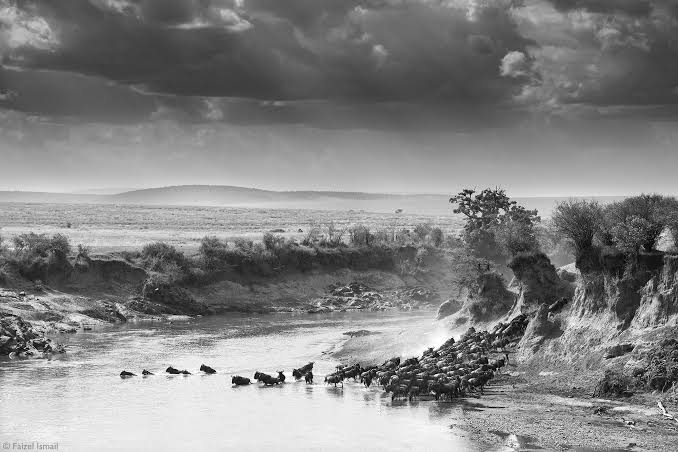
Photographing River Crossings
Photographing River Crossings: Position, Shutter Speed and Patience
Photographing wildebeest river crossings is one of the most rewarding experiences for wildlife photographers visiting Tanzania’s Serengeti National Park and Kenya’s Maasai Mara National Reserve. Every year, enormous herds of wildebeest gather along the Mara River before attempting to cross its deep channels, strong currents and steep riverbanks. For photographers, these moments provide opportunities to capture dramatic movement, natural animal behaviour and the remarkable scale of Africa’s Great Migration.
However, taking successful photographs of river crossings requires more than owning an expensive camera. Wildlife photographers must understand where to position themselves, how to select appropriate camera settings and why patience is essential. Wildebeest may gather beside the river for several hours before crossing, while the actual movement into the water can begin unexpectedly.
A well-positioned safari vehicle, suitable shutter speed and understanding of animal behaviour can make a substantial difference to the results. Photographers must also follow protected-area regulations and avoid disturbing migrating animals.
This guide explains how to photograph river crossings safely and effectively, whether you are using a professional camera, an entry-level digital camera or a modern smartphone.
Why Wildebeest River Crossings Are Challenging to Photograph
Wildebeest crossings are unpredictable natural events.
Large herds may approach the Mara River, gather near the banks and then move away without entering the water.
Sometimes animals return several times before a crossing begins.
When the first wildebeest enter the river, hundreds or thousands of others may follow.
Their movements can become rapid and difficult to predict.
Photographers must respond quickly to changes in distance, direction, lighting and animal behaviour.
Common Photography Challenges
Unpredictable crossing times.
Rapidly moving wildebeest.
Water splashing around swimming animals.
Strong sunlight and reflective water.
Dust rising from riverbanks.
Changing distances between wildlife and safari vehicles.
Limited viewing positions.
Other vehicles near popular crossing areas.
Understanding these challenges before your safari helps you prepare suitable camera equipment and settings.
1. Choose the Right Position Before the Crossing Begins
Position is one of the most important considerations when photographing wildebeest river crossings.
A photographer with a moderately priced camera in a suitable position may capture better images than someone using expensive equipment from an obstructed viewpoint.
The ideal position provides a clear view of the river while maintaining sufficient distance from the animals.
However, visitors cannot freely choose any location along the Mara River.
Safari vehicles must remain within authorised areas and follow the instructions of guides and protected-area staff.
Why Positioning Matters
A suitable viewpoint can help photographers capture several stages of a crossing.
These include wildebeest gathering near the river, animals entering the water, swimming herds and individuals climbing the opposite bank.
Some viewing locations provide wide views of the river, while others offer opportunities for closer photographs.
Your guide should select a position that balances photographic opportunities, safety and wildlife protection.
2. Never Block Wildebeest Approaching the River
One of the most important principles of responsible migration photography is avoiding interference with wildlife.
Wildebeest often hesitate before crossing because of difficult river conditions and potential dangers.
Vehicles parked along their approach routes may discourage animals from entering the water.
Photographers should never ask guides to move closer if doing so blocks the herd.
Responsible Vehicle Positioning
A professional safari guide should:
Follow authorised vehicle routes.
Avoid blocking crossing approaches.
Maintain appropriate distances.
Respect other safari vehicles.
Avoid chasing animals.
Follow instructions from wildlife authorities.
Natural behaviour produces more meaningful photographs than scenes influenced by vehicle pressure.
3. Use a Fast Shutter Speed for Moving Wildebeest
Shutter speed controls how long the camera sensor is exposed to light.
Fast shutter speeds help freeze movement, while slower speeds allow moving subjects to appear blurred.
Wildebeest can move rapidly when running down riverbanks or swimming through difficult currents.
For sharp action photographs, fast shutter speeds are usually preferable.
Recommended Shutter Speeds
| Photography situation | Suggested shutter speed |
|---|---|
| Wildebeest standing near the river | 1/250–1/500 second |
| Wildebeest walking | 1/500–1/1000 second |
| Running wildebeest | 1/1000–1/2000 second |
| Wildebeest entering the water | 1/1600–1/2500 second |
| Fast splashing action | 1/2000–1/3200 second |
| Intentional motion blur | 1/30–1/125 second |
These settings are starting points rather than fixed rules.
The best shutter speed depends on the animal’s movement, lighting conditions, lens stability and the photographic effect you want.
4. Understand Why 1/2000 Second Is Useful
A shutter speed of approximately 1/2000 second can be particularly useful during active river crossings.
It helps freeze water droplets and rapid leg movements.
This setting is valuable when wildebeest jump from riverbanks or struggle through shallow water.
However, a fast shutter speed reduces the amount of light reaching the camera sensor.
To maintain suitable exposure, photographers may need to use a wider aperture or higher ISO setting.
A sharp photograph with moderate digital noise is often preferable to a heavily blurred image of an important wildlife moment.
5. Choose the Right Camera Mode
Wildlife photography involves rapidly changing conditions.
Using a camera mode that allows easy control of shutter speed can simplify the process.
Shutter Priority Mode
Shutter Priority allows you to select a shutter speed while the camera adjusts other exposure settings.
This can be useful for beginners photographing moving animals.
Choose a suitable shutter speed and monitor whether the camera can maintain a correct exposure.
Manual Mode With Auto ISO
Experienced wildlife photographers often prefer Manual mode combined with Auto ISO.
This allows direct control over shutter speed and aperture while the camera adjusts ISO according to the available light.
For example, a photographer might select:
Shutter speed: 1/2000 second.
Aperture: f/5.6.
ISO: Auto.
Continuous autofocus.
High-speed continuous shooting.
These settings can provide a practical starting point for action photography during suitable daylight conditions.
6. Select the Right Aperture
Aperture controls the amount of light passing through the lens and influences depth of field.
A wide aperture allows more light to reach the sensor and can help separate an animal from the background.
However, photographing large groups sometimes requires greater depth of field.
Aperture Recommendations
For photographing an individual wildebeest, an aperture around f/4 or f/5.6 may provide good subject separation.
For several animals moving together, f/8 can help keep more of the scene sharp.
For wide landscape photographs, f/8 or f/11 may be appropriate.
The best choice depends on the lens, available light and distance between subjects.
Avoid using a very narrow aperture when it forces the shutter speed too low for moving wildlife.
7. Use Auto ISO Carefully
ISO controls the camera’s sensitivity setting for exposure.
Higher ISO values allow the camera to produce brighter images when light is limited, although they may introduce additional digital noise.
Modern cameras often perform well at moderate or relatively high ISO settings.
During early morning crossings, photographers may need ISO 1600 or higher to maintain a fast shutter speed.
In bright afternoon sunlight, considerably lower settings may be sufficient.
Why Auto ISO Is Helpful
Crossing scenes may change quickly as animals move between shaded riverbanks and open sunlight.
Auto ISO allows the camera to respond to changing brightness while preserving your selected shutter speed and aperture.
However, photographers should understand their camera’s noise performance and set an appropriate maximum ISO when possible.
8. Choose a Telephoto Lens With Flexible Zoom
A telephoto lens is particularly useful because safari vehicles must maintain appropriate distances from wildlife.
A zoom lens allows photographers to adjust their composition without moving the vehicle.
Recommended Lenses
A 100–400 mm lens offers a practical balance between wider herd photographs and closer views of individual animals.
A 70–200 mm lens can work well when animals are relatively close or when photographing large groups.
Longer lenses, such as 150–600 mm models, provide additional reach for distant wildlife.
However, long lenses can make it difficult to follow rapidly moving animals, especially when the crossing becomes crowded.
Why Zoom Flexibility Matters
During a crossing, animals may approach from different directions.
One moment, you may want to photograph an individual wildebeest entering the river.
The next moment, hundreds of animals may fill the scene.
A flexible zoom lens makes it easier to capture both situations without changing equipment.
9. Use Continuous Autofocus for Moving Animals
Autofocus is essential when photographing wildebeest swimming or running.
Single autofocus can work well for stationary subjects.
However, continuous autofocus is generally more suitable for moving wildlife.
Depending on your camera, this setting may be called AF-C or AI Servo.
Continuous autofocus allows the camera to adjust focus as the subject changes distance.
Animal Detection Autofocus
Some modern cameras offer animal eye or subject detection.
These systems can help maintain focus on wildlife, but their performance varies between species, cameras and conditions.
During a crowded crossing, the camera may accidentally focus on a different animal.
Photographers should practise selecting focus points or tracking zones before travelling.
10. Use Continuous Shooting Without Taking Unnecessary Photographs
High-speed continuous shooting allows cameras to capture several images each second.
This can be helpful when wildebeest jump from riverbanks or when water splashes around moving animals.
However, holding down the shutter continuously throughout an entire crossing can create thousands of photographs that are difficult to review.
Photograph Short Action Sequences
Watch for interesting movements and photograph them in short bursts.
Useful moments include:
The first wildebeest entering the river.
Animals jumping from steep banks.
Wildebeest swimming through strong currents.
Herds emerging from the water.
Individuals shaking water from their bodies.
Large groups running across surrounding grasslands.
This approach helps conserve memory card space and makes editing easier.
11. Photograph the Full Story of a Crossing
A successful migration photograph does not always need to show dramatic splashing or predator encounters.
The moments before and after a crossing can be equally interesting.
A complete photographic story might include wildebeest gathering along the river, a small group approaching the water, the crossing itself and animals moving away after reaching the opposite bank.
Include Wide and Close-Up Images
Wide photographs show the scale of the migration.
They can capture the surrounding grasslands, winding river and enormous herds.
Closer photographs reveal individual expressions, movement and physical details.
Combining both styles creates a more complete visual record of the experience.
12. Why Patience Matters More Than Expensive Equipment
Wildebeest may remain close to the river for several hours without crossing.
Photographers sometimes spend most of a morning watching a herd that eventually moves away.
This can be frustrating, particularly when safari time is limited.
However, patience is part of wildlife photography.
What to Do While Waiting
Observe how animals gather and move near the riverbank.
Watch for changes in herd density and direction.
Prepare your exposure settings before the action begins.
Check your camera battery and available memory.
Discuss possible photographic angles with your guide.
Avoid constantly moving between locations simply because no crossing has started.
However, remaining in one place should be balanced with reliable information about herd movements elsewhere.
13. How Lighting Affects River Crossing Photography
Lighting conditions influence image sharpness, colour and contrast.
The Mara River contains reflective water that can create exposure challenges, particularly in strong sunlight.
Early Morning Light
Early morning often provides softer light and pleasant colours.
However, lower light levels may require higher ISO settings when photographing fast movement.
Mist or haze can sometimes affect visibility.
Midday Light
Midday sunlight can create strong shadows.
Bright reflections from water may also cause exposure problems.
Photographers should monitor highlights to avoid losing detail in splashing water.
Late Afternoon Light
Late afternoon can provide warm colours and attractive side lighting.
However, the sun may become low before a crossing starts.
Photographers should remain prepared to increase ISO or adjust their camera settings as light levels decline.
14. Managing Water Reflections and Exposure
Bright water can sometimes confuse a camera’s exposure meter.
When sunlight reflects strongly from the river, pale water droplets may become overexposed.
Exposure compensation can help when using automatic exposure modes.
For example, a small reduction in exposure may preserve detail in bright reflections.
However, reducing exposure too much can make dark wildebeest appear excessively shadowed.
Review the histogram or highlight warning display when available.
This provides a more reliable guide than judging exposure only from the camera screen.
15. Capturing Crocodiles During a Crossing
Nile crocodiles are among the predators associated with Mara River crossings.
They may remain submerged before attempting to capture a wildebeest.
However, attacks are unpredictable, and many crossings occur without visible crocodile hunting.
Photographing Crocodile Behaviour
Use a telephoto lens to maintain a safe distance.
Watch crocodiles resting near the surface or moving through the water.
A fast shutter speed can help capture sudden movement.
Avoid focusing exclusively on crocodile attacks because other aspects of the crossing may provide equally rewarding photographs.
Wildlife photographers should never ask guides to approach crocodiles or interfere with predator behaviour.
16. Best Places to Photograph Wildebeest River Crossings
Both Kenya and Tanzania provide opportunities to photograph the Great Migration.
Maasai Mara National Reserve, Kenya
The Maasai Mara contains important sections of the Mara River used by migrating wildebeest.
Its open grasslands and established wildlife viewing areas make it a popular destination.
Crossing locations can attract numerous safari vehicles during the peak season.
Mara Triangle, Kenya
The Mara Triangle provides access to migration habitats along the Mara River.
The area supports wildebeest, zebras, predators and other resident wildlife.
Its landscapes offer opportunities for both river-crossing and wider savannah photography.
Northern Serengeti, Tanzania
Northern Serengeti is particularly important during the main Mara River crossing season.
Areas around Kogatende and Lamai provide access to suitable migration habitats.
The surrounding hills, kopjes and grasslands offer attractive photographic backgrounds.
17. Best Months for Mara River Photography
The main Mara River crossing period generally occurs between July and October.
August and September are often particularly favourable for visitors hoping to photograph large herds near the river.
However, rainfall and grazing conditions influence the precise timing.
Seasonal Photography Guide
| Month | Typical opportunities |
|---|---|
| July | Early northern migration activity and possible crossings |
| August | Often favourable for large river crossings |
| September | Continued crossings and large herd movements |
| October | Possible late-season crossings |
| November | Many herds may begin moving southwards |
The migration does not follow an exact schedule, so travellers should confirm recent herd movements before their safari.
18. How Many Days Should Photographers Spend Near the River?
A single game drive may produce excellent photographs, but crossing activity is unpredictable.
Some herds gather near the river without entering the water.
Other crossings happen quickly and may finish before a photographer reaches the viewing location.
For crossing-focused photography, spending four or five nights in a suitably located camp can provide more opportunities.
Travellers with limited time should consider at least three nights.
However, even a longer stay cannot guarantee a major crossing.
An experienced guide familiar with river-crossing behaviour is especially valuable.
19. Photographing River Crossings With a Smartphone
Modern smartphones can capture attractive wildlife photographs, especially in good lighting.
However, their shorter optical reach can make distant animals difficult to photograph.
Avoid excessive digital zoom because it can reduce image quality.
Smartphone Photography Tips
Use the highest practical image quality setting.
Keep the lens clean because safari vehicles can become dusty.
Use burst photography when available.
Tap the screen to select the main subject.
Take wider photographs showing the river and large herds.
Stabilise the phone against a secure surface inside the vehicle.
Never lean outside the vehicle or move into unsafe positions to obtain a closer photograph.
20. Protecting Camera Equipment During Safari
Safari environments can expose cameras to dust, heat and occasional rainfall.
Carry a suitable camera bag to protect equipment during transfers.
A lens cloth and small air blower can help remove dust.
Use protective rain covers when necessary.
Keep spare batteries and memory cards readily accessible.
Avoid changing lenses in dusty conditions whenever possible.
Back up photographs regularly if you have suitable storage equipment.
These simple precautions help prevent equipment problems during important wildlife moments.
21. Ethical Wildlife Photography at River Crossings
Responsible photography is essential because vehicle activity can influence the behaviour of migrating animals.
Photographers should remain in authorised viewing areas and follow protected-area regulations.
Do not ask guides to approach herds too closely or block river access.
Avoid using drones without the required authorisations.
Never attempt to attract crocodiles or other predators.
Respect other visitors and avoid obstructing their viewing opportunities.
Why Ethical Photography Produces Better Results
Wild animals behave more naturally when they are not disturbed.
A suitable distance allows photographers to capture genuine movement and interactions.
The goal should be to document natural behaviour rather than create dramatic scenes through interference.
Why Position, Shutter Speed and Patience Matter
Photographing wildebeest river crossings requires a combination of technical preparation and an understanding of wildlife behaviour.
A suitable position provides clear views of the action without disturbing animals.
Fast shutter speeds help capture running wildebeest, splashing water and sudden movement.
Continuous autofocus and flexible zoom lenses improve the ability to follow subjects.
However, patience remains one of the most valuable photography skills.
The Great Migration cannot be controlled, and no camera equipment guarantees a dramatic crossing.
For travellers visiting Kenya’s Maasai Mara or Tanzania’s northern Serengeti, the most rewarding photographs often come from spending time observing wildlife and allowing natural events to unfold.
By preparing appropriate camera settings, travelling with experienced guides and respecting wildlife regulations, photographers can capture memorable images while helping protect one of Africa’s most remarkable natural events.


No comment