
Dung Beetles and the Serengeti Ecosystem
Dung beetles work tirelessly across the Serengeti’s plains, rolling and burying dung deposited by the ecosystem’s enormous herds of wildebeest, zebra, and buffalo, a genuinely unglamorous but ecologically essential process that quietly supports the entire ecosystem’s long-term health in ways most visitors never fully appreciate.
Why Dung Beetles Matter So Much to the Serengeti
Given the sheer volume of dung produced daily by the Serengeti’s massive herbivore populations, particularly during the wildebeest migration when over a million animals move through the ecosystem, dung beetles perform a genuinely critical cleanup function that would otherwise leave the plains buried under accumulated waste. This rapid processing of dung directly supports grassland health, nutrient cycling, and even parasite control across the wider ecosystem.
How Dung Beetles Actually Work
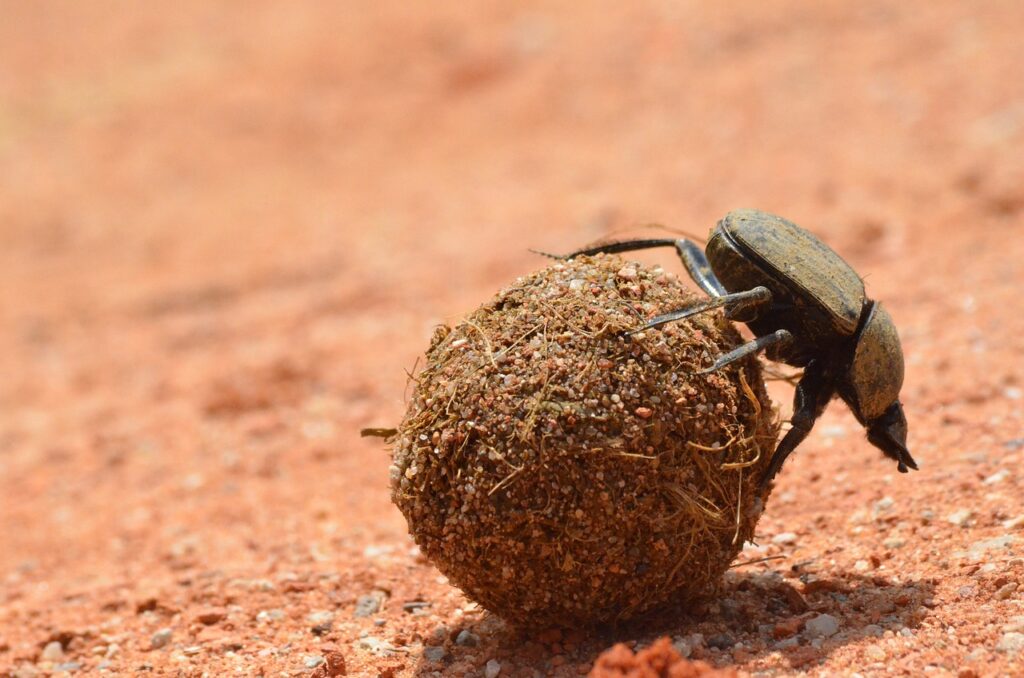
Different dung beetle species employ genuinely distinct strategies, with rollers forming dung into a ball and rolling it away from the source before burying it, tunnellers digging directly beneath a dung pile to bury material in place, and dwellers living and breeding directly within the dung itself. This behavioural diversity across species creates a genuinely comprehensive, efficient system for processing the Serengeti’s enormous daily dung output.
Dung Beetles and Nutrient Cycling
By burying dung underground, dung beetles genuinely accelerate nutrient return to the soil, fertilising grassland growth that in turn supports the very herbivore populations producing the dung in the first place, creating a genuinely efficient closed-loop nutrient cycle. This process happens considerably faster than dung would decompose if left exposed on the surface, giving dung beetles a genuinely outsized ecological impact relative to their tiny individual size.
Dung Beetles and Seed Dispersal
As dung beetles bury dung, they also inadvertently bury seeds that herbivores consumed and passed through their digestive system, effectively planting new vegetation across the plains in a genuinely important, if entirely accidental, seed dispersal service. This function contributes meaningfully to maintaining plant diversity across the Serengeti’s grassland ecosystem, an ecological role easy to overlook given how unassuming the insects themselves appear.
Dung Beetles and Parasite Control
By rapidly removing and burying dung, beetles genuinely help limit the breeding grounds available to flies and parasites that would otherwise multiply within exposed dung piles, indirectly reducing disease transmission risk across the Serengeti’s herbivore populations. This parasite control function is a genuinely underappreciated but real contribution to the wider ecosystem’s overall health.
How Dung Beetles Navigate Using the Stars
Certain Serengeti dung beetle species have been documented using the Milky Way as a genuine navigational reference, rolling their dung ball in a straight line away from competitors by orienting to the night sky’s pattern of light, a genuinely remarkable feat of insect navigation discovered through dedicated research on African dung beetle populations. This star-based orientation is genuinely one of the more scientifically fascinating behaviours documented among any insect species found anywhere in the world today.
Where to Observe Dung Beetles in the Serengeti
Dung beetles are genuinely easy to spot near fresh dung piles left by the migration’s passing herds, particularly during and shortly after the wildebeest migration’s peak movement through a given area. Guides who take a moment to point out this activity during an otherwise mammal-focused game drive offer genuine additional insight into the ecosystem’s less obvious workings.
Best Time of Year to Observe Dung Beetle Activity
Dung beetle activity is visible in the Serengeti year-round given the ecosystem’s consistent herbivore presence, though activity genuinely peaks during and immediately following the wildebeest migration’s passage through a specific area, when dung availability spikes dramatically. See our regional best-time guide for how East Africa’s seasonal patterns generally affect wider trip planning.
Self-Drive vs Guided Safaris for Dung Beetle Observation
A guided safari genuinely adds value in pointing out and explaining dung beetle behaviour, an easily overlooked sighting most self-drive visitors would likely pass without noticing given how much attention larger, more conventionally exciting wildlife typically draws. Most visitors combine this niche interest with a wider guided Northern Circuit itinerary.
Photographing Serengeti Dung Beetles
A dung beetle rolling its ball across open ground offers a genuinely charming macro photography opportunity distinct from the park’s larger wildlife subjects, best captured with a close-focusing lens rather than the telephoto gear typical of most safari photography, similar to some of the specialised equipment discussed in our camera gear guide.
What to Pack for a Serengeti Safari
Standard game drive gear – neutral clothing, sun protection, and binoculars – covers most of what the park requires. If your wider itinerary includes gorilla trekking, our gorilla trekking packing list covers that portion separately.
Combining Dung Beetle Interest With a Wider Northern Circuit
The Serengeti is commonly paired with Ngorongoro Crater on a standard Northern Circuit itinerary, and travelers with a genuine interest in the ecosystem’s smaller ecological processes can find similar dung beetle activity across both destinations.
Dung Beetle Competition and Speed
Fresh dung attracts genuinely intense competition among dung beetles, with dozens of individuals sometimes arriving within minutes of a deposit, racing to claim and process material before rivals can take a share. This competitive urgency is part of why rolling beetles move dung balls away from the source so quickly, reducing the risk of losing their claim to a more dominant competitor at the original pile.
Dung Beetle Reproduction and Brood Balls
Many dung beetle species form a specialised “brood ball,” a dung sphere in which a female lays a single egg, providing the developing larva with a genuinely complete food source buried safely underground away from surface predators and the day’s intense heat. This reproductive strategy, combining nutrition and protection in a single package, reflects the genuinely sophisticated behavioural adaptations dung beetles have evolved around processing herbivore waste.
The Scale of the Serengeti’s Dung Beetle Workforce
Given the Serengeti ecosystem’s enormous herbivore population, particularly during migration season when over a million wildebeest and hundreds of thousands of zebra pass through, the sheer number of individual dung beetles working simultaneously across the plains represents a genuinely massive, largely invisible workforce sustaining the ecosystem’s underlying nutrient cycle.
Dung Beetles’ Role in Reducing Greenhouse Gas Emissions
Research on dung beetle activity in various grassland ecosystems has suggested their rapid dung burial genuinely reduces methane emissions compared to dung left exposed on the surface, an ecological benefit with implications reaching well beyond the immediate Serengeti ecosystem into broader questions about grassland carbon cycling.
Comparing Dung Beetle Activity to the Masai Mara
Kenya’s Masai Mara shares the same broader migration ecosystem and hosts genuinely comparable dung beetle activity, given the shared herbivore populations passing through both sides of the international border throughout the annual migration cycle.
Why Guides Enjoy Highlighting This Overlooked Ecology
Experienced Serengeti guides who take time to explain the ecosystem’s less glamorous cleanup specialists, from vultures to dung beetles, often find travelers develop a genuinely deeper appreciation for how interconnected the entire ecosystem actually is, beyond the headline predator and prey sightings most itineraries focus on.
Getting to the Serengeti for a Deeper Ecological Experience
Most itineraries reach the Serengeti via road from Arusha through Ngorongoro Crater, or by scheduled light aircraft directly into one of the park’s several airstrips, with a wider Big Five itinerary generally providing the framework travelers build their deeper ecological interests around.
Dung Beetle Species Diversity
The Serengeti hosts a genuinely remarkable diversity of dung beetle species, each specialising in slightly different dung types, sizes, or freshness levels, creating a genuinely layered, efficient division of labour across the ecosystem’s overall waste-processing system rather than relying on any single generalist species working entirely alone.
A Small Sighting Worth Genuine Attention
Pausing a game drive for even a few minutes to watch dung beetle activity up close offers a genuinely different, considerably more intimate perspective on the Serengeti’s wider ecology than the typically fast-paced, rushed pursuit of larger, more conventionally exciting headline wildlife sightings.
Frequently Asked Questions
Why are dung beetles important to the Serengeti?
They rapidly process the enormous volume of dung produced by the ecosystem’s herds, supporting nutrient cycling, seed dispersal, and parasite control.
How do dung beetles navigate?
Some species genuinely use the Milky Way as a navigational reference, rolling their dung ball in a straight line by orienting to the night sky.
What are the different types of dung beetle behaviour?
Rollers form and roll dung balls away, tunnellers bury dung in place, and dwellers live and breed directly within the dung itself.
When is the best time to see dung beetle activity?
Year-round, though activity peaks during and immediately following the wildebeest migration’s passage through a specific area.
Can dung beetles really bury seeds?
Yes, genuinely so – as they bury dung, they inadvertently bury seeds passed through herbivore digestion, contributing to grassland plant diversity.
Ready to Plan Your Serengeti Safari?
Whether the Serengeti’s fascinating small-scale ecology, the wildebeest migration, or a full Northern Circuit itinerary is your priority, our team can build a Tanzania trip matched to your time and interests. Get in touch with our team below today and let’s start planning your complete Tanzania safari itinerary together.

No comment