

Do Lions Live in Rainforests? The Truth About Uganda’s Gorilla Parks
Lions don’t live in Uganda’s dense mountain rainforests, including Bwindi Impenetrable Forest and Mgahinga Gorilla National Park, a habitat mismatch that surprises some first-time visitors expecting a single trip to combine both gorilla trekking and lion sightings within the very same forest.
This guide covers exactly why this habitat mismatch exists, where Uganda’s actual lion populations are found instead, and how to plan a single trip that combines both experiences without unrealistic expectations.
Why Lions Never Evolved to Thrive in Dense Rainforest
Lions evolved as cooperative pride hunters built around chasing and ambushing large, herding prey across open terrain, a strategy that depends entirely on clear sightlines and coordinated group positioning, both impossible to execute within the dense, low-visibility undergrowth of a mountain rainforest. This fundamental mismatch between hunting strategy and habitat structure explains why lions simply never established populations within Uganda’s forested southwest, regardless of the region’s otherwise rich biodiversity.
Why Uganda’s Gorilla Parks Sit in a Different Ecosystem Entirely
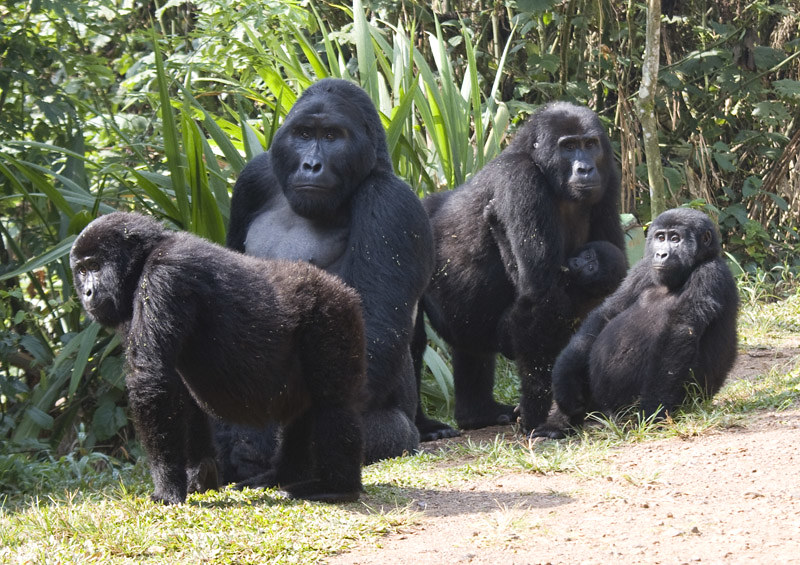
Bwindi Impenetrable Forest and Mgahinga Gorilla National Park occupy dense montane and lowland rainforest terrain, a habitat type built around thick, tangled vegetation and steep, forested terrain that supports mountain gorillas, forest elephants, and considerable primate diversity, but lacks both the open sightlines and the large migratory herbivore herds lions depend on for their cooperative hunting strategy.

What Predators Do Live Within These Forest Ecosystems
Rather than lions, Uganda’s forest parks support a different predator community adapted specifically to dense-forest hunting, including leopards, which thrive across a considerably wider range of habitat types than lions given their solitary, stealth-based hunting strategy. Our guide on lion versus leopard differences covers exactly why leopards’ fundamentally different hunting approach lets them succeed in terrain lions simply cannot, a distinction our guide on what lions eat and how they hunt also touches on from the cooperative-hunting side specifically.
Where Uganda’s Actual Lion Populations Are Found
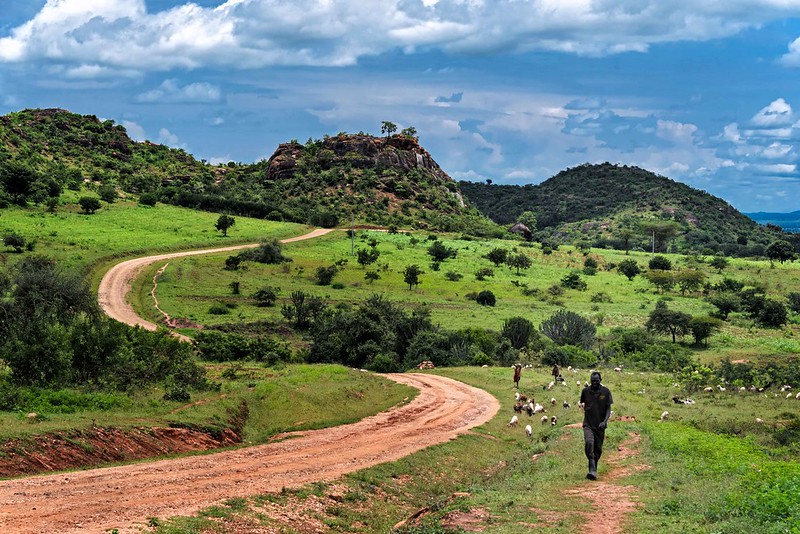
Uganda’s resident lion populations live within the country’s savanna ecosystems instead, primarily Queen Elizabeth National Park and Kidepo Valley National Park, both open grassland environments considerably more distant from the forested southwest gorilla trekking region. Our guide on Queen Elizabeth’s lion population covers Uganda’s most accessible and well-known lion destination in more depth.
Why This Geographic Separation Shapes Itinerary Planning
Given this ecological separation, visitors hoping to combine gorilla trekking with lion sightings within a single Uganda trip need to plan a multi-region itinerary, typically combining Bwindi or Mgahinga with Queen Elizabeth National Park, rather than expecting to find both experiences within the same park or even the same general region of the country. Our guide on the best parks to see lions in East Africa covers where Uganda’s savanna lion territory ranks alongside the region’s other top lion destinations.
How Queen Elizabeth National Park Bridges Both Worlds
Queen Elizabeth National Park sits within reasonable driving distance of Bwindi, making it the most practical combination for travelers wanting both experiences without excessive additional travel time, and the park’s famous Ishasha tree-climbing lions offer a distinctive lion-viewing experience considerably different from the more open savanna sightings typical of Uganda’s other lion territory. Our guide on Lake Manyara’s tree-climbing lions covers a comparable behavioural pattern found in a completely different ecosystem, useful context for understanding how unusual and geographically specific this tree-climbing trait is.
Why Rainforest Ecosystems Elsewhere in Africa Also Lack Lions
This same habitat pattern holds true across the continent more broadly, since Central Africa’s dense rainforest regions, including much of the Congo Basin, support gorillas, forest elephants, and okapi rather than lions, reinforcing that this is a genuine, consistent ecological pattern rather than something specific to Uganda alone. Rwanda’s own gorilla trekking parks follow this identical pattern too, with Volcanoes National Park’s forested slopes supporting gorillas rather than any resident lion population, mirroring Bwindi and Mgahinga’s situation just across the border.
What Makes Bwindi’s Ecosystem Unique Instead
Rather than lacking wildlife interest, Bwindi offers an entirely different, equally compelling ecological story, home to roughly half the world’s remaining mountain gorilla population alongside considerable primate and bird diversity found nowhere else in Uganda’s savanna parks, a distinct wildlife experience rather than a diminished one simply because it doesn’t include lions. Our guide on essential lion facts for safari-goers covers the savanna side of Uganda’s Big Five story in more depth.
How Guides Explain This to First-Time Visitors
Experienced guides field this exact question regularly from first-time visitors, and explaining the underlying ecological logic, hunting strategy versus habitat structure, helps set accurate expectations before a trip rather than leaving visitors disappointed mid-itinerary upon realising lions and gorillas don’t share the same Ugandan forest.
This same explanation extends naturally into a broader conversation about how habitat shapes which Big Five species travelers can realistically expect in any given park, a useful framing that helps set accurate expectations across an entire itinerary rather than just the lions-and-gorillas question specifically.
Why This Distinction Matters for Trip Budgeting Too
Understanding this habitat separation also matters for realistic trip budgeting, since combining Bwindi gorilla trekking with Queen Elizabeth’s lion safaris requires additional travel days and internal transport costs beyond a single-region trip, a planning consideration worth factoring in early rather than assuming both experiences fit within an unchanged, single-park itinerary and budget. Gorilla trekking permits themselves also represent a significant, separate cost worth budgeting for distinctly from standard park entrance and game-drive fees.
Planning a Combined Gorilla and Lion Safari
A well-planned Uganda itinerary combines both experiences without excessive complexity, typically routing through Queen Elizabeth National Park between Bwindi and other savanna destinations, giving travelers a complete picture of Uganda’s remarkable habitat diversity within a single well-structured trip.
Most travelers allocate a minimum of one to two nights within Queen Elizabeth National Park specifically to allow sufficient time for both the famous Ishasha tree-climbing lion sector and the park’s broader savanna game drives, rather than treating it purely as a brief transit stop between Bwindi and other destinations, a rushed approach that reduces the odds of a strong lion sighting considerably.
How Elevation Change Reinforces This Habitat Divide
Uganda’s gorilla trekking parks sit at considerably higher elevation than the country’s savanna lion territory, a mountainous, cooler climate that further reinforces the fundamentally different vegetation and ecosystem structure separating these two wildlife experiences. This elevation contrast also means travelers should pack accordingly for the distinct climate difference between a cooler forest trek and a warmer savanna game drive within the same overall trip, often within the span of just a single day’s travel between the two regions.
How This Compares to Other Big Five Species Within Forest Ecosystems
Lions aren’t the only Big Five species absent from Uganda’s forest parks. Rhinos and buffalo also favour more open terrain over dense rainforest, though buffalo show somewhat more habitat flexibility than lions given their less specialised diet and hunting-free lifestyle, meaning forest buffalo populations do exist in some rainforest regions even where lions cannot follow. Elephants show the most habitat flexibility of all, with distinct forest and savanna elephant populations documented across the continent, a broader ecological range than any other Big Five species manages.
Why Understanding Regional Ecology Improves Trip Planning Overall
Beyond the specific lions-and-gorillas question, understanding how habitat type shapes species distribution helps travelers set realistic expectations across an entire multi-region itinerary, whether planning a Big Five-focused savanna trip, a primate-focused forest trip, or, as covered throughout this guide, a well-planned combination of both within a single well-structured Uganda safari. Our guide on how lion prides are structured covers more about the specific cooperative hunting strategy that ties lions so closely to open savanna terrain in the first place.
Frequently Asked Questions
Are there lions in Bwindi Impenetrable Forest?
No – Bwindi’s dense rainforest habitat doesn’t support lions, which require open terrain for their cooperative hunting strategy.
Where can I see lions in Uganda?
Queen Elizabeth National Park and Kidepo Valley National Park hold Uganda’s resident lion populations.
Can I combine gorilla trekking and lion safaris in one Uganda trip?
Yes – Queen Elizabeth National Park sits within reasonable driving distance of Bwindi, making a combined itinerary practical.
Why don’t lions live in rainforests generally?
Their cooperative hunting strategy depends on open sightlines and large herding prey, both largely absent within dense forest.
What predators do live in Uganda’s gorilla parks?
Leopards thrive there instead, given their solitary, stealth-based hunting strategy suited to dense forest terrain.
Ready to Plan Your Uganda Safari?
Whether you’re hoping to combine gorilla trekking with a lion safari or focus entirely on one experience, our team can build a trip matched to your interests. Get in touch with our team below today and let’s start planning your complete Uganda safari itinerary together.

No comment