
Bushbuck of Queen Elizabeth National Park
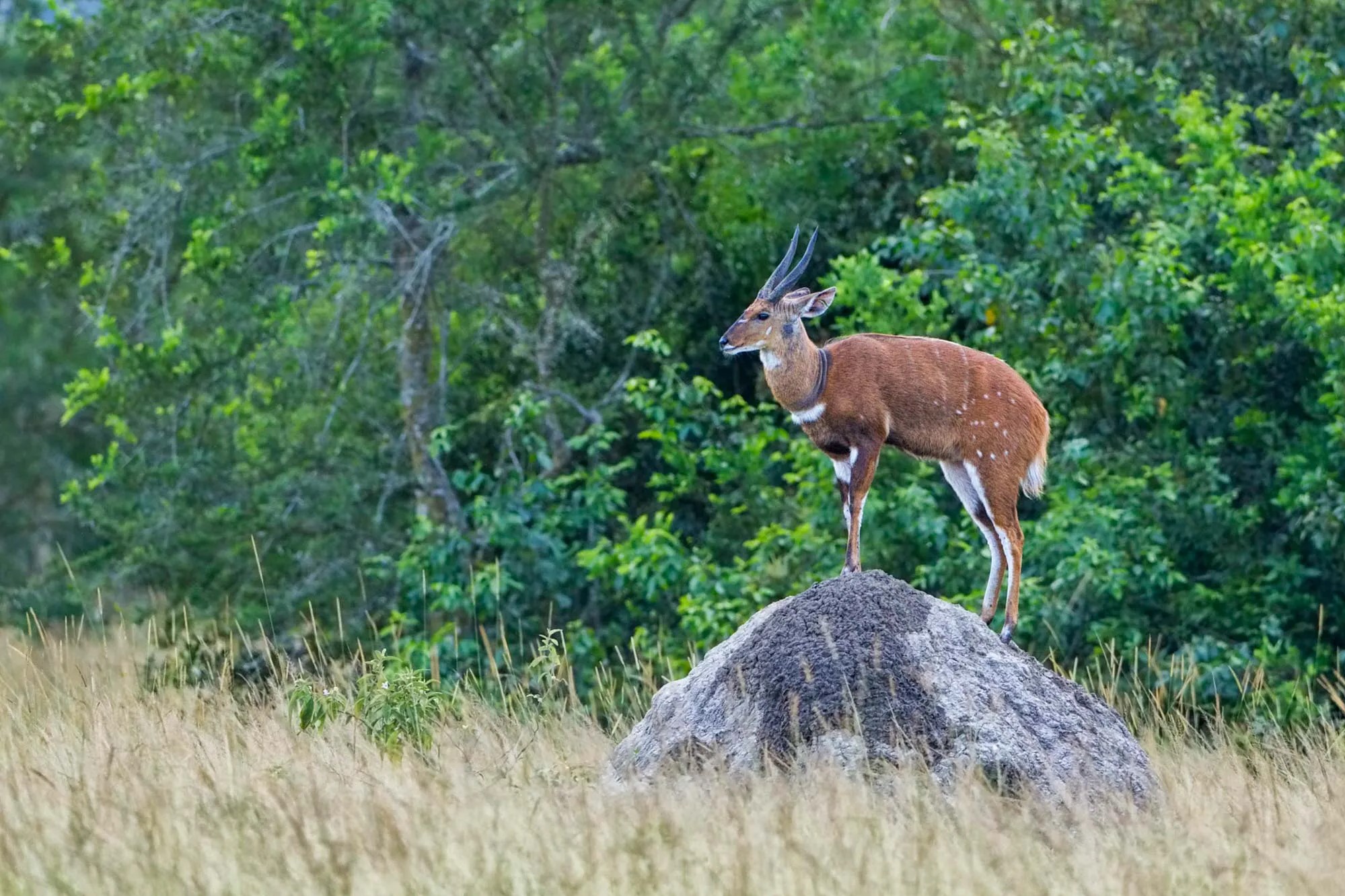
Bushbuck move quietly through Queen Elizabeth National Park’s denser woodland and forest fringe habitat, their reddish-brown coat marked with white spots and stripes making them one of the park’s more visually striking, if genuinely elusive, antelope species compared to the open-plains wildlife most visitors expect.
Why Bushbuck Favour Denser Cover
Unlike Queen Elizabeth’s more visible plains species, bushbuck genuinely prefer denser woodland, thicket, and forest-edge habitat, using cover both for feeding on browse vegetation and for concealment from predators. This habitat preference means bushbuck sightings often occur unexpectedly along forested park roads or near the Kazinga Channel’s denser vegetation rather than during standard open-plains game drives.
Identifying Bushbuck
Male bushbuck carry a genuinely striking reddish-brown to dark brown coat marked with white spots and vertical stripes along the flanks, along with modest, gently spiralled horns, while females share the spotted pattern but lack horns entirely. This distinctive marking makes bushbuck straightforward to identify once spotted, even though their preference for dense cover means sightings themselves require genuine patience.
Bushbuck Behaviour and Solitary Habits
Unlike many of Queen Elizabeth’s herding antelope species, bushbuck are genuinely solitary or found in loose pairs, rarely forming the larger herds typical of open-plains grazers. This solitary behaviour, combined with their preference for dense cover, gives bushbuck sightings a genuinely different character from the Kazinga Channel’s more visible, herd-based wildlife.
Bushbuck and Queen Elizabeth’s Wider Wildlife
Bushbuck share their preferred woodland habitat with the park’s leopard population, given leopard’s own preference for cover-rich terrain, though bushbuck’s naturally cautious, alert behaviour helps them remain a persistent, viable prey species despite this shared habitat pressure.
Bushbuck Diet and Feeding Behaviour
Bushbuck are primarily browsers, feeding on leaves, shoots, fruit, and occasionally flowers from woodland vegetation, a dietary specialisation genuinely different from the grass-focused diet of Queen Elizabeth’s more visible open-plains grazers. This browsing habit is part of why bushbuck remain closely tied to denser vegetation rather than venturing into open grassland.
Best Time of Year for Bushbuck Sightings
Bushbuck are visible in Queen Elizabeth year-round given their resident status, making seasonal timing genuinely less critical than time spent specifically exploring the park’s denser woodland sections rather than open plains alone. See our Uganda best-time guide for how the country’s broader dry and wet seasons still affect wider trip planning.
Self-Drive vs Guided Safaris for Bushbuck Viewing
Locating bushbuck genuinely benefits from guide knowledge of which forested park roads and woodland edges currently hold active individuals, given how easily this naturally cautious, cover-dependent species can remain hidden even at relatively close range. Most visitors combine Queen Elizabeth with a wider guided Uganda itinerary.
Photographing Queen Elizabeth’s Bushbuck
Bushbuck emerging briefly from woodland cover, particularly in the dappled light of early morning, offer genuinely rewarding photographic opportunities distinct from the park’s more commonly photographed open-plains wildlife. A mid-range zoom covers most sightings comfortably, similar to the gear recommended in our camera gear guide.
What to Pack for a Queen Elizabeth Safari
Standard game drive gear – neutral clothing, sun protection, and binoculars – covers most of what the park requires, and a light layer is worth having for the Kazinga Channel boat cruise given the breeze across open water. If your wider itinerary includes gorilla trekking, our gorilla trekking packing list covers that portion separately.
Bushbuck’s Role in the Wider Ecosystem
As a specialised browser within Queen Elizabeth’s woodland habitat, bushbuck contribute to shaping vegetation structure through their feeding pattern, a role genuinely distinct from the grazing pressure exerted by the park’s open-plains herbivores. This ecological niche, combined with their importance as prey for leopard, makes bushbuck a genuinely meaningful, if understated, part of Queen Elizabeth’s overall food web.
Combining Bushbuck Viewing With the Kazinga Channel
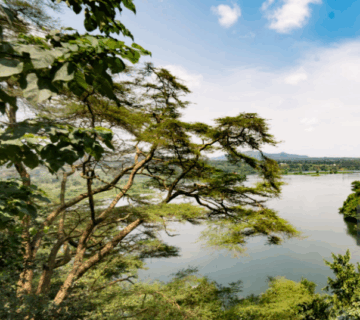
Bushbuck sightings pair naturally with a Kazinga Channel boat cruise, given the denser vegetation lining parts of the waterway, adding genuine additional wildlife variety to an activity primarily known for its hippo and crocodile sightings.
Getting to Queen Elizabeth National Park
Queen Elizabeth sits within a comfortable drive of western Uganda’s main tourism circuit, commonly reached en route between Kibale Forest and Bwindi Impenetrable National Park, making it a natural inclusion on longer itineraries combining multiple parks and primate destinations.
Bushbuck Alarm Behaviour and Escape Strategy
When startled, bushbuck typically freeze momentarily before bolting into denser cover with a genuinely distinctive bark-like alarm call, a strategy that relies on concealment and cover rather than the open-ground speed favoured by plains antelope species. This escape behaviour, combined with their naturally solitary habits, means a bushbuck sighting is often over as quickly as it began, rewarding quiet, patient observers who happen to spot one before it notices the vehicle.
Territorial Males and Breeding Behaviour
Male bushbuck maintain and defend individual territories through scent marking and occasional physical contests with rival males, using their modest spiralled horns in genuine, if generally brief, confrontations over territory and access to females. This solitary territorial structure, distinct from the harem or herd-based social systems of many other African antelope, reflects bushbuck’s particular adaptation to a woodland habitat where dense cover limits the value of larger group formations.
Calves and Early Life in Dense Cover
Bushbuck calves are hidden in dense vegetation for their first several weeks of life, a concealment strategy well suited to their forest-edge habitat, with mothers visiting periodically to nurse rather than keeping calves in constant close proximity as some herd-based species do. This hiding strategy genuinely improves calf survival odds given how effectively dense woodland cover can mask a calf’s presence from passing predators.
Why Bushbuck Reward a Slower, More Deliberate Safari Pace
Travelers moving quickly through Queen Elizabeth’s woodland sections in pursuit of the park’s more commonly sought open-plains wildlife often miss bushbuck entirely, given how effectively the species blends into dense cover at anything beyond a slow, deliberate pace. Guides who dedicate specific time to quietly exploring forested park roads genuinely improve the odds of a rewarding bushbuck sighting compared to a faster-paced standard game drive.
Comparing Queen Elizabeth’s Bushbuck to Other Uganda Parks
Bushbuck are also found across several of Uganda’s other national parks, though Queen Elizabeth’s genuinely varied habitat, combining woodland, forest edge, and the Kazinga Channel’s dense riparian vegetation, gives the park particularly strong bushbuck habitat diversity compared to more uniformly open reserves.
Bushbuck Alongside Queen Elizabeth’s Famous Predators
Beyond leopard, bushbuck occasionally fall prey to the park’s tree-climbing lions, particularly when caught in more open woodland-grassland transition zones rather than the deepest cover they typically favour.
Best Times of Day for a Bushbuck Sighting
Early morning and late afternoon generally offer the best odds of spotting bushbuck actively feeding along woodland edges, before retreating into deeper cover during the hottest midday hours, similar to the activity pattern seen among the park’s other resident herbivores.
Why First-Time Visitors Are Often Surprised by Bushbuck
Many travelers arrive at Queen Elizabeth expecting primarily open-plains wildlife and are genuinely surprised to encounter such a visually striking, cover-dwelling antelope, adding an unexpected layer of diversity to a park often associated primarily with its tree-climbing lions and Kazinga Channel hippo.
Getting to Queen Elizabeth From Other Uganda Destinations
Travelers arriving from Kibale Forest’s chimp trekking or heading onward toward Bwindi’s gorilla trekking can genuinely combine bushbuck viewing with either leg of a longer Uganda journey, given Queen Elizabeth’s convenient central position along the country’s main southwestern tourism route.
Bushbuck’s Wider Distribution Across Sub-Saharan Africa
Bushbuck are among the most widely distributed antelope species across sub-Saharan Africa, occurring in numerous countries and habitat types beyond Uganda, though this genuinely broad overall range doesn’t diminish the real appeal of encountering one specifically within Queen Elizabeth’s particular woodland and forest-edge setting alongside the park’s other headline wildlife.
What to Look and Listen For
Beyond visual spotting, a distinctive sharp barking alarm call often gives away a bushbuck’s presence before it’s actually seen, making attentive listening genuinely as valuable as scanning the woodland visually when searching for this particular species.
Frequently Asked Questions
Where in Queen Elizabeth can I see bushbuck?
Denser woodland, thicket, and forest-edge habitat, particularly along forested park roads and near the Kazinga Channel’s denser vegetation.
How can I identify a bushbuck?
Look for a reddish-brown coat marked with white spots and stripes, along with modest spiralled horns present only on males.
Do bushbuck live in herds?
No, genuinely not – unlike many antelope species, bushbuck are solitary or found in loose pairs rather than larger herds.
What’s the best time of year to see bushbuck in Queen Elizabeth?
Year-round given their resident status, making seasonal timing genuinely less critical than exploring the park’s denser woodland sections.
Are bushbuck easy to spot?
Genuinely not always – their preference for dense cover and naturally cautious behaviour make sightings require more patience than open-plains species.
Ready to Plan Your Queen Elizabeth Safari?
Whether the park’s elusive bushbuck, the Kazinga Channel’s famous hippo population, or a full Uganda itinerary is your priority, our team can build a trip matched to your interests. Get in touch with our team below today and let’s start planning your complete Uganda safari itinerary together.

No comment