
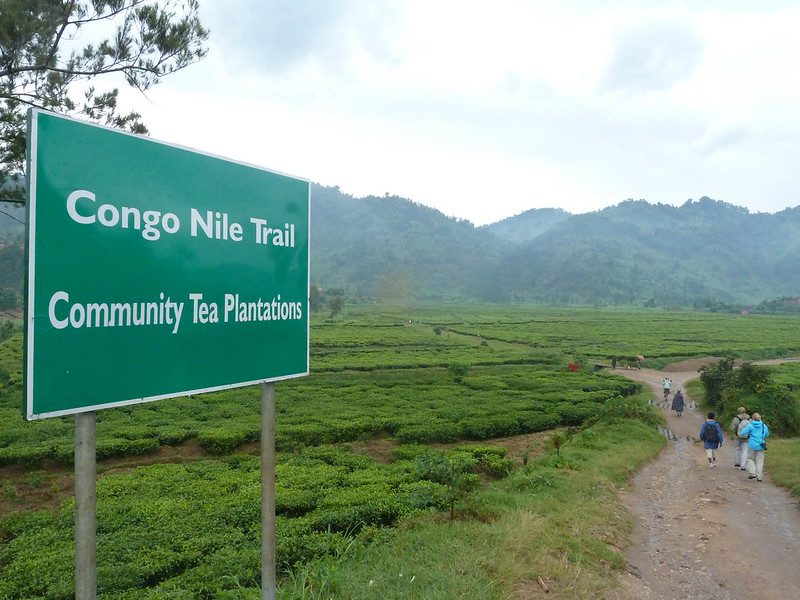
Rwanda’s Congo-Nile Trail is more than just an adventure! The Congo Nile Trail, which spans 227 kilometers (141 miles), is a magnificent low-impact approach to experiencing the plantations and traditional village life surrounding Lake Kivu in western Rwanda.
This adaptable route is smartly divided into segments. You may walk, cycle, or kayak the entire path, which traverses rivers, beaches, waterfalls, rice fields, farms, and communities. Another alternative is to ride one stage and then walk another. Choose the phases that appeal to you the most or are most relevant to your specific schedule.
Facts About Rwanda’s Congo-Nile Trail
The Congo-Nile Path is Rwanda’s longest single path.
It is divided into 10 daily stages, the lengths of which range from 11 to 61 km, with the majority being around 30 kilometers.
Each stage has its own distinct traits.
The trail’s top elevation is 2,630 meters.
Much more than an adventure activity.
The walk winds past tea, coffee, and banana plantations, bustling local markets, and fishing towns where your guides will teach you about local customs.
Each section of the route provides a unique opportunity to explore: beekeeping, traditional healing, music, night fishing, traditional ceramics, coffee and tea experiences, or sorghum beer-making.
Those interested in history might pay a visit to Richard Kandt House, located south of the lake. Kandt, a German adventurer, was Rwanda’s first colonial governor.
The route is ideal for peaceful birding and boat cruises to islands, not to mention the limitless vistas of the lake itself.
How to Get There
The majority of trail tourists begin their journey along the Congo Nile Trail at Rubavu (formerly known as Gisenyi), a picturesque town on the shores of Lake Kivu.
Well-known tourist locations that may be reached before or after the walk include Nyungwe Forest National Park to the southwest and Mukura Forest (part of Gishwati-Mukura, Rwanda’s newest national park) to the northeast of Lake Kivu.
How many days does it take?
Serious hikers should plan on spending ten days on the Congo Nile Trail, while most people just stay for one or two days.
For bikers, eight days is the best time to immerse themselves in Kinyarwanda culture (but dedicated riders may complete the path in five days).
How may the Congo-Nile Trail be combined with other destinations in Rwanda?
The Congo-Nile Trail receives few visitors, ensuring that it remains a unique experience. The path through the villages gives an ideal chance for true community encounters.
This is not only an exciting trip in and of itself, but it’s also an excellent opportunity to stretch your legs after a few days in a safari truck.
Best Time to Hike or Bike the Trail
The dry seasons, June to September and December to February, offer the firmest footing along the trail’s dirt paths and the most reliable conditions for cycling, while the wetter months bring a lusher, greener landscape at the cost of muddier sections in places. Lake Kivu’s moderate elevation keeps temperatures comfortable year-round, meaning the choice of season comes down mainly to trail conditions rather than concerns about heat or cold.
Accommodation Along the Congo-Nile Trail
Accommodation along the route ranges from simple guesthouses and homestays in trailside villages to more established lakeside lodges in towns like Rubavu and Kibuye, giving trekkers a genuine range of comfort levels across the ten-day itinerary. Community-run guesthouses in particular offer a chance to stay directly within the villages the trail passes through, deepening the cultural encounters that define much of the Congo-Nile experience.
Physical Demands of the Trail
With daily stages ranging from 11 to 61 kilometers and elevation reaching 2,630 meters at its highest point, the Congo-Nile Trail asks considerably more of hikers than a typical single-day safari activity, making a reasonable baseline fitness level important for anyone attempting multiple consecutive stages. Cyclists generally cover the route faster with less physical strain than walkers, though Rwanda’s hilly terrain, the source of its “land of a thousand hills” reputation, still makes for a genuinely demanding ride regardless of fitness level.
What to Pack for the Congo-Nile Trail
Sturdy, broken-in hiking boots or proper cycling shoes matter considerably given the trail’s length and varied terrain, alongside layers for cool mountain mornings that warm quickly once the day gets underway. A reliable rain jacket, sun protection, and a water purification method or ample bottled water round out a sensible packing list for the multi-day trek.
Combining the Trail With Gorilla Trekking
Many visitors combine a shorter Congo-Nile Trail segment with gorilla trekking in nearby Volcanoes National Park, using the trail’s slower, low-impact pace as a genuine contrast to the more intense, single-day primate trek. All in Africa Safaris can help sequence a Congo-Nile stage alongside gorilla permits and the rest of a broader Rwanda itinerary.
Guided Versus Independent Trekking
A local guide considerably enriches the Congo-Nile Trail experience, translating the specific customs and crafts practiced in each village and helping navigate a route where signage is often minimal outside the more established tourist towns. All in Africa Safaris can arrange guided stages of the trail, whether for a single day’s walk or a longer, multi-day itinerary tailored to your available time.
Kayaking Lake Kivu Alongside the Trail
Beyond walking and cycling, several stages of the Congo-Nile Trail can be covered by kayak directly on Lake Kivu itself, offering a genuinely different perspective on the same shoreline villages and landscapes visible from the trail on land. This water-based option particularly suits travelers seeking a lower-impact, more leisurely way to cover ground while still taking in the lake’s scenery and the fishing communities along its edge.
Cultural Encounters That Define the Trail
What sets the Congo-Nile Trail apart from a typical scenic hiking route is its emphasis on genuine community contact, sharing a meal in a village home, learning traditional dance, or watching a local craftsperson at work, rather than simply passing through as a spectator. These encounters, woven into nearly every stage of the trail, are what most returning trekkers describe as the experience’s real highlight, ahead even of the lake views themselves.
Extending Your Rwanda Trip With the Congo-Nile Trail
Travelers with extra time beyond a standard Rwanda gorilla trekking itinerary often find the Congo-Nile Trail a genuinely rewarding addition, offering a slower, more immersive counterpoint to the intensity of primate trekking and classic game drives. All in Africa Safaris can help build even a single trail stage into a broader Rwanda itinerary without requiring the full ten-day commitment.
Lake Kivu’s Role in the Trail’s Character
Lake Kivu, one of Africa’s Great Lakes, forms the trail’s constant companion throughout its 227-kilometer length, its shifting shoreline shaping nearly every stage’s scenery, from open beaches to terraced hillside plantations descending directly to the water. This near-constant lake presence gives the Congo-Nile Trail a genuinely different character from Rwanda’s more famous forest-based attractions, trading dense canopy for open water views and a more varied, ever-changing landscape.
Choosing Which Stages Suit Your Trip
Rather than committing to the full ten-day route, most visitors select two or three consecutive stages based on their available time, often choosing sections near Rubavu or Kibuye for their stronger infrastructure and easier logistics compared to the trail’s more remote central stretches. All in Africa Safaris can help identify which specific stages best match your fitness level, interests, and the rest of your Rwanda itinerary.
A Trail That Rewards Slowing Down
In a country whose tourism reputation rests heavily on the single, intense hour of gorilla trekking, the Congo-Nile Trail offers a deliberately different pace, multiple unhurried days moving through farmland, fishing villages, and lakeside scenery at walking or cycling speed. Travelers who build in time for this contrast consistently describe it as giving them a fuller, more rounded sense of Rwanda beyond its headline wildlife attractions.
Practical Logistics for a Multi-Day Trek
Luggage transfer between stages, arranged in advance through a local operator, allows trekkers to walk or cycle with only a daypack while their main bags travel ahead to each night’s accommodation, considerably easing the physical demands of a multi-day itinerary. All in Africa Safaris can arrange this logistics support alongside guiding and accommodation for a genuinely well-organized Congo-Nile Trail experience.
A Genuinely Different Kind of Rwanda Memory
While gorilla trekking understandably dominates most Rwanda itineraries and most travelers’ expectations of the country, the Congo-Nile Trail offers a slower, more personal counterpoint built on village encounters and lakeside scenery rather than a single wildlife encounter. Travelers who make room for even a short stage often describe it as giving them a genuinely different, more textured memory of Rwanda than the trekking portion of their trip alone.
Ready to Walk, Cycle, or Paddle Lake Kivu’s Shore
Whether your interest lies in a single scenic day’s walk or the full ten-day cultural immersion, the Congo-Nile Trail offers a genuinely flexible way to experience western Rwanda at whatever pace suits your itinerary and fitness level. All in Africa Safaris can turn that interest into a specific, well-organized trail itinerary matched to your travel dates and level of ambition, whether that means a gentle single afternoon or the full multi-day traverse of Lake Kivu’s western shore.


No comment