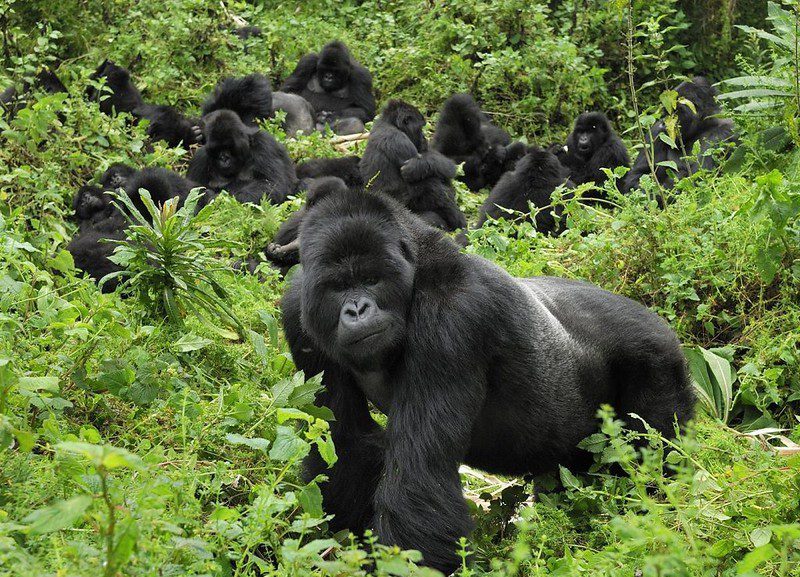
The most popular safari activity in Uganda is mountain gorilla trekking. This pastime, which was introduced to the country over 20 years ago, has drawn a large number of visitors to the country throughout the years to witness these famous apes. Mountain gorilla trekking was founded to promote mountain gorilla conservation in the East African area, as gorillas are among the world’s most severely endangered mammals. Trekking activities were designed to provide people with access to gorillas and to help them understand the value of gorillas to humanity and the overall environment.
To suggest the notion hasn’t worked is to minimise the efforts of the many authorities who have made it a reality thus far. As of 2022, the several gorilla habitats in Rwanda, Uganda, and the Democratic Republic of the Congo collectively house about 1500 individual gorillas, a significant increase from around 800 individuals ten years ago.
What exactly is gorilla trekking in Uganda?
Mountain gorilla trekking in Uganda entails visiting one of the country’s two mountain gorilla habitats, climbing the terrain, and finally encountering the gorillas in their habitat.
Where can you find mountain gorillas in Uganda?
Both mountain gorilla habitats in Uganda are located in southwestern Uganda. These environments include Bwindi and Mgahinga National Parks. Bwindi National Park is home to three-quarters of the world’s mountain gorilla population.
When can you go mountain gorilla trekking in Uganda?
Mountain gorilla hiking is available in both habitats throughout the year in Uganda. However, the peak seasons for the activities occur during the dry seasons, which last from June to August and December to February.
How long does it take to go mountain gorilla trekking in Uganda?
Mountain gorilla trekking in Uganda takes one day, which is the duration of the activity. It normally begins at 7 a.m. with a briefing, after which trekkers enter the jungle in search of gorillas. this hike takes around 4 to 5 hours, depending on the park you are trekking in.
After that, you spend an hour with the gorillas before descending the mountain to your next destination. The descent takes around 3 to 4 hours. The mountain gorilla safari, on the other hand, can last anywhere from two to four days, depending on where you enter the parks and your overall safari itinerary.
What are the rules for trekking mountain gorillas in Uganda?
The rules for mountain gorilla trekking are the same all over the world, and they include, but are not limited to, not trekking while sick because you can spread your illness to the gorillas, keeping a 7-meter distance between you and the mountain gorillas while on a trek, not engaging in anything that can harm the mountain gorillas, not feeding the mountain gorillas, and not coughing or sneezing directly into the gorillas, among other things.
How much does it cost to go mountain gorilla trekking in Uganda?
The cost of mountain gorilla trekking in Uganda is just the cost of permits, which is $800 USD per permit per person.
Low season discount: The Uganda Wildlife Authority now offers discounted low season gorilla tracking permits during April, May, and November – $600 for foreign non-residents and $500 for foreign residents (standard rates apply the rest of the year). Low season permits cannot be rescheduled, so book early through a licensed tour operator.
This permit provides or offers you the opportunity to hike mountain gorillas in either of the country’s two habitats.
Which trekking sector should first-time trekkers choose?
Bwindi Impenetrable National Park’s Buhoma sector is often recommended for first-time trekkers given its established infrastructure and generally moderate terrain compared to some of Bwindi’s steeper sectors, though all four sectors, Buhoma, Ruhija, Rushaga, and Nkuringo, offer genuinely rewarding gorilla encounters. All in Africa Safaris can recommend the sector that best matches your fitness level and travel dates.
What happens if you don’t find the gorillas?
While rangers track gorilla families closely and sightings are very likely, a small chance exists that a specific trek doesn’t result in a find, in which case most parks offer some form of follow-up permit or partial refund policy. Your permit fee still directly funds conservation and community programs regardless of outcome, meaning the trek retains real value even in this rare scenario.
Can children go mountain gorilla trekking?
Uganda enforces a minimum age of 15 for gorilla trekking, a rule consistent across all three trekking countries, reflecting both the physical demands of the trek and the need for all participants to follow safety instructions reliably during the encounter itself. Families with younger children can still enjoy other activities in the surrounding park areas while older members trek.
Do you need to be extremely fit to go gorilla trekking?
While elite fitness isn’t required, a reasonable baseline level of cardiovascular health and comfort with hill walking meaningfully improves your experience, since trek duration and terrain difficulty vary depending on where the gorilla family happens to be located on your specific trekking day. Building general fitness in the weeks before your trip, along with hiring a porter on the day itself, helps most travelers manage the physical demands comfortably.
What should you pack for a gorilla trek?
Sturdy waterproof hiking boots, gardening gloves for gripping vegetation, a lightweight rain jacket, and a daypack with water and snacks form the core of a sensible gorilla trekking packing list, alongside your permit and a valid identification document. All in Africa Safaris can send a detailed packing checklist ahead of your trip so nothing important gets left behind.
How far in advance should you book your permit?
Given strict daily limits on permits per gorilla family, booking six months to a year ahead is genuinely advisable, particularly for travel during the popular June to August and December to February dry seasons. All in Africa Safaris can check current availability and secure your permit as early as your travel planning allows.
Do you need travel insurance for gorilla trekking?
Comprehensive travel insurance covering medical emergencies and evacuation is strongly recommended given the remote forest setting and physically demanding nature of the activity, and many operators require proof of coverage before confirming your booking. Checking that your policy specifically covers trekking activities, rather than assuming a standard policy includes them, is worth confirming before departure.
Is gorilla trekking safe?
Gorilla trekking is genuinely safe when conducted through a licensed operator, since every trekking group is accompanied by armed park rangers and an experienced guide who manage both wildlife encounters and general trail safety throughout the day. Following the guidelines covered above, particularly maintaining distance and staying calm around the gorillas, is what keeps the activity safe for both trekkers and the gorillas themselves.
Can you reschedule a gorilla trekking permit?
Rescheduling policies vary, but most operators can help transfer a permit to a new date given sufficient advance notice, particularly in cases of genuine illness where trekking would risk transmitting disease to the gorillas. Discussing your operator’s specific rescheduling terms before booking helps set clear expectations from the outset.
What’s the difference between gorilla trekking and gorilla habituation?
Standard gorilla trekking offers a one-hour encounter with a fully habituated family, while gorilla habituation experiences, available at select locations, extend your time to up to four hours with a semi-habituated family at a higher permit cost. All in Africa Safaris can advise on whether this extended experience fits your interests and budget.
Do all trekkers see the gorillas up close?
Yes, once your group locates the assigned gorilla family, the entire group typically observes from a similar respectful distance for the full hour, meaning every trekker gets a genuinely close, meaningful view regardless of where they’re positioned within the group.
Can you take photos during the trek?
Photography is allowed and genuinely encouraged during your hour with the gorillas, though flash photography is strictly prohibited since it can startle or distress the animals. Packing a camera with a reliable low-light performance, rather than relying on flash, helps you capture quality images within the forest’s often shaded conditions.
Should you hire a porter?
Hiring a porter for a modest fee is worth strong consideration given Bwindi’s steep, sometimes muddy terrain, since a porter carries your daypack and provides physical support on demanding sections, letting you focus your energy on the climb itself. This small expense also directly supports the local community bordering the park.
What is the best time of year to go?
The dry seasons from June to August and December to February offer firmer, less muddy trail conditions, making the physical demands of trekking somewhat more manageable, though gorilla trekking remains available and rewarding throughout the year given the gorillas’ status as permanent forest residents.
Can you trek gorillas more than once in a single trip?
Yes, travelers wanting more than one encounter can purchase multiple permits, sometimes trekking different gorilla families across Bwindi’s various sectors during the same trip. All in Africa Safaris can arrange multiple treks as part of an extended southwestern Uganda itinerary.
What other activities pair well with gorilla trekking?
Many travelers combine their gorilla trek with golden monkey tracking, a Batwa cultural trail experience, or classic savannah game drives in nearby Queen Elizabeth National Park, rounding out a southwestern Uganda itinerary well beyond the gorillas alone. All in Africa Safaris can build these activities into your trekking itinerary.
Is gorilla trekking worth the cost?
Travelers who complete a gorilla trek consistently describe the encounter as genuinely worth its cost, an unforgettable hour that few other wildlife experiences on Earth can rival, made possible only through the conservation funding permit fees provide. All in Africa Safaris can answer any remaining questions and turn this FAQ into a confirmed booking whenever you’re ready.
Error: Contact form not found.