
How Do Chimpanzees Hunt Colobus Monkeys?
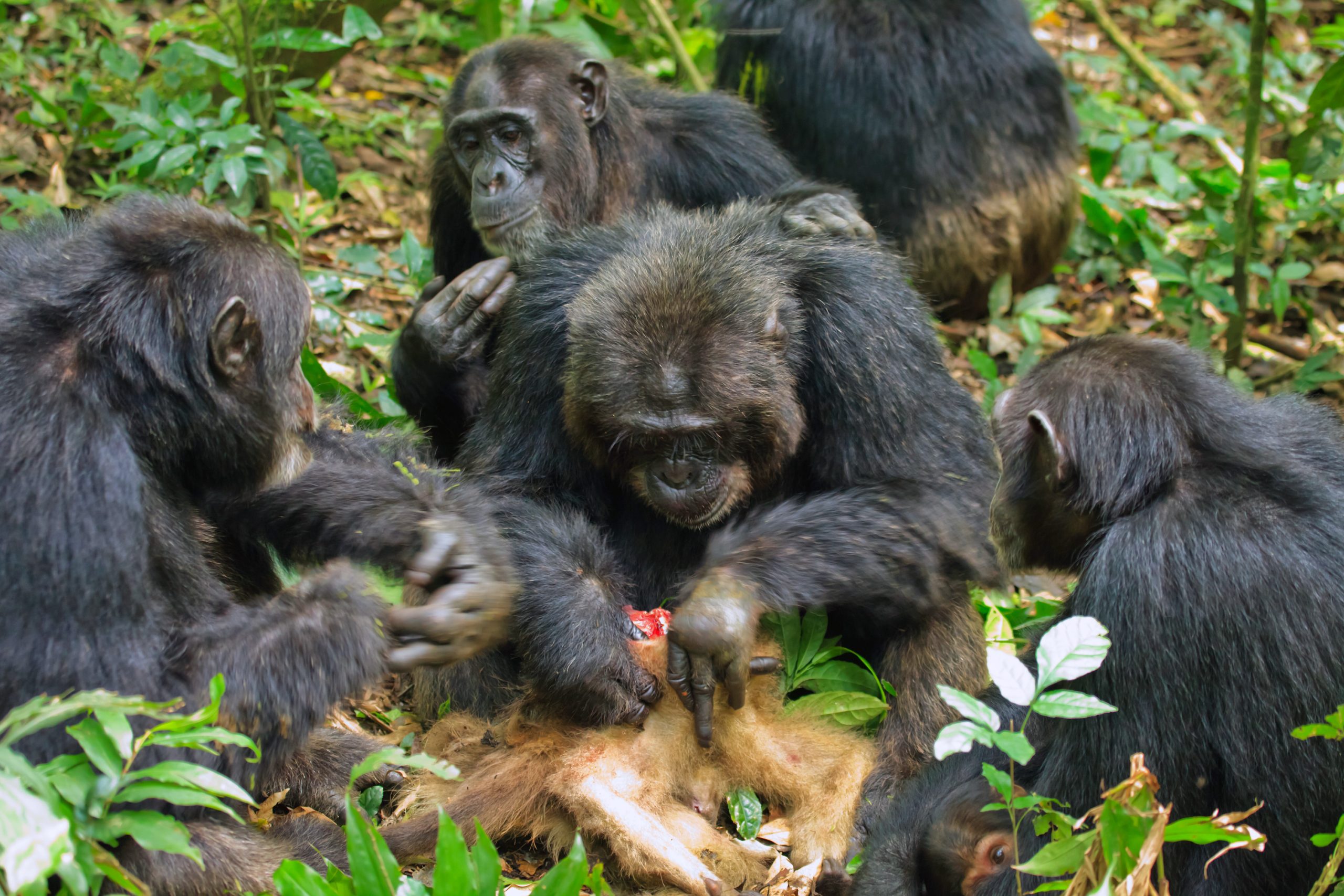
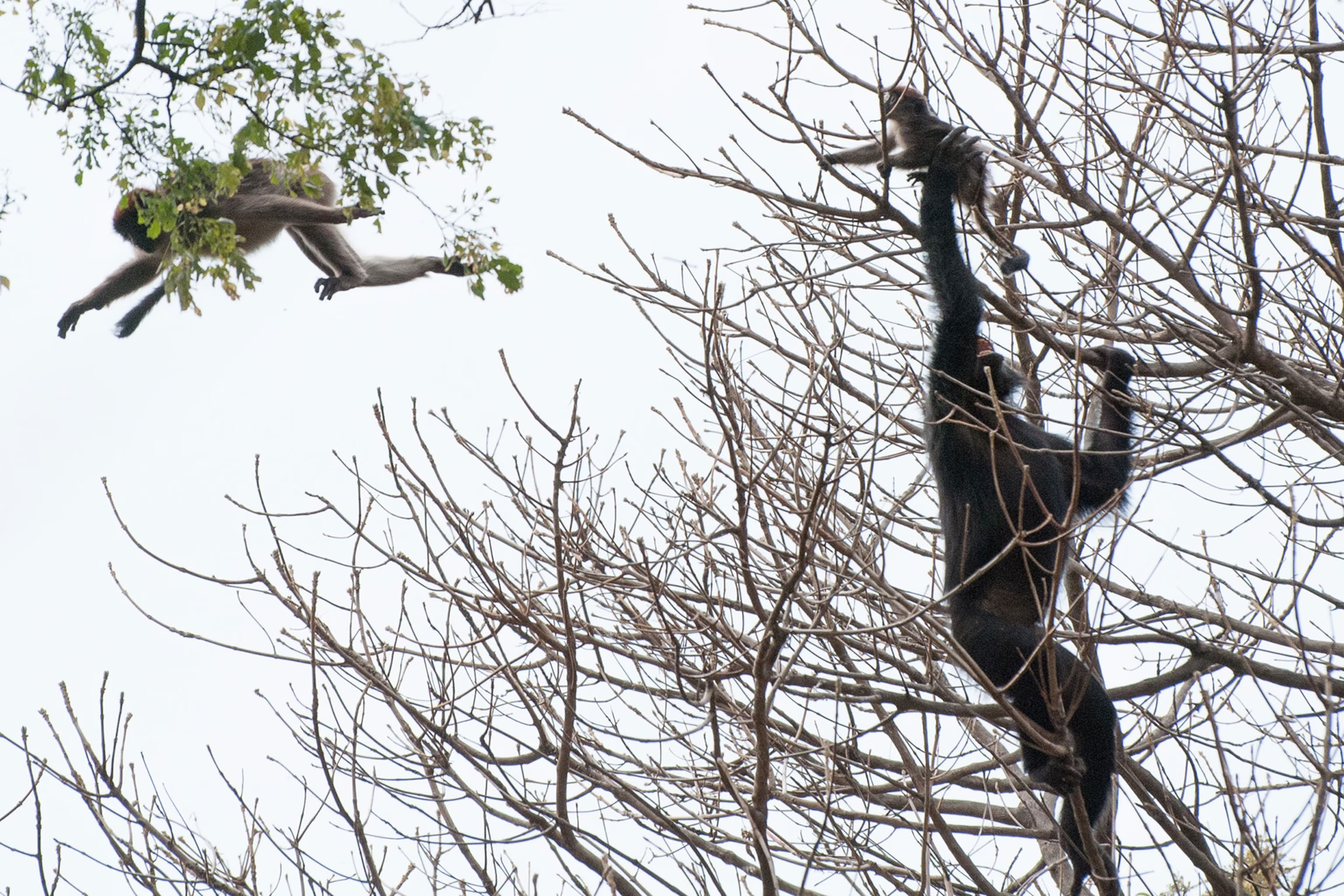
Chimpanzees genuinely hunt red colobus monkeys through coordinated group pursuit involving distinct cooperative roles, with different individuals driving, blocking, and ambushing prey through the forest canopy, a level of coordinated primate hunting strategy that made Kibale Forest chimpanzee-colobus predation one of the most extensively studied examples of non-human cooperative hunting anywhere in the world.
Why Chimpanzee Hunts Genuinely Involve Distinct Coordinated Roles
Detailed field research on chimpanzee hunting behaviour has genuinely identified several distinct roles individual hunters adopt during a coordinated colobus hunt, including drivers who push prey toward waiting ambushers, blockers who cut off potential escape routes through the canopy, and the individual who ultimately executes the capture, meaning a successful hunt genuinely depends on multiple chimpanzees performing different, complementary tasks simultaneously rather than simply chasing prey as an undifferentiated group.
How This Canopy-Based Hunting Genuinely Differs From Ground-Based Predator Strategy
Unlike savannah predators coordinating pursuit across open ground, chimpanzee hunting genuinely takes place through the three-dimensional complexity of forest canopy, meaning hunters must genuinely anticipate not just where prey will move horizontally but which branches and canopy gaps a fleeing colobus might use vertically, a considerably more complex spatial coordination challenge than ground-based group hunting typically requires.
Why Male Chimpanzees Genuinely Dominate Hunting Participation
Research has genuinely found adult male chimpanzees participate in colobus hunts considerably more frequently than females, and successful hunters genuinely gain real social status benefits from participation, including improved standing within the troop and, researchers have documented, increased mating opportunity, meaning hunting success genuinely carries social and reproductive consequences beyond the immediate nutritional benefit of the catch itself.
How Meat Sharing Genuinely Follows Complex Social Rules After a Successful Hunt
Once a hunt succeeds, meat distribution genuinely follows a complex social pattern rather than simple first-come consumption, with the successful hunter typically controlling initial access and genuinely using meat sharing strategically to reinforce alliances, reward cooperation from other hunt participants, or, researchers have documented, exchange meat for other social favours, meaning the hunt’s aftermath genuinely involves as much social complexity as the coordinated hunting itself.
Why Red Colobus Populations Genuinely Face Measurable Predation Pressure From This Behaviour
Long-term research at Kibale Forest has genuinely found chimpanzee predation represents a measurable, significant mortality factor for local red colobus populations, with some studied groups experiencing predation rates high enough to genuinely influence colobus group size and behaviour, meaning chimpanzee hunting isn’t simply an occasional curiosity but a genuine, ecologically significant predator-prey relationship shaping colobus population dynamics within the forest.
How Colobus Monkeys Genuinely Attempt to Defend Against Chimpanzee Hunting Parties
Red colobus genuinely aren’t passive prey, with adult males sometimes mounting active group defence against an approaching chimpanzee hunting party, including coordinated mobbing behaviour intended to drive hunters away before a hunt can fully develop, meaning the relationship genuinely involves real defensive counter-strategy from the prey species rather than colobus simply fleeing at the first sign of chimpanzee presence.
Where to Observe Chimpanzee Behaviour in East Africa
Chimpanzee hunting behaviour, while opportunistic and unpredictable, has been most extensively documented within Kibale Forest National Park, one of the world’s most thoroughly studied chimpanzee research sites.
Best Time of Year for Chimpanzee Trekking
Chimpanzees are trackable year-round given resident troop territories within Kibale Forest. See our Uganda best-time guide for how the country’s broader seasons shape wider trip planning.
Photographing Chimpanzee Behaviour
Capturing genuine hunting behaviour requires considerable luck given its opportunistic, unpredictable timing, though general troop social behaviour offers genuinely rich photographic opportunities during a standard trek. See our camera gear guide for broader equipment recommendations.
What to Pack for Chimpanzee Trekking
Standard forest trekking gear – sturdy shoes, rain protection, and neutral clothing – covers most of what chimpanzee trekking requires. If your wider itinerary includes gorilla trekking, our gorilla trekking packing list covers similar essentials.
Why This Research Genuinely Reshaped Broader Understanding of Chimpanzee Cognition
The detailed documentation of role-differentiated cooperative hunting genuinely became a landmark case study in primate cognition research, since demonstrating that chimpanzees could coordinate distinct, complementary roles toward a shared goal provided genuine evidence for a level of social planning and cooperation researchers previously associated primarily with human behaviour, considerably influencing how scientists understand the evolutionary roots of human cooperative strategy.
How Hunting Frequency Genuinely Varies Considerably Between Different Chimpanzee Populations
Not every studied chimpanzee population hunts colobus with the same frequency or intensity, with some communities engaging in considerably more frequent, coordinated hunting than others studied elsewhere in Africa, a genuine behavioural variation researchers believe reflects local prey availability, forest structure, and possibly culturally transmitted hunting technique passed down within specific communities rather than existing as a universal, fixed chimpanzee behaviour.
Why Young Chimpanzees Genuinely Learn Hunting Roles Through Extended Observation
Juvenile chimpanzees genuinely spend years observing successful hunts before actively participating themselves, gradually taking on more active roles as they mature and gain the physical coordination and spatial understanding effective hunting requires, meaning hunting competence genuinely develops through extended social learning rather than emerging as pure instinct at a fixed developmental age.
Comparing Chimpanzee Cooperative Hunting to Lion Pride Strategy
Where lion prides coordinate hunting primarily through positioning and timing across open terrain, chimpanzee hunting genuinely adds a further layer of role specialisation and canopy-specific spatial planning, a meaningfully more cognitively complex coordination challenge reflecting the different physical and cognitive demands of forest-canopy versus open-savannah cooperative hunting.
Why Guides Value Explaining This Behaviour to Visitors
Given how rarely visitors witness an actual hunt given its opportunistic, unpredictable timing, experienced guides genuinely value explaining the documented research behind chimpanzee hunting strategy whenever the topic arises, adding real appreciation for just how cognitively sophisticated chimpanzee social behaviour genuinely extends beyond the tool use and grooming interactions visitors more commonly observe.
Combining Chimpanzee Trekking With a Wider Primate Circuit
Chimpanzee behaviour observation pairs naturally with a broader primate-focused itinerary covering colobus and other monkey species within the same overall Kibale Forest visit.
Why Chimpanzee Tool Use and Hunting Behaviour Genuinely Reflect Related Cognitive Skills
Beyond hunting, the same population studied for coordinated colobus predation has also been documented using considerable tool-making skill, and researchers believe both behaviours genuinely draw on overlapping cognitive capabilities, planning, anticipating outcomes, and coordinating action toward a specific goal, meaning hunting and tool use aren’t entirely separate skill sets but genuinely related expressions of the species’ broader problem-solving intelligence.
How Seasonal Fruit Availability Genuinely Affects Hunting Frequency
Research has genuinely found chimpanzee hunting frequency increases during periods when preferred fruit is less abundant, suggesting hunting genuinely functions partly as a dietary supplement during leaner periods rather than occurring at a constant rate regardless of alternative food availability, meaning the behaviour genuinely responds to broader seasonal ecological pressure rather than existing as a fixed, unvarying activity.
Why This Predator-Prey Relationship Genuinely Shapes Colobus Group Structure Too
Given the measurable predation pressure chimpanzee hunting represents, red colobus groups in areas with active hunting chimpanzee communities genuinely tend to maintain somewhat different group size and vigilance patterns than colobus populations elsewhere facing less consistent predation risk, a behavioural adjustment broadly comparable to how vervet monkeys calibrate alarm and defensive behaviour based on locally relevant predator presence.
Why Long-Term Research Sites Genuinely Matter for Understanding This Behaviour
The considerable depth of current understanding around chimpanzee-colobus predation genuinely depends on decades of continuous, dedicated field research at specific long-term study sites, since the behaviour’s genuinely opportunistic, unpredictable timing means only sustained, extended observation across many years could reveal the consistent role patterns and social dynamics now documented, a research investment considerably longer, and more sustained, than most wildlife behavioural studies elsewhere genuinely require.
Why This Behaviour Genuinely Reframes How Visitors Should Think About Chimpanzee Trekking
Given how much genuine cognitive and social sophistication underlies chimpanzee behaviour beyond the more obviously charming grooming and play visitors typically witness during a standard trek, understanding the documented hunting research genuinely adds real depth to appreciating the species, framing chimpanzee trekking as an opportunity to observe one of the animal kingdom’s genuinely most complex social and cognitive systems in action.
Frequently Asked Questions
Do chimpanzees really hunt cooperatively with distinct roles?
Yes, genuinely so – research has documented drivers, blockers, and capturers performing different, complementary tasks during a coordinated hunt.
Why do male chimpanzees hunt more often than females?
Successful hunters gain real social status and, researchers have documented, increased mating opportunity, providing genuine incentive for male participation.
How is meat shared after a successful hunt?
The successful hunter typically controls initial access and strategically shares meat to reinforce alliances or reward cooperation.
Do colobus monkeys defend themselves against chimpanzee hunting parties?
Yes – adult males sometimes mount active group defence, including coordinated mobbing to drive hunters away before a hunt develops.
Where has this behaviour been most studied?
Kibale Forest National Park in Uganda is one of the world’s most thoroughly studied sites for chimpanzee hunting behaviour.
Ready to Plan Your Uganda Safari?
Whether chimpanzee trekking, wider primate viewing, or a full Uganda itinerary is your priority, our team can build a trip matched to your interests. Get in touch with our team below today and let’s start planning your complete Uganda safari itinerary together.


No comment