
How Do Wildebeest Know When to Migrate?
Wildebeest genuinely time their movement across the Serengeti-Mara ecosystem primarily in response to rainfall patterns and resulting grass growth, tracking where fresh, nutrient-rich grazing has recently sprouted rather than following any fixed calendar date, meaning the migration’s exact timing genuinely shifts from year to year based on actual weather conditions rather than remaining perfectly predictable across every single season.
Why Rainfall, Not Calendar Dates, Genuinely Drives Movement
Wildebeest genuinely respond to localised rainfall considerably more than any fixed seasonal schedule, since rain triggers fresh grass growth within days, and herds appear able to detect this new growth from a genuine distance, whether through visual cues, scent carried on the wind, or some combination of both, moving toward recently rained-on areas well before drier ground nearby has visibly changed, a responsiveness that explains why migration timing genuinely varies by weeks between different years depending on how rainfall patterns actually unfold.
How Researchers Believe Wildebeest Detect Distant Rainfall
Researchers studying migration triggers believe wildebeest may genuinely detect the smell of rain or fresh vegetation carried on wind currents from considerable distance, a sensory capability that would allow herds to begin moving toward a rained-on area before visibly reaching it themselves, and some researchers also point to genuine sensitivity to distant lightning and thunder as a possible early cue that rainfall, and the fresh grazing it will soon produce, is occurring somewhere within travelling range.
Why the Migration Genuinely Forms a Roughly Circular Annual Pattern
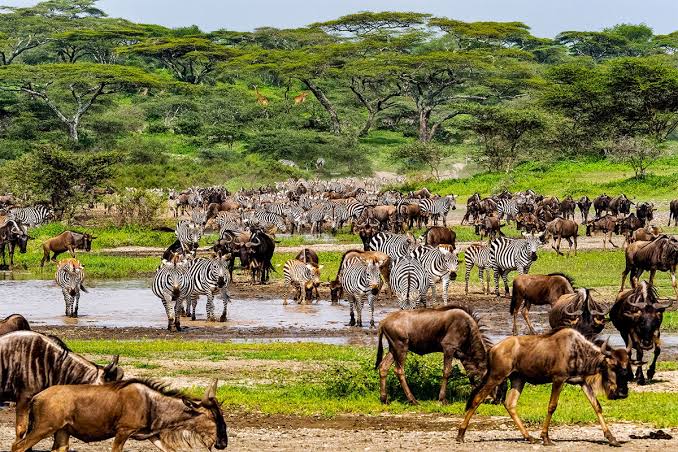
Despite year-to-year timing variation, the wildebeest migration genuinely follows a broadly consistent circular route across the Serengeti-Mara ecosystem, moving between southern short-grass plains during calving season and northern territory including the Masai Mara during drier months, a pattern shaped by the underlying rainfall gradient across the ecosystem rather than any innate calendar-based instinct alone.
How Grass Quality, Not Just Quantity, Genuinely Shapes Movement Decisions
Wildebeest genuinely favour short, newly sprouted grass over taller, more mature growth, since young grass carries considerably higher protein and mineral content critical for lactation and calf development, meaning herds don’t simply move toward any available grazing but specifically track the freshest, most nutritionally valuable grass regrowth, a selectivity that researchers believe reflects genuine nutritional optimisation rather than random wandering toward whatever grass happens to be nearest.
Why the Southern Serengeti’s Volcanic Soil Genuinely Anchors Calving Season Timing
The migration’s calving season, when the overwhelming majority of calves are born within a remarkably tight window, genuinely centres on the southern Serengeti’s mineral-rich volcanic soil plains, since grass grown in this specific soil type carries genuinely higher calcium and phosphorus content critical for pregnant and nursing females, meaning this particular leg of the migration’s timing is anchored considerably more to soil-driven grass quality than to rainfall pattern alone.
How River Crossings Genuinely Reflect Water-Driven Movement Decisions
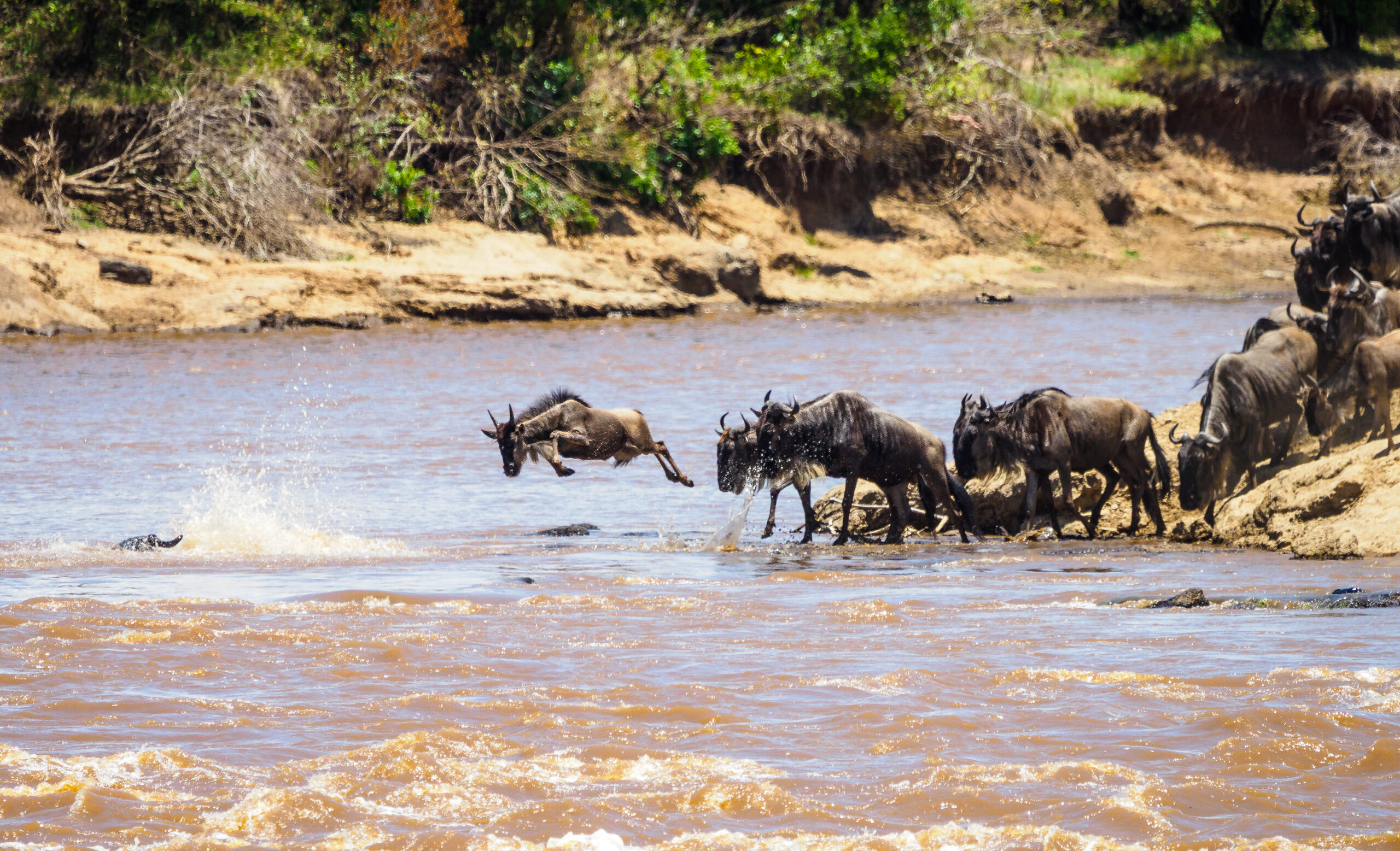
The migration’s famous river crossings, most notably at the Mara River, genuinely occur when herds reach a physical barrier separating current grazing ground from grass they’ve detected or anticipate further ahead, meaning crossing timing reflects a combination of accumulated herd movement pressure and genuine grazing necessity rather than any predetermined crossing schedule, explaining why exact crossing dates and locations genuinely shift from year to year even along a broadly consistent overall route.
Where to Observe the Migration in East Africa
The migration is genuinely visible across the Serengeti-Mara ecosystem throughout the year, with specific herd location depending on the current season and recent rainfall pattern.
Best Time of Year for Migration Viewing
Migration timing genuinely varies year to year based on rainfall, though broad seasonal patterns still guide realistic planning. See our regional best-time guide for how East Africa’s broader seasonal patterns affect wider trip planning.
Photographing the Migration
Capturing herds on the move, or a river crossing in progress, offers genuinely dramatic photographic opportunities though exact timing requires flexibility given how unpredictable specific movement dates can be. See our camera gear guide for broader equipment recommendations.
What to Pack for a Migration-Focused Safari
Standard game drive gear – neutral clothing, sun protection, and binoculars – covers most of what migration viewing requires. If your wider itinerary includes gorilla trekking, our gorilla trekking packing list covers that portion separately.
Why Herd Leadership During Migration Genuinely Remains Somewhat Unclear
Unlike species with a clearly identifiable dominant leader directing group movement, researchers studying wildebeest migration have found genuine difficulty identifying consistent individual leadership, with movement direction instead appearing to emerge from a more collective, distributed process where enough individuals moving toward better grazing gradually pulls the wider herd along, a genuinely decentralised decision-making pattern researchers continue actively studying to better understand.
How Climate Change Genuinely Threatens Migration Predictability
Researchers studying long-term rainfall data across the Serengeti-Mara ecosystem have found genuinely measurable shifts in rainfall timing and intensity over recent decades, changes that directly affect grass growth patterns the migration depends on, meaning climate change represents a genuine, ongoing threat to the migration’s traditional timing and route consistency, a concern conservationists increasingly factor into long-term ecosystem management planning across the shared Kenya-Tanzania landscape.
Why Predator Populations Genuinely Time Their Own Behaviour Around Migration Movement
Given how directly migration timing shapes prey availability, resident predator populations, including lion prides, genuinely adjust territorial range and hunting behaviour to track the migration’s seasonal presence, meaning the migration’s own rainfall-driven timing indirectly shapes predator behaviour patterns across the entire shared ecosystem, not just wildebeest movement itself.
Comparing Wildebeest Migration Timing to Zebra Movement
While zebra often migrate alongside wildebeest along broadly the same route, researchers have found zebra genuinely tend to move slightly ahead of wildebeest herds in some sections, since zebra tolerate taller, more mature grass that wildebeest generally avoid, meaning zebra effectively “open up” grazing ground that wildebeest then follow into once the taller growth has been grazed down to the shorter, more nutritionally preferred stage.
Why Guides Value Explaining This Rainfall-Driven Logic to Visitors
Given how often visitors expect migration timing to follow a fixed, predictable calendar, experienced guides genuinely value explaining the underlying rainfall and grass-quality logic driving actual herd movement, helping set realistic expectations while adding genuine appreciation for just how responsive and dynamic the migration’s real-time decision-making process actually is.
Combining Migration Viewing With a Wider Serengeti-Mara Circuit
Migration viewing pairs naturally with broader predator and Big Five viewing within the same overall Serengeti-Mara itinerary, giving travelers genuine insight into the ecosystem’s full interconnected wildlife dynamic.
Why the Migration’s Sheer Scale Genuinely Depends on Ecosystem Connectivity
The migration genuinely involves well over a million wildebeest moving across a shared, largely unfenced landscape spanning both Tanzania and Kenya, and researchers emphasise that this scale is only possible because the ecosystem remains genuinely connected across the international border, meaning any future habitat fragmentation, roads, fencing, or agricultural expansion cutting across traditional migration corridors, would genuinely threaten the herd’s ability to follow rainfall-driven grazing patterns the way it currently does.
How Crocodile Predation at River Crossings Genuinely Interacts With Migration Timing
Because crocodile feeding cycles at major crossing points are themselves genuinely timed around when wildebeest are expected to cross, the two species’ behaviour has become measurably interlinked over time, with crocodiles concentrating hunting effort specifically during the narrow annual window when crossing activity peaks, a genuine predator-prey timing relationship layered directly on top of the migration’s underlying, genuinely rainfall-driven movement pattern across the wider, shared Serengeti-Mara ecosystem itself.
Why Calf Survival Genuinely Depends on This Precisely Timed Nutritional Window
Calves born during the tightly synchronised southern plains calving season genuinely need the volcanic soil’s elevated calcium and phosphorus content during their first critical weeks to develop the bone density and strength required to keep pace with the herd once broader migration movement resumes, meaning the precise timing and location of calving isn’t simply about safety in numbers alone but genuinely reflects a real nutritional necessity tied directly to herd movement demands that begin almost immediately after birth.
Frequently Asked Questions
What actually triggers wildebeest to start migrating?
Primarily rainfall and the resulting fresh grass growth, which herds appear able to detect from considerable distance rather than following a fixed calendar.
Why does migration timing vary from year to year?
Because it responds to actual rainfall patterns, which genuinely shift year to year rather than following a perfectly predictable annual schedule.
Why does calving season happen in the southern Serengeti specifically?
The region’s volcanic soil produces grass with higher calcium and phosphorus content, critical for pregnant and nursing females.
Do wildebeest have a single leader directing the migration?
Not clearly identified – movement appears to emerge from a more collective, distributed decision-making process among the herd.
Is climate change affecting migration timing?
Yes, genuinely so – measurable shifts in rainfall patterns are directly affecting the grass growth the migration depends on.
Ready to Plan Your East Africa Safari?
Whether witnessing the migration firsthand, wider predator viewing, or a full East Africa itinerary is your priority, our team can build a trip matched to your interests. Get in touch with our team below today and let’s start planning your complete safari itinerary together.


No comment