
Oribi of Lake Mburo National Park
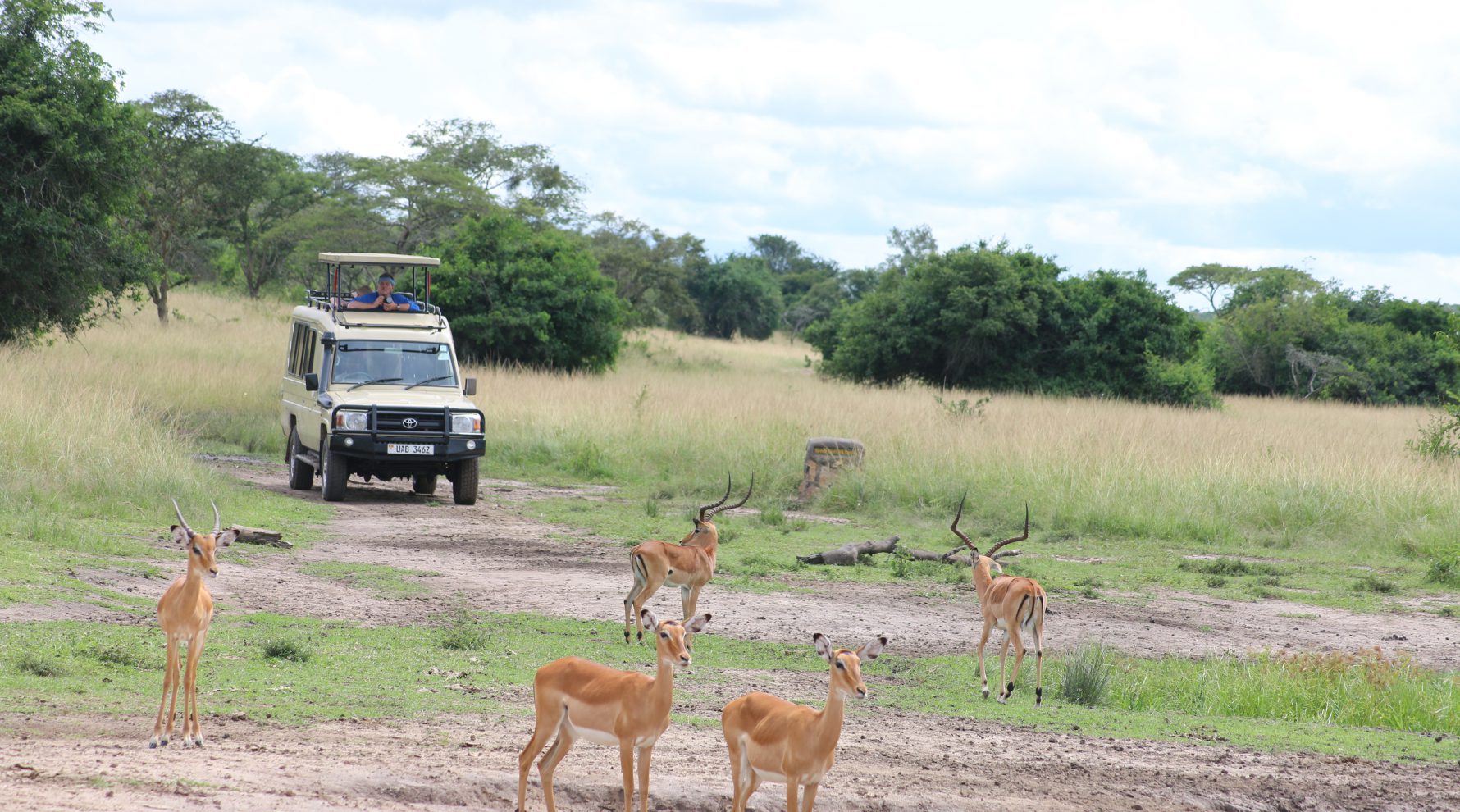
Oribi dot Lake Mburo National Park’s open grassland in genuinely small, delicate pairs, their black facial gland patches and distinctive stiff-legged pronking display setting them apart from the park’s larger, far more numerous impala and zebra sharing the same short-grass terrain.
Getting to Know Uganda’s Smallest Common Antelope
Oribi stand considerably shorter than impala or kob, with a slender, delicate build genuinely suited to quick, agile movement through short grassland rather than the sustained speed larger antelope rely on. Their small size, combined with a naturally alert, easily startled temperament, means sightings often involve a brief glimpse before the animal bounds away into slightly taller cover rather than an extended, relaxed viewing.
Why Lake Mburo’s Open Terrain Genuinely Suits Oribi
Oribi require genuinely short, closely cropped grassland specifically, since their small size and reliance on early visual predator detection depend on maintaining clear sightlines across their territory, and Lake Mburo’s compact, well-grazed grassland areas provide exactly this habitat more consistently than the taller grass typical of parts of Uganda’s larger savannah parks. This specific habitat requirement means oribi distribution within the park closely tracks the shortest-grass patches rather than being spread evenly across all open ground.
Identifying Oribi
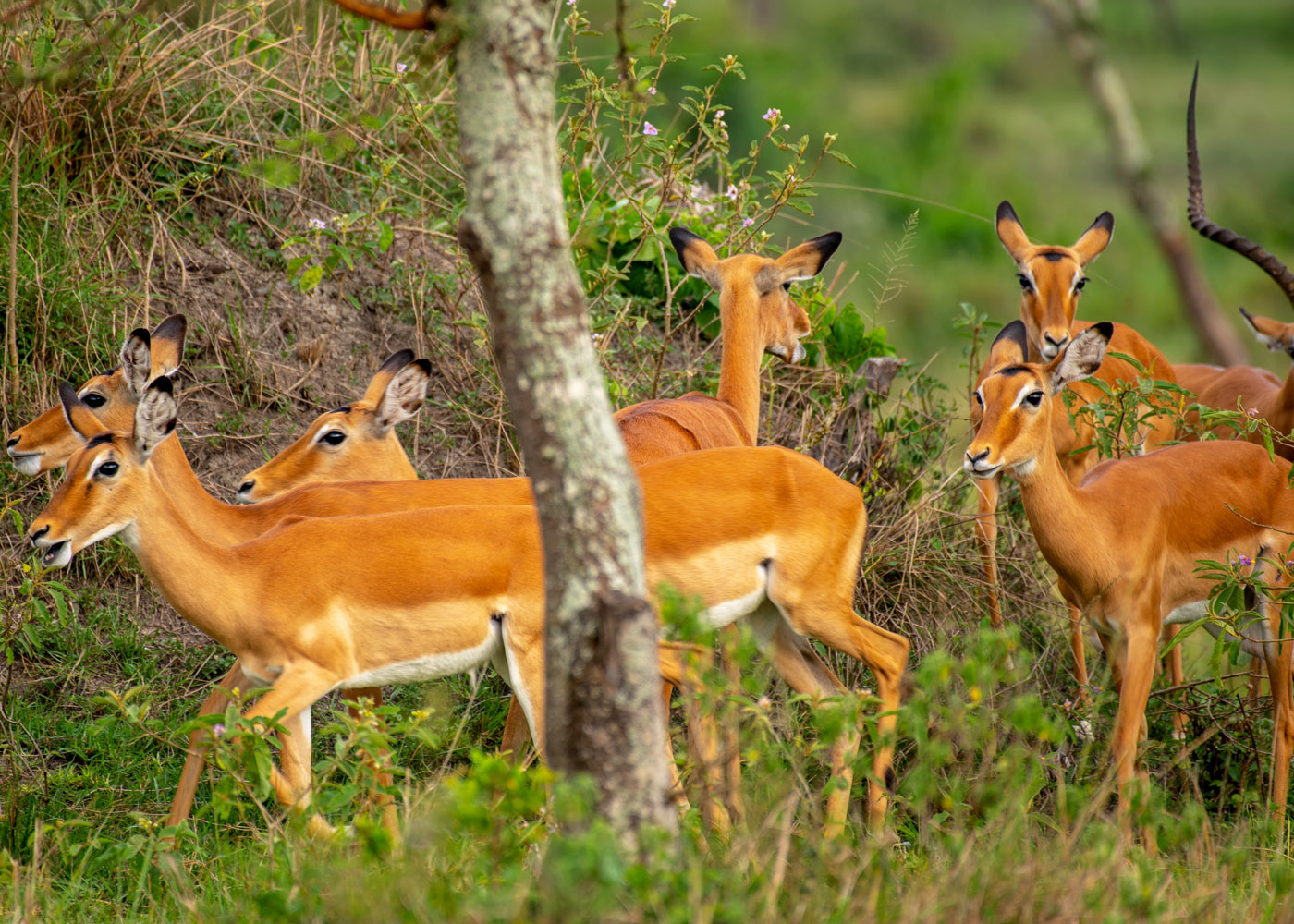
Oribi carry a genuinely distinctive black scent gland patch below each ear, a visible marking that helps distinguish them from Lake Mburo’s other small antelope at a glance, along with short, straight horns present only on males and an overall tan-and-white colouring providing effective camouflage against dry season grass.
The Pronking Display: A Genuine Warning Signal
When startled, oribi perform a genuinely distinctive stiff-legged bouncing display called pronking, jumping repeatedly on all four legs before bolting into cover, a behaviour thought to signal fitness and alertness to a potential predator, discouraging pursuit before it even begins by essentially demonstrating the animal is too strong and alert to be worth chasing. This differs meaningfully from the flat-out sprint escape favoured by larger, faster antelope species sharing the same grassland.
Genuinely Monogamous Pairs Rather Than Larger Herds
Oribi typically live in monogamous pairs or small family groups, a genuinely different social structure from the massive herds impala and Uganda kob form elsewhere in the country, and this more solitary lifestyle, combined with their small size and naturally cautious behaviour, is part of why oribi require more deliberate, patient searching than Lake Mburo’s larger, more conspicuous grazing species.
Territorial Behaviour and Scent Marking
Oribi pairs maintain genuinely well-defined territories marked through their distinctive facial scent glands, depositing scent on grass stems throughout their home range to signal boundaries to neighbouring pairs, a consistent marking behaviour that helps minimise direct territorial conflict between established pairs occupying adjacent patches of the park’s grassland.
Oribi and Lake Mburo’s Predators
Given the park’s genuine absence of lion and reduced elephant density, oribi here face somewhat less predation pressure than populations sharing habitat with a full predator guild elsewhere in Uganda, though leopard and occasional python still present real risk to a species this small, meaning vigilance and rapid flight remain the primary survival strategy regardless of the reduced overall pressure.
Best Time of Year for Oribi Sightings
Oribi are visible in Lake Mburo year-round given their resident status, making seasonal timing genuinely less critical than for many other Uganda wildlife sightings. See our Uganda best-time guide for how the country’s broader dry and wet seasons still shape wider trip planning.
Self-Drive vs Guided Safaris
Lake Mburo’s compact size and good road network make self-driving genuinely feasible, though locating oribi specifically genuinely benefits from guide knowledge given how easily their small size and cautious behaviour can go unnoticed among the park’s more conspicuous impala herds.
Photographing Lake Mburo’s Oribi
Oribi captured mid-pronk, bouncing stiffly across open grassland, offer genuinely charming, distinctive photographic opportunities distinct from more static antelope sightings. See our camera gear guide for broader equipment recommendations.
What to Pack for a Lake Mburo Safari
Standard game drive gear – neutral clothing, sun protection, and binoculars – covers most of what the park requires, and comfortable walking shoes are worth packing given the park’s unique walking safari option. If your wider itinerary includes gorilla trekking, our gorilla trekking packing list covers that portion separately.
Combining Oribi Viewing With Gorilla Trekking
Given its position en route to Bwindi, Lake Mburo pairs naturally with gorilla trekking, letting travelers break up the long drive south with a genuinely worthwhile wildlife stop rather than treating the journey as pure transit time.
Getting to Lake Mburo National Park
Lake Mburo sits conveniently along the main road between Kampala and Bwindi Impenetrable National Park, roughly three to four hours from the capital, making it a natural stopover for travelers heading toward gorilla trekking rather than a dedicated separate trip.
Calving and Early Life in Short Grassland
Oribi calves are hidden in slightly taller grass for their first weeks of life, a concealment strategy well suited to their short-grassland habitat, with the mother visiting periodically to nurse rather than keeping the calf in constant close proximity the way herd-based species often do. This hiding strategy genuinely improves calf survival odds given the predation pressure young oribi face from Lake Mburo’s leopard population and occasional larger raptors capable of taking a small calf.
Why Oribi Prefer Genuinely Short Grass Over Taller Cover
Unlike many other Lake Mburo antelope species that tolerate taller, denser vegetation without issue, oribi genuinely require the shortest available grassland specifically, since their entire early-warning survival strategy depends on maintaining clear sightlines across their territory, meaning even moderately overgrown patches within the park become genuinely unsuitable habitat that oribi will actively avoid regardless of how much food might be available there.
Oribi Vocalisations and How They Warn Each Other
Oribi communicate through a distinctive high-pitched whistling alarm call, alerting a mate or nearby family members to potential danger before the pronking escape display even begins, adding a genuinely useful audible early-warning layer to their overall predator-avoidance strategy across Lake Mburo’s open grassland habitat.
Comparing Lake Mburo’s Oribi to Murchison Falls’ Population
Oribi also occur at Murchison Falls, though Lake Mburo’s genuinely more compact, consistently short-grazed terrain and reduced predator pressure given the absence of lion make sightings here somewhat more reliable and relaxed than in Murchison’s considerably larger, more predator-dense northern savannah sector.
Why Guides Value Pointing Out Oribi Behaviour
Experienced Lake Mburo guides frequently note that oribi sightings genuinely reward closer attention than a passing glance suggests, particularly the pronking display when a pair is startled, offering a genuinely different, more delicate behavioural encounter than the park’s larger, more commonly discussed eland and zebra.
Best Lodges for Oribi and Small Antelope Viewing
Properties positioned along the park’s main game-viewing circuit genuinely simplify logistics for travelers specifically prioritising oribi and wider small-antelope viewing, cutting down on drive time before and after game drives. Discussing current sighting information directly with your operator, alongside the park’s giraffe activity, is genuinely worth doing before finalising your complete Lake Mburo itinerary.
Why First-Time Visitors Are Often Surprised by Oribi
Many travelers focused primarily on Lake Mburo’s zebra and giraffe are genuinely surprised to learn such a delicate, small antelope species shares the same grassland, adding unexpected variety to a park already known for its abundant, more conspicuous wildlife.
Combining Oribi Viewing With a Wider Uganda Circuit
Beyond its role as a stopover en route to Bwindi, Lake Mburo also works as part of a longer circuit including Murchison Falls or Kibale’s chimp trekking, giving travelers a genuinely varied Uganda experience spanning antelope diversity, Big Five wildlife, and forest primates within a single well-planned trip.
What to Look and Listen For
Scanning the shortest-grass patches near slightly taller cover, and listening for the alarm whistle, genuinely improves the odds of a rewarding oribi encounter compared to simply hoping for a chance sighting while focused on larger wildlife.
Why Oribi Rarely Draw the Same Attention as Larger Grazers
Because a single oribi sighting typically lasts only seconds before the pair bounds off, and because the species lacks the sheer visual impact of a giraffe or zebra herd, oribi genuinely tend to register as a minor footnote on a game drive report rather than a headline sighting, even though their unusual monogamous social structure and distinctive pronking display arguably make them one of the more behaviourally interesting smaller species Lake Mburo has to offer.
Frequently Asked Questions
What is “pronking” behaviour?
A distinctive stiff-legged jumping display oribi perform when startled, thought to signal fitness and discourage predator pursuit before it even begins.
How do I identify an oribi?
Look for a distinctive black scent gland patch below each ear, a smaller build than impala, and short straight horns present only on males.
Do oribi live in herds?
No, genuinely not – they typically live in monogamous pairs or small family groups rather than the larger herds impala form.
Why does Lake Mburo suit oribi well?
The park’s short, closely cropped grassland gives oribi the clear sightlines their early-warning survival strategy specifically depends on.
What’s the best time of year to see oribi in Lake Mburo?
Year-round given their resident status, making seasonal timing genuinely less critical than for other Uganda wildlife.
Ready to Plan Your Lake Mburo Safari?
Whether the park’s delicate oribi, its unique zebra population, or a stop en route to gorilla trekking is your priority, our team can build an itinerary matched to your interests. Get in touch with our team below today and let’s start planning your complete Uganda safari itinerary together.

No comment