






How Do Chameleons Change Colour? The Real Reason
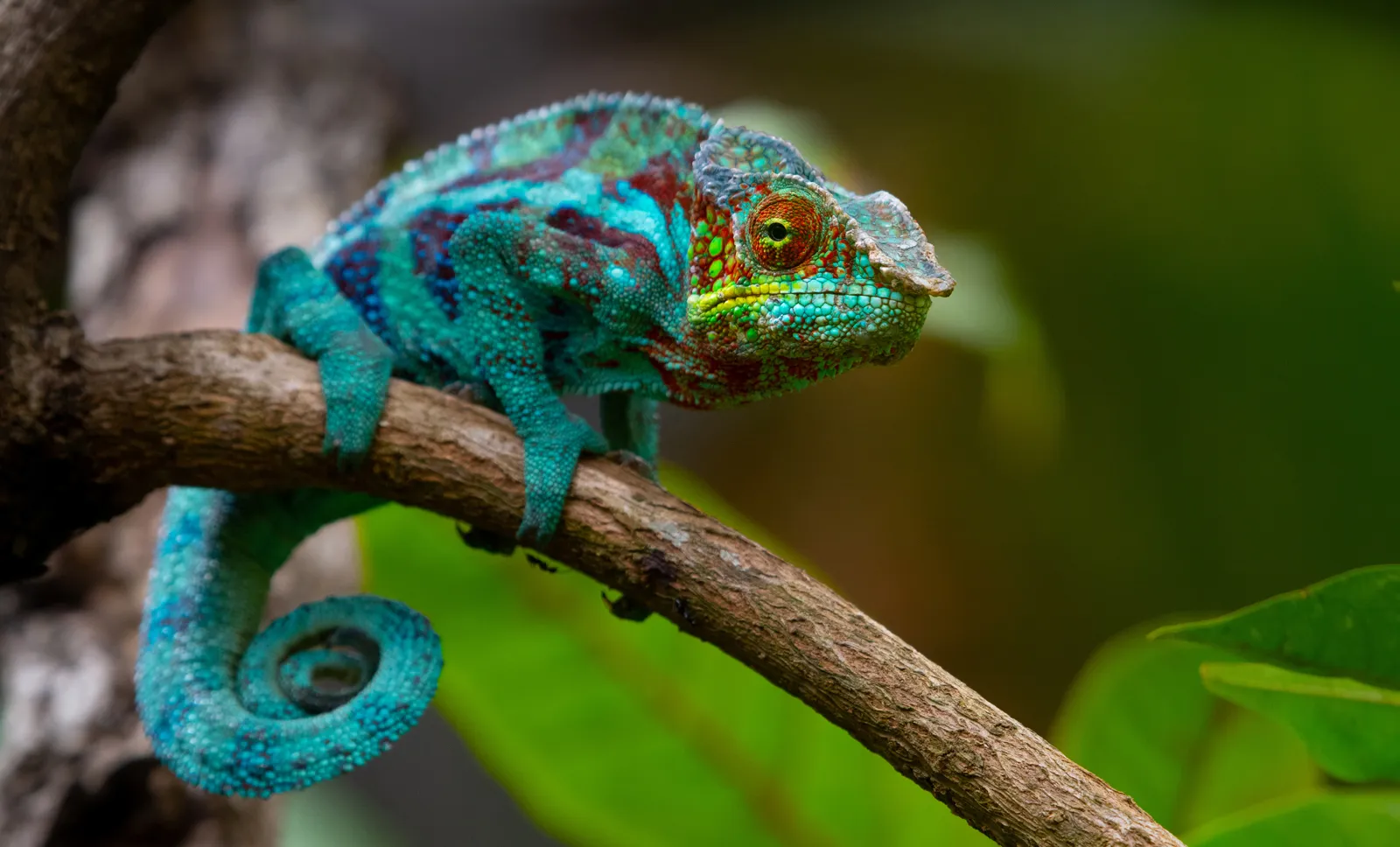
Chameleons genuinely change colour primarily to communicate mood, temperature, and social status rather than to camouflage against a specific background, a discovery that overturned decades of popular assumption once researchers actually worked out the physical mechanism, layered nanocrystals in the skin that the animal can actively adjust, behind the colour shift itself.
The Real Mechanism: Nanocrystals, Not Pigment Mixing
For years the popular explanation assumed chameleons simply mixed and moved pigment granules within skin cells to blend with surroundings, but research published by Swiss scientists in 2015 identified the actual mechanism: chameleons possess a layer of specialised skin cells called iridophores containing a lattice of tiny guanine nanocrystals, and by actively relaxing or tensing this layer, the animal changes the spacing between crystals, which in turn changes which wavelengths of light reflect back to an observer’s eye. This is genuinely a structural colour mechanism, similar in principle to how a butterfly wing or peacock feather produces colour through microscopic structure rather than pigment alone, not the simple pigment-shuffling most people assume.
Why Camouflage Was Never the Main Driver
Chameleons are already remarkably well camouflaged in their resting, baseline colouring, typically shades of green or brown matching their forest or scrubland habitat, and genuinely dramatic colour shifts, bright yellows, oranges, and blues, occur specifically during social encounters rather than when an individual is simply trying to hide from a predator, direct behavioural evidence that communication, not concealment, drives the most visible colour changes.
What Colour Actually Communicates: Mood and Dominance
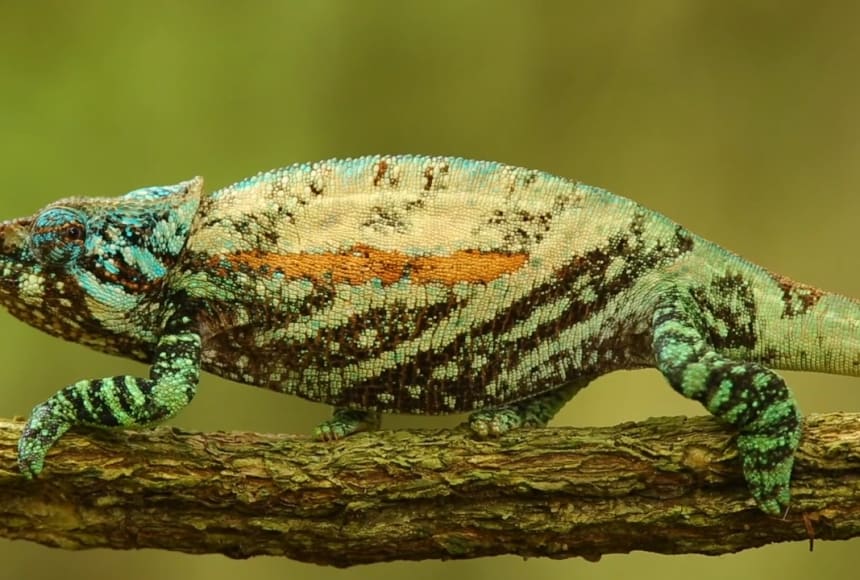
A male chameleon encountering a rival genuinely displays brighter, more saturated colours and bold patterning specifically to signal dominance and readiness to defend territory, while a submissive or stressed individual typically shifts toward duller, darker tones, meaning colour intensity functions as a genuinely readable signal of an individual’s current social and emotional state to any other chameleon, and to an observant human, watching.
Temperature Regulation as a Second Genuine Function
Beyond social signalling, chameleons also use colour change for thermoregulation, darkening to absorb more heat during cooler periods and lightening to reflect heat and stay cooler when temperatures rise, a genuinely practical secondary function operating through the same nanocrystal mechanism but triggered by temperature rather than social context.
Why Males Display More Dramatically Than Females
Male chameleons genuinely possess a considerably wider colour range and display more dramatically than females in most species, reflecting the trait’s importance in male-to-male competition and female mate choice, with females showing measurable preference for males capable of the brightest, most vivid displays, similar in underlying logic to how mane darkness signals fitness in male lions.
How Fast the Colour Change Actually Happens
A full colour shift can genuinely occur within seconds once triggered, the nanocrystal lattice adjusting its spacing rapidly enough that researchers filming the process at high speed have captured the transition unfolding in real time, a genuinely fast physiological response compared to most other animal signalling mechanisms that rely on slower processes like hormone-driven physical growth.
Where to See Chameleons in East Africa
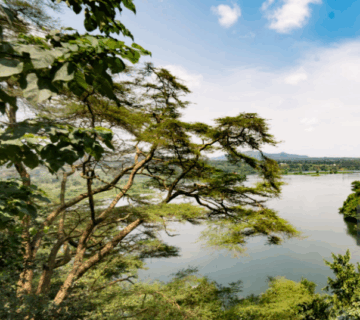
Chameleons are genuinely widespread across East Africa’s forested and woodland habitats, including Uganda’s Kibale Forest, where guided walks focused on smaller, often-overlooked wildlife can turn up several species alongside the forest’s better-known primates.
Best Time of Year and Time of Day for Chameleon Viewing
Chameleons are genuinely easier to spot at night using a torch, since their pale nighttime colouring stands out clearly against dark foliage, making a guided night walk considerably more productive than daytime searching alone. See our Uganda best-time guide for how the country’s broader seasons affect wider trip planning.
Photographing Chameleon Colour Change
Capturing a chameleon mid-transition, or the contrast between its resting and display colouring, requires genuine patience and a macro-capable lens given the animal’s small size. See our camera gear guide for broader equipment recommendations.
What to Pack for Forest Walks and Night Searches
Standard forest trekking gear – sturdy shoes, rain protection, and neutral clothing – covers most of what a guided walk requires, and a torch is genuinely essential for a dedicated night search. If your wider itinerary includes gorilla trekking, our gorilla trekking packing list covers similar essentials.
How the 2015 Discovery Actually Overturned Decades of Assumption
Prior to the Swiss research team’s detailed microscopic and optical analysis, the pigment-based explanation had gone largely unchallenged in popular science for decades, and the study’s key contribution was directly imaging the iridophore crystal lattice under different states and demonstrating, with genuine physical measurement, that crystal spacing changed measurably between a resting and excited chameleon, providing hard structural evidence rather than inference from colour observation alone.
Two Layers of Iridophores, Two Different Jobs
Researchers identified that chameleons actually possess two distinct layers of these crystal-containing cells: a superficial layer responsible for the rapid, dramatic colour shifts used in social signalling, and a deeper layer containing larger crystals that primarily reflects near-infrared light, functioning as a passive heat-management system helping the animal avoid overheating regardless of its surface display colour, meaning the species genuinely runs two separate structural-colour systems simultaneously for two different biological purposes.
Why Some Chameleon Species Show a Far Wider Colour Range Than Others
Species living in more socially complex populations with frequent male-to-male competition, and correspondingly stronger sexual selection pressure, have generally evolved a genuinely wider achievable colour range and faster transition speed than species living more solitary lives with less frequent direct social encounters, direct evidence linking the mechanism’s evolutionary elaboration to how socially significant colour signalling actually is for a given species.
How Stress and Illness Show Up in Colour
Beyond mood and dominance signalling, a chameleon in genuinely poor health or under sustained stress typically displays duller, darker, less vivid colouring than a healthy individual, meaning experienced keepers and field researchers alike can use colour as one practical, non-invasive indicator of an individual’s general condition without needing direct physical examination.
Why Chameleons Can Also Change Colour Independently on Each Side
Genuinely remarkably, chameleons can display different colour patterns on each side of the body simultaneously, particularly during a territorial confrontation where a male might show an aggressive display pattern toward a rival on one flank while showing calmer colouring on the side facing away, a level of independent bilateral control not documented in most other colour-changing animals and made possible by the localised nature of the iridophore mechanism across different skin regions.
Comparing Chameleon Colour Change to Other African Wildlife Displays
Unlike flamingo colouring, which develops slowly through diet over weeks or months, chameleon colour change is genuinely immediate and reversible within seconds, making it a fundamentally different category of biological colour signal despite both ultimately relying on how light interacts with specialised tissue structures.
Why Guides Genuinely Enjoy Correcting This Common Misconception
The camouflage explanation is genuinely so widely believed that experienced guides at destinations like Kibale Forest regularly field the assumption from first-time visitors, and correcting it with the actual social-signalling and thermoregulation explanation tends to genuinely deepen appreciation for a species many travelers otherwise treat as a minor curiosity alongside the forest’s larger, more famous primates.
What to Look For During a Night Walk Search
Beyond simply spotting a chameleon’s pale nighttime silhouette, watching for slow, deliberate movement and the animal’s genuinely distinctive independently rotating eyes, which can track two different objects simultaneously, adds real behavioural interest to a search that might otherwise focus purely on colour.
Combining a Chameleon Search With Wider Forest Wildlife
A guided night walk searching for chameleons often turns up other genuinely interesting nocturnal species too, adding a rewarding secondary activity alongside standard daytime chimpanzee trekking within the same overall Kibale itinerary.
Getting to Kibale Forest National Park
Kibale sits within Uganda’s western tourism circuit, commonly combined with Queen Elizabeth National Park and Bwindi gorilla trekking on a longer, wider itinerary.
Frequently Asked Questions
Do chameleons change colour mainly to camouflage?
No, genuinely not primarily – the most dramatic colour shifts occur during social encounters to signal mood and dominance, not to hide from predators.
How does the colour change actually work?
Through nanocrystal layers in the skin that the chameleon actively adjusts, changing which light wavelengths reflect back, a structural rather than pigment-based mechanism.
Why do male chameleons display more colour than females?
Colour range plays a genuine role in male-to-male competition and female mate choice, similar to other fitness-signalling traits in African wildlife.
Can chameleons also use colour to regulate temperature?
Yes, genuinely so – darkening absorbs more heat in cooler conditions, while lightening helps reflect heat during warmer periods.
When is the best time to spot chameleons on safari?
At night with a torch – their pale nighttime colouring stands out clearly against dark foliage, making guided night walks considerably more productive.
Ready to Plan Your Uganda Safari?
Whether spotting chameleons on a guided forest walk, chimpanzee trekking, or a full Uganda itinerary is your priority, our team can build a trip matched to your interests. Get in touch with our team below today and let’s start planning your complete Uganda safari itinerary together.



No comment