
Banded Mongoose of Queen Elizabeth National Park
Banded mongoose move through Queen Elizabeth National Park’s grassland in genuinely large, tightly coordinated packs, their cooperative social structure and constant, energetic foraging behaviour making them one of the park’s more consistently entertaining small carnivore sightings alongside its famous tree-climbing lions.
A Genuinely Social Small Carnivore
Banded mongoose live in genuinely large family groups, often numbering twenty or more individuals, considerably more social than many other African mongoose species that live solitary or in smaller pairs. This large pack structure gives banded mongoose sightings a genuinely dynamic, busy quality distinct from the more solitary small carnivores found elsewhere in the park.
Identifying Banded Mongoose
Banded mongoose carry a genuinely distinctive series of dark bands across their lower back and rump, contrasting against an otherwise greyish-brown coat, making identification straightforward once a pack is spotted moving through grassland. Their compact size and constant, busy movement further distinguish them from Queen Elizabeth’s larger predator species.
Where to Find Banded Mongoose in Queen Elizabeth
Banded mongoose range across the park’s open grassland and woodland edges, often denning in abandoned termite mounds that provide secure shelter for the pack. Their genuinely bold, active foraging behaviour during daylight hours makes sightings here reliably frequent throughout a standard game drive.
Cooperative Pack Behaviour
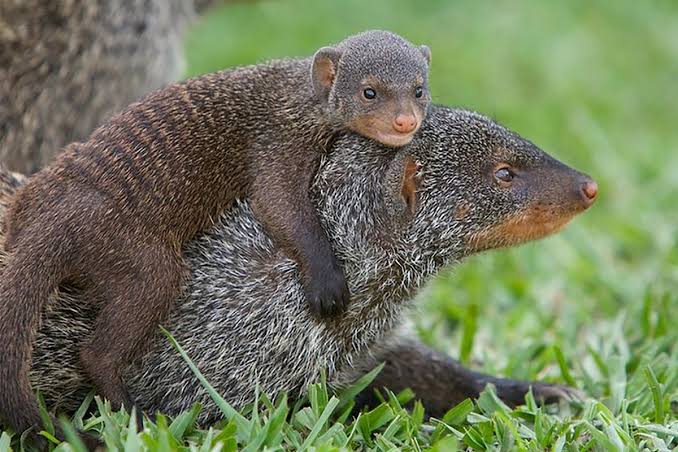
Banded mongoose packs display genuinely remarkable cooperative behaviour, including coordinated foraging, shared pup-rearing duties among multiple females, and collective defence against predators, with pack members working together to mob and drive off threats considerably larger than any single individual could confront alone. This cooperation reflects one of the more socially sophisticated small carnivore systems found in East Africa.
Why Banded Mongoose Hunt in Groups
Foraging as a coordinated group allows banded mongoose packs to flush out and capture prey, including insects, small reptiles, and rodents, more efficiently than solitary hunting would allow, while also providing genuine collective vigilance against the park’s larger predators during vulnerable ground-level foraging.
Banded Mongoose and Queen Elizabeth’s Predators
Despite their small size, banded mongoose packs display genuinely fearless collective defence when threatened, sometimes mobbing and driving off snakes or birds of prey that would easily overpower a lone individual, a behaviour that offers a genuinely compelling glimpse into the power of coordinated group defence.
Best Time of Year for Banded Mongoose Sightings
Banded mongoose are visible in Queen Elizabeth year-round given their resident status, making seasonal timing genuinely less critical than for many other Uganda wildlife sightings. See our Uganda best-time guide for how the country’s broader dry and wet seasons still affect wider trip planning.
Self-Drive vs Guided Safaris for Mongoose Viewing
Banded mongoose are among the more straightforward Queen Elizabeth species to locate given their large pack size and active daytime foraging behaviour, though a guided safari still adds real value in interpreting pack social dynamics alongside the park’s other headline wildlife. Most visitors combine Queen Elizabeth with a wider guided Uganda itinerary.
Photographing Queen Elizabeth’s Banded Mongoose
A banded mongoose pack foraging together across open grassland offers genuinely dynamic, behaviourally rich photographic opportunities distinct from the park’s larger, more static wildlife. A mid-range zoom covers most sightings comfortably, similar to the gear recommended in our camera gear guide.
What to Pack for a Queen Elizabeth Safari
Standard game drive gear – neutral clothing, sun protection, and binoculars – covers most of what the park requires, and a light layer is worth having for the Kazinga Channel boat cruise given the breeze across open water. If your wider itinerary includes gorilla trekking, our gorilla trekking packing list covers that portion separately.
Banded Mongoose Communication
Banded mongoose communicate through a genuinely wide range of vocalisations and scent marking, coordinating pack movement and reinforcing social bonds within the group. This communication system, combined with their cooperative foraging and defence behaviour, makes banded mongoose genuinely one of Africa’s more socially complex small carnivore species.
Combining Mongoose Viewing With the Kazinga Channel
Banded mongoose sightings pair naturally with a Kazinga Channel boat cruise, given the grassland habitat lining parts of the waterway, adding genuine additional wildlife variety to an activity primarily known for its hippo and crocodile sightings.
Getting to Queen Elizabeth National Park
Queen Elizabeth sits within a comfortable drive of western Uganda’s main tourism circuit, commonly reached en route between Kibale Forest and Bwindi Impenetrable National Park, making it a natural inclusion on longer itineraries combining multiple parks and primate destinations.
Pup Care Within a Banded Mongoose Pack
Banded mongoose display genuinely unusual communal breeding behaviour, with multiple females often giving birth around the same time and pups raised cooperatively across the entire pack rather than exclusively by their biological mother. Individual adult “escorts” frequently form close bonds with specific pups, providing dedicated care and protection through the vulnerable early weeks of life.
Territorial Behaviour and Pack Conflicts
Banded mongoose packs maintain genuinely defined territories, and encounters between rival packs can occasionally escalate into serious, sometimes violent confrontations over contested ground or resources. These territorial disputes, while less commonly witnessed by visitors than routine foraging behaviour, offer a genuinely compelling glimpse into the more competitive side of banded mongoose social life.
How Banded Mongoose Handle Dangerous Prey
Banded mongoose packs are genuinely capable of tackling dangerous prey, including scorpions and even small venomous snakes, using coordinated group tactics and their natural agility to subdue prey that would pose serious risk to a solitary hunter. This collective hunting capability reflects the broader theme of cooperation running through nearly every aspect of banded mongoose behaviour.
Banded Mongoose and Termite Mound Ecology
The abandoned termite mounds banded mongoose frequently use for denning reflect a genuinely important ecological relationship, since these structures, originally built by termites, provide ready-made shelter that would otherwise require considerable excavation effort, illustrating how species interdependence shapes even small carnivore behaviour across the wider ecosystem.
Comparing Banded Mongoose to Other East African Mongoose Species
Unlike more solitary mongoose species found across East Africa, banded mongoose’s genuinely large, cooperative pack structure sets them apart as one of the more socially complex small carnivores travelers can observe, offering a genuinely different behavioural dynamic from the more commonly discussed solitary predators found within the same parks.
Best Lodges for Banded Mongoose and Wider Small Carnivore Viewing
Properties positioned near Queen Elizabeth’s open grassland genuinely simplify logistics for travelers specifically prioritising banded mongoose and wider small carnivore viewing, cutting down on drive time before and after game drives. Discussing current pack activity directly with your operator, alongside the park’s tree-climbing lion activity, is genuinely worth doing before finalising your complete Queen Elizabeth itinerary.
Why First-Time Visitors Are Often Surprised by Mongoose Behaviour
Many travelers arrive expecting a fairly passive small-mammal sighting and are genuinely surprised by how active, coordinated, and socially dynamic a banded mongoose pack actually is up close, with constant foraging, play, and occasional pack-wide alarm response offering considerably more entertainment value than a brief glance suggests.
Combining Mongoose Viewing With Queen Elizabeth’s Big Five
Banded mongoose sightings pair naturally with the park’s buffalo and elephant populations, rounding out a genuinely varied Queen Elizabeth game drive spanning both large and small mammal wildlife within a single well-planned visit.
Mongoose Foraging Sounds Worth Listening For
Banded mongoose packs produce a genuinely distinctive chattering and chirping sound while foraging together, a near-constant vocal backdrop that helps maintain pack cohesion across dispersed individuals and often gives away a pack’s location before it’s actually spotted visually within tall grass.
Getting to Queen Elizabeth From Other Uganda Destinations
Travelers arriving from Kibale Forest’s chimp trekking or heading onward toward Bwindi’s gorilla trekking can genuinely combine banded mongoose viewing with either leg of a longer Uganda journey, given Queen Elizabeth’s convenient central position along the country’s main southwestern tourism route.
A Small Sighting Worth Genuine Attention
Pausing a game drive for even a few minutes to watch a banded mongoose pack’s coordinated foraging offers a genuinely rewarding, considerably different perspective on Queen Elizabeth’s overall wildlife beyond its more famous large mammal sightings alone.
Frequently Asked Questions
How can I identify a banded mongoose?
Look for distinctive dark bands across the lower back and rump, contrasting against an otherwise greyish-brown coat.
How large are banded mongoose packs?
Genuinely large – often twenty or more individuals, considerably more social than many other African mongoose species.
Do banded mongoose defend themselves against predators?
Yes, genuinely so – packs display fearless collective defence, sometimes mobbing threats considerably larger than any single individual.
What’s the best time of year to see banded mongoose?
Year-round given their resident status, making seasonal timing genuinely less critical than for other Uganda wildlife.
Where do banded mongoose shelter in Queen Elizabeth?
Often in abandoned termite mounds, which provide secure shelter for the pack’s genuinely large family group.
Ready to Plan Your Queen Elizabeth Safari?
Whether the park’s cooperative banded mongoose packs, its famous tree-climbing lions, or a full Uganda itinerary is your priority, our team can build a trip matched to your interests. Get in touch with our team below today and let’s start planning your complete Uganda safari itinerary together.

No comment