
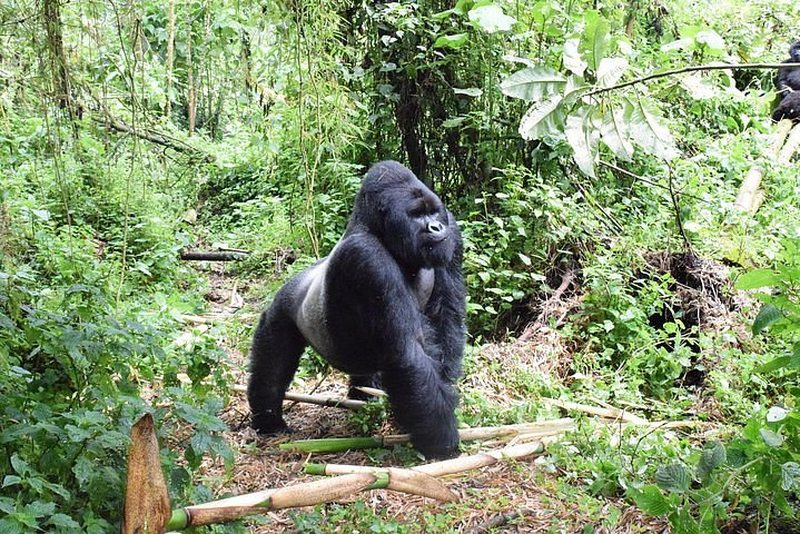
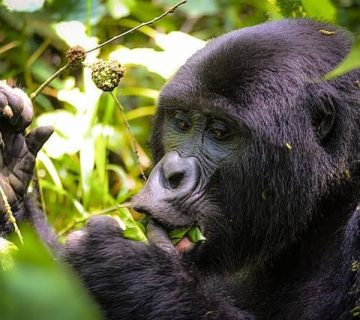
Eastern lowland gorillas, also known as Grauer’s gorillas, are a genuinely distinct species from the mountain gorillas found in Uganda and Rwanda – larger, found at lower altitude, and tracked in a completely different Congolese park, Kahuzi-Biega, making them a real point of interest for travelers who’ve already done mountain gorilla trekking and want a genuinely different, memorable primate encounter.
What Makes Eastern Lowland Gorillas Different
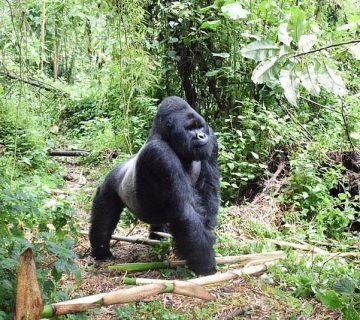
Eastern lowland gorillas are the largest of all gorilla subspecies, with adult males notably heavier and more thickset than their mountain gorilla cousins, and they inhabit lower-altitude tropical rainforest rather than the high-altitude bamboo and montane forest mountain gorillas favour. This size and habitat difference gives lowland gorilla trekking a genuinely distinct character, both visually and physically, from trekking in Bwindi or Volcanoes National Park.
Where to Find Eastern Lowland Gorillas
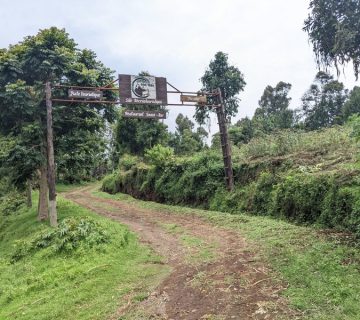
Kahuzi-Biega National Park, in eastern Democratic Republic of Congo, is the primary destination for eastern lowland gorilla trekking, holding the largest remaining habituated population of this critically endangered subspecies. The park’s lower-altitude rainforest terrain, generally less steep than Bwindi’s mountainous trails, makes the physical trekking experience noticeably different, though still genuinely demanding given the dense forest cover.
Conservation Status: A Critically Endangered Subspecies
Eastern lowland gorillas are classified as critically endangered, with population numbers having declined dramatically over recent decades due to poaching, habitat loss, and the instability that has affected parts of eastern Congo. This conservation status makes Kahuzi-Biega’s habituated population a genuinely significant conservation priority, and tourism revenue plays a real role in funding the ranger presence needed to protect remaining gorillas.
How Lowland Gorilla Trekking Differs From Mountain Gorilla Trekking
Beyond the physical differences between the two subspecies, lowland gorilla trekking in Kahuzi-Biega generally involves lower-altitude terrain than mountain gorilla trekking in Uganda or Rwanda, though the region’s history of instability has meant visitor numbers and infrastructure remain considerably smaller than the well-established mountain gorilla tourism industry further east.
Safety and Practical Considerations in Eastern Congo
Eastern Congo’s security situation has historically been more volatile than Uganda or Rwanda, and travelers considering Kahuzi-Biega should work closely with experienced operators who monitor current conditions and can advise honestly on whether a visit is currently advisable. This is a genuinely different risk calculation from planning a Uganda or Rwanda gorilla trip, and shouldn’t be underestimated when considering this option.
Combining Lowland Gorillas With Virunga’s Mountain Gorillas
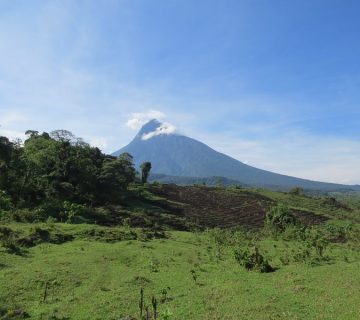
Congo also holds its own mountain gorilla population in Virunga National Park, meaning a single, ambitious Congo itinerary could theoretically include both gorilla subspecies, though the distance and travel logistics between Kahuzi-Biega and Virunga make this a genuinely demanding undertaking rather than a simple add-on.
Permit Costs for Lowland Gorilla Trekking
Lowland gorilla trekking permits in Kahuzi-Biega are generally more affordable than mountain gorilla permits in Uganda or Rwanda, reflecting both the lower visitor demand and the different tourism infrastructure supporting the experience. See our gorilla trekking pricing guide for how Congo’s permit costs compare across all three gorilla trekking countries.
Best Time of Year for Lowland Gorilla Trekking
Kahuzi-Biega’s lowland rainforest experiences less dramatic seasonal variation than the higher-altitude mountain gorilla parks, though the region’s wetter months can still make trails considerably muddier and more physically demanding. Checking current conditions and access with your operator closer to your travel dates is genuinely important given the park’s more limited infrastructure.
Physical Fitness for Lowland Gorilla Trekking
Kahuzi-Biega’s lower altitude removes one of the physical challenges associated with mountain gorilla trekking, though the dense rainforest terrain and unpredictable trek duration still demand a reasonable baseline fitness level. Travelers who’ve completed mountain gorilla trekking elsewhere generally find lowland trekking a genuinely comparable, if slightly different, physical undertaking overall, requiring similar preparation and stamina.
What to Pack for Kahuzi-Biega
Standard forest trekking gear applies – sturdy hiking boots, gardening-style gloves, and rain protection given the rainforest’s genuinely unpredictable weather. Our gorilla trekking packing list covers the same essentials, applicable to lowland gorilla trekking as well as mountain gorilla trekking elsewhere in the region.
Research and Conservation Value of Kahuzi-Biega
Ongoing conservation work at Kahuzi-Biega, supported partly by tourism revenue, represents one of the most important efforts to prevent the eastern lowland gorilla’s extinction, given how dramatically the wider population has declined outside protected areas. Visiting responsibly, through operators who work closely with park management, genuinely supports this critical conservation priority.
The History of Kahuzi-Biega National Park
Kahuzi-Biega was established in 1970 and later designated a UNESCO World Heritage Site, recognition of both its biological significance and its role as one of the last strongholds for the eastern lowland gorilla. The park’s history since has been shaped considerably by the wider instability affecting eastern Congo, with periods of reduced ranger access and genuine conservation setbacks alongside sustained efforts to protect the park’s core gorilla population.
Population Decline and Recovery Efforts
Surveys conducted over recent decades have documented a dramatic decline in the eastern lowland gorilla’s overall population, driven heavily by bushmeat poaching and habitat encroachment during periods when park security weakened. Conservation organisations working in and around Kahuzi-Biega have focused on strengthening ranger capacity and community engagement, recognising that long-term recovery depends on stabilising both the park’s security situation and its relationship with surrounding communities.
Gorilla Family Groups at Kahuzi-Biega
Kahuzi-Biega’s habituated gorilla families are considerably fewer in number than the many habituated groups available across Uganda and Rwanda’s mountain gorilla parks combined, reflecting both the smaller overall lowland gorilla population and the more limited tourism infrastructure supporting trekking here. This scarcity makes each family group genuinely significant to the park’s conservation programme, and rangers monitor them especially closely given how few remain.
Other Wildlife at Kahuzi-Biega
Beyond its famous gorillas, Kahuzi-Biega’s rainforest holds chimpanzees, forest elephants, and a genuinely rich, diverse variety of primate and bird species typical of Congo’s biodiverse lowland forest, though tourism infrastructure for these other species remains considerably less developed than the park’s core gorilla trekking programme. Serious wildlife enthusiasts with a specific interest in Congo’s forest biodiversity may find these secondary species a worthwhile addition to a gorilla-focused visit.
Getting to Kahuzi-Biega National Park
Kahuzi-Biega sits near Bukavu in eastern Congo, typically reached via a connecting flight through Kigali or Goma given the region’s limited direct international access. This routing means most Kahuzi-Biega visits require careful advance logistics planning, ideally coordinated through an operator with genuine on-the-ground experience in this specific part of Congo and its current travel conditions.
Working With Experienced Operators
Given the genuine complexity and evolving security considerations around visiting eastern Congo, working with an operator who maintains current, on-the-ground knowledge of Kahuzi-Biega’s accessibility is essential, rather than booking based on outdated or generic information. This is a genuinely different planning process from arranging Rwanda or Uganda gorilla trekking, where infrastructure and security are considerably more established.
Photographing Eastern Lowland Gorillas
Kahuzi-Biega’s dense rainforest canopy creates challenging low-light conditions similar to those found trekking Uganda’s Kibale Forest, so a fast lens with a wide maximum aperture makes a genuine difference to image quality compared to standard daylight safari photography. The larger size of eastern lowland gorillas compared to mountain gorillas also changes composition considerations, often requiring a slightly wider frame to capture a full adult male within typical trekking distance.
Comparing Congo’s Two Gorilla Experiences
Congo uniquely offers both mountain and lowland gorilla trekking within the same country, though Virunga’s mountain gorilla experience remains considerably more established and accessible than Kahuzi-Biega’s lowland trekking given current regional conditions. Travelers specifically drawn to the rarer lowland subspecies should expect a genuinely more involved planning process than a standard Uganda habituation experience or Rwanda gorilla trip requires.
Frequently Asked Questions
Are eastern lowland gorillas the same as mountain gorillas?
No, they’re a genuinely distinct subspecies, larger overall and found at lower altitude in a different Congolese park, Kahuzi-Biega, rather than Bwindi or Volcanoes National Park.
Is it safe to visit Kahuzi-Biega for gorilla trekking?
This depends heavily on current conditions in eastern Congo, and working with an experienced operator who monitors security closely is genuinely essential before planning any visit.
How does lowland gorilla trekking compare in cost to mountain gorilla trekking?
Generally more affordable, reflecting lower visitor demand and different tourism infrastructure compared to the well-established Uganda and Rwanda gorilla trekking industry overall.
Can I see both mountain and lowland gorillas in Congo?
Theoretically yes, given Virunga’s mountain gorillas and Kahuzi-Biega’s lowland gorillas, though the distance and logistics between the two make this a genuinely demanding, carefully planned undertaking.
Why are eastern lowland gorillas critically endangered?
Poaching, habitat loss, and regional instability have driven a dramatic population decline in recent decades, making Kahuzi-Biega’s protected population genuinely significant for the subspecies’ overall long-term survival prospects.
Ready to Plan Your Congo Safari?
Whether Congo’s eastern lowland gorillas, its own mountain gorilla population, or a wider regional primate itinerary is your priority, our team can help you plan carefully and responsibly given current conditions. Get in touch with our team below today and let’s discuss your Congo safari options and current conditions together.

No comment