Top 25 Facts About Mountain Gorillas.
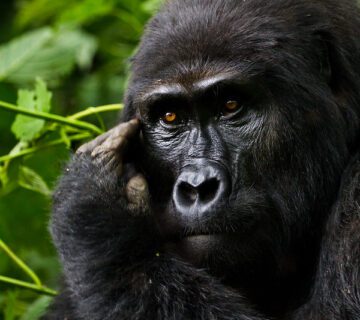
The top 25 facts about mountain gorillas include the fact that they are intelligent animals that inhabit the Virunga conservation mountain and the montane rainforest. They can be found in three nations throughout the world: Rwanda, Congo, and Uganda. The most important facts about mountain gorillas are mentioned here.
There are around 1063 mountain gorillas left in the wild, and they may be found in the Virunga national park in Congo, the Volcanoes national park in Rwanda, and the Bwindi Impenetrable national park in Uganda.
Gorillas come in two species: eastern and western. A subspecies of the eastern gorilla is the mountain gorilla.
There are an estimated 1063 mountain gorillas in the wild, making them an endangered species.
Two independent populations of mountain gorillas inhabit the Virunga volcanoes in east central Africa, which span three national parks—one in the Bwindi Impenetrable National Park and the others in Rwanda, Uganda, and the Democratic Republic of the Congo.
They are situated in high-altitude bamboo and montane forests that are encircled by agricultural areas.
Since they share 98% of our DNA, they are more susceptible to human illnesses including malaria, the flu, coughing, and COVID-19 because they are genetically close to us but lack the requisite immunity.
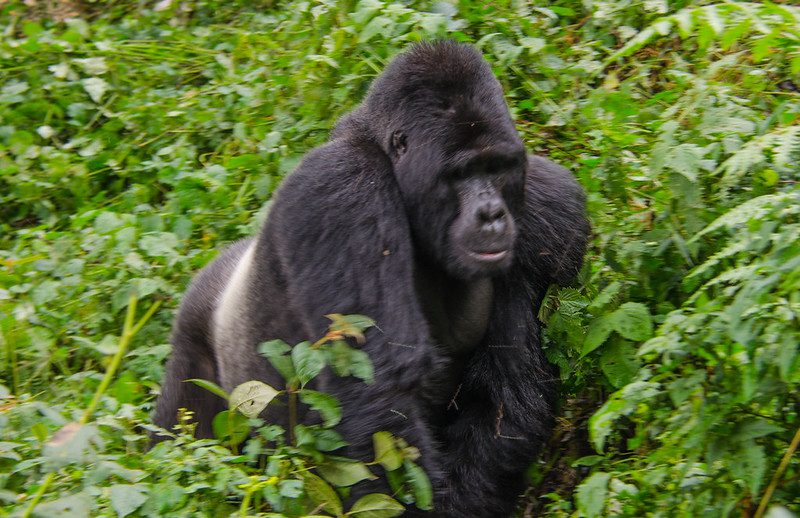
Male mountain gorillas, which weigh 180 kilograms and stand 170 centimeters tall, are the most powerful primates now in existence.
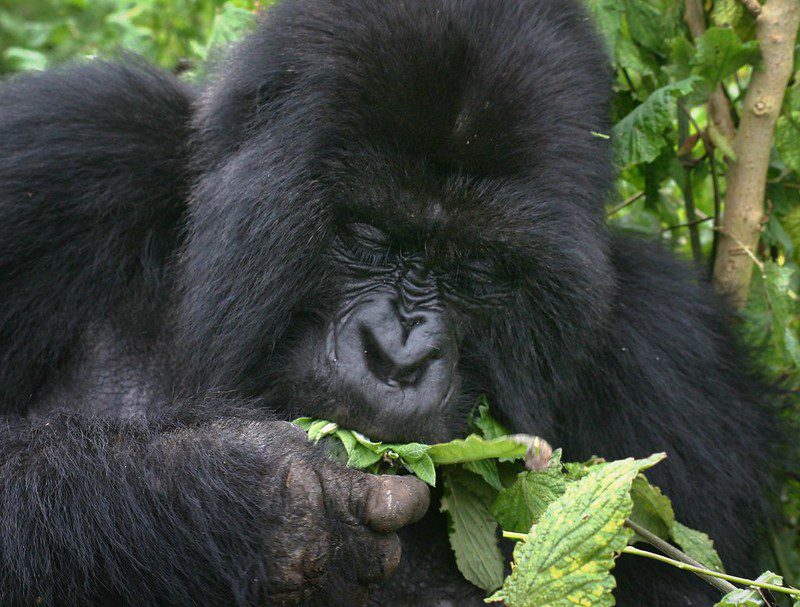
Throughout the day, mountain gorillas eat leaves, shoots, snails, ants, and bark, which is a good supply of salt.
Families of mountain gorillas typically build their nests high in trees or on the ground at night using leaves. Young gorillas actually share the hottest nest with their mothers.
Mountain gorillas can be scared by their sixteen various call kinds, including brief barks. Male gorillas employ vocalizations like “roars and hoots,” as well as rigid legs and chest beats, to communicate.
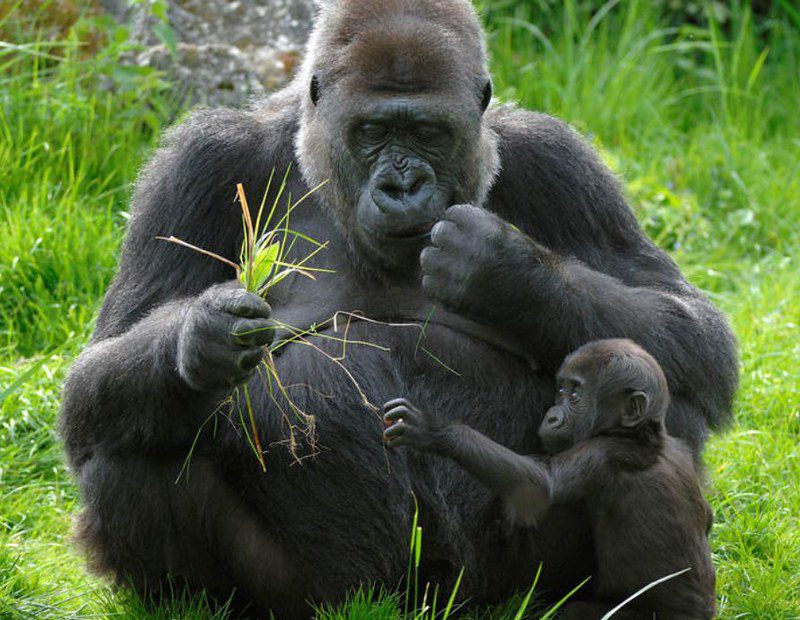
The majority of mountain gorillas live in groups of ten or more, with a dominant male and many females. In the family, both men and women take care of their infants by negotiating, playing with, feeding, cleaning, and carrying them.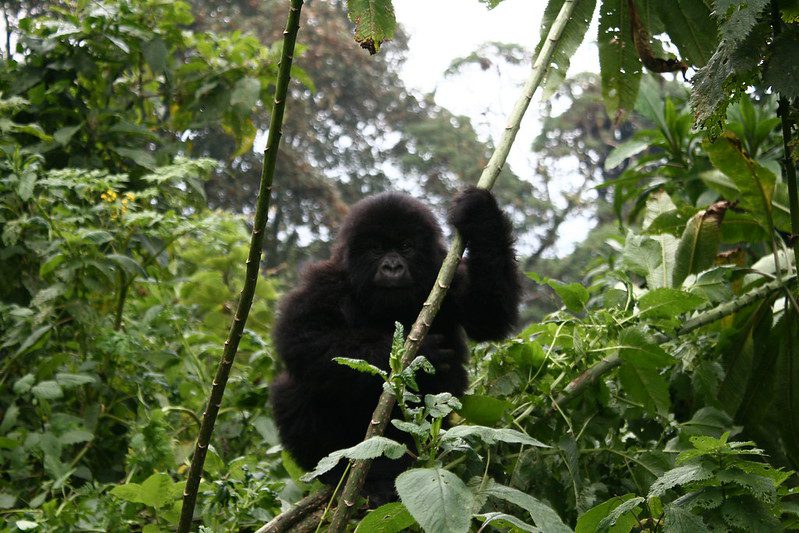
About 60% of females and the majority of males depart from their birth group to join another tribe as they get older. Just be aware that it helps keep inbreeding from happening.
Gorillas can live for more than 40 years in the wild.
Gorillas are classified as newborns until they are three and a half years old, at which point they become adults at the age of eight.
Blackbacks are male gorillas that are between the ages of 8 and 12. Around the age of twelve, they start to grow a silverback—a stretch of hair that covers their hips and back.
In addition to the danger of human contact and diseases, mountain gorillas are endangered by poachers who frequently kill them and by nearby farmers who kill them when they eat their banana plantations.
They can be found in groups of thirty, and one dominant and one silverback can lead the troop.
Compared to other gorilla species, mountain gorillas typically have shorter limbs and are slightly larger.
They eat tree bark and pulp, roots, shoots, fruits, and wild celery.
After almost nine months of pregnancy, female mountain gorillas give birth to a single baby.
The four-pound baby gorillas can barely hold on to their mother’s fur.
Unless they feel threatened, gorillas are usually peaceful and non-aggressive.
The male gorilla usually stands erect, attacks with aggression, and beats his massive chest while roaring or hooting loudly.
They play, climb trees, chase each other, and swing from tree branches for a large portion of the day.
From the time they are four months old until the first two or three years of their existence, infant gorillas typically ride on their mothers’ backs.
Why the 1063 Population Figure Matters So Much
This number represents genuine progress. Decades ago, mountain gorilla populations dropped far lower, close to genuine extinction. Today’s count reflects one of conservation’s real success stories. All in Africa Safaris can explain how trekking tourism directly supports this ongoing recovery.
What Makes Their Shared DNA Genuinely Significant
Sharing 98% of human DNA means genuine emotional and behavioral similarities are visible during a trek. Watching a family group interact often feels remarkably familiar, which is part of why the encounter moves so many visitors.
Why Silverbacks Rarely Need to Use Their Full Strength
Despite being among the most powerful primates alive, silverbacks typically rely on posture and vocalization rather than actual physical confrontation to maintain order within the group.
How Nest-Building Reveals Genuine Intelligence
Constructing a fresh nest every single night, using carefully arranged leaves and branches, demonstrates a level of environmental awareness and skill uncommon among wild animals.
Why Group Dispersal Genuinely Protects the Species
Young gorillas leaving their birth group isn’t random. It’s a genuine evolutionary strategy that prevents inbreeding and keeps the broader population genetically healthy over time.
What the Sixteen Distinct Calls Actually Communicate
From alarm barks to contentment grunts, this vocal range lets gorillas coordinate movement, warn of danger, and maintain social bonds. It’s a genuinely sophisticated communication system for a non-human species.
Why Human Disease Transmission Remains a Genuine Threat
Given their close genetic relationship to humans, gorillas can catch illnesses as common as a cold. This is exactly why trekking rules require distance and prohibit visits from anyone showing symptoms.
How Long a Mountain Gorilla Genuinely Lives
A lifespan exceeding forty years in the wild is genuinely long for a large mammal. This longevity means individual gorillas, and even entire family lineages, can be tracked by researchers across decades.
Why Blackbacks Represent a Genuinely Important Life Stage
This transitional period between adolescence and full silverback status shapes a male’s eventual role, whether he’ll lead his own group or remain within his birth family.
What Poaching and Habitat Loss Genuinely Still Threaten
Despite population recovery, snares set for other animals still injure gorillas, and farmland expansion continues pressuring habitat boundaries. Conservation work remains genuinely ongoing, not finished.
Why Their Diet Reflects Genuine Adaptability
Consuming everything from bamboo shoots to ants and tree bark shows genuine dietary flexibility, letting mountain gorillas survive across varied forest conditions throughout the year.
How a Newborn’s Vulnerability Shapes Early Life
A four-pound infant barely able to grip its mother’s fur depends entirely on her protection during those first fragile months, a genuinely critical period for survival.
Why Chest-Beating Displays Rarely Signal Real Aggression
This dramatic display usually communicates strength and warning rather than genuine intent to attack. Guides read this behavior constantly and rarely see it escalate further during a trek.
What a Typical Day in Gorilla Life Actually Looks Like
Between feeding, resting, and play, gorillas spend genuine time on social bonding, an often underappreciated part of their daily routine that trekkers get a rare window into.
Why Bwindi and Volcanoes Host Genetically Separate Populations
Though geographically close, Bwindi’s gorillas and the Virunga population don’t interbreed, since dense forest and human settlement separate them. This distinction matters genuinely for conservation genetics research.
What Makes High-Altitude Habitat Genuinely Demanding
Living in cool, high-elevation bamboo forest requires real physical adaptation. Thicker fur and a robust build help mountain gorillas handle temperatures considerably colder than lowland gorilla habitats.
Why Female Group Transfers Differ From Male Behavior
Roughly sixty percent of females eventually leave their birth group, often joining an established silverback elsewhere. This pattern genuinely shapes how new family groups form across the population.
How Researchers Track Individual Gorillas Long-Term
Distinct nose prints, similar to human fingerprints, let researchers identify individual gorillas across years of observation. This genuinely detailed tracking underlies most of what we know about gorilla social behavior.
Why Trekking Rules Directly Reflect These Facts
Distance requirements, health screening, and group size limits all trace directly back to the vulnerabilities covered here, disease susceptibility, habitat sensitivity, and stress response. All in Africa Safaris ensures every trek follows these rules precisely.
Why Dian Fossey’s Research Still Shapes Understanding Today
Much of what’s known about mountain gorilla behavior traces back to decades of dedicated field research. This foundation genuinely underlies the conservation and trekking guidelines still followed today.
What Makes Play Behavior Genuinely Important to Development
Young gorillas chasing, wrestling, and climbing aren’t just passing time. This play genuinely builds the physical coordination and social skills they’ll rely on as adults.
Why These Facts Genuinely Enrich the Trekking Experience
Knowing the biology and behavior behind what you’re watching turns a single hour of observation into something considerably more meaningful than simply viewing wildlife from a distance.
Why Every Permit Purchased Supports This Ongoing Story
The facts covered here aren’t static history. Ranger patrols, veterinary care, and habitat protection funded by trekking permits continue writing this species’ recovery story every single day.
Planning Your Mountain Gorilla Trekking Experience
From their remarkable intelligence to their complex social bonds and hard-won conservation recovery, mountain gorillas offer a genuinely profound wildlife encounter. All in Africa Safaris can turn this overview into a fully confirmed trekking itinerary, bringing you face to face with these remarkable animals in Uganda, Rwanda, or Congo.