
Giant Forest Hogs of Kibale Forest
Giant forest hogs move through Kibale Forest’s dense undergrowth in genuinely substantial family groups, their considerable size and shaggy black coat making them Africa’s largest wild pig species, a genuinely impressive if elusive sighting compared to the forest’s headline chimpanzee population.
Africa’s Largest Wild Pig Species
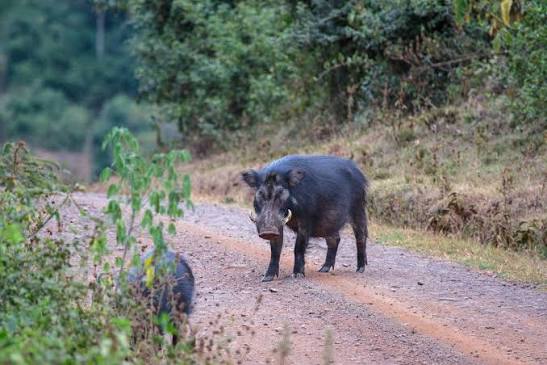
Giant forest hogs are genuinely the largest wild pig species found anywhere in Africa, with adult males weighing considerably more than warthog or bushpig, a size difference immediately obvious for travelers who’ve already encountered the continent’s other pig species elsewhere. Their shaggy black coat and prominent facial features give them a genuinely distinctive, almost prehistoric appearance.
Where to Find Giant Forest Hogs in Kibale
Giant forest hogs favour Kibale’s dense forest undergrowth and clearings, foraging primarily during early morning and evening hours when their genuinely secretive, cautious nature makes them somewhat easier to encounter than during the heat of midday. Sightings here often occur unexpectedly during guided forest walks focused primarily on primate tracking.
Giant Forest Hog Social Structure
Giant forest hogs typically live in family groups called sounders, led by a dominant male and including multiple females and their offspring, a social structure genuinely similar to other wild pig species but scaled up considerably given the species’ larger overall size. These groups move together through the forest, foraging on roots, tubers, and vegetation.
Why Giant Forest Hogs Are Genuinely Elusive
Despite their considerable size, giant forest hogs are genuinely difficult to locate given their naturally cautious, secretive behaviour and preference for dense forest cover that limits visibility. This elusiveness, combined with their primarily crepuscular activity pattern, means sightings often require genuine patience and current guide knowledge of recent activity.
Giant Forest Hog Diet and Feeding Behaviour
Giant forest hogs are genuinely opportunistic omnivores, though predominantly herbivorous, feeding on roots, tubers, grass, and forest vegetation using their powerful snout to root through soil and undergrowth. This feeding behaviour, similar in concept to warthog rooting but on a genuinely larger scale, shapes forest floor vegetation across their range.
Giant Forest Hogs and Kibale’s Wider Wildlife
Giant forest hogs share their forest habitat with Kibale’s famous chimpanzee population and various monkey species, adding genuine additional mammal diversity to a park primarily known for its primates rather than larger terrestrial mammals.
Best Time of Year for Giant Forest Hog Sightings
Giant forest hogs are visible in Kibale Forest year-round given their resident status, making seasonal timing genuinely less critical than time of day, with early morning and evening walks offering the best odds of an unexpected sighting. See our Uganda best-time guide for how the country’s broader dry and wet seasons still affect wider trip planning.
Self-Drive vs Guided Forest Walks
Giant forest hog viewing in Kibale is only available through guided forest walks, given the dense vegetation and specialised tracking knowledge required to locate this genuinely elusive species. Most visitors combine a chance giant forest hog sighting with standard chimpanzee trekking permits on the same forest walk.
Photographing Kibale’s Giant Forest Hogs
A giant forest hog sounder foraging at the forest edge during early morning light offers a genuinely rare, rewarding photographic opportunity given how uncommon confirmed sightings actually are. A mid-range zoom covers most sightings comfortably, similar to the gear recommended in our camera gear guide.
What to Pack for a Kibale Forest Safari
Standard forest trekking gear – sturdy shoes, rain protection, and neutral clothing – covers most of what Kibale requires. If your wider itinerary includes gorilla trekking, our gorilla trekking packing list covers similar essentials applicable to Kibale as well.
Giant Forest Hog’s Ecological Role
As genuinely significant forest floor foragers, giant forest hogs contribute to seed dispersal and soil turnover through their rooting behaviour, a role that indirectly benefits forest plant diversity across their range, making them a genuinely meaningful, if understated, part of Kibale’s overall ecosystem.
Combining Giant Forest Hog Viewing With Chimpanzee Trekking
Most Kibale itineraries combine standard chimpanzee trekking permits with broader forest walks that occasionally encounter giant forest hogs and other mammal species, giving travelers genuine bonus value across a single, well-organised forest excursion.
Getting to Kibale Forest National Park
Kibale sits within Uganda’s western tourism circuit, commonly combined with Queen Elizabeth National Park and Bwindi gorilla trekking on a longer itinerary, making it a natural inclusion for travelers already planning a broader southwestern Uganda safari.
Giant Forest Hog Physical Characteristics
Beyond their considerable size, giant forest hogs display genuinely distinctive facial warts and ridges, along with tusks used both for digging and occasional defensive display, features that give the species a genuinely rugged, formidable appearance despite their predominantly herbivorous, non-aggressive diet and temperament.
Piglet Development and Family Group Care
Giant forest hog piglets remain closely dependent on the sounder for genuine protection during their vulnerable early months, with the dominant male and other adult members providing collective vigilance against forest predators including leopard, one of the few species genuinely capable of threatening an adult giant forest hog despite its considerable size.
Why Kibale’s Forest Habitat Suits This Species
Giant forest hogs genuinely require dense forest cover and abundant understory vegetation to thrive, making Kibale’s protected, largely undisturbed forest habitat one of Uganda’s more suitable environments for the species compared to more fragmented or degraded forest elsewhere in the country.
Comparing Giant Forest Hogs to Uganda’s Other Wild Pigs
Unlike the more commonly seen warthog, found across Uganda’s open savannah parks, giant forest hogs occupy a genuinely distinct forest ecological niche, rarely if ever venturing into open grassland habitat that warthog favour, giving travelers a genuinely different pig-species encounter depending on which type of park they visit.
Guide Knowledge and Locating This Elusive Species
Experienced Kibale guides maintain genuine current knowledge of recent giant forest hog activity, given how much local tracking expertise improves the odds of a sighting compared to independent, unguided searching within the forest’s dense, visually limited undergrowth.
Why a Giant Forest Hog Sighting Feels Genuinely Special
Given how consistently elusive the species remains even to experienced guides, a confirmed giant forest hog sighting is genuinely regarded as a memorable bonus by most Kibale visitors, distinct from the more reliably scheduled chimpanzee trekking permit that anchors most itineraries to the park.
Best Lodges for a Chance Giant Forest Hog Sighting
Properties positioned near Kibale’s main trailheads genuinely simplify logistics for travelers hoping for an early morning or evening giant forest hog encounter, cutting down on transfer time before guided forest walks timed specifically around the species’ crepuscular activity pattern.
Getting to Kibale From Other Uganda Destinations
Kibale sits within a comfortable connecting drive of Queen Elizabeth National Park, making it a natural inclusion on longer itineraries covering both savannah wildlife and forest primates within a single well-planned western Uganda circuit.
Why First-Time Visitors Are Often Surprised
Many travelers arrive at Kibale focused entirely on chimpanzee trekking and are genuinely unaware Africa’s largest wild pig species also calls the same forest home, making an unexpected sighting a genuinely memorable, pleasant surprise beyond the standard primate-focused itinerary most visitors plan around.
What to Expect From a Combined Forest Walk
A single Kibale forest walk often produces sightings of colobus and red-tailed monkeys alongside the more elusive giant forest hog, giving travelers a genuinely rewarding overview of the park’s mammal diversity beyond chimpanzee trekking alone within a single guided excursion.
Genuine Conservation Status
Giant forest hog populations remain genuinely stable across much of their protected range, including Kibale, though habitat loss and fragmentation elsewhere in Africa have caused localised declines, making protected forest areas like Kibale genuinely important strongholds for the species going forward.
A Sighting Worth Genuine Patience
Travelers willing to slow their pace and observe forest edges quietly during early morning walks genuinely improve their odds of a giant forest hog encounter compared to those moving quickly and purposefully toward the day’s primary chimpanzee trekking objective alone without pausing.
What to Pack Specifically for Forest Mammal Tracking
Beyond standard forest gear, a small pair of binoculars genuinely helps spot movement within dense undergrowth from a safe, respectful distance without disturbing a genuinely wary species.
Frequently Asked Questions
Are giant forest hogs really Africa’s largest wild pig?
Yes, genuinely so – they’re considerably larger than warthog or bushpig, Africa’s other resident wild pig species.
Why are giant forest hogs so hard to spot?
Their naturally cautious, secretive behaviour and preference for dense forest cover make sightings genuinely uncommon despite their considerable size.
What do giant forest hogs eat?
Primarily roots, tubers, and vegetation, using their powerful snout to root through soil and undergrowth.
Can I see giant forest hogs during chimpanzee trekking?
Sightings occasionally occur during forest walks, though they remain considerably less predictable than chimpanzee encounters.
What’s the best time of day to see giant forest hogs?
Early morning and evening, given their primarily crepuscular activity pattern within the forest.
Ready to Plan Your Kibale Forest Safari?
Whether spotting the elusive giant forest hog, chimpanzee trekking, or a full Uganda itinerary is your priority, our team can build a trip matched to your interests. Get in touch with our team below today and let’s start planning your complete Uganda safari itinerary together.


No comment