A Bird Worth Protecting: The Case for the Shoebill
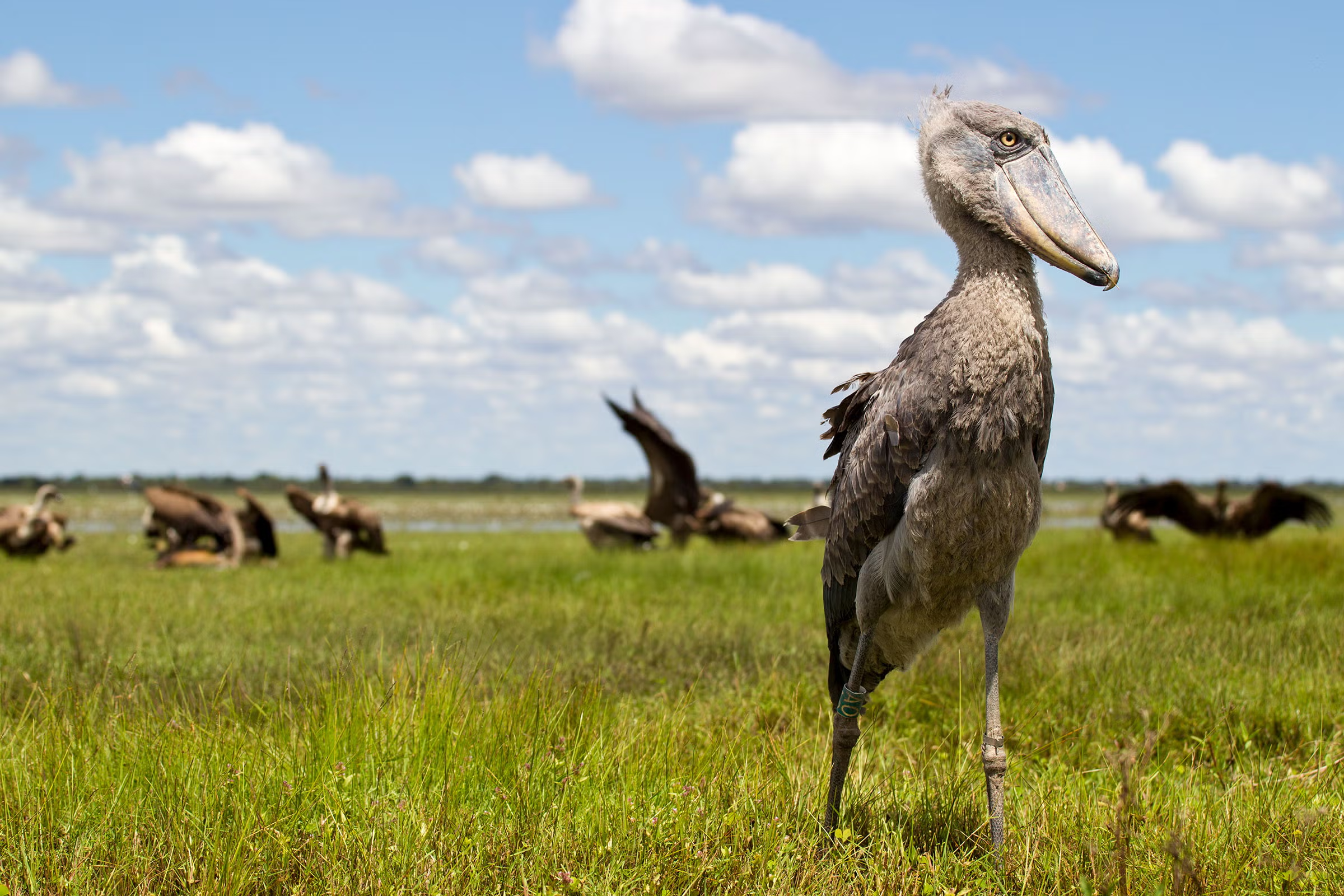
The African Shoebill is an amazing bird. It stands over four feet tall. Has a huge bill that looks like a shoe. When you see it, you cannot. Be impressed. The African Shoebill has a quiet nature that makes it seem like a bird from a long time ago. Even though it looks so cool, the African Shoebill is in trouble.
The main problem is that its home, the wetlands, is being destroyed. People are also hunting the African Shoebill and selling it on the black market. The weather is changing too, which makes it hard for the bird to find food and a place to live. Every year it gets harder for the African Shoebill to survive because the wetlands are disappearing.
We need to save the African Shoebill.
It is not just about the bird. We also need to protect the wetlands where it lives. The wetlands are home to other animals and plants, and they help keep our water clean and our communities safe. If we save the African Shoebill, we will also be helping people. The wetlands provide us with water, reduce flooding, and support fishing industries. They even help keep the air clean by storing carbon.
In countries like Uganda, South Sudan, Zambia, Tanzania, Rwanda and the Democratic Republic of Congo, people are working together to protect the African Shoebill. They are showing us that we can make a difference no matter how small our actions may seem.
The African Shoebill is a special bird. It is also known as Balaeniceps rex, which means “king whale head”. This name comes from its bill. The African Shoebill can grow up to 140 centimeters tall. Has wings that span over two meters.. Even though it is so big it is not a strong flyer. Instead it is a hunter that waits for the perfect moment to catch its prey.
The African Shoebill likes to live in shallow freshwater swamps with lots of plants and quiet pools. These wetlands are perfect for catching fish, frogs and snakes. The African Shoebill can even catch crocodiles. It will often stand still for a time waiting for the perfect moment to strike.
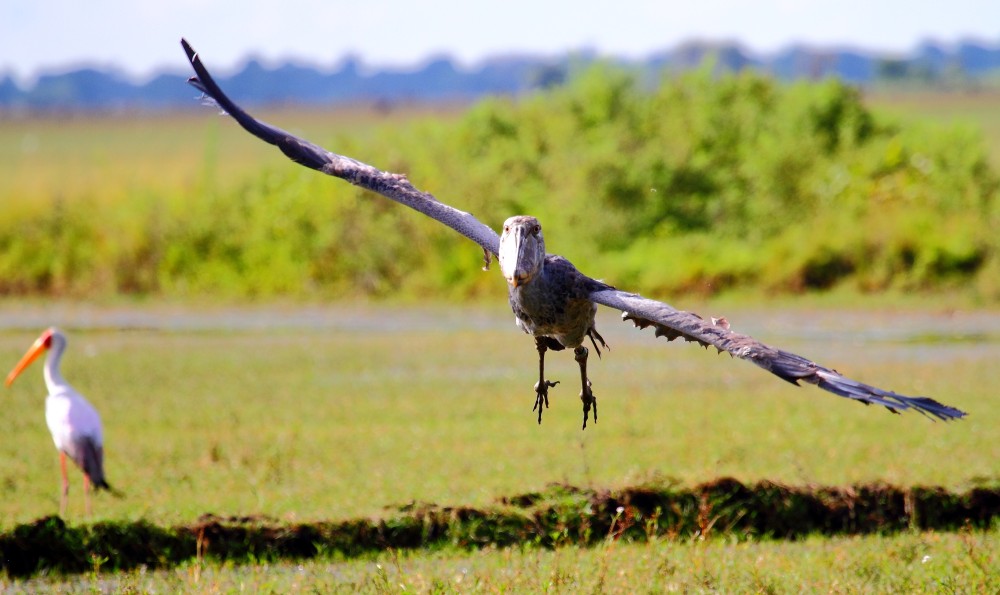
The way the African Shoebill behaves is very interesting.
It has features like broad feet and a powerful bill that help it survive in the wetlands. The African Shoebill is usually alone or with its mate. It does not like to be in big groups like some other birds. This means that every African Shoebill is very important and we need to protect them all.
The wetlands are crucial for the African Shoebills survival. Without the wetlands the African Shoebill would not be able to thrive. The wetlands do things to help us and the environment. They clean our water help prevent floods and provide a home for animals and plants.
There is a place in Uganda called Mabamba Swamp that’s one of the best places to find the African Shoebill. It is near Lake Victoria and many birdwatchers visit the area. The swamp also helps the community by providing jobs and income. There are other wetlands like Mabamba Swamp in central and eastern Africa that are home to many different species of birds, reptiles, amphibians, mammals and fish.
these wetlands are disappearing fast.
People are draining them to build houses, farms and roads. The water’s also getting polluted, which makes it hard for the African Shoebill and other animals to survive.
We need to protect the wetlands not for the African Shoebill but for all the other animals and plants that live there. The wetlands are like a web of life and if we destroy them we will be hurting many different species.
The African Shoebill is facing threats. It has been around, for millions of years. The problems it is facing now are happening too fast for it to adapt.
One of the threats is that its home, the wetlands is being destroyed. People are building farms, houses and roads. They are draining the wetlands to do so. This makes it hard for the African Shoebill to find a place to live and hunt.
Climate change is also a problem. The weather is getting stranger. It is hard for the African Shoebill to find food and a place to nest. The rain is not coming at the times and there are big droughts and floods. All these things make it hard for the African Shoebill to survive.
Illegal Wildlife Trade
Young shoebills are highly sought after by collectors and some private zoos. Chicks stolen from nests rarely survive the capture process. Removing them disrupts future breeding populations.
Since shoebills usually raise one surviving chick during a breeding season losing even a few young birds has serious consequences for long term population recovery.
Human Disturbance
Tourism provides income when managed responsibly but excessive disturbance can create problems. Boats approaching nests closely loud noise, drones and careless photography may stress breeding birds and reduce nesting success.
Fishing activities that unintentionally disturb nesting sites also create challenges in areas where people and wildlife share the wetlands.
Communities Are Becoming Conservation Leaders
One of the encouraging developments in recent years is the growing role of local communities in conservation.
For years wildlife protection relied mainly on government agencies and conservation organizations. Today local residents have become partners because they directly benefit from preserving healthy ecosystems.
Bird guides earn incomes by leading visitors through wetlands in search of shoebills. Boat operators transport tourists safely while following conservation guidelines. Accommodation providers, restaurants, craft sellers and transport businesses all benefit from nature based tourism.
As tourism creates jobs communities gain incentives to protect wetlands instead of converting them for short term economic gain.
Education also plays a role. Schools introduce children to wildlife through environmental programs helping young people appreciate the natural heritage surrounding them. These students often become conservation advocates within their own communities.
Responsible Tourism Makes a Difference
Visitors can support conservation through simple choices.
Choosing local guides ensures tourism income stays within surrounding communities. Respecting viewing distances minimizes stress on wildlife. Avoiding litter staying on designated routes and following park regulations all help protect habitats.
Every responsible visitor becomes part of a conservation effort.
Science Is Helping Protect the Future
Researchers continue learning more about shoebill behavior, breeding biology, habitat requirements and movement patterns.
Population surveys help conservation organizations identify breeding areas and monitor long term trends. Satellite tracking provides information about seasonal movements and habitat use. Camera monitoring reduces disturbance while allowing scientists to study behavior.
Scientific research also helps governments make conservation decisions by identifying wetlands that deserve stronger legal protection.
International cooperation has become increasingly important because shoebills cross boundaries. Conservation efforts succeed best when neighboring countries share information and coordinate habitat protection strategies.
Research alone cannot save wildlife. It provides the knowledge needed to make effective conservation decisions.
Every Person Can Help Protect the Shoebill
Many people assume wildlife conservation is the responsibility of scientists or governments. In reality individual actions collectively create change.
Supporting conservation organizations contributes to habitat restoration, research, education and community development projects. Choosing wildlife experiences encourages responsible tourism operators while discouraging harmful practices.
Sharing information about shoebills raises public awareness and inspires others to appreciate wetland conservation. Even small conversations can influence attitudes toward protecting nature.
Consumers also make contributions, by supporting businesses that demonstrate environmental responsibility and sustainable practices.
The future of wildlife depends on millions of decisions made every day
A Future That Is Still Worth Fighting For
There are signs that conservation work is making a difference. Protected wetlands are still helping keep populations strong. Community based tourism is making living conditions better for people while helping protect the places where wildlife lives. Scientists are learning more which helps make plans for keeping wildlife safe.
These good results show that extinction does not have to happen
if people work together with will and time.
The shoebill is more than one bird. It shows how healthy the wetlands in Africa are and how people and nature are connected. When wetlands are strong people have water, better fishing, more types of animals and stronger nature areas.
A Bird Worth Protecting: The Case for the Shoebill tells us that protecting wildlife is really about investing in our future. Every wetland that’s safe every child who is taught every tourist who is careful and every person who works hard for conservation helps keep one of the most amazing birds in the world alive.
The choices people make now will decide if future generations see shoebills in pictures or get to see one standing quietly among the tall plants. By thinking about wetlands helping conservation and being careful when traveling people can help these amazing birds keep living in the places where they belong in Africa.
The story of the shoebill is still being written.
With more people working being kind and taking care of nature the end can be a happy one instead of a sad one. That is why A Bird Worth Protecting: The Case for the Shoebill should be known by everyone who believes animals have a place in the future. When people see how important wetlands are and do something to protect them the good results are not just for one kind of animal. They help entire areas help people live better and keep nature safe for many years. In the end A Bird Worth Protecting: The Case, for the Shoebill is a reminder that taking care of one bird helps take care of a whole world of life.