
How Crocodiles Feed During Mara River Crossings
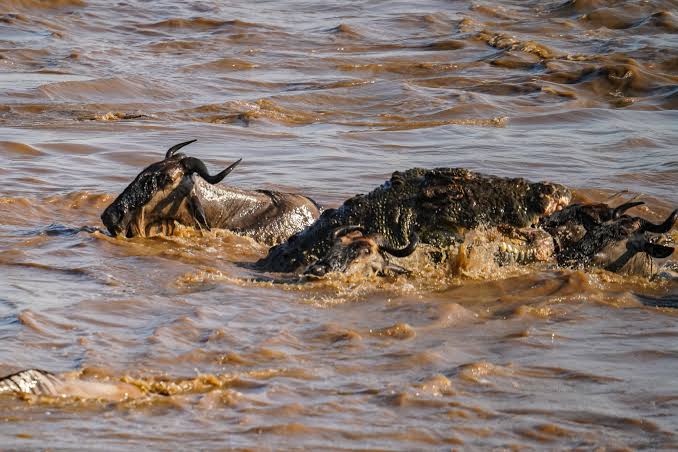
Crocodiles during Mara River crossings are among the most dramatic wildlife attractions of the Great Wildebeest Migration in Kenya and Tanzania. Every year, large herds of wildebeest gather along the Mara River before attempting to cross its deep channels, powerful currents and difficult riverbanks. Beneath the water, Nile crocodiles may wait for opportunities to capture animals as they swim towards the opposite shore.
The Nile crocodile (Crocodylus niloticus) is one of Africa’s largest freshwater predators. Its powerful jaws, muscular tail and ability to remain almost completely submerged make it a highly effective ambush hunter. During the migration, crocodiles may attack wildebeest struggling in the water, although many animals cross successfully without encountering these predators.
For travellers visiting Kenya’s Maasai Mara National Reserve or Tanzania’s northern Serengeti, understanding how crocodiles hunt, feed and survive provides a fascinating perspective on this annual wildlife event. Crocodile feeding also plays an important ecological role by helping process animal remains and contributing to nutrient cycling within the Mara River.
Why Crocodiles Gather Around the Mara River
The Mara River is an important freshwater habitat within the Serengeti–Mara ecosystem. It supports fish, aquatic birds, reptiles and numerous mammals that depend on the river for drinking water.
Nile crocodiles inhabit suitable sections of the river throughout the year. They do not arrive only when migrating wildebeest approach.
During ordinary periods, crocodiles feed on fish, birds and other available animals. However, the arrival of large wildebeest herds creates additional opportunities for hunting and scavenging.
The migration generally brings substantial numbers of wildebeest into northern Serengeti and the Maasai Mara between July and October, although the timing changes with rainfall and grazing conditions.
Quick Facts About Nile Crocodiles
| Feature | Description |
|---|---|
| Common name | Nile Crocodile |
| Scientific name | Crocodylus niloticus |
| Animal group | Reptiles |
| Adult length | Commonly 3–5 metres, with some individuals growing larger |
| Main habitat | Rivers, lakes and freshwater wetlands |
| Main diet | Fish, mammals, birds and other animals |
| Hunting method | Ambush predation |
| Main adaptations | Powerful jaws, strong tail and concealed movement |
| Conservation status | Least Concern globally |
| Important safari locations | Maasai Mara and northern Serengeti |
How Nile Crocodiles Hunt Wildebeest
Nile crocodiles rely heavily on patience and concealment when hunting.
Rather than continuously chasing prey, they often remain submerged or rest near suitable feeding locations.
Their eyes and nostrils sit high on the head, allowing them to observe activity and breathe while most of their bodies remain underwater.
When wildebeest enter the river, crocodiles may respond to the movement and disturbance created by swimming animals.
The Ambush Hunting Technique
A crocodile may remain almost motionless beneath the water until suitable prey approaches.
When an opportunity appears, it uses its muscular tail to accelerate rapidly over a short distance.
The crocodile then attempts to seize the animal with its powerful jaws.
It may grip a leg, neck or another accessible part of the wildebeest.
Once it has secured its hold, the crocodile may pull the animal into deeper water or use twisting movements to control it.
However, successful attacks are not guaranteed. Wildebeest are capable swimmers, and many escape potential predators while crossing.
Why Wildebeest Are Vulnerable During River Crossings
Wildebeest face several dangers while attempting to cross the Mara River.
Strong currents can make swimming difficult, particularly when water levels are high.
Steep riverbanks may create additional challenges when animals attempt to leave the water.
Large herds can also become crowded, making movement more difficult.
Conditions That Increase Crossing Risks
Strong river currents that carry animals downstream.
Deep water requiring prolonged swimming.
Slippery rocks and steep muddy banks.
Exhaustion after travelling considerable distances.
Crowding at narrow crossing points.
Separation of calves from surrounding adults.
Injuries sustained while entering the river.
These conditions may increase vulnerability to crocodile attacks, but they also create risks independently of predators.
Some wildebeest drown without ever being attacked by a crocodile.
Do Crocodiles Prefer Young or Weak Wildebeest?
Crocodiles are opportunistic predators capable of attacking animals of different ages and sizes.
A struggling or exhausted wildebeest may be easier to capture than a strong animal swimming efficiently.
Calves can also be vulnerable because their smaller bodies make difficult river conditions more challenging.
However, crocodiles do not always select young or weak animals deliberately.
An individual may attack whichever wildebeest passes close enough to capture.
Adult wildebeest can also become prey, particularly when they encounter difficult water conditions.
What Happens When a Crocodile Catches a Wildebeest?
After seizing a wildebeest, a crocodile may attempt to subdue it using its jaws, body weight and movements in the water.
Large crocodiles possess extremely powerful bite forces, allowing them to maintain a strong grip on struggling prey.
However, crocodiles cannot chew food in the same way mammals do.
When handling large animals, they must separate pieces of meat that can be swallowed.
Why Crocodiles Perform the Death Roll
The death roll is a rapid twisting movement in which a crocodile rotates its body while gripping prey.
This action can help subdue an animal or tear pieces from a larger carcass.
A crocodile may also use the resistance of water, nearby objects or other crocodiles to separate portions of food.
Not every attack involves a death roll.
Some crocodiles maintain their grip or move prey into a position where it becomes easier to handle.
Can Crocodiles Swallow an Entire Wildebeest?
A large Nile crocodile can swallow relatively small prey whole.
However, an adult wildebeest is too large to consume in a single piece.
Crocodiles feeding on large mammals must remove portions of meat.
They may pull, twist or reposition the carcass to separate manageable pieces.
The process can take considerable time, depending on the size of the prey and the number of crocodiles present.
Several crocodiles may sometimes feed near the same carcass, although competition can occur between individuals.
Do Nile Crocodiles Hunt Together?
During large wildebeest crossings, multiple crocodiles may gather around productive feeding locations.
Visitors sometimes observe several individuals approaching the same animal or feeding near one another.
However, this does not necessarily mean they are cooperating.
Nile crocodiles are not organised pack hunters in the same way as African wild dogs.
Their feeding behaviour is largely opportunistic.
Larger crocodiles may dominate smaller individuals when food is limited, and interactions can become aggressive.
Why Crocodiles Sometimes Ignore Crossing Wildebeest
One of the most surprising sights during a Mara River crossing is watching crocodiles remain motionless while wildebeest swim nearby.
Crocodiles do not need to feed continuously.
As reptiles, they have relatively low metabolic requirements compared with mammals of similar body mass.
A large crocodile that has recently consumed substantial food may remain without another meal for an extended period.
Water temperature, body condition and activity influence feeding requirements.
Consequently, crocodiles may ignore passing wildebeest because they are not actively hunting or because suitable opportunities do not arise.
What Happens to Wildebeest That Drown?
Not every wildebeest death during a Mara River crossing results from crocodile predation.
Strong currents, difficult riverbanks and crowded crossing conditions can cause drowning.
When carcasses enter the river, they provide food for several animal groups.
Crocodiles may scavenge dead wildebeest, while fish, aquatic invertebrates and microorganisms consume other remains.
Scientific research examining mass drownings in the Mara River estimated that an average of approximately 6,250 wildebeest carcasses entered the studied river system annually during 2011–2015.
These historical estimates describe mass drowning events rather than crocodile kills.
How Carcasses Support River Wildlife
Animal remains introduce organic material and nutrients into the river.
Soft tissues are consumed or broken down relatively quickly.
Bones can remain for much longer, gradually releasing nutrients into the surrounding aquatic environment.
This process supports different organisms and connects the surrounding grasslands with the river ecosystem.
Crocodiles are one part of this wider ecological relationship.
What Other Animals Feed on Wildebeest Carcasses?
Several animals benefit from carcasses left after difficult crossings.
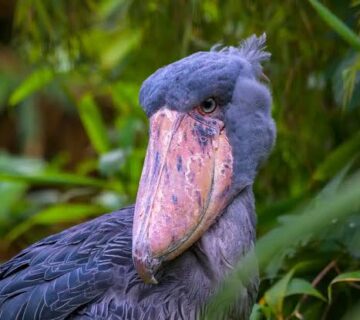
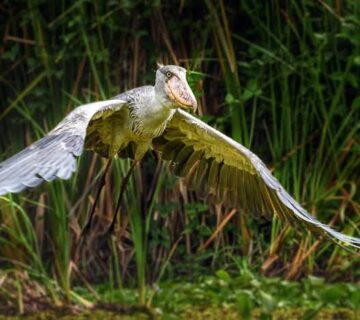
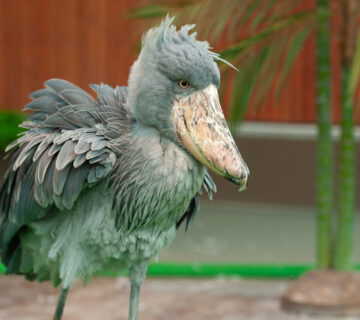
Marabou Storks and vultures may feed on remains accessible along riverbanks.
Fish and aquatic invertebrates consume smaller pieces of organic material.
Hyenas may also scavenge carcasses when they become accessible on land.
The availability of this food changes as carcasses break down.
Different species may therefore feed at different stages of decomposition.
When Is the Best Time to Watch Crocodiles During the Great Migration?
The main Mara River crossing period generally occurs between July and October.
August and September are often particularly attractive months for travellers hoping to observe large wildebeest herds near the river.
However, rainfall patterns influence the timing of migration movements.
Crocodile attacks cannot be predicted for a particular date or hour.
Mara River Crossing Season
| Month | General wildlife activity |
|---|---|
| June | Wildebeest may begin approaching northern Serengeti |
| July | Mara River crossings may begin |
| August | Often favourable for major crossing activity |
| September | Large herd movements may continue |
| October | Crossings remain possible |
| November | Many herds begin moving south, depending on rainfall |
These are typical seasonal patterns rather than guaranteed crossing dates.
Where to Watch Crocodiles During Mara River Crossings
Both Kenya and Tanzania provide opportunities to observe crocodiles and migrating wildebeest.
Maasai Mara National Reserve, Kenya
The Maasai Mara is one of Africa’s most famous destinations for Great Migration river crossings.
During suitable conditions, large wildebeest herds gather along the Mara River.
Nile crocodiles inhabit sections of the waterway and may be observed resting, swimming or hunting.
Experienced guides monitor herd movements and select appropriate wildlife viewing locations.
Mara Triangle, Kenya
The Mara Triangle occupies the western section of the Maasai Mara ecosystem.
Its grasslands and access to the Mara River provide opportunities for migration viewing.
Visitors may observe wildebeest gathering near riverbanks before attempting to cross.
Northern Serengeti National Park, Tanzania
Northern Serengeti provides excellent access to the Tanzanian sections of the Mara River.
Areas around Kogatende and Lamai are particularly well known for seasonal wildebeest movements.
Travellers can observe crocodiles, migrating herds and other wildlife within suitable river habitats.
How Long Should You Stay to Watch a Crossing?
River crossings are unpredictable.
A large wildebeest herd may approach the river and begin crossing shortly afterwards.
Another group may hesitate for hours before moving away without entering the water.
For travellers whose main interest is the Great Migration, spending three or four nights in a suitably located safari camp can improve opportunities to observe crossings.
However, additional time does not guarantee a crocodile attack.
A knowledgeable guide can help assess recent herd movements and identify suitable observation locations.
Photography Tips for Crocodiles During Mara River Crossings
Crocodile hunting behaviour can happen suddenly, making photography challenging.
A telephoto lens of approximately 100–400 mm provides flexibility for photographing both individual crocodiles and larger crossing scenes.
Use a fast shutter speed, preferably around 1/1000–1/2000 second when lighting conditions permit.
Continuous autofocus can help capture moving animals.
Photographing crocodiles resting near the river can also produce interesting images, particularly when their eyes and nostrils remain visible above the water.
Responsible Photography Practices
Maintain a respectful distance from wildlife.
Avoid asking safari guides to drive close to resting crocodiles or disturb crossing wildebeest.
Never block an animal’s route towards the river.
Visitors should remain inside authorised safari vehicles and follow reserve regulations.
Why Nile Crocodiles Are Important to the Mara River
Nile crocodiles are part of the Mara River’s natural food web.
They consume fish, birds, mammals and animal remains, contributing to the movement of nutrients through the ecosystem.
Their feeding activities are closely connected to the wider wildlife community.
However, crocodiles are not responsible for every death during the migration.
River conditions, herd behaviour and natural obstacles also influence survival.
Protecting the Mara River helps maintain suitable habitats for crocodiles, fish, birds and migrating mammals.
Conservation Challenges Facing Nile Crocodiles
The Nile crocodile is currently classified as Least Concern globally, although local populations may experience environmental pressures.
Habitat destruction, pollution and conflicts with people can affect crocodiles.
Changes in river flow and water quality may also influence suitable feeding and breeding areas.
In the Serengeti–Mara ecosystem, protecting natural river habitats is important for maintaining healthy crocodile populations.
Responsible safari tourism can support conservation by encouraging wildlife protection and sustainable management of natural resources.
Why Watching Crocodiles During Mara River Crossings Is Memorable
Crocodile feeding during the Great Migration provides an opportunity to observe one of Africa’s most powerful aquatic predators in its natural environment.
Their hunting behaviour demonstrates remarkable patience, strength and adaptation to freshwater habitats.
However, the Mara River crossing is more complex than a simple encounter between crocodiles and wildebeest.
Some animals are captured by predators, others drown because of difficult river conditions, and many cross safely before continuing towards fresh grazing areas.
For travellers visiting Kenya’s Maasai Mara or Tanzania’s northern Serengeti, observing these events provides a deeper understanding of migration, predator behaviour and the ecological importance of the Mara River.
The most rewarding safari experiences come from patient observation and allowing wildlife to behave naturally.

No comment