How the Shoebill Got Its Name And Its Reputation
Few birds make people curious as fast as the shoebill. Just a single look at its shoe-shaped beak and strong eyes is enough to create a strong memory. This special bird lives in the freshwater wetlands of East and Central Africa. It has become one of the most loved wild animals in the area. Bird watchers go far to see it once. Photographers spend hours waiting to take pictures of its amazing looks.
How the Shoebill Got Its Name. Its Reputation is a story that is more than just about its strange look. It is a story of changing, surviving, waiting, and the amazing connection between people and nature. The shoebill shows that first impressions do not always show everything. Behind its look is a calm bird that is perfect for living in the swamps of Africa.
A Name Inspired by Nature
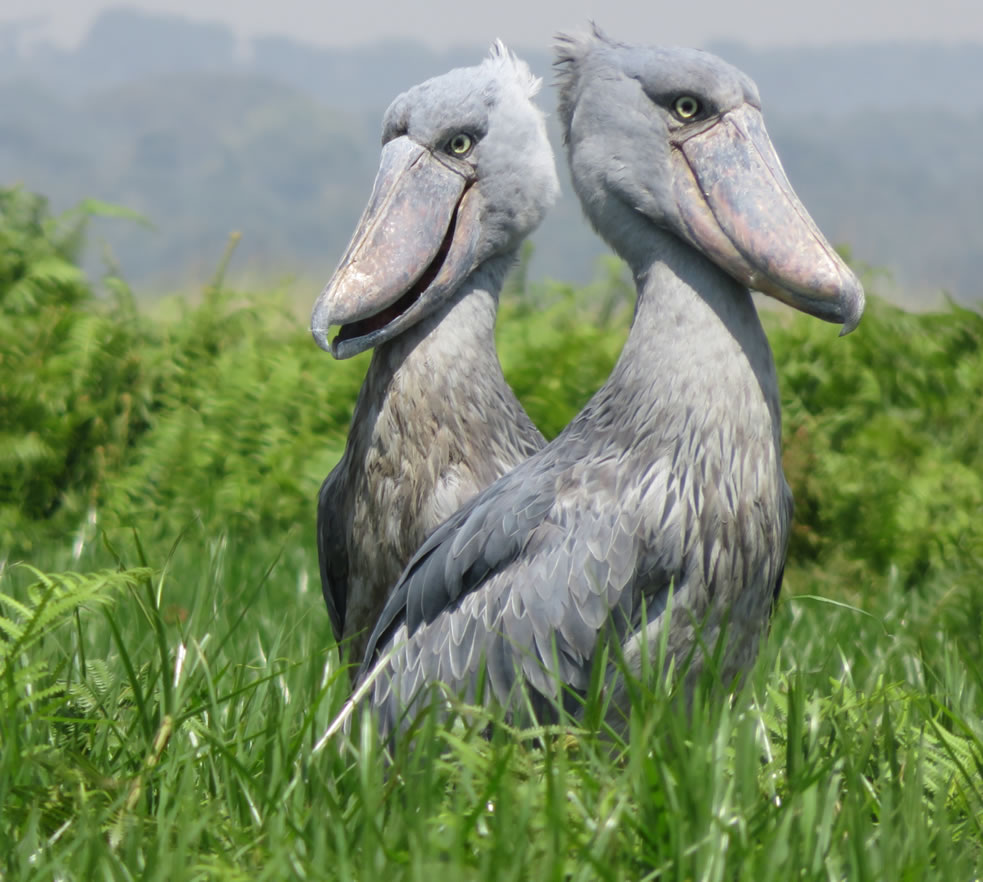
The story behind the shoebill’s name is very simple. Early explorers and people who studied nature saw the bird’s beak right away. It looked like a wooden shoe. They did not look for a reason. They just said what they saw.
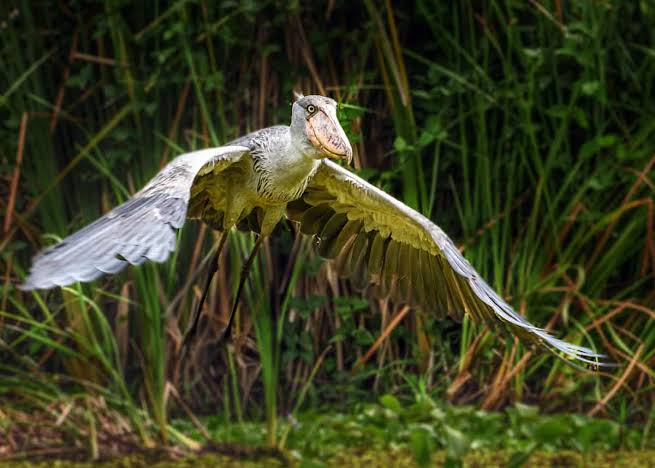
The birds beak can be 24 centimetres long and more than 10 centimetres wide. It is big strong and ends with a point that helps the bird hold slippery food. Unlike the beaks of herons or storks the shoebills beak looks too big for its body.. Every part has a purpose.
Its scientific name, Balaeniceps rex gives information. “Balaeniceps” means “whale-headed “. Rex” means “king.” Together the name means “king whalehead,” which refers to its head and strong look. While the common name talks about its beak the scientific name shows the birds presence.
Names often change the way people think. Before people find out about the shoebills actions they imagine a bird with special features. In this case the name shows one of the recognizable things in nature.
Built for Survival
The shoebills beak is not just an unusual feature. It is a hunting tool made by years of evolution.
African swamps have lots of food. Catching it needs patience and care. Lungfish, catfish, eels, frogs, water snakes and even small crocodiles hide under floating plants. Fast moves usually make the food run away.
Of running after food the shoebill stands still. Sometimes it stays still for than an hour. When the right moment comes it moves its head down fast.
The strong beak breaks plants while the sharp point holds the food. After shaking off mud and plants the bird eats the food whole.
What looks strange at first becomes clear when you think about survival. Every special feature helps the shoebill live in one of the places, in Africa.
shoebill has a reputation for being a bird.
When people do not know much about the shoebill they often say it is terrifying or even frightening.
The shoebill gets this reputation because of the way it looks.
The shoebill is a bird that can stand up to 1.5 metres tall, It has legs and broad wings,The shoebill has feathers and large yellow eyes that do not blink very often, When the shoebill stands still it looks like a statue, This makes the shoebill look very unusual, Social media has made people think the shoebill is scary, There are videos of the shoebill standing still and staring at the camera.Some people think the shoebill is going to attack them.
The shoebill is actually a bird.
It does not like to fight. It does not try to hurt people.
The shoebill mostly eats fish and other animals that live in the water.
When people see the shoebill it is usually just standing there looking at its surroundings.
The shoebill has a reputation that is based on how it looks, not how it behaves.
The shoebill is a bird.
This is one reason why people who like wildlife think the shoebill is so interesting.
In our lives we are often in a hurry.
We want things to happen quickly.
The shoebill is different.
It knows that if it moves around much it will get tired, So the shoebill waits for the moment to catch its food,It can stand still for hours waiting for the time to strike,When it does it only takes a second,This shows us that being patient can be a way to survive,The shoebill teaches us that we do not always have to be moving to be successful, Sometimes it is better to wait and watch, People who want to take pictures of the shoebill learn this lesson,They have to be quiet and wait for hours to see the shoebill,When they finally do it is very rewarding.
This is because they had to be patient,The shoebill looks like a bird from a time ago.
Many people say it looks prehistoric.
The shoebill is not a dinosaur that’s still alive today.
It is a bird that has evolved to live in its environment.
The shoebill has a head and a strong bill.
It moves slowly. This makes it look ancient.
The shoebill is still. Adapting to its surroundings.
Scientists think the shoebill is related to pelicans, not storks.
This was a surprise, to people because the shoebill does not look like a pelican.
This shows us that we should not judge things based on how they look.
The shoebill is an example of how animals can evolve to survive in their environment.
It is a reminder that thingsre not always what they seem.
The Shoebill is a bird that people respect because of the way it behaves.
The Shoebill got its name and reputation from people watching it in the wild.
It is not about how the Shoebill looks it is also about how people feel about the bird after seeing it in its home.
People who take care of animals in the wild often say that seeing a Shoebill is something they will never forget.
Visitors go to see the Shoebill thinking it will be a bird but they leave feeling impressed by how calm and confident the bird is.
The Shoebill is different from birds that like to be in big groups and make a lot of noise.
The Shoebill likes to be alone and quietly takes care of its area without making a show.
This calm behaviour has helped people see the Shoebill in a way.
Of being scared of the bird people now really like it.
The Shoebill needs wetlands to survive.
The wetlands with plants give the Shoebill food, a place to nest and a safe place to live.
These wetlands are also home to other animals like fish, frogs, insects, snakes and mammals.
The wetlands are in trouble because people are draining them using them for farms polluting them and building houses.
The weather is also changing, which makes it hard to predict if the wetlands will have water.
to help the Shoebill we need to protect the wetland.
When the wetlands are healthy the people who live near them are also happy.
The wetlands help keep the water clean stop floods and give people fish to eat.
The Shoebill is a popular bird for people to watch.
Places like the Mabamba Swamp in Uganda are famous because people can see the Shoebill there.
When people visit to see the Shoebill it helps the community and encourages people to take care of the wetlands.
Every time someone sees the Shoebill it shows that living birds are more important than destroyed homes.
The Shoebill is teaching us a lot of things.
It shows us that being patient is a thing.
It shows us that it is good to be different and use our special talents.
It shows us that we should not judge something by how it looks.
It shows us that we need to take care of the places that give us life.
The Shoebill is very calm. Does not try to show off.
It just does its job. Does it very well.
There is a lot to learn from the Shoebill.
As people learn more about the Shoebill they start to see it in a way.
The Shoebill is not a strange-looking bird it is a symbol of being strong and taking care of the environment.
The story of the Shoebill is a reminder that we should appreciate things, respect animals and protect their homes.
When we take care of the wetlands we help the Shoebill and all the other animals that live there.
The Shoebill is a special bird and it is worth protecting.
It is a reminder that every animal has a story to tell and that we should take care of the places that help them survive.
Whether you like the Shoebill because of how it looks, how it hunts or how calm it is one thing is, for sure.
The Shoebill is a bird and it is worth learning more about.