
Rhino Tracking at Ziwa Rhino Sanctuary, Uganda: A Complete Guide
Uganda lost its entire wild rhino population to poaching and civil conflict by the late 1980s – today, the only place in the country to see a rhino in the wild is Ziwa Rhino Sanctuary, a dedicated reintroduction and breeding project roughly halfway between Kampala and Murchison Falls National Park. This guide covers what rhino tracking at Ziwa actually involves, what it costs, and how to fit it into a wider Uganda safari.
Why Ziwa Is the Only Place to See Rhinos in Uganda
Uganda’s last wild rhinos were killed off during the political instability of the 1970s and 80s, and by the early 2000s the country had none left at all – a stark contrast to neighbouring Kenya and Tanzania, which retained protected populations throughout. Ziwa Rhino Sanctuary was established in 2005 by the Rhino Fund Uganda specifically to breed southern white rhinos in a secure, monitored 70-square-kilometre sanctuary, with the long-term goal of eventually reintroducing rhinos back into Uganda’s national parks once numbers and security allow. Every rhino currently in Uganda descends from a small founding group brought in from Kenya and Disney’s Animal Kingdom in the US.
How Many Rhinos Are at Ziwa Today?
The sanctuary started with just six founder rhinos and has grown steadily through natural breeding, now supporting several dozen individuals – a genuine conservation success story, and one of the reasons rhino tracking here feels different from a standard game drive. Because numbers are still relatively small and closely monitored by rangers around the clock, sightings on a tracking visit are close to guaranteed.
What Rhino Tracking at Ziwa Actually Involves
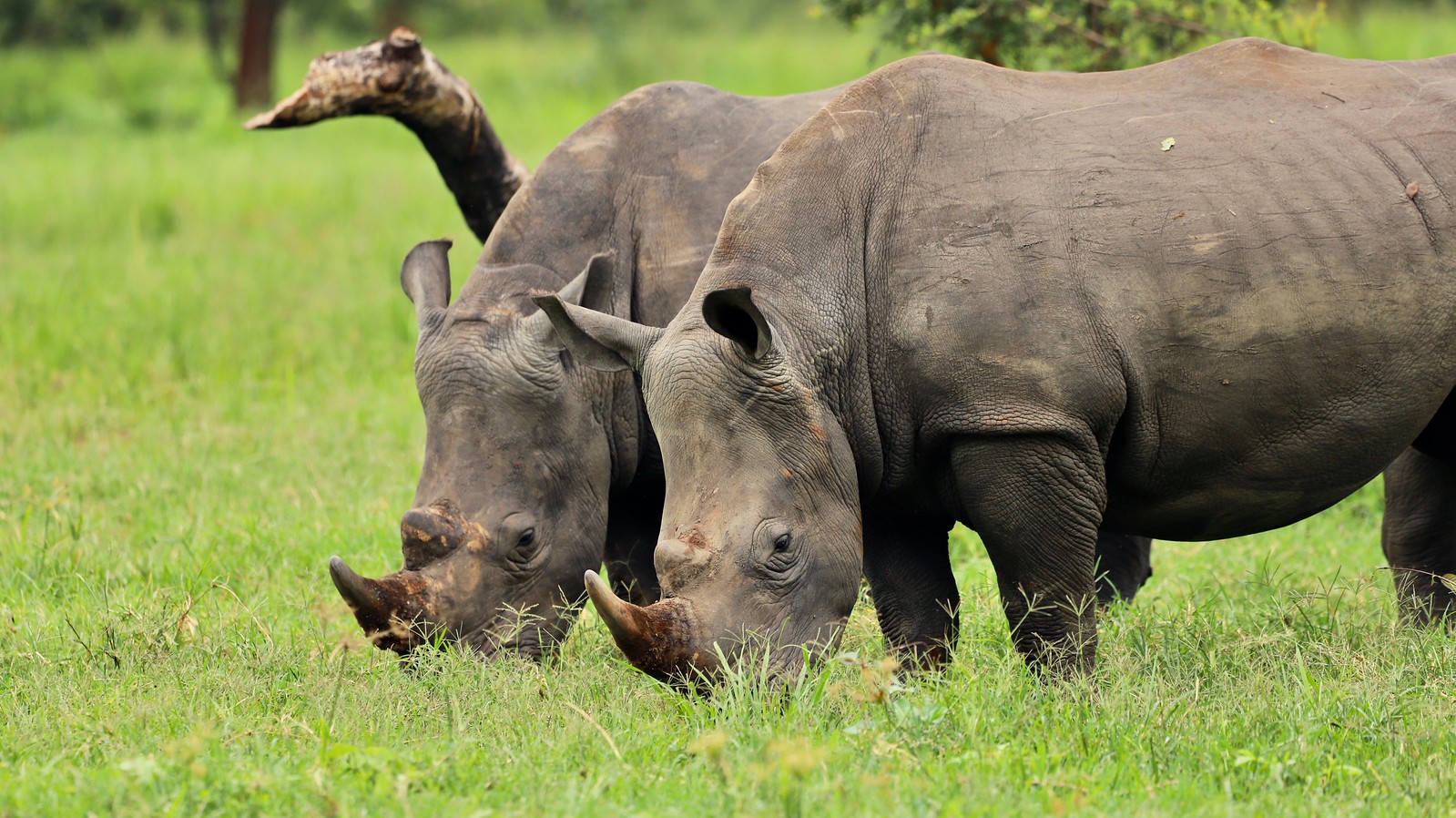
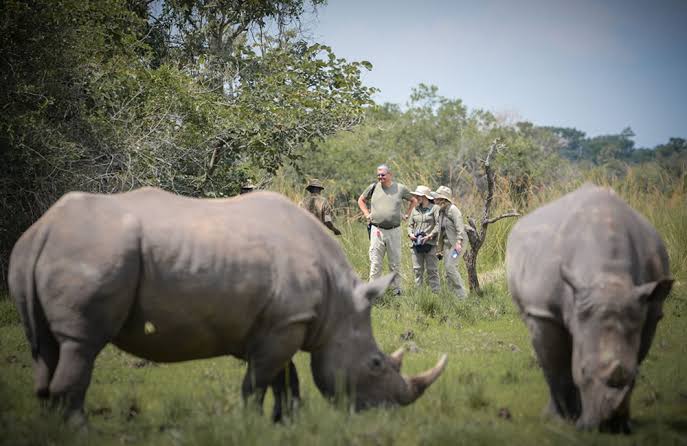
Unlike a typical game drive, rhino tracking at Ziwa is done entirely on foot. Rangers who monitor the rhinos daily already know roughly where each group is grazing, so your guide leads you on a short walk – usually 20 minutes to an hour – directly toward them rather than searching. Once you’re within a safe distance, usually around 20 metres, you’re given time to observe, photograph, and learn about individual rhinos, many of which the rangers know by name and personality. Because it’s a walking encounter rather than a vehicle sighting, it produces some of the most intimate wildlife photography available anywhere in Uganda – you’re at ground level with the animal rather than shooting down from a vehicle roof.
Safety is taken seriously despite the rhinos being relatively habituated to human presence: white rhinos are generally calmer than black rhinos, but they’re still enormous wild animals, and your ranger will position the group carefully and brief you on what to do if a rhino moves toward you before the walk begins.
Best Time to Visit Ziwa Rhino Sanctuary
Ziwa can be visited year-round, and unlike gorilla trekking, rhino tracking isn’t meaningfully affected by season since it’s a flat, open sanctuary rather than dense mountain forest. Early morning visits tend to be cooler and catch the rhinos more active before the heat of the day, but afternoon tracking works perfectly well too. Most visitors combine it as a stopover rather than a dedicated day trip.
Combining Ziwa With a Murchison Falls Safari
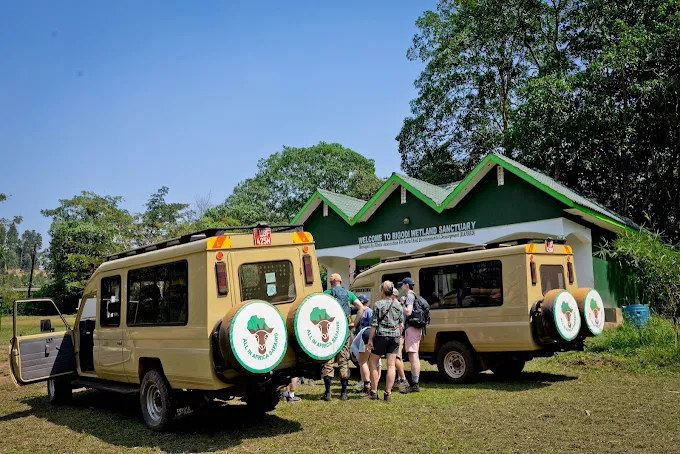
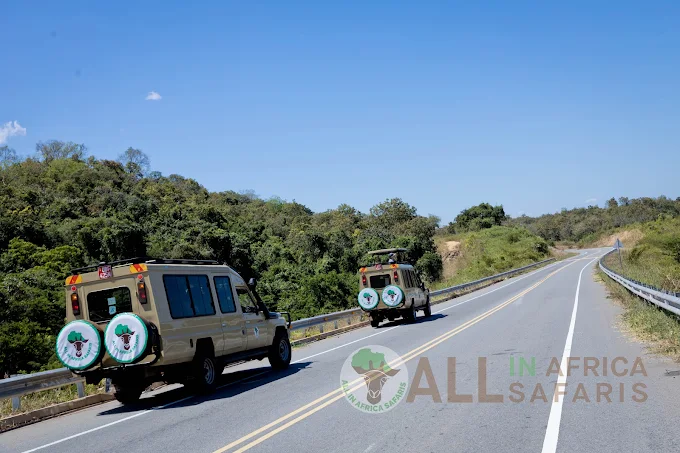
Ziwa sits directly on the main road between Kampala and Murchison Falls National Park, which makes it one of the easiest add-ons in Ugandan safari planning – almost every overland itinerary to Murchison Falls passes within a few minutes of the sanctuary gate. Rather than a rushed roadside stop, we recommend budgeting two to three hours to properly enjoy the walk and the rhinos rather than treating it as a bathroom break on a long drive.
Rhino Tracking Rules and What to Bring
Rangers ask visitors to keep voices low, avoid sudden movements, and stay in a group during the approach – broadly similar etiquette to gorilla trekking rules, though the walk itself is far less physically demanding since the terrain is flat savanna rather than steep forest. Closed walking shoes, a hat, sunscreen, water, and a camera are all you really need; the neutral clothing advice that applies to gorilla trekking is less critical here, since the walk is short and the rhinos are already well habituated to human visitors.
How Rangers Protect Ziwa’s Rhinos
Given how devastating poaching was to Uganda’s original rhino population, security at Ziwa is intensive. Armed rangers monitor every rhino daily, tracking their movement, health, and location around the clock, and the sanctuary is fenced and patrolled continuously. Tourism revenue from tracking visits and lodge stays directly funds this protection, which is part of why the sanctuary actively encourages day visitors rather than restricting access – every visit is a direct contribution to keeping the reintroduction program funded.
Rhino Facts Worth Knowing Before Your Visit
White rhinos, despite the name, aren’t actually white – the name is a mistranslation of the Afrikaans “wyd,” meaning wide, referring to their broad, square lip adapted for grazing grass. They’re the more social and generally calmer of Africa’s two rhino species, often seen in small groups, unlike the more solitary and famously short-tempered black rhino. An adult white rhino can weigh over two tonnes, yet despite their bulk they can run at surprising speed over short distances – another reason the on-foot approach is always led by an experienced ranger who reads the animals’ behaviour continuously during the walk.
How Ziwa Compares to Kenya’s Rhino Sanctuaries
Kenya has a considerably larger and longer-established rhino tourism industry, centred on Lake Nakuru National Park and Ol Pejeta Conservancy, the latter also home to the world’s last two northern white rhinos. Ol Pejeta and Nakuru both allow vehicle-based rhino sightings as part of a normal game drive, since their populations are larger and spread across bigger, wilder landscapes. Ziwa’s experience is different by design – smaller, more intimate, entirely on foot, and framed explicitly around the reintroduction story, which makes it feel more like a guided conservation visit than a standard game drive. Rwanda’s Akagera National Park sits somewhere in between, having reintroduced both rhino and lion from 2015 onward as part of a similarly dramatic recovery story.
Photographing Rhinos at Ziwa
Because tracking is on foot and sightings are close-range, Ziwa produces some of the best rhino photography opportunities in East Africa without requiring specialist gear. A mid-range zoom lens is usually enough, and the low, ground-level angle you get on foot – compared to shooting down from a safari vehicle roof – tends to produce far more striking images. Early morning light is softest and rhinos are typically more active, making the first tracking slot of the day the best choice for photographers.
Where to Stay Near Ziwa
Most visitors treat Ziwa as a stopover between Kampala and Murchison Falls rather than an overnight destination, though the sanctuary does operate its own on-site accommodation for travelers who prefer to split the long drive north into two shorter days, or who want to combine rhino tracking with an early-morning nature walk or the sanctuary’s bird watching, since Ziwa also holds a healthy population of shoebill storks in its wetlands.
Frequently Asked Questions About Rhino Tracking at Ziwa
Do I need a permit to track rhinos at Ziwa?
Yes, though unlike gorilla trekking permits, rhino tracking permits at Ziwa are inexpensive, widely available, and don’t need to be booked months in advance – a significant practical advantage if you’re finalizing your Uganda itinerary close to travel dates.
Is Ziwa suitable for children?
Yes. The walk is short and flat, making it one of the more family-friendly wildlife activities in Uganda compared to the steep, physically demanding terrain of gorilla or chimpanzee trekking.
What visa do I need to visit Uganda for a Ziwa and Murchison Falls trip?
Most travelers need either a standard Uganda tourist visa or the East Africa Tourist Visa, which also covers Kenya and Rwanda on the same permit – see our Uganda visa requirements guide for the current application process.
Can I combine Ziwa with the Uganda dry season for the best overall safari?
Yes – while Ziwa itself isn’t season-dependent, timing your trip around Uganda’s dry seasons will improve game viewing at Murchison Falls and any other parks on your itinerary, so it’s worth planning the whole trip around that window rather than Ziwa specifically.
The Long-Term Goal: Rhinos Back in Uganda’s National Parks
Ziwa was never intended to be a permanent enclosure – it’s explicitly a breeding and reintroduction project, with the long-term aim of eventually releasing rhinos back into Murchison Falls and other former range parks once populations and anti-poaching security are strong enough to support them in the wild. That timeline is still years away, but every tracking visit and every dollar of tourism revenue moves the project closer, which is part of what makes Ziwa feel different from a typical wildlife stop – you’re watching an active conservation story unfold rather than visiting a static attraction.
If Ziwa and the wider rhino conservation story interest you, it’s worth pairing your Uganda trip with a look at how Rwanda’s own reintroduction programs at Akagera have run a similar playbook for both rhino and lion, and packing appropriately matters too – the same practical advice in our gorilla trekking packing list around footwear, sun protection, and neutral colours applies just as well to a Ziwa walking visit.
Ready to Add Ziwa to Your Uganda Safari?
Rhino tracking at Ziwa is one of the easiest, most reliable wildlife encounters to add to almost any Uganda itinerary, whether you’re heading to Murchison Falls, gorilla trekking in Bwindi, or building a longer multi-park safari. Get in touch below and we’ll build it into your route.

No comment