
Bwindi vs Mgahinga: Which Park Has Better Gorilla Sightings?
Uganda is one of the best destinations in Africa for experiencing mountain gorillas in their natural habitat. The country is home to two protected areas where visitors can participate in gorilla trekking: Bwindi Impenetrable National Park and Mgahinga Gorilla National Park. Although both parks protect mountain gorillas and offer genuine opportunities to see them, they provide quite different experiences.
For travellers planning a gorilla safari, one of the biggest questions is whether Bwindi or Mgahinga offers better gorilla sightings. The answer is not as simple as choosing one park and declaring it the best. Both destinations have their own advantages, and the quality of a gorilla encounter depends on several factors, including the location of the gorilla family, the terrain, weather conditions, the movements of the animals and the trekking sector.
In general, Bwindi offers more opportunities for gorilla trekking, while Mgahinga offers a smaller and more intimate experience. For travellers who want the widest choice of trekking areas and accommodation, Bwindi will usually be the preferred option. For visitors who want a quieter experience surrounded by dramatic volcanic scenery, Mgahinga can be an excellent alternative.
Understanding Bwindi Impenetrable National Park
Bwindi Impenetrable National Park is located in southwestern Uganda and is one of the most important mountain gorilla habitats in the world. The forest is extremely old and biologically rich, supporting not only mountain gorillas but also numerous species of birds, mammals, butterflies, reptiles, plants and other wildlife.
The park is divided into four main gorilla trekking sectors known as Buhoma, Ruhija, Rushaga and Nkuringo. Each sector has its own trekking routes, habituated gorilla families and accommodation facilities. This gives Bwindi a major advantage when it comes to planning a gorilla safari.
The different sectors also provide different experiences. Buhoma is the historic gorilla trekking area and has a well-developed tourism infrastructure. Ruhija is known for its forest environment and birdwatching opportunities. Rushaga is particularly important for gorilla trekking and gorilla habituation experiences, while Nkuringo is famous for its mountainous scenery and challenging terrain.
Because of these different sectors, travellers have greater flexibility when planning their Uganda gorilla safari in Bwindi.
Understanding Mgahinga Gorilla National Park
Mgahinga Gorilla National Park is much smaller than Bwindi and is located in the southwestern corner of Uganda. It forms part of the Virunga volcanic mountain range, which stretches across Uganda, Rwanda and the Democratic Republic of Congo.
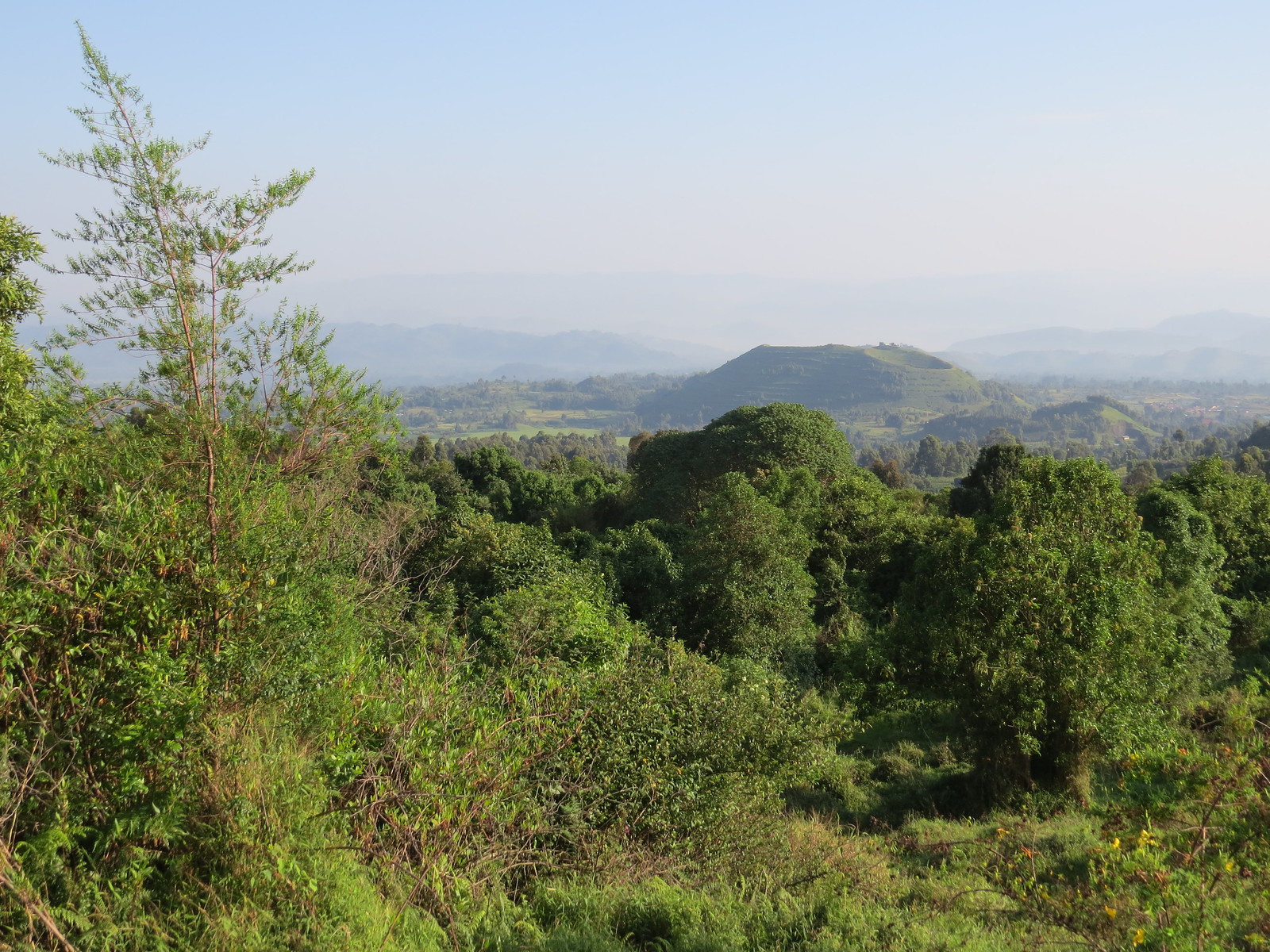
The landscape is one of the biggest differences between Mgahinga and Bwindi. While Bwindi is famous for its dense rainforest, Mgahinga is characterised by forested volcanic slopes, bamboo vegetation and spectacular mountain scenery.
The park protects three of the Virunga volcanoes, creating a dramatic backdrop for wildlife experiences. This means that a gorilla trek in Mgahinga is not simply a forest walk. It is also a journey through a volcanic mountain environment.
Mgahinga has fewer gorilla trekking opportunities than Bwindi, but this can be an advantage for travellers who prefer a quieter and less crowded destination.
Which Park Has More Gorillas?
Bwindi generally has the larger mountain gorilla population and a much larger gorilla tourism operation. The Bwindi-Sarambwe ecosystem recorded 459 mountain gorillas during the 2018 census, while the wider Virunga Massif, which includes Mgahinga, recorded 604 mountain gorillas during its 2015 census.
It is important to understand that the 604 gorillas recorded in the Virunga Massif were not all in Uganda. The Virunga population is shared between Uganda, Rwanda and the Democratic Republic of Congo.
Bwindi therefore has a particularly important role in Uganda’s mountain gorilla conservation programme.
The population figures should not, however, be interpreted as a guarantee of better sightings. A larger gorilla population does not automatically mean that every visitor will have a closer or longer encounter.
Does Bwindi Have Better Gorilla Sightings?
Bwindi generally provides more opportunities for visitors because of its larger number of habituated gorilla groups and four trekking sectors. This gives safari planners more flexibility when arranging permits and accommodation.
However, gorilla sightings are not like wildlife viewing on an open savannah. You cannot simply drive around until you find a gorilla family.
The gorillas move through the forest naturally. Their location can change from one day to another, and sometimes even during the course of a trek. Trackers and guides use their knowledge of the animals and information about their recent movements to locate the family.
This means that the actual experience depends heavily on where the gorillas are on the day of your trek.
A visitor in Bwindi can have an incredible encounter, but another visitor in Mgahinga can have an equally unforgettable experience.
What Makes Bwindi Attractive for Gorilla Sightings?
The biggest advantage of Bwindi is its scale and variety. With several trekking sectors and numerous habituated families, the park has a much broader gorilla tourism system.
This also means that visitors can choose accommodation according to their trekking sector. A traveller with a Buhoma permit can stay near Buhoma, while someone trekking in Rushaga can choose accommodation in the southern part of the park.
This reduces unnecessary travel before the trek and makes the overall safari more comfortable.
Bwindi also provides opportunities to combine gorilla trekking with other activities. Visitors can explore local communities, participate in cultural experiences, enjoy birdwatching and experience the surrounding forest environment.
The diversity of activities makes Bwindi particularly attractive for travellers who want a complete safari rather than gorilla trekking alone.
What Makes Mgahinga Attractive for Gorilla Sightings?
Mgahinga’s greatest strength is its intimate character.
Because the gorilla tourism operation is smaller, the park can feel much quieter than Bwindi. There are fewer visitors and fewer trekking groups, which can create a more peaceful atmosphere.
The volcanic landscape also makes the experience visually different.
Imagine trekking through the forest with the slopes of the Virunga volcanoes rising around you. The scenery becomes part of the wildlife experience, creating a combination of mountain adventure and gorilla trekking.
Mgahinga is also an excellent destination for travellers who want to experience other primates. The park is particularly well known for golden monkey trekking, allowing visitors to combine two important primate experiences during the same Uganda safari.
Are Gorilla Sightings Guaranteed in Bwindi?
No.
No responsible safari operator should promise a guaranteed gorilla encounter.
The gorillas are habituated to human presence, but they remain wild animals. They are not kept in an enclosure or moved to a particular viewing location for tourists.
Their movements depend on food, social behaviour, weather, terrain and other natural factors.
The trackers begin searching based on information about the gorilla family’s previous location and follow signs through the forest. Their experience is extremely valuable, but the animals ultimately determine where the encounter takes place.
This is an important part of the authenticity of gorilla trekking.
Are Gorilla Sightings Guaranteed in Mgahinga?
The same principle applies to Mgahinga.
Although the park is smaller, the gorillas still move naturally through their habitat. Their location cannot be guaranteed in advance.
A smaller park does not mean that the gorillas will always be close to the starting point.
The terrain can also be challenging because Mgahinga is located in a mountainous environment. Depending on where the gorilla family is located, visitors may have to hike through steep sections of forest.
The reward is an opportunity to observe one of the world’s rarest great apes in an authentic natural environment.
Which Park Is Easier for Gorilla Trekking?
It is difficult to say that either park is always easier.
Bwindi’s terrain varies significantly between sectors. Some treks may involve steep slopes and thick vegetation, while others may be relatively manageable depending on where the gorilla family is located.
Mgahinga can also be physically demanding because of its volcanic terrain and elevation.
The duration of a gorilla trek can vary considerably. Sometimes the gorillas may be found relatively close to the trailhead, while on other days trackers may have to walk for several hours.
Fitness is therefore important regardless of which park you choose.
Bwindi for First-Time Gorilla Trekkers
For someone visiting Uganda for the first time specifically to see mountain gorillas, Bwindi is often the easiest recommendation.
The reason is not necessarily that the gorillas are easier to find. The main advantage is the flexibility offered by the different trekking sectors.
There are more accommodation options, more habituated families and more possibilities for building an itinerary around the trek.
Travellers can also choose between different levels of accommodation, from budget and mid-range properties to luxury lodges.
This makes Bwindi particularly convenient for international travellers who want to combine gorilla trekking with other Ugandan destinations.
Mgahinga for Travellers Seeking Privacy
Mgahinga can be particularly attractive to travellers who prefer quieter destinations.
The smaller scale of the park creates a different atmosphere from the more established tourism areas of Bwindi.
Instead of feeling like you are visiting a major tourist destination, Mgahinga can feel more remote and personal.
This can be especially appealing to couples, photographers and travellers who want to enjoy the forest without encountering large numbers of other visitors.
The volcanic scenery adds another major attraction and makes Mgahinga stand out from other gorilla trekking destinations.
Bwindi and Accommodation
Bwindi has a clear advantage when it comes to accommodation.
Because the park has four major trekking sectors and a larger tourism industry, there is a wide range of places to stay.
Travellers can find luxury lodges, comfortable mid-range accommodation and more affordable options.
Some luxury properties are positioned close to the trekking trailheads, making them particularly convenient for visitors who want comfort without long morning transfers.
This variety also makes Bwindi suitable for different types of travellers, including honeymooners, families, photographers and luxury safari clients.
Mgahinga and Accommodation
Mgahinga has fewer accommodation choices compared with Bwindi.
However, this is not necessarily a disadvantage.
Travellers who choose Mgahinga are often looking for a more intimate and less commercial experience.
The smaller number of properties can contribute to the feeling of being away from the main tourist routes.
For visitors who prioritise luxury accommodation and a large selection of lodges, Bwindi is likely to be more suitable.
For travellers who value privacy and a quieter environment, Mgahinga can be extremely appealing.
Which Park Is Better for Photography?
Both parks are excellent for photography, but they offer different photographic environments.
Bwindi is ideal for travellers who want classic rainforest images. The thick vegetation, misty forest, dramatic slopes and close encounters with gorillas provide many opportunities for wildlife photography.
Mgahinga offers the additional advantage of spectacular volcanic scenery.
The Virunga Mountains provide dramatic backgrounds, while the forest and bamboo vegetation create different photographic environments.
For someone interested primarily in gorilla portraits and forest photography, Bwindi may be preferable.
For someone who wants a combination of wildlife and mountain landscapes, Mgahinga can be more rewarding.
Which Park Is Better for a Luxury Safari?
Bwindi generally has the advantage for luxury travellers because of its larger selection of high-end lodges.
Luxury accommodation is available in several of its trekking sectors, allowing travellers to choose a property that matches their gorilla permit.
The combination of luxury accommodation, private transfers, excellent food and gorilla trekking makes Bwindi particularly attractive for high-end safari travellers.
Mgahinga can still provide a wonderful luxury experience, but the accommodation choices are more limited.
The decision therefore depends on whether luxury accommodation variety or a quieter environment is more important to you.
Which Park Is Better for Honeymooners?
Both parks can be excellent for a honeymoon.
Bwindi offers a greater selection of luxury lodges and can easily be combined with other romantic destinations in Uganda.
Couples can combine gorilla trekking with time around Lake Bunyonyi, Queen Elizabeth National Park or other scenic destinations.
Mgahinga provides a quieter and more secluded environment, with dramatic mountain scenery that can create a very romantic atmosphere.
For couples who want a private adventure away from busier tourism areas, Mgahinga can be an excellent choice.
Which Park Offers the More Authentic Experience?
Both offer authentic experiences.
Mountain gorillas in Bwindi and Mgahinga are wild animals living in protected natural habitats.
The difference is not really authenticity but atmosphere.
Bwindi feels like a vast rainforest wilderness with several tourism sectors.
Mgahinga feels like a compact volcanic wilderness.
The experience you prefer will depend on your personal interests.
If you enjoy deep rainforest environments and want a wider range of trekking options, Bwindi may be the better choice.
If you love mountains, volcanic landscapes and quieter destinations, Mgahinga may appeal more strongly to you.
The Importance of Choosing the Right Trekking Sector
If you decide to visit Bwindi, choosing the correct trekking sector is extremely important.
The park is geographically large, and travelling from one sector to another can take considerable time.
Your accommodation should therefore be selected according to the location of your gorilla trekking permit.
This is particularly important because gorilla trekking starts early in the morning. Staying close to your briefing point means you can wake up, have breakfast and prepare for the trek without a long road journey.
A well-planned itinerary should therefore consider the gorilla permit, accommodation and transportation together.
So, Which Park Has Better Gorilla Sightings?
If the question is strictly about which park provides more opportunities for gorilla trekking, Bwindi has the advantage.
Its larger gorilla population, several habituated families and four trekking sectors give travellers more flexibility.
But if the question is about which park provides a more intimate and peaceful experience, Mgahinga may be the better choice.
The actual gorilla encounter cannot be predicted simply by choosing one park over the other.
The gorillas determine the experience.
Their movements, the terrain, the weather and the location of the family all influence how the trek develops.
Final Verdict
Bwindi is generally the better choice for travellers who want more gorilla trekking options, more accommodation choices and greater flexibility.
Mgahinga is an excellent choice for travellers who want a quieter experience, fewer visitors and spectacular volcanic scenery.
Neither destination can honestly promise a better gorilla sighting every time.
What matters most is the quality of the conservation, the expertise of the trackers and guides, the preparation of the traveller and the natural behaviour of the gorillas.
Whether you trek through the dense forests of Bwindi or climb through the volcanic landscape of Mgahinga, you are entering one of the last remaining habitats of the mountain gorilla.
And when you finally come face-to-face with a gorilla family in its natural environment, the difference between Bwindi and Mgahinga becomes much less important than the experience itself.
