
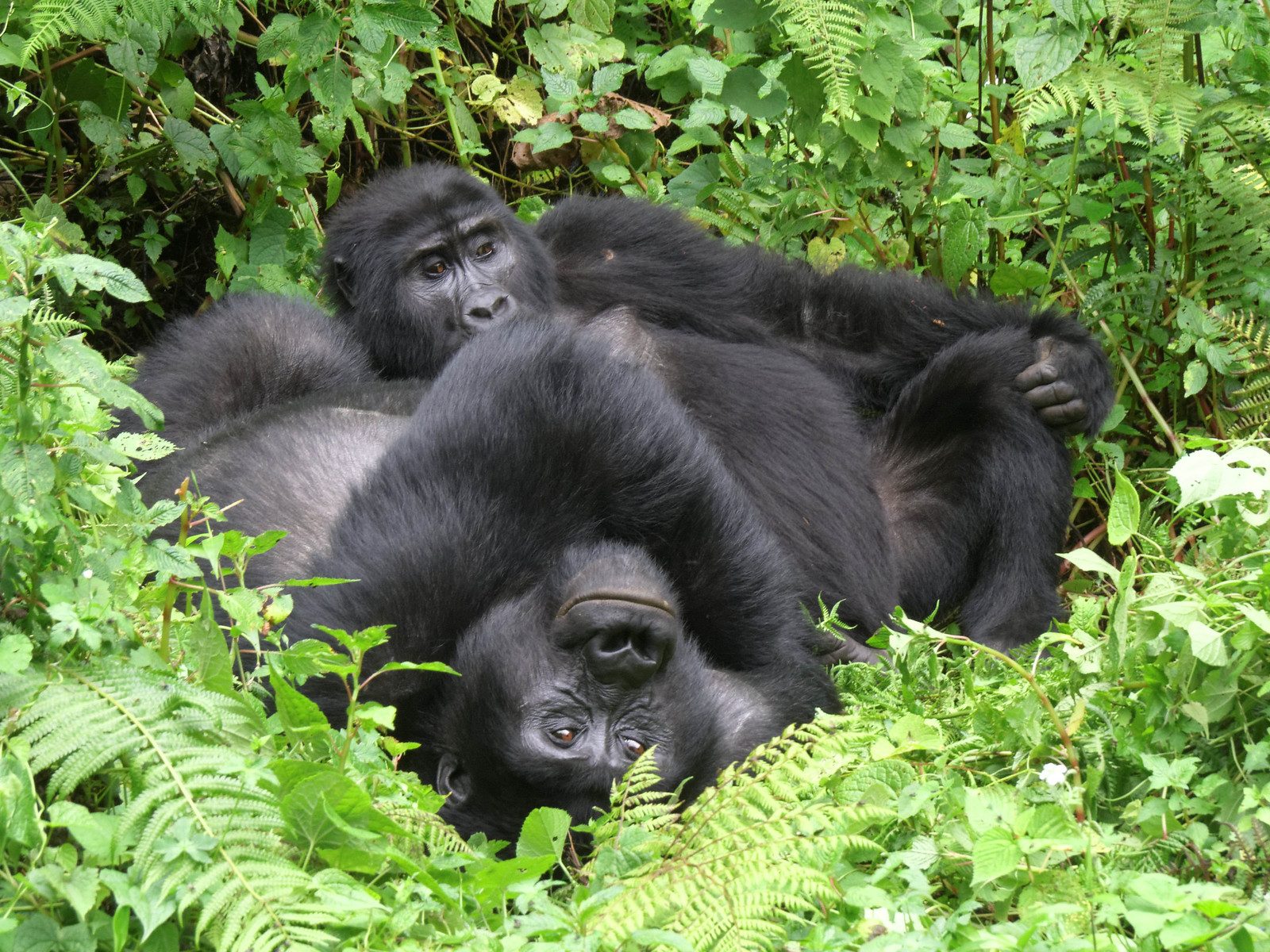
Gorilla Families of Bwindi: Which Group Will You Meet?
Bwindi Impenetrable National Park is one of the most remarkable wildlife destinations in Africa and one of the most important places on earth for the conservation of mountain gorillas. Located in southwestern Uganda, the park is covered by ancient rainforest, steep hills and deep valleys that form an extraordinary natural environment for one of the world’s most fascinating great apes.
For travellers planning a gorilla trekking safari in Uganda, one question naturally arises: Which gorilla family will I meet in Bwindi?
The answer is more interesting than simply choosing a family from a list. Gorilla families are living social groups, and their composition, leadership and location can change over time. Visitors also do not normally have complete freedom to select a particular family. Instead, gorilla trekking is organised around designated sectors of Bwindi, with visitors allocated to habituated gorilla groups according to the arrangements made by the Uganda Wildlife Authority.
Understanding how the families are organised, how they develop and why their composition changes can make your gorilla trekking experience much more meaningful. Rather than simply thinking about the gorillas as an attraction, you begin to understand that each family is a living community with its own relationships, history and social structure.
Understanding the Gorilla Families of Bwindi
Mountain gorillas are highly social animals. They normally live in family groups led by one or, in some cases, several adult males, with females, juveniles and infants forming the wider social unit. The dominant silverback plays an important role in protecting the group, maintaining social order and deciding where the family moves, rests and feeds.
However, the silverback is not the only important member of the family. Adult females contribute significantly to the social stability of the group, while younger gorillas learn social behaviour through interaction with other members. Infants remain closely connected to their mothers during their early development, and juveniles spend considerable time playing and learning from the adults around them.
This social complexity is one of the reasons gorilla trekking is so fascinating. Visitors are not simply looking at a collection of animals. They are observing a functioning social community.
The composition of these communities is not permanent. Gorillas are constantly growing, reproducing, ageing and changing their social relationships. A young male may eventually leave his family, a female may transfer to another group, a dominant silverback may lose his position, or a group may divide into smaller units. New infants can also change the size and dynamics of a family.
Consequently, the gorilla family you read about in an older travel article may not have exactly the same members when you visit Uganda several years later.
What Does It Mean for a Gorilla Family to Be Habituated?
When people hear the term “habituated gorilla family,” it is important to understand what it actually means.
Mountain gorillas remain wild animals. They have not been domesticated, trained to perform for tourists or placed in controlled enclosures. Instead, selected groups undergo a carefully managed habituation process that allows them to become accustomed to the presence of humans.
The process takes time and requires experienced trackers, researchers and conservation personnel. The objective is to allow the gorillas to tolerate human observers while continuing to behave naturally within their forest habitat.
Only habituated groups are normally available for conventional tourist trekking.
This system is essential for the protection of the gorillas. If visitors were allowed to search randomly for any gorilla group in the forest, the animals could experience unnecessary stress and disturbance. By limiting tourism to designated habituated families, Uganda can manage visitor numbers and monitor interactions more effectively.
The system also gives travellers a much better opportunity to observe natural gorilla behaviour without the animals being completely unfamiliar with human presence.
Where Can You Trek to See Gorilla Families in Bwindi?
Bwindi is a large forest and gorilla trekking is organised into different sectors. The four principal trekking sectors are Buhoma, Ruhija, Rushaga and Nkuringo.
These sectors are geographically separated, and the distance between them can make it impractical to treat Bwindi as a single trekking destination. Your permit is associated with a particular sector, which means that selecting the correct sector is one of the most important decisions when planning your safari.
The location of your accommodation should also correspond with the trekking sector on your permit. This is particularly important because gorilla trekking begins early in the morning, and travelling a long distance from your lodge to a different sector can create unnecessary complications.
Each sector has its own characteristics, surrounding communities, accommodation options and habituated gorilla families. The terrain also differs, meaning that the physical experience can vary depending on where you trek.
Buhoma and Its Gorilla Families
Buhoma is located in the northern section of Bwindi and has a special place in the history of Uganda’s gorilla tourism. It was the first area of the park where gorilla tourism was established, and it has therefore become one of the most recognised trekking destinations in the country.
The sector has been associated with several famous gorilla families, including groups such as Mubare, Habinyanja and Rushegura. These families have different histories, and their composition has changed over the years as individual gorillas have moved between groups and new generations have been born.
Mubare is particularly significant because of its place in the early development of gorilla tourism in Bwindi. The family was among the first groups to undergo habituation for tourism in the Buhoma area. Like all gorilla families, however, Mubare has experienced changes in membership and leadership over time.
Habinyanja is another historically important group from Buhoma. The family has undergone natural changes in its social structure, demonstrating how mountain gorilla groups can evolve as individuals mature, transfer between groups or establish new social relationships.
Rushegura is also associated with Buhoma and has been another important family for tourism in the sector. Visitors who trek in Buhoma may encounter one of these or other groups depending on the allocation and operational arrangements of the park authorities.
The important point for travellers is that choosing Buhoma does not necessarily mean choosing one specific family. The exact group you visit is determined through the park’s allocation system.
Ruhija and Its Gorilla Families
Ruhija is located in the eastern part of Bwindi and offers a different atmosphere from Buhoma. The area is surrounded by impressive forested hills and is particularly attractive to visitors interested in birdwatching because of Bwindi’s importance within the Albertine Rift.
The Ruhija sector has been associated with gorilla families such as Bitukura and Oruzogo, while the Kyaguriro group has also had a significant history in the area, particularly in relation to research and conservation.
Bitukura is known as one of the habituated groups associated with Ruhija. Its history illustrates the complexity of gorilla society, where several adult males may live within the same group while one dominant silverback maintains the leading position.
Oruzogo has also attracted considerable interest from visitors. The group has been known for its social activity, particularly among younger gorillas. Juveniles provide some of the most interesting behaviour to observe during a trek because they are still developing social skills and frequently interact through play.
Kyaguriro has an especially important scientific history. The group has been closely monitored for research purposes, contributing to the wider understanding of mountain gorilla behaviour and social development. Its history demonstrates that not every gorilla group is managed solely for tourism. Some groups play an important role in scientific research and conservation.
Rushaga and the Southern Gorilla Families
Rushaga is located in the southern part of Bwindi and has become an important gorilla trekking sector with several habituated families.
Families historically associated with the southern sector have included groups such as Nshongi, Bweza, Busingye and Kahungye, among others. Their histories provide an excellent example of how gorilla groups naturally change.
One of the most fascinating aspects of gorilla society is the process through which large groups can divide. When social conditions change, individuals mature or competition develops among males, a group may split into smaller social units. These new groups can eventually develop their own identities and become recognised as separate families.
The history of the Nshongi group provides an example of these types of changes. The group became well known for its relatively large social structure and later experienced divisions that contributed to the development of other groups.
Busingye is another family associated with the Rushaga region. Its name is commonly associated with the idea of peace, and the group has provided visitors with opportunities to observe the complex interactions between silverbacks, females and younger members.
Kahungye also has a significant history in the region and illustrates the dynamic nature of gorilla groups. Changes within such families are not unusual but are part of the natural development of mountain gorilla society.
Nkuringo and Its Gorilla Families
Nkuringo is located in the southern part of Bwindi and is particularly famous for its dramatic scenery. The area has steep slopes and impressive views across the surrounding landscape, creating a different trekking environment from some of the other sectors.
The Nkuringo gorilla family has become one of the most recognised groups associated with the sector.
Trekking in Nkuringo can be physically demanding because of the mountainous terrain. Visitors should therefore consider their physical fitness carefully when choosing this sector. At the same time, the challenging landscape is part of what makes the experience so memorable.
The combination of mountain scenery, dense forest and gorilla trekking provides an experience that appeals particularly to travellers who enjoy hiking and wilderness adventures.
Can You Choose Which Gorilla Family You Will See?
This is one of the most common questions from travellers planning a Uganda gorilla safari.
In most cases, you cannot simply choose a particular gorilla family and guarantee that you will visit it.
What you can normally choose is the trekking sector. Your permit is issued for a particular sector, and the park authorities organise the allocation of visitors among the available habituated groups within that area.
This system is necessary for conservation and visitor management.
Imagine if every traveller wanted to visit the same famous gorilla family. That group could receive much greater visitor pressure than others, creating unnecessary stress for the animals and potentially affecting their natural behaviour.
Controlled allocation helps distribute tourism more responsibly.
For this reason, a safari operator should not promise that you will definitely meet a specific family unless there is a particular official arrangement that allows it.
Why Gorilla Families Are Not Permanent
A gorilla family is not like a hotel or tourist attraction that remains exactly the same year after year.
Mountain gorilla society is constantly changing.
Infants are born and grow into juveniles. Juveniles become adults. Young males may leave their natal groups. Females can move between groups. Silverbacks can die, lose dominance or be replaced by another male.
Sometimes a group may split into two separate units. In other circumstances, individuals can join another family.
These changes are important because they help maintain genetic diversity and allow the population to develop naturally.
For travellers, this means that the experience should not be based on expectations such as “this family always has 20 members” or “this silverback will definitely be there.”
The family may have changed by the time you arrive.
That is not a problem. It is evidence that the gorillas are living natural lives.
The Role of the Dominant Silverback
The silverback is usually the most recognisable member of a gorilla family.
The term “silverback” refers to the silver-coloured hair that develops across the back of mature males. These males can become extremely powerful and may weigh considerably more than adult females.
The dominant silverback typically plays an important role in the group. He may protect the family from threats, determine movement patterns and help maintain social order.
However, visitors should not assume that every family contains only one adult male. Some groups may contain multiple silverbacks or other adult males, and their relationships can be complex.
Younger males may remain in the group for a period before eventually leaving and establishing themselves independently or joining another social group.
Watching these relationships is one of the most educational parts of gorilla trekking.
The Role of Mothers and Infants
The relationship between mothers and infants is another fascinating part of a gorilla family.
Newborn gorillas spend much of their early life close to their mothers. The mother provides protection, warmth and care while the infant gradually develops the physical and social skills necessary to become more independent.
As the young gorilla grows, it begins to interact more actively with other members of the family.
Visitors may sometimes see juveniles playing, climbing or exploring the vegetation around the group. These activities are not merely entertainment. Play helps young gorillas develop coordination, communication and social skills.
Observing these interactions gives visitors a much deeper understanding of gorillas as intelligent and highly social animals.
How Do Trackers Know Where the Family Is?
The work of the trackers is central to the success of gorilla trekking.
Trackers monitor the gorillas and look for signs that indicate their direction of movement. These can include feeding remains, footprints, broken vegetation and nesting sites.
Because they spend so much time in the forest, experienced trackers develop an impressive understanding of the terrain and the behaviour of individual families.
However, they do not have complete control over the animals’ movements.
A gorilla family can travel during the night or continue moving while visitors are approaching. The trackers therefore have to adapt continuously.
This is why a gorilla trek can sometimes take several hours.
The animals decide where they go, and the trackers follow.
Why the Gorilla Family May Be Far From the Starting Point
One of the most important things to understand before trekking is that the distance from the park headquarters to the gorillas is not fixed.
A family may be relatively close on one day and much farther away on another.
Mountain gorillas spend much of their day feeding, resting and travelling through the forest. The availability of food and other environmental factors can influence their movements.
If the family has travelled deep into the forest, visitors may need to walk for several hours before reaching them.
This is why physical preparation is important.
Gorilla trekking is not simply a wildlife viewing activity. It is a hiking experience through a challenging rainforest environment.
Does Every Gorilla Family Have the Same Behaviour?
No.
Although mountain gorillas share many biological and social characteristics, individual families can have noticeably different personalities and social dynamics.
Some groups may appear particularly active, while others may spend long periods feeding quietly.
Some may contain several energetic juveniles, while others may have more adults and fewer young animals.
The personality of the dominant silverback can also influence the group.
These differences are part of what makes visiting gorilla families so interesting.
You cannot know exactly what you will see before entering the forest.
What Makes Meeting a Gorilla Family Different From a Safari Sighting?
During a conventional safari, you may observe a pride of lions from a vehicle or watch elephants crossing a road. These encounters can be extraordinary, but gorilla trekking offers a different kind of experience because you physically travel through the forest to find the animals.
You are walking within their habitat.
The encounter is also more intimate because visitors spend a controlled period observing a single habituated family rather than simply passing through an area where multiple species are present.
This allows travellers to pay attention to social behaviour, relationships and individual personalities.
It is one of the reasons gorilla trekking is often described as an experience rather than simply a wildlife sighting.
Can the Gorilla Family Change During Your Trek?
Yes, the group can continue moving while you are in the forest.
The trackers may initially have an idea of where the family is located, but the animals can move before the trekking group reaches them.
When this happens, the trackers continue following signs of movement.
This can cause the route to change and may extend the duration of the trek.
For visitors, this is a normal part of the experience rather than a sign that the tracking team has lost control of the situation.
Experienced trackers are accustomed to following moving families through difficult terrain.
Is One Gorilla Family Better Than Another?
There is no objective answer to this question.
Every family offers something different because the animals have different social structures and individual personalities.
One traveller may be fascinated by a dominant silverback, while another may be most interested in watching juveniles interact with one another. A photographer may value the forest environment and lighting, while a wildlife enthusiast may be particularly interested in observing social behaviour.
This means that the idea of finding the “best” gorilla family is largely subjective.
The most important thing is not the name of the family but the quality of the encounter and the opportunity to observe the animals responsibly.
How Should You Choose Your Trekking Sector?
The best sector for you depends on your overall safari plans.
Buhoma is an excellent choice for travellers interested in the historical heart of Uganda’s gorilla tourism and additional forest activities.
Ruhija is particularly attractive to visitors who appreciate birdwatching, forest scenery and the quieter atmosphere of eastern Bwindi.
Rushaga is a strong option for travellers interested in the southern part of the forest and additional gorilla-related experiences.
Nkuringo is especially appealing to hikers who appreciate dramatic mountain scenery and are comfortable with more challenging terrain.
Your accommodation, transport arrangements and gorilla permit should all be coordinated around the sector you choose.
What If You Have a Specific Gorilla Family in Mind?
It is understandable to become interested in a particular gorilla family after reading about its history.
However, you should not build your entire safari around the assumption that you will definitely meet that group.
Family structures can change, groups can move and park authorities control tourist allocation.
If a particular family is especially important to you, discuss your preference with your safari operator before booking. They can explain what is realistically possible under the current trekking arrangements.
A professional operator should be honest rather than promising something that cannot be guaranteed.
The Importance of Conservation
The organisation of gorilla families is closely connected to conservation.
Mountain gorillas remain an endangered species, and their survival depends on the protection of their forest habitat, careful monitoring and responsible human interaction.
Gorilla tourism generates revenue that supports conservation and provides economic opportunities for communities around the parks.
The strict rules governing trekking are therefore not designed simply to make the experience more complicated for visitors. They exist to reduce pressure on the animals and protect the long-term future of the species.
Every visitor who follows the rules contributes to a more responsible tourism system.
What Should You Expect on the Day of Your Trek?
The most important expectation is uncertainty.
You know the sector where you will trek, but you may not know the exact route, the exact location of the gorilla family or precisely how long the trek will take.
You may meet a family with several playful juveniles or one with a quieter social atmosphere.
You may find the gorillas feeding in dense vegetation or resting in a more open section of the forest.
The weather may be dry or rainy. The trek may be relatively short or physically demanding. All of these possibilities are part of the experience.
The less you try to control every detail, the more you can appreciate what the forest offers you on that particular day.
Why the Gorilla Family You Meet May Become Your Favourite
Many travellers begin their safari with a particular family in mind but return home talking passionately about a completely different group.
This happens because the emotional connection often comes from the encounter itself.
Perhaps you watched a mother carefully caring for her infant. Perhaps a juvenile spent several minutes playing nearby.
Perhaps a silverback remained quietly within view while your group observed from the permitted distance.
Perhaps the family was moving through the forest as a group, giving you a glimpse into their social relationships.
Those experiences create personal memories that are far more meaningful than simply knowing the name of the family.
Final Thoughts
The gorilla families of Bwindi are constantly evolving communities, and that is one of the most fascinating aspects of mountain gorilla conservation. Families have their own histories, social relationships, leaders, mothers, juveniles and individual personalities, but none of these characteristics remain completely unchanged.
Visitors normally do not select an individual gorilla family with certainty. Instead, they choose a trekking sector such as Buhoma, Ruhija, Rushaga or Nkuringo and obtain a permit for that area. The Uganda Wildlife Authority manages the allocation of visitors among the habituated groups available for tourism.
This approach helps distribute visitor pressure and supports responsible gorilla tourism.
Whether you eventually meet Mubare, Habinyanja, Rushegura, Bitukura, Oruzogo, Nkuringo, Busingye, Bweza, Nshongi or another habituated family, the most important part of the experience is the opportunity to observe mountain gorillas living naturally within the forests of Uganda.
The family name may be what you research before your trip, but the individual animals and their behaviour are what you will remember afterwards.
Gorilla trekking is not about finding a particular name on a list. It is about entering the world of a living gorilla family, understanding its social relationships and experiencing one of Africa’s most extraordinary wildlife encounters in the heart of Bwindi Impenetrable Forest.
