
Where to see giraffes: Species and subspecies across East Africa
Giraffes are among the most recognisable animals on an East African safari. Their exceptional height, long necks, patterned coats and graceful movements make them easy to identify across open grasslands and savannas. However, giraffes found in different parts of East Africa do not all look alike. Their coat patterns, geographical ranges and physical features vary between populations.
East Africa is home to three of Africa’s four recognised giraffe species: the Masai giraffe, reticulated giraffe and northern giraffe. The northern giraffe population in Uganda and parts of Kenya is commonly associated with the name Rothschild’s giraffe, although modern conservation classification places Rothschild’s giraffe within the Nubian giraffe population.
Kenya and Tanzania are important destinations for seeing Masai and reticulated giraffes, while Uganda is particularly well known for its Nubian giraffes. These animals inhabit different landscapes, from the open plains of the Serengeti and Maasai Mara to the savannas of Murchison Falls and Kidepo Valley.
Understanding where each type occurs helps you choose the right national parks for your safari. It also makes wildlife viewing more interesting because you can learn to recognise giraffes by their markings rather than simply identifying them as one general species.
How many types of giraffes are found in Africa?
Giraffes were traditionally classified as one species divided into several subspecies. However, genetic research has provided evidence that giraffes belong to four distinct species. This classification is now recognised by the IUCN’s Giraffe and Okapi Specialist Group.
The four recognised species are the Masai giraffe, reticulated giraffe, northern giraffe and southern giraffe. The southern giraffe mainly occurs in southern Africa, while the other three are particularly relevant to East African wildlife viewing.
The Masai giraffe is found mainly in Kenya and Tanzania. The reticulated giraffe is associated with northern Kenya and neighbouring parts of Ethiopia and Somalia. The northern giraffe includes the Nubian giraffe, which occurs in Uganda and parts of Kenya, as well as other populations in Central and West Africa.
These differences are important for conservation because each species has its own geographical distribution and faces different threats. Habitat protection, wildlife corridors and community conservation programmes help maintain the populations across their natural ranges.
Masai giraffes in Kenya and Tanzania
The Masai giraffe is one of the most familiar giraffes in East Africa. It occurs across large areas of Kenya and Tanzania, particularly in savannas with scattered trees, open woodland and grassland.
Its coat has irregular, jagged patches that often resemble leaves or vines. The markings are uneven and continue down the legs, making the Masai giraffe relatively easy to distinguish from the reticulated giraffe.
Masai giraffes feed mainly on leaves, shoots and other vegetation from trees and shrubs. Acacia trees are important food sources, and their long tongues help them reach between thorny branches. Their height allows them to feed on vegetation that many other herbivores cannot reach.
They are commonly encountered in the Maasai Mara, Amboseli, Tsavo, Serengeti and Tarangire. These protected areas contain suitable browsing vegetation and extensive habitats where giraffes can move between feeding locations.
The Masai giraffe also includes the Luangwa giraffe, traditionally known as Thornicroft’s giraffe, which occurs in Zambia’s Luangwa Valley. This population is not part of the usual Kenya and Tanzania safari circuit.
Where to see Masai giraffes in Kenya
Maasai Mara National Reserve
The Maasai Mara is one of Kenya’s leading destinations for seeing Masai giraffes. Its open grasslands and scattered trees provide suitable feeding grounds, and giraffes are regularly encountered during game drives.
You may see them feeding on acacia trees, crossing the plains or gathering in loose groups. Their height makes them relatively easy to spot, although they can become less visible when moving through thicker woodland.
The surrounding conservancies also provide suitable giraffe habitat. Areas such as Mara North, Naboisho and Olare Motorogi form part of the wider Mara ecosystem and offer additional opportunities to observe wildlife.
Amboseli National Park is another excellent place to see Masai giraffes. The park is famous for its large elephant herds and views of Mount Kilimanjaro, but its open plains and woodland areas also support giraffes.
They are often seen feeding among scattered trees or moving across the grasslands. When the mountain is visible, photographers may capture giraffes against the impressive Kilimanjaro landscape.
Amboseli is particularly attractive to visitors who want to combine giraffe viewing with elephants, buffaloes, zebras and other savanna wildlife.
Tsavo East and Tsavo West national parks
Tsavo East and Tsavo West provide further opportunities to see Masai giraffes. These large parks contain dry savanna, open woodland and bushland, creating suitable conditions for browsing animals.
Tsavo East is known for its expansive landscapes and reddish soil, while Tsavo West has a more varied environment with hills, rocky areas and vegetation. Both parks offer a different setting from the Mara and Amboseli.
Where to see Masai giraffes in Tanzania
Serengeti National Park
The Serengeti is one of Tanzania’s best places to observe Masai giraffes. Its open plains, scattered trees and riverine woodland provide suitable feeding areas.
Giraffes can be encountered in several parts of the park, including the central Serengeti and areas around the western and northern regions. They may be seen feeding in woodland or walking across open grassland.
The Serengeti’s large wildlife populations make it possible to combine giraffe viewing with sightings of lions, elephants, cheetahs, leopards and other animals.
Tarangire National Park is another excellent destination. It is particularly known for its baobab trees, elephant herds and seasonal wildlife concentrations.
Masai giraffes are regularly seen browsing among the trees and shrubs. Their height makes them easy to identify against the park’s distinctive landscape.
The Tarangire River attracts wildlife during the dry season, and game drives can produce sightings of giraffes alongside elephants, zebras, wildebeest and several antelope species.
Lake Manyara National Park
Lake Manyara National Park supports Masai giraffes within its varied habitats. The park contains groundwater forests, open woodland, floodplains and lakeshore vegetation.
Giraffes may be encountered in woodland clearings or near the edges of the forest. Their movements depend on feeding opportunities and the availability of suitable vegetation.
Lake Manyara is a useful addition to a northern Tanzania safari that also includes Tarangire, Ngorongoro and the Serengeti.
Ngorongoro Conservation Area
Masai giraffes also occur in the wider Ngorongoro Conservation Area. They are more likely to be encountered in suitable woodland and grassland habitats outside the crater floor.
Visitors exploring the surrounding highlands and open areas may see giraffes feeding or moving through the landscape. The Ngorongoro Conservation Area is also an important destination for seeing elephants, zebras, wildebeest and several predators.
Reticulated giraffes in northern Kenya
The reticulated giraffe is one of the easiest giraffe types to recognise. Its coat has large, clearly defined reddish-brown or chestnut patches separated by narrow white lines. These markings form a regular network across the body, giving the animal its name.
Unlike the irregular patches of the Masai giraffe, the reticulated giraffe’s markings have more defined edges and a geometric appearance. The contrast between the dark patches and pale lines makes it particularly attractive to wildlife photographers.
Reticulated giraffes are associated with dry and semi-arid landscapes in northern Kenya. They also occur in parts of Ethiopia and Somalia. Their habitat includes open bushland, scrub and areas with scattered trees.
They feed on leaves and shoots from trees and shrubs. Their height allows them to browse above the feeding level of many smaller herbivores, although they still depend on suitable vegetation across their range.
Northern Kenya is the best region to plan a safari focused on reticulated giraffes. Samburu, Buffalo Springs, Shaba, Meru and several Laikipia conservancies offer opportunities to see them.
Where to see reticulated giraffes in Kenya
Samburu National Reserve is one of the most popular places to see reticulated giraffes. Located in northern Kenya, the reserve has a dry landscape shaped by the Ewaso Ng’iro River and surrounding semi-arid plains.
Giraffes are often seen browsing along riverine woodland or moving through open bushland. The reserve is also known for northern Kenyan wildlife such as Grevy’s zebras, gerenuks, Beisa oryx and Somali ostriches.
Samburu is a particularly good destination for visitors who want to see several species associated with the drier northern parts of the country.
Buffalo Springs and Shaba national reserves
Buffalo Springs and Shaba are neighbouring reserves that form part of the wider Samburu ecosystem. Their riverine vegetation, dry woodland and open areas provide suitable habitat for reticulated giraffes.
Wildlife moves between suitable habitats across this landscape, so visitors may encounter giraffes during game drives in different sections of the ecosystem.
These reserves can be combined with Samburu in a longer northern Kenya safari.
Meru National Park is another destination where visitors can look for reticulated giraffes. The park has rivers, woodlands, open grasslands and areas of dense vegetation.
Its varied habitats support elephants, lions, leopards, zebras and several antelope species. Giraffes may be seen feeding near trees or moving through open areas.
Meru is a useful option for travellers who want to explore a less frequently visited national park in Kenya.
Laikipia conservancies
Laikipia is particularly interesting for visitors who want to see reticulated giraffes in private and community-managed conservation areas. Several conservancies support important wildlife populations and provide opportunities for guided game drives.
Lewa Wildlife Conservancy is one of the well-known conservation destinations in the region. It is recognised for rhino conservation and also supports reticulated giraffes and other wildlife.
The experience varies between conservancies, but some offer quieter game drives and opportunities to learn about wildlife monitoring and conservation activities.
Nubian giraffes in Uganda and Kenya
The Nubian giraffe is part of the northern giraffe species. It is particularly important to East African conservation because Uganda holds significant populations.
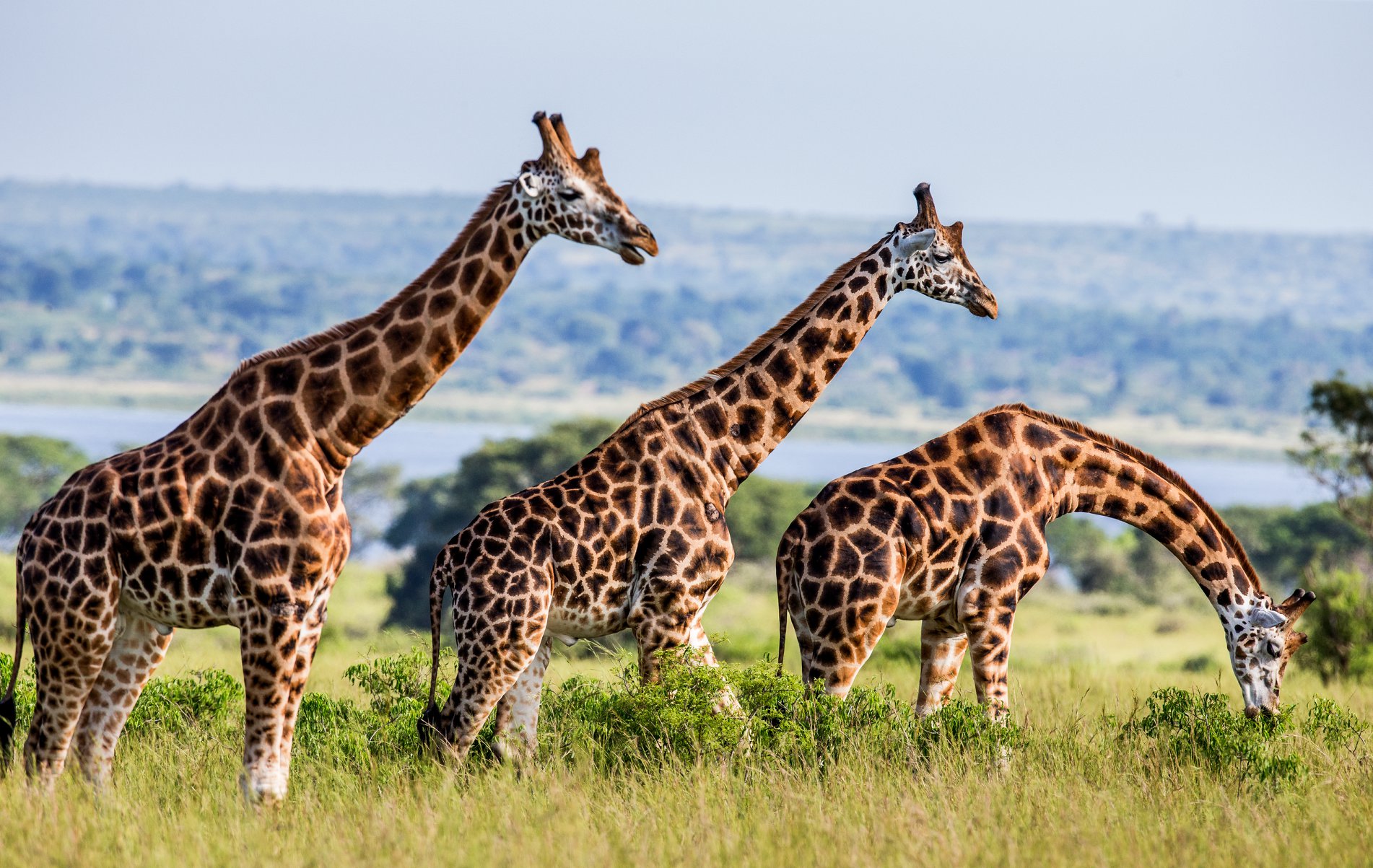
Its coat has large, irregular chestnut-brown patches separated by pale lines. The lower legs are generally pale and unmarked, which can help distinguish it from other giraffe populations.
In older wildlife literature and tourism descriptions, these animals are often called Rothschild’s giraffes. Modern genetic research has shown that Rothschild’s giraffe is genetically the same as the Nubian giraffe, so it is now included within that population rather than treated as a separate subspecies.
Uganda is one of the most practical destinations for seeing Nubian giraffes in their natural habitat. The main natural populations occur in Murchison Falls National Park and Kidepo Valley National Park. A population has also been reintroduced to Pian Upe Wildlife Reserve.
Kenya has Nubian giraffe populations in selected protected areas and conservation properties, including Ruma National Park and Ruko Community Wildlife Conservancy near Lake Baringo.
Where to see Nubian giraffes in Uganda
Murchison Falls National Park
Murchison Falls National Park is one of the best places in Uganda to see Nubian giraffes. The park supports an important population, particularly in the northern sector, where open savanna and woodland provide suitable habitat.
Game drives across the northern bank of the Nile offer good opportunities to encounter them. Giraffes may be seen feeding on trees, walking across open grassland or gathering in loose groups.
The northern sector also supports elephants, buffaloes, Uganda kob, hartebeests and several predators. Visitors can combine giraffe viewing with a boat safari on the Victoria Nile, where hippos and Nile crocodiles are among the main attractions.
Murchison Falls is a practical choice for visitors who want to see Uganda’s giraffes without travelling to the more remote northeastern part of the country.
Kidepo Valley National Park
Kidepo Valley National Park is another important destination for Nubian giraffes. Located in northeastern Uganda near the borders with South Sudan and Kenya, the park has extensive savanna landscapes surrounded by mountains.
Giraffes can be seen across suitable grassland and woodland areas. The park’s quieter atmosphere makes it attractive to visitors seeking a less crowded wildlife experience.
Kidepo is also home to elephants, lions, buffaloes, zebras, hartebeests and several other species. Its remote location means that visitors should allow enough time for the journey from Kampala.
Pian Upe Wildlife Reserve
Pian Upe Wildlife Reserve in eastern Uganda is another location associated with Nubian giraffe conservation. Giraffes were reintroduced to the reserve as part of efforts to restore wildlife to areas where populations had disappeared.
The reserve contains open grassland, rocky hills and semi-arid vegetation. It provides a different setting from the forests and savannas of western Uganda.
Giraffe sightings depend on animal movements and the availability of guided activities. Visitors should confirm current access and wildlife viewing arrangements before including Pian Upe in an itinerary.
Where to see Nubian giraffes in Kenya
Although Uganda is particularly associated with Nubian giraffes, Kenya also has populations in selected protected areas.
Ruma National Park in western Kenya is an important destination. It supports Nubian giraffes alongside other wildlife and offers a different experience from the major safari reserves in southern and northern Kenya.
Ruko Community Wildlife Conservancy near Lake Baringo is another notable location. The conservancy has been involved in efforts to restore giraffes to the area through conservation translocations.
Other Kenyan protected areas and conservation properties have received or support Nubian giraffes. These include selected reserves and conservancies around the Rift Valley and central parts of the country. Access and sightings vary, so travellers should check current arrangements before planning a visit specifically for this population.
What happened to Rothschild’s giraffe?
Rothschild’s giraffe was historically treated as a separate subspecies and became widely known through conservation programmes in Uganda and Kenya.
Its population declined significantly, and it disappeared from much of its former range. Conservation organisations and wildlife authorities worked to protect the remaining animals and establish populations in suitable areas through translocations.
Genetic studies later found that Rothschild’s giraffe is not genetically distinct from the Nubian giraffe. It is therefore included within the Nubian giraffe population under the modern classification.
The name Rothschild’s giraffe remains common in tourism materials, older wildlife books and some conservation discussions. If you visit Murchison Falls or Kidepo Valley, you may still hear guides use this familiar name.
How to identify giraffe types on safari
Identifying giraffes becomes easier when you pay attention to their coat patterns and geographical location.
The Masai giraffe has irregular, jagged patches that resemble leaves or vines. Its markings continue down the legs and have uneven edges. It is commonly found in southern Kenya and much of Tanzania.
The reticulated giraffe has large, sharply defined patches separated by narrow white lines. Its coat has a regular, net-like appearance. Northern Kenya is the best region to search for this type.
The Nubian giraffe has large chestnut-brown patches with pale lines between them. Its lower legs are generally pale and unmarked. Uganda’s Murchison Falls and Kidepo Valley are important destinations for seeing this population.
Geography is also useful when identifying giraffes. A giraffe seen in Samburu is likely to be reticulated, while one seen in the Maasai Mara is generally a Masai giraffe. In Murchison Falls, the giraffes are part of the Nubian population.
Coat patterns can vary between individuals, so it is better to consider both physical appearance and location rather than relying on one marking alone.
Comparing the main giraffes of East Africa
| Giraffe | Main distribution | Coat pattern | Places to see them |
|---|---|---|---|
| Masai giraffe | Kenya and Tanzania | Irregular, jagged patches | Maasai Mara, Amboseli, Serengeti, Tarangire |
| Reticulated giraffe | Northern Kenya and neighbouring parts of Ethiopia and Somalia | Large geometric patches with narrow white lines | Samburu, Buffalo Springs, Shaba, Laikipia |
| Nubian giraffe | Uganda and selected parts of Kenya | Chestnut patches with pale lower legs | Murchison Falls, Kidepo, Pian Upe, Ruma |
Can you see different giraffe types on one East African safari?
Yes. Kenya is particularly useful for travellers who want to see more than one giraffe type because the country supports Masai, reticulated and Nubian giraffe populations.
A Kenya itinerary could begin in the Maasai Mara, where you can look for Masai giraffes. You could then travel north towards Samburu or Laikipia to search for reticulated giraffes. Including Ruma National Park or Ruko Community Wildlife Conservancy would provide an opportunity to look for Nubian giraffes.
Tanzania is a strong choice for visitors interested in Masai giraffes. A northern circuit safari combining Tarangire, Lake Manyara, Ngorongoro and the Serengeti offers several opportunities to see them.
Uganda is particularly suitable for travellers interested in Nubian giraffes. Murchison Falls and Kidepo Valley are the main natural destinations, while Pian Upe offers an additional conservation-focused experience.
A longer East African itinerary could combine Uganda with Kenya or Tanzania. This would allow you to see different giraffe populations while also visiting other wildlife destinations. However, the route should account for international flights, border crossings and travel time between parks.
Best time of year to see giraffes
Giraffes can be seen throughout the year in the major East African parks. They do not undertake the same large seasonal migration as wildebeest, although they move within their home ranges in search of food and suitable habitat.
The dry seasons are often convenient for wildlife viewing. Shorter grass and thinner vegetation can make animals easier to spot, while wildlife may concentrate around areas with reliable water and food.
In Kenya and Tanzania, the main dry-season period generally occurs between June and October, with another relatively dry period often falling between January and February. Actual conditions vary by location and year.
In Uganda, Murchison Falls and Kidepo Valley can be visited throughout the year. Dry periods usually make some park tracks easier to navigate, although weather conditions can change quickly. Rainy months bring greener vegetation, which can make photography attractive but sometimes reduce visibility.
For a safari focused on giraffes, the location of your accommodation and the amount of time spent exploring the park are often more important than choosing one particular month. Staying near suitable habitat and allowing several game drives gives you more opportunities to find different groups.
Giraffe conservation in East Africa
Giraffes face several conservation challenges across Africa. Habitat loss, agricultural expansion, illegal hunting, civil conflict and the fragmentation of natural landscapes have affected populations in different regions.
East Africa has experienced both population declines and successful conservation recoveries. Protected areas, private conservancies and community wildlife initiatives have helped maintain important populations.
Uganda’s giraffe conservation programme includes protecting natural populations in Murchison Falls and Kidepo Valley, alongside reintroductions to areas such as Pian Upe. These efforts help restore giraffes to parts of their former range.
In Kenya, conservation organisations and community conservancies have supported reticulated giraffe populations through habitat protection, monitoring and efforts to reduce conflict with people. Laikipia and northern Kenya are important areas for these programmes.
Tanzania’s large savanna ecosystems support important Masai giraffe populations. Protecting wildlife corridors between national parks and surrounding landscapes is essential because giraffes need room to move and find food.
Responsible tourism can support conservation through park fees, employment, accommodation operations and community initiatives. Visitors can contribute by choosing responsible safari operators, respecting wildlife viewing rules and avoiding activities that disturb animals.
How giraffes behave in the wild
Giraffes are social animals, but their groups are not always permanent. Individuals may join or leave groups depending on age, sex, feeding conditions and other factors. These changing associations are sometimes described as a fission-fusion social system.
Females are often seen with calves and younger giraffes, while adult males may spend more time alone or move between groups. Males sometimes compete for access to females through a behaviour known as necking.
During necking, two males swing their necks and heads against each other. The impacts can be powerful, and the behaviour helps establish dominance. It may look aggressive, but it is a natural part of giraffe social and reproductive behaviour.
Giraffes spend much of the day feeding. They use their long tongues to pull leaves from branches and can reach vegetation unavailable to many other herbivores. They also drink water when available, although they can obtain a significant amount of moisture from the plants they eat.
Their height provides a wide field of view across open landscapes. It can help them detect approaching predators, although young calves remain vulnerable to lions, hyenas and other predators.
Photographing giraffes on safari
Giraffes are excellent subjects for wildlife photography because their height and coat patterns create distinctive compositions. You can photograph a full animal against the savanna, focus on its face or capture a group feeding among trees.
A telephoto lens is useful when photographing individual animals from a game drive vehicle. A lens around 70-300mm or 100-400mm is suitable for many situations, while wider lenses can capture giraffes within their landscape.
Early morning and late afternoon often provide softer light. These periods can also create attractive backgrounds, especially when giraffes are feeding among trees or moving across open plains.
Try photographing the animal from the side to capture its full body and distinctive markings. Close-up photographs of the face can reveal its eyes, ears and the short, horn-like structures on its head.
Avoid asking your guide to move too close or block the animal’s path. Giraffes may appear calm, but they are large wild animals and should be given enough space to feed and move naturally.
Choosing the best East African destination for giraffe viewing
The best destination depends on which giraffe you want to see. The Maasai Mara, Amboseli and Serengeti are strong choices for Masai giraffes. Samburu, Buffalo Springs, Shaba and Laikipia are among the leading places for reticulated giraffes. Murchison Falls and Kidepo Valley are important destinations for Nubian giraffes in Uganda.
If you want to see several giraffe types during one trip, Kenya offers a useful starting point because of its varied wildlife regions and different giraffe populations. Tanzania is particularly suitable for a safari centred on Masai giraffes, while Uganda provides a distinctive experience for travellers interested in Nubian giraffes and their conservation history.
Giraffes are present in East Africa’s major savanna landscapes throughout the year, so you can plan your trip around the wider wildlife experience rather than a short seasonal event. With enough time in the right habitats, you can observe their feeding behaviour, social interactions and different coat patterns while learning how these remarkable animals survive across the region.



No comment