
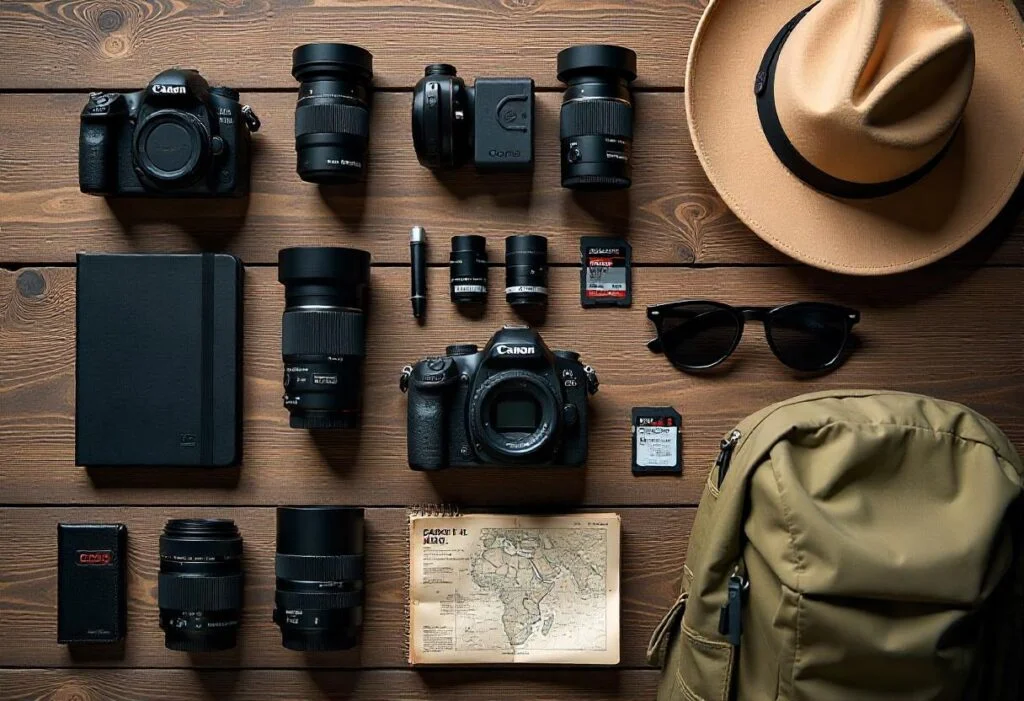
Safari Photography Checklist: What to Pack in Your Camera Bag
Assembling an appropriate camera bag for an East African safari requires balancing genuinely comprehensive photographic capability against practical weight and space constraints, visitors often uncertain exactly which equipment genuinely deserves inclusion within their limited luggage allowance. Safari photography checklist covers what genuinely belongs in your camera bag, this practical guidance helping visitors pack appropriately without either critical gaps or unnecessary excess weight throughout their trip.
Key Highlights
- A telephoto lens represents the single most essential wildlife photography equipment item
- Multiple memory cards and backup storage protect against data loss throughout your trip
- Camera support equipment addresses vehicle-based photography’s inherent stability challenges
- Protective equipment guards against dust, moisture and general environmental exposure
- Power and charging equipment ensures continuous equipment function throughout extended days
- Cleaning supplies maintain equipment performance despite challenging field conditions
Why a Telephoto Lens Represents Essential Equipment
A telephoto lens represents the single most essential wildlife photography equipment item, this equipment category’s importance for achieving adequate wildlife magnification making it genuinely non-negotiable for visitors seriously pursuing wildlife photography, visitors should prioritise packing appropriate telephoto capability above virtually any other equipment consideration.
Why This Single Item Deserves Top Packing Priority
Without adequate telephoto reach, wildlife subjects typically appear disappointingly small and distant within resulting images, visitors should ensure their telephoto lens packing decision receives careful, prioritised attention above other equipment considerations given its genuinely fundamental importance to successful safari photography.
Memory Cards and Backup Storage
Multiple memory cards and backup storage protect against data loss throughout your trip, visitors should pack considerably more memory card capacity than they expect to need, alongside some form of backup storage solution, this redundancy protecting against potential card failure or loss throughout an extended trip without reliable internet access for cloud backup.
Camera Support Equipment
Camera support equipment addresses vehicle-based photography’s inherent stability challenges, visitors should pack a bean bag or similar support equipment specifically suited to vehicle-based photography, this stability equipment genuinely important given standard tripods’ general impracticality within safari vehicle confines.
Why Support Equipment Deserves Dedicated Packing Space
Vehicle-based photography’s inherent stability challenges make dedicated support equipment genuinely important rather than optional, visitors should allocate specific packing space and priority to this equipment category despite its somewhat bulky nature, given its genuine contribution to achieving sharp final images.
Protective Equipment for Environmental Challenges
Protective equipment guards against dust, moisture and general environmental exposure, visitors should pack a rain cover, lens cloths and ideally a weather-resistant camera bag, this protective equipment category addressing East Africa’s genuine environmental challenges throughout a typical safari itinerary, from dusty dry-season roads to sudden tropical rainfall.
Power and Charging Equipment
Power and charging equipment ensures continuous equipment function throughout extended days, visitors should pack multiple charged batteries, appropriate charging cables and adapters suited to East African power outlets, plus ideally a portable power bank, this comprehensive power preparation preventing equipment downtime given many safari properties’ limited or scheduled power availability.
Why Comprehensive Power Preparation Deserves Particular Attention
Many safari lodges maintain genuinely limited or scheduled power availability rather than unlimited charging access, visitors should pack power equipment with this constraint specifically in mind, rather than assuming identical charging convenience to home or standard hotel accommodation elsewhere.
Cleaning Supplies for Field Maintenance
Cleaning supplies maintain equipment performance despite challenging field conditions, visitors should pack a basic cleaning kit including lens cloths, a blower brush and sensor cleaning supplies where appropriate for their skill level, this maintenance capability helping address dust and general grime accumulation throughout an extended dusty safari itinerary.
Lens Filters Worth Considering
Visitors should consider packing a polarising filter and protective UV or clear filters for their lenses, these relatively compact, lightweight accessories offering genuine photographic and protective benefit without consuming substantial additional luggage space or weight within an overall camera bag packing plan.
A Smaller Backup Camera or Smartphone
Visitors should consider their smartphone or a smaller secondary camera as genuine backup capability, should their primary camera experience equipment failure during their trip, this backup consideration providing meaningful insurance against the genuine disappointment complete equipment failure would otherwise cause during an irreplaceable safari experience.
A Wide-Angle Lens for Landscape and Context Shots
Visitors should pack a wide-angle lens alongside their telephoto equipment, this lens category capturing broader landscape scenes, camp settings and group photographs that telephoto lenses genuinely cannot achieve, this complementary equipment ensuring visitors can document their full safari experience beyond simply distant wildlife subjects alone.
Why Wide-Angle Capability Complements Telephoto Equipment
Telephoto lenses excel specifically at distant wildlife magnification but cannot capture broader scenes, landscapes or group photographs, visitors should pack both lens categories to ensure comprehensive photographic coverage across their entire safari experience rather than focusing exclusively on wildlife subjects alone.
Travel Documents and Permit Paperwork Specific to Photography
Visitors should include any photography-specific permits or documentation within their camera bag’s organised contents, particularly relevant for visitors pursuing activities like drone photography requiring specific authorisation, this organised documentation ensuring necessary paperwork remains readily accessible throughout the trip rather than buried within general luggage.
A Comfortable, Appropriately Sized Camera Bag Itself
Visitors should select their actual camera bag carefully, balancing adequate capacity for essential equipment against genuine portability and comfort throughout extended game drives, this bag choice itself representing an important equipment decision deserving the same careful consideration visitors apply to individual items packed within it.
Why Bag Selection Deserves Genuine Consideration Beyond Simply Capacity
An overly large, heavy camera bag creates genuine physical burden throughout extended game drives, visitors should balance comprehensive equipment capacity against practical portability, this balance helping ensure the bag itself doesn’t become a source of genuine physical discomfort throughout an extended safari itinerary.
Packing Cubes and Organisation Within Your Camera Bag
Visitors should use dedicated packing cubes or compartment organisers within their camera bag, this organisational system helping visitors quickly locate specific equipment items during time-sensitive wildlife encounters, rather than fumbling through disorganised bag contents precisely when efficient equipment access matters most.
Why Organisation Genuinely Matters During Time-Sensitive Moments
Wildlife encounters often require quick equipment access and adjustment, visitors with well-organised camera bags locate needed items considerably faster than those with disorganised packing, this organisational efficiency genuinely mattering during brief, time-sensitive wildlife photography opportunities throughout the trip.
Frequently Asked Questions
What single piece of equipment matters most for safari photography?
An appropriate telephoto lens, given its fundamental importance for adequate wildlife magnification.
How many memory cards should I pack for a safari trip?
Considerably more than you expect to need, given limited backup options without reliable internet access.
Do I really need camera support equipment like a bean bag?
Yes, this genuinely improves image sharpness given vehicle-based photography’s inherent stability challenges.
Should I pack protective equipment against dust and rain?
Yes, East Africa’s environmental conditions genuinely threaten camera equipment throughout a typical itinerary.
How should I prepare for limited power availability at safari lodges?
Pack multiple charged batteries and a portable power bank given many properties’ scheduled power access.
Should I bring a backup camera or rely on my smartphone as backup?
Consider this genuine insurance against primary equipment failure during your irreplaceable trip.
Considering Weight Limits for Light Aircraft Transfers
Visitors whose itinerary includes light aircraft transfers between destinations should specifically research these flights’ often stricter luggage weight limits compared to standard commercial flights, this research helping visitors pack their camera equipment appropriately without exceeding limits that could create genuine logistical complications during their trip.
Why Light Aircraft Weight Limits Deserve Specific Advance Research
Light aircraft transfers common on multi-destination East African itineraries typically enforce considerably stricter weight limits than standard commercial flights, visitors should research these specific limits before finalising their camera equipment packing list, this advance research preventing difficult last-minute equipment decisions at transfer points.
Prioritising Essential Items When Facing Genuine Space Constraints
Visitors facing genuine luggage space or weight constraints should prioritise their telephoto lens, camera body, adequate memory cards and basic protective equipment above secondary items like additional lenses or extensive cleaning kits, this prioritisation helping ensure genuinely essential capability survives any necessary packing compromises forced by luggage limitations.
Keeping Your Camera Bag Accessible During Travel
Visitors should keep their camera bag as accessible carry-on luggage rather than checked baggage wherever airline policy allows, this accessibility protecting valuable equipment from checked baggage’s rougher handling while also ensuring your photography capability remains available immediately upon arrival rather than depending on checked luggage arrival timing.
Reviewing This Checklist Shortly Before Departure
Visitors should review their complete camera bag checklist shortly before departure, rather than relying solely on packing completed considerably earlier, this final review helping catch any overlooked items or last-minute changes, ensuring genuinely comprehensive equipment preparation before beginning an irreplaceable safari photography opportunity.
Adjusting This Checklist to Your Own Specific Photography Priorities
Visitors should treat this checklist as a genuinely useful starting framework rather than a rigid, universal requirement, adjusting specific items based on their own particular photography priorities, equipment already owned and realistic luggage constraints, this personalisation helping ensure the final packing decision genuinely suits each visitor’s individual circumstances rather than following generic guidance blindly.
Recommended Safaris
Packing your camera bag thoughtfully ensures you’re genuinely prepared for whatever photographic opportunities arise. Ready to plan your trip? Reach our team through our Book Now page and we’ll help with the details.




No comment