
Rwenzori Foothills Village Walks for Travellers Who Won’t Summit
Summiting the Rwenzori’s Margherita Peak is a multi-day technical undertaking most travellers never seriously consider — glaciers, scrambling, and roughly a week of hard trekking at altitude. What far fewer people realise is that the mountains’ lower slopes offer a completely different, far more accessible way to experience the range: Rwenzori foothills village walks through Bakonzo communities who have farmed these same green hillsides for centuries, no technical gear or multi-day commitment required.
Key Highlights
- Guided walks through Bakonzo farming villages on the lower slopes of the Rwenzori Mountains, requiring no climbing experience or summit ambitions
- Ruboni village, home to roughly 2,000 Bakonzo residents, one of the best-established community tourism sites in the foothills
- Mihunga village, run by the local Turaco View community tourism group, facing the range’s snow-capped peaks directly
- Activities include homestead visits, traditional healer demonstrations, basket weaving, coffee processing and live drumming and dance performances
- The Bakonzo have inhabited these foothill slopes for centuries, adapting their farming and daily life to steep terrain without electricity or running water in many areas
- A genuine alternative or complement to Rwenzori summit trekking for travellers without the time, fitness or interest in a multi-day technical climb
A Mountain Range Most Visitors Never Really Meet
The Rwenzoris’ reputation is built almost entirely around the summit trek to Margherita Peak, a demanding, multi-day expedition that keeps the range firmly in “serious mountaineer” territory for most travellers planning a Uganda trip. That reputation obscures a simpler reality: the mountains’ foothill villages, sitting well below the glaciers and technical climbing routes, are genuinely walkable in a single day, and the communities living there have built a real tourism economy around welcoming visitors who have no intention of going anywhere near the summit.
Why the Foothills Deserve Separate Attention
Treating the Rwenzoris as purely a mountaineering destination misses what’s actually most distinctive about the range at lower altitude: a living Bakonzo farming culture shaped directly by this specific terrain, not a generic rural-Uganda experience that happens to have mountains in the background. The steep hillsides, the crop choices, the building styles, all reflect centuries of adaptation to this exact landscape, which is precisely what a good foothills village walk sets out to show.
Ruboni: The Best-Established Foothills Village
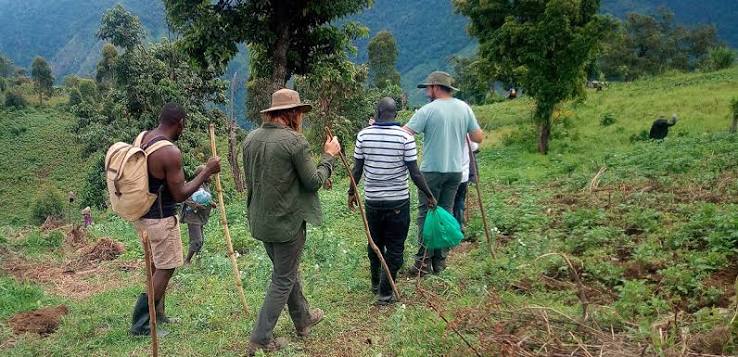
Ruboni sits among the most developed of the Rwenzori foothill community tourism sites, home to roughly 2,000 Bakonzo residents living as farmers on the mountains’ lower slopes. Guided walks here move through working homesteads as villagers go about genuine daily activities — tending livestock, working crops, preparing meals — rather than staged demonstrations performed purely for visitors.
Meeting Ruboni’s Specialists
A typical Ruboni walk introduces visitors to the village’s blacksmith, a traditional healer, basket weavers and local storytellers, each demonstrating skills that have been passed down through generations of Bakonzo families in this specific place. Walks commonly close with a live dance performance accompanied by drumming, a genuinely energetic capstone to what’s otherwise a fairly quiet, unhurried walking experience through the village’s daily rhythms.
Mihunga: A Village Facing the Peaks Directly
Further into the foothills, the small village of Mihunga offers a similar cultural walk with one distinct advantage: a direct view of the Rwenzoris’ snow-capped peaks from the village itself, a striking visual reminder of exactly which mountains this Bakonzo community has called home for over three centuries, and a genuinely photogenic backdrop rarely available from the lower-lying viewpoints most travellers experience elsewhere in the region. Mihunga’s tourism is organised through Turaco View, a local community group running cultural tours that include traditional healer demonstrations, a stop at the village school, craft demonstrations and dance performances broadly similar in structure to Ruboni’s, but delivered by a different, smaller community with its own distinct character.
Three Centuries Without Electricity or Running Water
Much of Mihunga still operates without electricity or running water, a detail worth mentioning honestly rather than glossing over — this isn’t a curated cultural theme park but a genuine working community that has adapted its farming, cooking and daily routines to a demanding highland environment over three hundred years, and visitors should approach it with the same respect they’d bring to any real, functioning village rather than treating it as a purely photographic backdrop.
What a Foothills Walk Actually Involves
Most village walks run a few hours, covering a mix of homestead visits, craft and skill demonstrations, and time built in for genuine conversation through a local guide who can translate and provide context. Unlike a summit trek, no specialist gear or advance fitness training is needed — comfortable walking shoes and a reasonable level of everyday fitness are sufficient for the terrain involved.
Combining a Village Walk With Other Foothill Activities
Travellers based near Kilembe or Kasese, the main access points for Rwenzori summit treks, can easily add a foothills village walk as a half-day activity alongside shorter hikes, waterfall visits or simply a rest day built into a longer itinerary elsewhere in western Uganda. It’s a natural way to get a genuine taste of the Rwenzoris without committing the week or more a full summit attempt requires, and for many travellers it ends up being the more memorable of the two experiences precisely because it centres on people rather than pure physical endurance.
Beyond the Two Main Villages
Ruboni and Mihunga are the best-known and most established foothill community tourism sites, but they aren’t the only entry points into Bakonzo culture in this region. Smaller heritage sites, including a local museum preserving Bakonzo artefacts and history near the foothills, give visitors with a deeper interest in the culture a further stop beyond the standard village-walk format, worth asking your guide about if a single walk leaves you wanting more context.
Coffee, Crops and the Farming Economy
Much of what makes a Bakonzo foothills walk genuinely engaging is the farming itself — these slopes support coffee, banana and vanilla cultivation among other crops, worked using techniques adapted specifically to steep hillside terrain that would be unworkable with more mechanised, flat-land farming methods. Some village programs let visitors take part directly in planting or harvesting activities alongside residents, turning a purely observational walk into something more hands-on for travellers who want it.
Planning Your Visit
Getting There
Ruboni and Mihunga are both reached from the Kasese and Kilembe area, the same general access point used for Rwenzori Mountains summit treks, making these foothill villages a natural stop for travellers already routing through this part of western Uganda regardless of their trekking plans. Most tour operators, ours included, can arrange a village walk as a standalone half-day activity or bundle it into a longer western Uganda itinerary.
Best Time to Go
Foothill village walks are a genuinely year-round activity, since they don’t depend on the same weather-sensitive high-altitude conditions that affect summit trekking. Light rain gear is worth carrying regardless of season given this region’s unpredictable highland weather, but there’s no strict dry-season requirement the way there is for an actual Margherita Peak attempt.
Frequently Asked Questions
Do I need any hiking experience for a foothills village walk?
No. These walks are designed for general visitors rather than trekkers, covering gentle terrain at a relaxed pace with no technical requirements whatsoever.
How does this differ from an actual Rwenzori Mountains trek?
A full summit trek to Margherita Peak is a multi-day technical mountaineering expedition involving glacier travel and significant altitude. A foothills village walk is a few hours at low elevation, focused on culture and community rather than mountaineering. For the fuller trekking picture, our guide to mountain hiking tours in Uganda covers the range’s climbing routes separately.
Is it respectful to visit these villages as a tourist?
Done through an established, community-run tourism operation like Ruboni’s or Mihunga’s Turaco View group, yes — these programs are set up specifically by the communities themselves to share their culture and generate income on their own terms, rather than being imposed by an outside operator. Following your guide’s lead on what’s appropriate to photograph, ask about, or take part in is the simplest way to keep a visit respectful throughout.
Can I combine a village walk with a shorter Rwenzori hike, without attempting the full summit?
Yes, shorter day hikes into the lower Rwenzori foothills are available separately from the full summit trek, and pairing one with a village walk makes for a well-rounded day without the commitment of a multi-day climbing expedition. Talk to your operator about combining a short foothills hike with a village visit on the same day if you want a slightly more active complement to the cultural walk itself.
Recommended Safaris
Rwenzori foothills village walks pair naturally with a wider western Uganda itinerary. Our guide to mountain hiking tours in Uganda covers the fuller range of trekking options in the Rwenzoris for travellers considering a longer climb alongside their village visit. Ready to build a Rwenzori foothills village walk into your own itinerary, with or without a summit trek attached? Reach our team through our Book Now page and we’ll plan it around your dates.




No comment