

Palaearctic migrants: What winter brings to East Africa
Every year, as temperatures fall across Europe and northern Asia, millions of birds begin travelling south towards warmer regions. Some cross deserts, mountains and seas before reaching Africa, where they spend the northern winter feeding, resting and preparing for the return journey. East Africa is one of their important destinations.
For birdwatchers, this seasonal movement brings a different range of species to Uganda, Kenya, Tanzania and Rwanda. Familiar wetlands gain visiting waders and ducks, grasslands attract wagtails and pipits, while forests and woodland edges receive warblers, flycatchers and other small insect-eating birds. Some migrants remain for several months, while others stop briefly before continuing farther south.
The arrival of these birds makes the period from October to March particularly interesting for birding in many parts of East Africa. However, migration does not follow an identical calendar every year. Rainfall, food availability, weather conditions and the location of suitable habitats all influence when birds arrive and how long they stay.
What are Palaearctic migrants?
Palaearctic migrants are birds that breed in the Palaearctic region, which includes Europe, northern Africa and much of temperate Asia, but travel to warmer areas during the northern winter. Many species cannot find enough food or suitable conditions in their northern breeding grounds during winter, so they move south after raising their young.
East Africa receives birds travelling along the African-Eurasian migration system. Their journeys can cover thousands of kilometres and involve several stopovers. Some birds arrive through the Middle East and the Horn of Africa before moving into Kenya, Uganda and Tanzania. Others pass through East Africa on their way to southern Africa.
The birds do not all follow the same route. Some use coastal habitats, while others cross inland areas, follow river systems or move through the Rift Valley. A few species spend the entire northern winter in East Africa. Others remain for only a short period before continuing south.
The word winter can be slightly confusing in this context. East Africa does not experience the cold northern winter that these birds leave behind. Instead, they arrive during the warmer months of the year, when local rainfall and food conditions may provide suitable feeding grounds.
When do Palaearctic migrants arrive in East Africa?
The first migrants can begin appearing from September, although October and November are important arrival months in many locations. Some species reach East Africa earlier, while others arrive later depending on their breeding range and migration route.
Many migrants remain between November and March. Some stay into April or May, particularly where suitable feeding habitat remains available. The return journey towards northern breeding grounds usually becomes noticeable from February or March, with many birds departing during March and April.
These dates are broad regional patterns rather than fixed schedules. A birdwatcher visiting Uganda in October may see a different selection of migrants from someone visiting northern Tanzania in December. Local rainfall can also affect the availability of insects, seeds and exposed mudflats, changing where birds gather.
The Ngulia area of Tsavo West National Park in Kenya is particularly well known for autumn migration. Large numbers of small migrant birds have been recorded there during the passage period, especially in November and December. The movement through this part of Kenya demonstrates how important suitable stopover habitats are to birds crossing East Africa.
Which birds arrive from Europe and Asia?
Palaearctic migrants belong to several bird groups. Some are easy to recognise, while others require patience and a good field guide. Their appearance also varies depending on age, sex and seasonal plumage.
The following species and groups are among the interesting visitors that birdwatchers may encounter in East Africa.
European bee-eaters
European bee-eaters are among the most colourful migrants seen in the region. They have bright green, yellow, chestnut and blue plumage, with a dark eye stripe and a long, slightly curved bill. Their pointed wings and streamlined bodies make them easy to recognise when they fly in groups.
They feed mainly on flying insects, especially bees and wasps. A bird often catches an insect in the air, returns to a perch and removes the sting before swallowing it. You may see them resting on exposed branches, wires and fences while watching for insects.
European bee-eaters occur in different parts of East Africa during migration and the northern winter. Open country, grasslands, woodland edges and areas near water can provide suitable feeding opportunities. Their movements may be particularly noticeable around Murchison Falls National Park and other open habitats in Uganda.
Barn swallows
Barn swallows are familiar migrants with long, deeply forked tails, pointed wings and glossy dark upperparts. Their reddish throat and forehead help distinguish them from several other swallow species.
They feed while flying, catching insects over wetlands, grasslands, farmland and open water. Large groups may gather before roosting, particularly where reedbeds and other sheltered vegetation provide suitable overnight locations.
Barn swallows are widespread during migration and the northern winter. They can be seen around towns, lakes, wetlands and agricultural landscapes throughout East Africa. Their aerial feeding behaviour makes them easier to observe than many small woodland migrants.
Willow warblers
Willow warblers are small, greenish-brown birds that visit East Africa during the northern winter. They feed mainly on insects and other small invertebrates, searching through leaves and branches in woodland, scrub and forest edges.
They can be difficult to identify because several other small warblers have similar colours. Their subtle plumage means that birdwatchers often rely on a combination of appearance, movement, calls and habitat.
Willow warblers may be encountered in gardens, woodland, forest margins and areas with dense vegetation. They are particularly interesting for birders who want to improve their identification skills because separating them from similar species requires careful observation.
Common sandpipers
Common sandpipers are among the most recognisable migrant waders around East African lakes, rivers and wetlands. They have brown upperparts, pale underparts and a distinctive habit of bobbing their bodies and tails while standing or walking.
They feed along water margins, searching for insects, small crustaceans and other invertebrates. You may find them walking along muddy banks, exposed stones, sandy shores and the edges of shallow pools.
Common sandpipers are widespread in East Africa during the northern winter. They can occur around Lake Victoria, the Kazinga Channel, Lake Naivasha, coastal wetlands and many smaller water bodies.
Wood sandpipers
Wood sandpipers are elegant waders with long legs, a slender bill and pale spots across their brown upperparts. They prefer shallow freshwater habitats, including marshes, flooded grasslands, muddy pools and the margins of lakes.
They feed by walking through shallow water and probing or picking small prey from the surface. Their feeding areas can change as water levels rise and fall, so a wetland that attracts many birds one month may hold fewer the next.
Uganda, Kenya and Tanzania all provide suitable habitats for wood sandpipers. They are particularly interesting around seasonal wetlands and shallow pools where several migrant wader species feed together.
Common greenshanks
Common greenshanks are larger waders with long greenish legs, a slightly upturned bill and a grey-brown back. Their pale underparts and upright posture make them relatively easy to recognise.
They feed in shallow water and along muddy edges, catching small fish, insects, crustaceans and other aquatic animals. Their long legs allow them to forage in water that is too deep for smaller waders.
Common greenshanks can occur around inland lakes, estuaries, riverbanks and coastal mudflats. Mida Creek in Kenya, the shores of Lake Victoria and wetlands around Lake Naivasha are examples of habitats where visiting birdwatchers may look for migrant waders.
Yellow wagtails
Yellow wagtails are attractive migrants with a slim body, relatively long tail and yellow underparts in many adult plumages. Their upperparts are generally greenish or greyish, while the head pattern varies between different forms.
They frequently feed on insects in short grass, damp fields, flooded areas and open ground. You may see them walking through grass or running after insects near grazing animals.
Yellow wagtails are among the migrants that can make open grasslands and agricultural areas more interesting during the northern winter. Their identification can be challenging because several forms have different head patterns, and females and immature birds are often less brightly coloured.
Northern wheatears
Northern wheatears are small, upright birds that often use open ground, rocky areas and short grassland. They have a distinctive white rump and tail pattern that becomes particularly noticeable when they fly.
Their plumage varies with age and sex. Adult males can have contrasting dark and pale markings, while females and immature birds are generally less striking. Their habit of standing on stones, low bushes and exposed ground makes them easier to observe than some other migrants.
They feed mainly on insects and other small invertebrates. Birdwatchers may encounter them in suitable open habitats during passage and wintering periods, although their distribution varies across the region.
Other migrants to look for
East Africa receives many additional Palaearctic visitors. These include spotted flycatchers, red-backed shrikes, common whitethroats, lesser whitethroats, marsh warblers, sedge warblers, Eurasian bee-eaters and several species of waders.
Some are widespread and relatively easy to find. Others occur in particular habitats or pass through specific migration corridors. The Basra reed warbler, for example, is a specialised migrant associated with dense wetland vegetation, marshes, river edges and coastal scrub. It is a much more difficult bird to locate than common migrants such as barn swallows or common sandpipers.
Birdwatchers should also remember that not every bird seen during the northern winter is a Palaearctic migrant. East Africa has its own resident species and intra-African migrants that move in response to rainfall and food availability. Identifying the origin and seasonal status of a bird often requires more than simply noting the month.
Wetlands become important winter feeding grounds
Wetlands are among the most valuable habitats for Palaearctic migrants in East Africa. They provide shallow water, mudflats, exposed shorelines, reedbeds and aquatic invertebrates that support different feeding strategies.
Waders use muddy margins to search for worms, insects and small crustaceans. Ducks feed on aquatic vegetation, seeds and small animals. Some terns and gulls gather where fish and other prey are available.
Uganda has several important wetland areas for migrant birds. Mabamba Bay is well known for its shoebills, but its papyrus edges, channels and open water also support many other waterbirds. Lutembe Bay on Lake Victoria attracts large concentrations of waterbirds, including migrant terns and other seasonal visitors. The wetlands around Entebbe and the wider Lake Victoria shoreline can also provide productive birding.
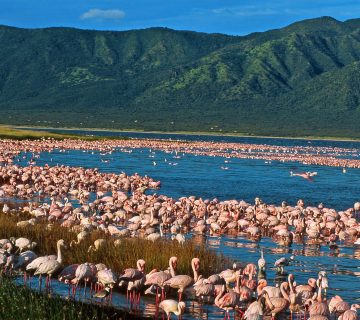
In Kenya, Lake Naivasha, Lake Nakuru, Mida Creek, Sabaki River mouth and other coastal and inland wetlands attract migrants. The shallow margins of lakes can be particularly productive when water levels expose feeding areas.
Tanzania also has extensive wetlands that support visiting birds. The Rufiji Delta, coastal lagoons, river mouths and lakes in the northern circuit offer different habitats for waterbirds and waders. The best locations depend on the species you hope to find and the conditions during your visit.
Grasslands and farmland attract insect-eating migrants
Not all Palaearctic migrants depend on water. Many feed in open grassland, cultivated fields, pastures and lightly wooded areas.
Wagtails, pipits, wheatears and some shrikes use these habitats to search for insects. Their presence can be easy to overlook because they often feed close to the ground and may blend into the vegetation.
Grassland birding can be productive around the Maasai Mara, Amboseli, the Serengeti ecosystem and several open landscapes in Uganda. Areas with short grass, livestock grazing and damp ground can attract feeding birds.
The condition of the grass is important. Very tall vegetation may hide small birds, while recently grazed or naturally short grass can make them easier to observe. After rain, insects may become more available and attract birds to areas that previously appeared quiet.
Forest edges and woodland support small migrants
Woodlands, forest margins and scrub provide feeding opportunities for warblers, flycatchers and other insect-eating migrants. These birds may spend much of the day moving through foliage, making them harder to find than open-country species.
Bwindi Impenetrable National Park, Kibale Forest, Mabira Forest and other forested areas in Uganda can support migrant birds alongside resident forest species. In Kenya, Arabuko-Sokoke Forest and coastal woodland habitats offer interesting opportunities. Tanzania’s coastal forests and Eastern Arc mountain forests also deserve attention.
A quiet approach is important in these habitats. Instead of walking continuously, stop regularly and listen. Small birds often reveal their presence through calls and movement before you can see them clearly. A good guide can help distinguish migrant species from similar resident birds.
The best places to see Palaearctic migrants in Uganda
Uganda is well positioned for bird migration because it lies near the equator and contains a wide range of wetlands, grasslands, forests and open savannas.
Mabamba Bay is a strong choice for wetland birding. Its channels and papyrus margins attract numerous waterbirds, and a boat trip allows you to explore habitats that are difficult to reach on foot. Migrant waders and other visiting waterbirds may be present alongside resident species.
Lutembe Bay is another important location, particularly for waterbirds on Lake Victoria. Large seasonal gatherings can make the bay rewarding for birdwatchers interested in terns and other wetland visitors.
Queen Elizabeth National Park offers several different habitats. The Kazinga Channel, Kasenyi Plains, crater lakes and surrounding woodland support resident birds and seasonal migrants. A boat trip along the channel can produce waterbirds, while open grassland drives may reveal wagtails, pipits and other migrants.
Murchison Falls National Park is worth considering for its mixture of riverine habitats, woodland and open savanna. The Nile and its surrounding wetlands attract waterbirds, while grassland and woodland edges provide feeding areas for other migrant species.
Kibale Forest and Bigodi Wetland Sanctuary offer opportunities to search forest edges, swamp vegetation and woodland for small migrants. These areas are especially useful for birders who want to combine migrant watching with forest birding.
The best places to see Palaearctic migrants in Kenya
Kenya offers an excellent variety of habitats for migrant birds. Its position along the East African migration routes, combined with its coastline, lakes, savannas and highland forests, makes it one of the region’s most rewarding birding destinations.
Lake Naivasha is a useful starting point for wetland birding. Its shoreline, papyrus areas and surrounding grasslands support waterbirds and other migrants. The exact selection changes with water levels and the availability of feeding habitat.
Lake Nakuru is another important destination. Its lake margins and surrounding habitats attract waders and other waterbirds, although the numbers and species present can change considerably as lake conditions change.
The Maasai Mara is known mainly for large mammals, but it also supports a rich bird community. During the northern winter, migrant species join resident grassland and woodland birds. Open plains, river edges and areas around seasonal pools provide different opportunities.
Tsavo West is particularly interesting for bird migration. The Ngulia area has a long history of migrant bird monitoring and ringing. Its position and local conditions make it an important stopover area for birds travelling through southeastern Kenya.
Along the coast, Mida Creek and the Sabaki River mouth are productive sites for waders, terns and other waterbirds. Their tidal mudflats and estuarine habitats provide feeding areas for birds that depend on shallow water and exposed mud.
The best places to see Palaearctic migrants in Tanzania
Tanzania’s northern and eastern regions offer a mixture of wetlands, grasslands, woodlands and coastal habitats. The Serengeti ecosystem is particularly interesting because migrant birds arrive alongside large populations of resident species.
The Serengeti’s open plains and seasonal wetlands provide feeding areas for several migrant species. The central region around Seronera offers varied habitats, while the southern plains can be productive when seasonal conditions create suitable feeding grounds.
Lake Manyara National Park is another useful destination. Its lake, groundwater forest, woodland and open areas attract a variety of waterbirds and land birds. Migrant waders may use suitable shallow margins when water conditions allow.
The Ngorongoro Conservation Area offers grassland, woodland and highland habitats. Birdwatchers can search for migrants around open areas, wetlands and cultivated landscapes outside the crater floor.
Coastal Tanzania has different opportunities. The Rufiji Delta, Mafia Island, Zanzibar and other coastal wetlands provide habitat for migrant shorebirds and waterbirds. The combination of tidal flats, mangroves, lagoons and sandy shorelines makes the coast particularly valuable for birds that feed along the sea and estuaries.
How migration changes birdwatching during the year
The arrival of Palaearctic migrants changes the composition of East Africa’s birdlife. A wetland that holds mostly resident birds during part of the year may support additional waders and ducks from October onwards. Woodland edges can become more active as warblers and flycatchers arrive. Open grasslands may attract wagtails, pipits and other visiting species.
November to February is often a productive period for birdwatchers who want to see migrants that spend the northern winter in East Africa. However, this is not automatically the best period for every species or destination. Some birds pass through quickly, while others remain in particular habitats for several months.
March and April can be rewarding for observing northbound migration. Birds begin moving towards their breeding grounds, and some locations may experience noticeable passage. The return movement can be shorter and more concentrated than the southbound journey.
June to September is generally quieter for many Palaearctic migrants because most have returned north. However, East Africa still supports a large resident bird population, and local breeding seasons can make this period excellent for other birding interests.
How to identify migrant birds in the field
Identifying migrants can be difficult, particularly when several species have similar colours and shapes. A small brown warbler, for example, may be challenging to identify without examining its bill, wing markings, tail, behaviour and call.
Start by observing the bird’s size and general shape. Look at its bill length, leg colour, wing shape and tail pattern. Notice whether it feeds on the ground, catches insects in flight, searches through leaves or wades in shallow water.
Habitat can help narrow down the possibilities. A small bird feeding along a muddy shoreline is likely to belong to a different group from one moving through the canopy of a forest. However, habitat alone cannot confirm an identification because many migrants use more than one type of environment.
Calls are also useful. Learning the sounds of common migrants can help you detect birds that remain hidden in vegetation. A field guide and a reliable bird identification application can support your observations, but always check several features before recording an unfamiliar species.
Take photographs when possible, especially of birds that are difficult to identify. Even a distant image may reveal a wing pattern, bill shape or tail marking that you did not notice in the field. Avoid approaching too closely or repeatedly flushing a bird to obtain a better photograph.
What equipment should you bring?
A pair of 8×42 binoculars is a practical choice for general birding in East Africa. They provide a useful balance between magnification, brightness and field of view. They are suitable for scanning wetlands, woodland edges and open grassland.
A spotting scope can be helpful for distant waders, ducks and seabirds. Many wetland birds remain far from the shore, so a scope allows you to examine their features without approaching them.
A regional field guide is useful for checking identification. A notebook or digital bird list can help you record the date, location, habitat and behaviour of each sighting. These details become valuable when comparing seasonal records or identifying birds later.
For photography, a telephoto lens helps you record details while keeping a respectful distance. A lens in the 300mm to 600mm range can be useful, depending on the camera system and the size of the bird.
Responsible birdwatching during migration
Migratory birds travel long distances and need suitable places to rest and feed. Disturbance at these stopover sites can force them to use energy that should be reserved for migration.
Keep a reasonable distance from feeding and resting birds. Avoid walking through flocks of waders, approaching roosting sites or entering reedbeds where birds may be sheltering. If birds repeatedly move away from you, increase your distance.
Do not disturb nests or use playback close to breeding birds. Avoid using bright flash on resting or nocturnal species, and never chase a bird for a photograph. At wetlands, follow the instructions of your guide and use established paths or authorised boat routes.
Protecting wetlands, coastal mudflats, grasslands and forest edges is essential for migratory birds. These habitats provide food and shelter during a demanding annual journey. Their conservation benefits resident birds and other wildlife as well.
Planning a winter birding trip in East Africa
If your main objective is to see Palaearctic migrants, plan your trip around the habitats used by the species you want to find. A wetland-focused itinerary may include Mabamba Bay, Lutembe Bay, Lake Naivasha and Lake Nakuru. A broader birding trip can combine wetlands with forests, woodland and savanna.
Allow enough time at each location. Migrants may be present in a site without being immediately visible, and a second visit can produce different sightings as weather and feeding conditions change. A knowledgeable local bird guide can also help you distinguish seasonal visitors from resident species.
November to February is a useful general period for a migrant-focused trip, but check recent bird records before travelling. If you are interested in particular species, such as Basra reed warbler or a specific wader, seek recent local information because their distribution and numbers can vary.
Palaearctic migration gives East African birdwatching a seasonal change that is easy to appreciate once you begin recognising the visitors. The same wetland, woodland or grassland can hold a different selection of birds at different times of the year. By visiting during the northern winter and paying attention to habitat, behaviour and timing, you can discover a wider range of species and understand the journeys that connect East Africa with Europe and Asia.




No comment