
Birding with children: Fun ways to teach young travellers
Introducing children to birdwatching during a family holiday in East Africa can turn an ordinary nature outing into an exciting learning experience. From watching African fish eagles hunt over lakes to spotting colourful kingfishers along rivers, young travellers have many opportunities to discover birds in their natural habitats. They can learn to recognise different species, understand animal behaviour and appreciate the importance of protecting wildlife.
Birding is also one of the activities that families can enjoy at different ages. Younger children can search for colourful birds, listen to calls and play simple observation games. Older children can use binoculars, keep bird lists, take photographs and learn how different species survive in forests, wetlands and grasslands.
East Africa offers an excellent setting for introducing children to birdwatching. Uganda, Kenya, Tanzania and Rwanda have a remarkable variety of habitats, including lakes, rivers, savannas, tropical forests, mountains and coastal wetlands. These environments support birds of different sizes, colours and feeding habits, giving children plenty to observe during a holiday.
The key is to make each outing suitable for the child’s age, interests and attention span. You do not need to begin with complicated identification exercises or long walks. A short visit to a garden, wetland or national park can provide enough experiences to encourage a lasting interest in birds.
Why birding is a good activity for children
Birdwatching encourages children to pay attention to their surroundings. Instead of walking through a park without noticing much, they begin looking for movement in trees, listening for calls and observing how birds interact with their environment.
It also introduces practical lessons about nature. Children can learn why some birds have long legs, why others have hooked bills and how different species find food. Watching a heron catch a fish, a weaver construct its nest or a kingfisher dive into water gives them a real example of animal behaviour.
Birding can also develop patience. A bird may remain hidden for several minutes before appearing on an exposed branch. Children gradually learn to wait, observe and listen instead of expecting every animal to appear immediately.
Another benefit is that birdwatching can be enjoyed without travelling long distances. Families can begin in their hotel garden, around a campsite or near a lake. Children can discover birds even when they are not visiting a national park.
Birding also encourages questions. A child who sees a bird carrying grass may ask whether it is building a nest. Another may wonder why flamingos stand on one leg or why some birds gather in large groups. These questions provide natural opportunities to explain wildlife and environmental conservation.
Start with large and colourful birds
Young beginners usually find large, colourful and active birds easier to observe than small birds hidden in thick vegetation. Begin with species that have distinctive shapes, bright colours or interesting behaviour.
The African fish eagle is a good example. Its large body, white head, dark brown wings and powerful bill make it relatively easy to recognise. Children can watch it perched near a lake or flying above the water. If they are lucky, they may see it dive towards the surface to catch a fish.
<PRIVATE_PERSON> is another interesting example. The grey crowned crane has a golden crown, grey body and red throat pouch. Its unusual appearance makes it an attractive bird for children to identify. In Uganda, it is the national bird, and families may encounter it in suitable wetland and grassland habitats.
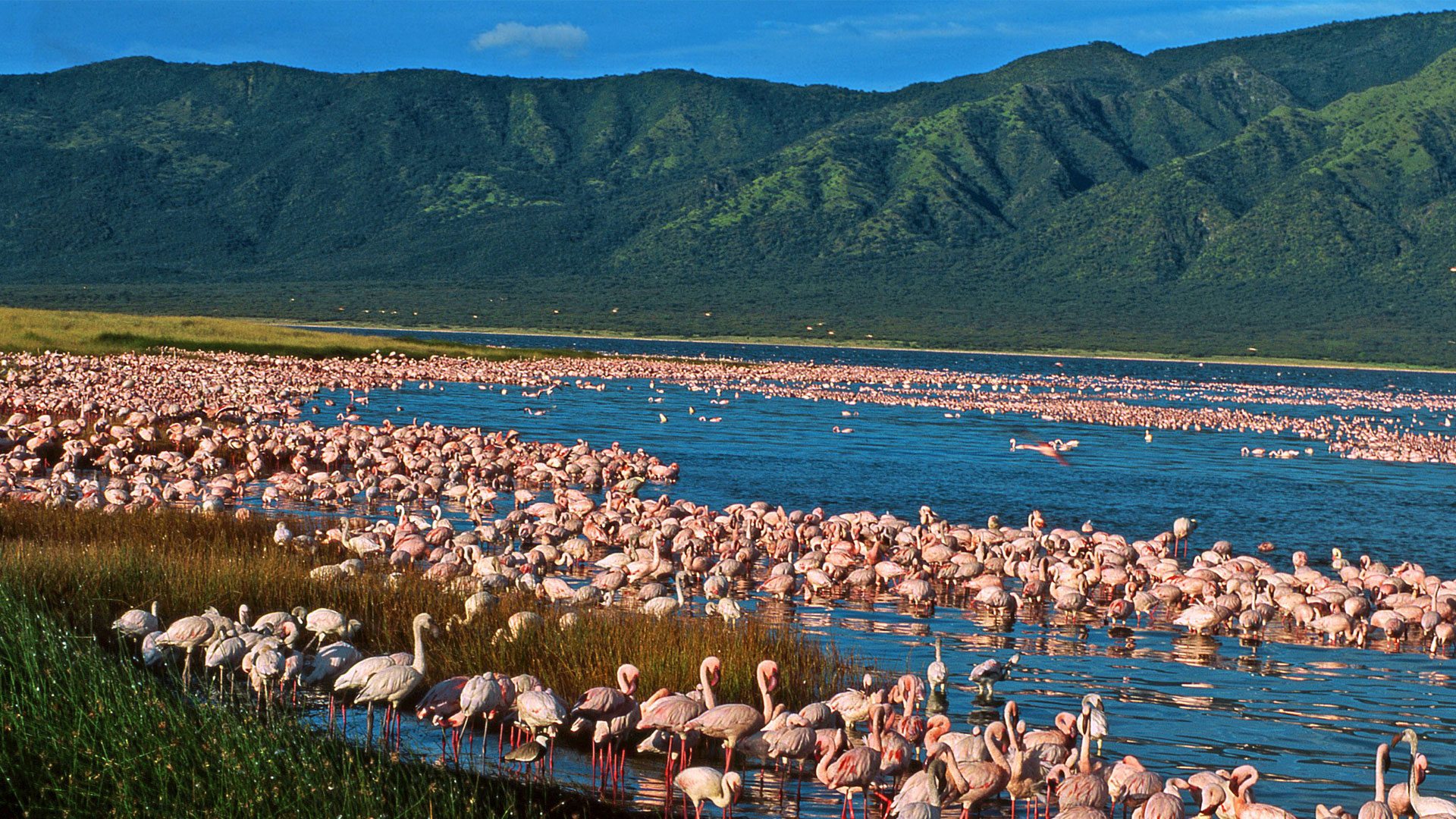
Flamingos are also excellent birds for introducing children to birdwatching. Their pink colour, long legs and curved bills make them easy to remember. Children can learn that flamingos feed by filtering small organisms from shallow water.
Other suitable birds include hornbills, herons, egrets, ibises, storks and large kingfishers. These species offer different shapes and feeding behaviours that children can compare.
Avoid beginning with difficult identification challenges involving several similar-looking warblers or small waders. Children are more likely to remain interested when they can recognise some of the birds they see.
Turn birdwatching into a scavenger hunt
A bird scavenger hunt is one of the easiest ways to make birding exciting for children. Instead of asking them to identify every bird they encounter, give them a simple list of things to find.
The list can include a bird with a long bill, a bird with bright colours, a bird swimming, a bird sitting on a tree, a bird catching food and a bird flying overhead.
For younger children, use pictures rather than written descriptions. They can tick each item when they find a matching bird.
Older children can work with more detailed challenges. Ask them to find a bird with webbed feet, a bird with a curved bill, a bird that feeds on insects or a bird that searches for food in shallow water.
You can also organise a colour challenge. Children look for birds with yellow, red, blue, green, black and white feathers. This activity works particularly well in gardens and woodland areas where several species may be visible.
The goal is to encourage observation rather than competition. If one child finds more birds than another, allow everyone to share their discoveries. You can also give small rewards for careful observations, interesting questions or responsible behaviour.
Teach children to recognise bird sounds
Birdwatching involves listening as much as looking. Many birds call from dense vegetation or fly overhead before children have a chance to see them.
Begin by asking children to close their eyes for a short period and listen to the sounds around them. They may hear a bird calling from a tree, another responding from a nearby bush or several species singing at the same time.
Encourage them to describe what they hear. A call may sound like a whistle, a repeated note, a whistle followed by a clicking sound or a series of short whistles. Children can imitate the sound using their voices, provided they do not use those imitations to disturb the birds.
Different species produce different calls. The African fish eagle has a familiar series of loud calls, while many kingfishers produce sharp, repeated notes. Hornbills can produce distinctive calls that are easy to recognise once children become familiar with them.
You can also introduce a simple listening game. Ask each child to count how many different bird sounds they hear during five minutes. They do not need to identify the species immediately. The activity helps them understand that a habitat may contain many birds even when only a few are visible.
Introduce binoculars gradually
Binoculars can make birdwatching more exciting because children can examine details that are difficult to see with the naked eye. However, some young children struggle to hold them steadily or locate a bird through the lenses.
Choose lightweight binoculars with a comfortable grip. A magnification of 6x or 7x can be easier for younger users to handle, while many older children can use 8x binoculars comfortably. A wide field of view makes it easier to locate moving birds.
Before going outdoors, teach children how to adjust the binoculars. They can practise focusing on a stationary object such as a tree trunk, sign or building.
Explain that they should first locate the bird with their eyes. Once they know where it is, they can slowly raise the binoculars without losing sight of the target. This is much easier than searching for a small bird by moving the binoculars randomly.
Children should stand still when looking through binoculars. Walking while looking through the lenses can lead to trips and falls, particularly on uneven trails.
For very young children, binoculars are optional. They can enjoy birdwatching by observing birds with their eyes, using a simple picture guide or looking through a spotting scope operated by an adult.
Use a simple bird identification challenge
Bird identification becomes easier when children learn to look at specific features. You can introduce a few basic questions during each outing.
Ask them to notice the bird’s size, colour, bill shape, leg length and feeding behaviour. These features help distinguish different bird groups.
For example, a heron has long legs and a long pointed bill suited to catching fish and other aquatic animals. A weaver has a shorter, stronger bill suited to handling seeds and plant material. A kingfisher often has a long, pointed bill used for catching fish or insects.
Children can also compare birds that live in different habitats. A fish eagle hunts near lakes and rivers, while a ground hornbill spends much of its time walking across open grassland and searching for food.
You do not need to teach every identification detail during one trip. Introduce one or two features at a time and allow children to practise recognising them.
When you are unsure about a bird’s identity, explain that you will check a field guide later. This teaches children that learning about wildlife involves asking questions and checking evidence.
Keep a birdwatching notebook
A birdwatching notebook gives children a personal record of their discoveries. It can be a small exercise book, a sketchbook or a printed checklist that they carry during the trip.
Ask them to record the date, location and names of birds they identify. They can also draw birds, describe their colours or write down unusual behaviour.
A younger child might draw a flamingo with long legs and a curved bill. An older child might record that it was feeding in shallow water with a group of other flamingos.
The notebook can include a simple habitat section. Children can record whether they saw the bird in a forest, wetland, grassland, garden or near a river.
Photographs can also be added after the trip. Parents can print selected images and allow children to match them with their notes.
Over time, the notebook becomes a record of the places they have visited and the birds they have encountered. It can also help them compare species found in Uganda with those seen during visits to Kenya, Tanzania or Rwanda.
Try bird photography with older children
Photography can help older children develop an interest in bird identification and behaviour. A camera gives them an opportunity to observe details such as feather patterns, bill shapes and colours.
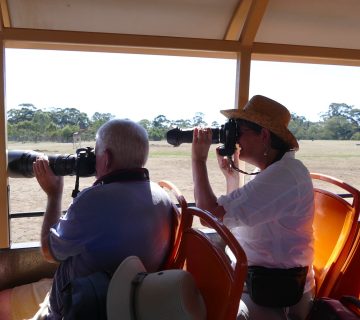
You do not need professional equipment for a first birding experience. A smartphone can photograph large birds at relatively close distances, while a camera with a telephoto lens can record birds farther away.
Teach children to focus on the bird’s eye and keep the camera steady. Large birds such as storks, cranes and eagles are often easier subjects than small, fast-moving species.
Photography should never encourage children to approach birds too closely. Explain that they should remain at a safe distance and allow the bird to continue feeding, resting or moving naturally.
Children can also photograph habitats. A picture of a wetland, tree cavity or grassland can help explain where birds live and how they find food.
A simple photography challenge might involve taking one picture of a bird in flight, one of a bird feeding and one of a bird resting. The activity gives children different observation goals without requiring them to photograph every species.
Explain how birds build nests
Nest building is one of the most interesting bird behaviours to teach young travellers. Children often enjoy watching birds carry grass, twigs and other materials to a nesting site.
Weaver birds provide an excellent example in East Africa. Their woven nests hang from branches and are constructed from strips of grass and other plant materials. Some species build several nests in the same tree, creating a busy nesting colony.
Sunbirds use fine plant materials and other natural fibres to construct hanging nests. Storks and eagles build much larger nests using branches and sticks.
Explain that different birds use different nesting strategies. Some build nests in trees, others use holes in trunks, while ground-nesting birds lay their eggs directly on the ground or in shallow depressions.
It is important to teach children that nests should be observed from a distance. They should never touch eggs, remove nesting materials or climb trees to inspect a nest. Even well-intentioned visits can disturb adult birds and expose eggs or young to danger.
A good alternative is to use photographs or videos to show how nests are built. Children can also make their own model nests using paper, dry grass and other safe craft materials collected from home rather than from active nesting sites.
Learn about bird feeding habits
Birds have different feeding habits, and children can learn a great deal by observing their bills and behaviour.
A kingfisher catches fish or insects using its pointed bill. A heron waits near shallow water and strikes quickly when prey comes within reach. A bee-eater catches flying insects in the air, while a hornbill searches trees and the ground for fruits and small animals.
Flamingos feed by filtering small organisms from water and mud. Ducks may feed by dipping their heads underwater or searching along shallow margins. Vultures feed mainly on animal remains and play an important role in removing carcasses from the environment.
You can turn this into a matching activity. Show children pictures of different birds and ask them to match each one with a feeding method. They can then look for those behaviours during a guided walk.
Explain that not every bird eats the same food. Some feed mainly on insects, others consume fruits, seeds, fish, nectar or small animals. These differences allow many bird species to live in the same habitat without competing for exactly the same food.
Make a bird call matching game
A bird call matching game can be organised before or after a nature walk. Prepare a few recordings of common local birds and let children listen to each one.
Ask them to match the sound with a photograph or drawing of the bird. Start with species that have distinctive calls rather than recordings that sound very similar.
The African fish eagle, grey crowned crane, pied kingfisher and several hornbills can provide interesting examples. Children can learn to associate a sound with a bird’s appearance and habitat.
Use recordings for educational purposes rather than repeatedly playing them in the field. Artificial calls can disturb birds, particularly during breeding periods. During an actual birding outing, children should listen to natural calls and observe the birds without trying to attract them through playback.
Explore different bird habitats
A family birding trip becomes more educational when children visit more than one habitat. Each environment supports different bird species and feeding opportunities.
Wetlands are good places to observe herons, egrets, storks, ducks, kingfishers and waders. Children can see how birds use shallow water, reedbeds and muddy shorelines.
Forests support hornbills, turacos, barbets, sunbirds and many smaller birds. The thick vegetation makes some species difficult to see, but listening for calls and watching movement between branches can make the experience interesting.
Grasslands attract ostriches, bustards, cranes, lapwings, pipits and other open-country birds. Children can learn how ground-feeding species search for insects and seeds.
Woodlands provide opportunities to observe weavers, rollers, hornbills, eagles and many other species. Some birds feed in the trees, while others search for food on the ground.
Coastal habitats offer a different selection. Children may see terns, gulls, sandpipers, plovers and other birds feeding along beaches, mudflats and estuaries.
Comparing these environments helps children understand that birds depend on suitable habitats for food, shelter, nesting and protection.
Best places for birding with children in Uganda
Uganda has several accessible birding locations that are suitable for family outings. The best choice depends on the children’s ages, the length of the visit and the type of birds they want to see.
Entebbe Botanical Gardens is a convenient starting point for families staying around Entebbe. The gardens have mature trees, open spaces and lakeside vegetation that attract different birds. Children can enjoy a relaxed walk while looking for weavers, sunbirds, hornbills, kingfishers and other common species.
Mabamba Bay offers a more specialised wetland experience. Families can take a guided canoe trip through its channels and papyrus areas. The shoebill is the most famous bird in the wetland, although sightings are never guaranteed. Children may also encounter jacanas, herons, egrets and other waterbirds. Boat trips should be arranged with an experienced local guide, and the length of the outing should suit the children.
Lake Mburo National Park combines birdwatching with a general wildlife experience. Families can look for African fish eagles, grey crowned cranes, hornbills, storks and many other birds while also seeing zebras, impalas, buffaloes and giraffes. Its variety of wildlife can help keep children interested throughout the visit.
Queen Elizabeth National Park offers several birding habitats, including the Kazinga Channel, open grasslands and woodland. A boat cruise along the channel provides opportunities to see kingfishers, fish eagles, herons, cormorants and other waterbirds. Children can also observe hippos and other wildlife from the boat, following the guide’s safety instructions.
Bigodi Wetland Sanctuary near Kibale Forest is another useful option. Guided walks introduce visitors to wetland and forest-edge birds, including turacos, kingfishers, weavers and other species. Children can learn how wetlands support birds, primates and other wildlife.
For families travelling with very young children, a short visit to a garden or accessible wetland may be more suitable than a long forest walk.
Family-friendly birding locations in Kenya
Kenya has many locations where families can combine birdwatching with other outdoor activities.
Lake Naivasha is a strong option for families interested in waterbirds. Boat trips can provide opportunities to see African fish eagles, cormorants, herons, pelicans and other birds. Children can also learn about hippos and the importance of keeping a safe distance from wildlife.
Lake Nakuru National Park offers a mixture of lake habitats, woodland and grassland. Families may see flamingos when conditions are suitable, alongside pelicans, storks, eagles and other birds. The park also provides opportunities to see rhinos, giraffes, buffaloes and other mammals.
Nairobi National Park is convenient for families staying in the capital. Its open grassland and wetland habitats support many bird species. Children can combine birdwatching with opportunities to see lions, giraffes, zebras and rhinos.
Arabuko-Sokoke Forest near the Kenyan coast is particularly interesting for older children who want to learn about forest birds. Guided walks can introduce them to different habitats and species, although some birds may be difficult to observe in dense vegetation.
Mida Creek is a useful coastal destination for families interested in waders and waterbirds. Its mudflats, mangroves and shallow channels attract different species depending on the tides. Children should remain with their guide and avoid walking through feeding or resting flocks.
Family birding experiences in Tanzania and Rwanda
Tanzania and Rwanda also offer opportunities for families to explore birdlife during a holiday.
In Tanzania, Lake Manyara National Park is an interesting destination for birdwatching because it contains a lake, woodland and open areas. Children may see flamingos when conditions are suitable, alongside pelicans, storks, hornbills and other birds.
Tarangire National Park is another useful choice. Its baobab trees, riverine woodland and open savanna support a variety of birds. Children can look for hornbills, rollers, bee-eaters, eagles and large ground birds while enjoying general wildlife viewing.
Arusha National Park offers a mixture of forest, lakes and open landscapes. Its varied habitats can provide opportunities to observe waterbirds, forest species and birds of prey during a family visit.
In Rwanda, Akagera National Park is particularly suitable for combining birdwatching with a traditional wildlife experience. Its lakes, wetlands, woodland and savanna support many bird species. Children may encounter African fish eagles, kingfishers, storks, herons and the grey crowned crane.
Nyungwe Forest National Park offers a different experience for families with older children who enjoy forest walks. Its birds include turacos, sunbirds and several forest specialists. Some trails are demanding, so families should select activities according to the children’s fitness and age.
How long should a birding outing with children last?
The ideal length depends on the child’s age, interest and energy level. A young child may enjoy 20 to 30 minutes of focused birdwatching before needing a break. Older children may remain interested for an hour or longer, especially when the outing includes games, photography or a guided activity.
Start with shorter walks and extend the duration only when children remain comfortable and interested. A family does not need to spend an entire morning identifying birds to have a successful experience.
For a national park visit, combine birding with other activities. Children may enjoy a morning game drive, a short birding walk where permitted and a relaxed break at the lodge.
Boat trips can also be rewarding, but check their duration before booking. Some children may become restless during long cruises, especially when the boat moves slowly between birding locations.
Allow time for meals, drinking water and rest. Children are more likely to enjoy the experience when the schedule does not feel rushed.
What should children bring for birdwatching?
The equipment should remain simple. Children do not need expensive cameras or complicated identification tools to begin birding.
A small backpack can carry drinking water, a notebook, pencils, a hat, sunscreen and a light snack. Comfortable clothing and suitable footwear are important, particularly when visiting wetlands or forest trails.
Lightweight binoculars can be useful for older children. A small regional bird guide with clear illustrations can also help them identify common species.
Insects can be common around wetlands and forests, so parents should carry suitable insect repellent and follow local guidance on protection against mosquitoes and other biting insects.
For boat trips, use properly fitted life jackets and follow the operator’s instructions. Children should remain seated when required and avoid leaning over the sides of boats.
Teach children to respect birds and wildlife
Responsible birdwatching should be part of every family outing. Children need to understand that wild birds should be observed without being chased, touched or disturbed.
Explain that birds need quiet places to feed, rest and raise their young. Running towards a flock may cause birds to fly away, using energy they need for survival.
Children should never collect eggs, remove feathers from nests, touch chicks or attempt to catch wild birds. A young bird on the ground may not be abandoned, so it should not be picked up without advice from a qualified wildlife professional.
Avoid feeding wild birds unless the activity is part of an authorised conservation or education programme. Human food may be unsuitable, and feeding can change natural behaviour.
During a guided walk, children should stay with their parents or guide and follow instructions about safe distances. This is particularly important around hippos, crocodiles, buffaloes and other large animals that may share birding habitats.
Good wildlife habits are easier to teach when adults demonstrate them. Parents who speak quietly, remain on designated paths and avoid disturbing animals provide a practical example children can follow.
Make birding part of the safari holiday
Birdwatching does not need to be a separate activity from a family safari. It can be included naturally in game drives, boat cruises, nature walks and visits to conservation areas.
During a game drive, parents can ask children to look for birds near the road, on trees or around waterholes. A guide can explain why vultures gather near carcasses, why oxpeckers feed on buffaloes and how eagles locate prey.
A boat cruise provides opportunities to observe birds feeding, flying and resting along the shoreline. Children may see kingfishers diving, cormorants drying their wings and fish eagles watching the water.
At a lodge, a short walk around the gardens can introduce children to smaller birds that they might otherwise overlook. They can look for sunbirds visiting flowers, weavers building nests and small birds feeding around trees.
Combining birds with larger wildlife helps maintain interest, particularly for children who are more excited by elephants, lions and giraffes than by small birds.
Birding activities for different age groups
Children do not all learn in the same way, so activities should match their development and interests.
For children aged three to five, focus on colours, shapes and sounds. Ask them to find a big bird, a small bird, a bird with a long neck or a bird that makes a loud call. Picture cards and simple drawings can help them remember what they see.
Children aged six to nine can begin using binoculars and keeping basic bird lists. They can compare bills, feet and feather colours, then draw the birds they encounter. Simple challenges such as finding five different birds or identifying three feeding behaviours can keep them engaged.
Children aged ten to thirteen may enjoy learning species names, photographing birds and using a field guide. They can record locations, compare habitats and research the birds they saw after the trip.
Teenagers may prefer more independent activities. They can use a camera, maintain a bird list, learn bird calls or participate in organised bird counts and conservation education programmes. Some may also enjoy understanding migration and how birds travel between continents.
These age groups are general guides. A child’s experience, confidence and interest are more important than their exact age.
Turn bird sightings into lessons about conservation
Birdwatching provides a practical introduction to conservation. Children can learn that birds depend on healthy forests, wetlands, grasslands and coastlines.
Explain how wetland drainage affects birds that feed in shallow water. Show how cutting down mature trees can remove nesting and feeding sites for forest species. Discuss how plastic waste can harm birds that mistake it for food or become trapped in discarded materials.
Children can also learn about migratory birds. Some species travel between Europe, Asia and Africa every year. They depend on suitable habitats along the entire journey, including places where they can rest and feed.
Simple activities can reinforce these lessons. Children can help keep a family campsite clean, avoid leaving plastic waste outdoors and participate in supervised tree-planting or habitat restoration activities.
Conservation should be explained in practical language. A healthy wetland supports birds, fish, plants and people. Protecting natural habitats helps maintain the resources that communities and wildlife depend on.
Make the experience enjoyable rather than competitive
The most successful family birding trips allow children to explore at their own pace. Some will enjoy identifying as many species as possible, while others will prefer drawing birds, listening to calls or taking photographs.
Avoid turning every sighting into a test. Children should not feel embarrassed when they cannot remember a bird’s name. Encourage them to describe what they observed and work together to identify it.
Celebrate small discoveries. A child who notices a sunbird feeding on a flower or a heron catching a fish has made a valuable observation, even if the species remains unidentified.
Allow children to choose some of the activities. One may want to visit a lake, while another prefers a forest walk. Giving them a role in planning can increase their interest and make the trip more meaningful.
Birding can become a family activity that continues long after the holiday. Children who begin by watching birds around a lodge may later recognise the same species in their home gardens, school grounds or local wetlands.
A family activity that can last beyond the holiday
Birding with children is a practical way to introduce young travellers to East Africa’s natural heritage. It gives them opportunities to observe wildlife closely, ask questions and understand how different species depend on their habitats.
A successful outing does not require a long checklist or rare bird sightings. A few minutes watching an African fish eagle, listening to a woodland bird or observing flamingos feeding in shallow water can be enough to create a lasting memory.
By choosing accessible locations, using simple games and allowing time for rest, parents can make birdwatching suitable for different ages. Children also learn important habits, including respecting wildlife, keeping natural areas clean and observing animals without disturbing them.
Whether the family is visiting Uganda’s wetlands, Kenya’s lakes, Tanzania’s savannas or Rwanda’s forests, birdwatching can add an educational and enjoyable part to the journey. The birds children discover during their travels may become the beginning of a lasting interest in nature and conservation.




No comment