
Lake Mburo on Horseback, Bicycle and Foot: A Non-Driver’s Safari
Most Uganda safaris put you behind glass, or at least behind a vehicle windscreen, for the entire game-viewing experience. Lake Mburo National Park breaks that pattern more thoroughly than anywhere else in the country: it’s the only national park in Uganda where a horseback wildlife safari is legally permitted, and its compact, relatively predator-light landscape makes both cycling and walking safaris genuinely practical here in a way they simply aren’t at Uganda’s larger, more predator-dense parks.
Key Highlights
- The only national park in Uganda where horseback wildlife viewing safaris are legally permitted
- Horseback rides offered exclusively through Mihingo Lodge, just outside the park’s eastern boundary near Nshara Gate
- Cycling safaris through rolling valley-bottom terrain with strong wildlife visibility, suited to both casual and serious mountain bikers
- Guided walking safaris and nature walks available throughout the park
- Compact size and relatively low predator density make these close-to-the-ground activities practical here in a way they aren’t at Uganda’s larger savanna parks
- Zebra, various antelope species, buffalo and abundant birdlife are the main wildlife encountered on foot, by bike or on horseback
Why Lake Mburo Allows What Other Parks Don’t
Uganda’s larger savanna parks — Queen Elizabeth, Murchison Falls, Kidepo — carry meaningful lion and other large-predator populations that make close-to-ground activities like horseback riding and unrestricted cycling genuinely risky to permit at scale. Lake Mburo’s smaller size and different predator profile, with far fewer large cats than those bigger parks, has allowed park authorities to permit exactly the kind of activities that would be unthinkable elsewhere in the country’s protected area system.
A Genuinely Different Way to Meet the Wildlife
The practical result is a park where the actual experience of encountering wildlife changes fundamentally depending on how you move through it. A vehicle keeps animals at a predictable distance and behind a physical barrier; a horse, bicycle or your own feet put you in the same open landscape the zebras and antelope are standing in, with no glass or metal between you and them — a genuinely different, more immersive register of safari experience that most visitors never get to try anywhere else in Uganda.
Horseback Safaris: Lake Mburo’s Signature Activity
Horseback wildlife viewing at Lake Mburo is offered exclusively through Mihingo Lodge, a private property just outside the park’s eastern boundary near Nshara Gate, making it the sole operator authorised for this activity anywhere in Uganda. Experienced riders can join longer rides of four to five hours through the grassy Warukiri hills in the park’s interior, while beginners and less experienced riders are kept to a walking pace rather than excluded outright.
Overnight Horseback Options
For riders wanting more than a single outing, overnight horseback safaris are available, with camps pitched either along Lake Mburo’s shoreline or atop one of the park’s many hills — a genuinely unusual way to experience an African savanna landscape, waking up already among the wildlife rather than driving in to meet it each morning.
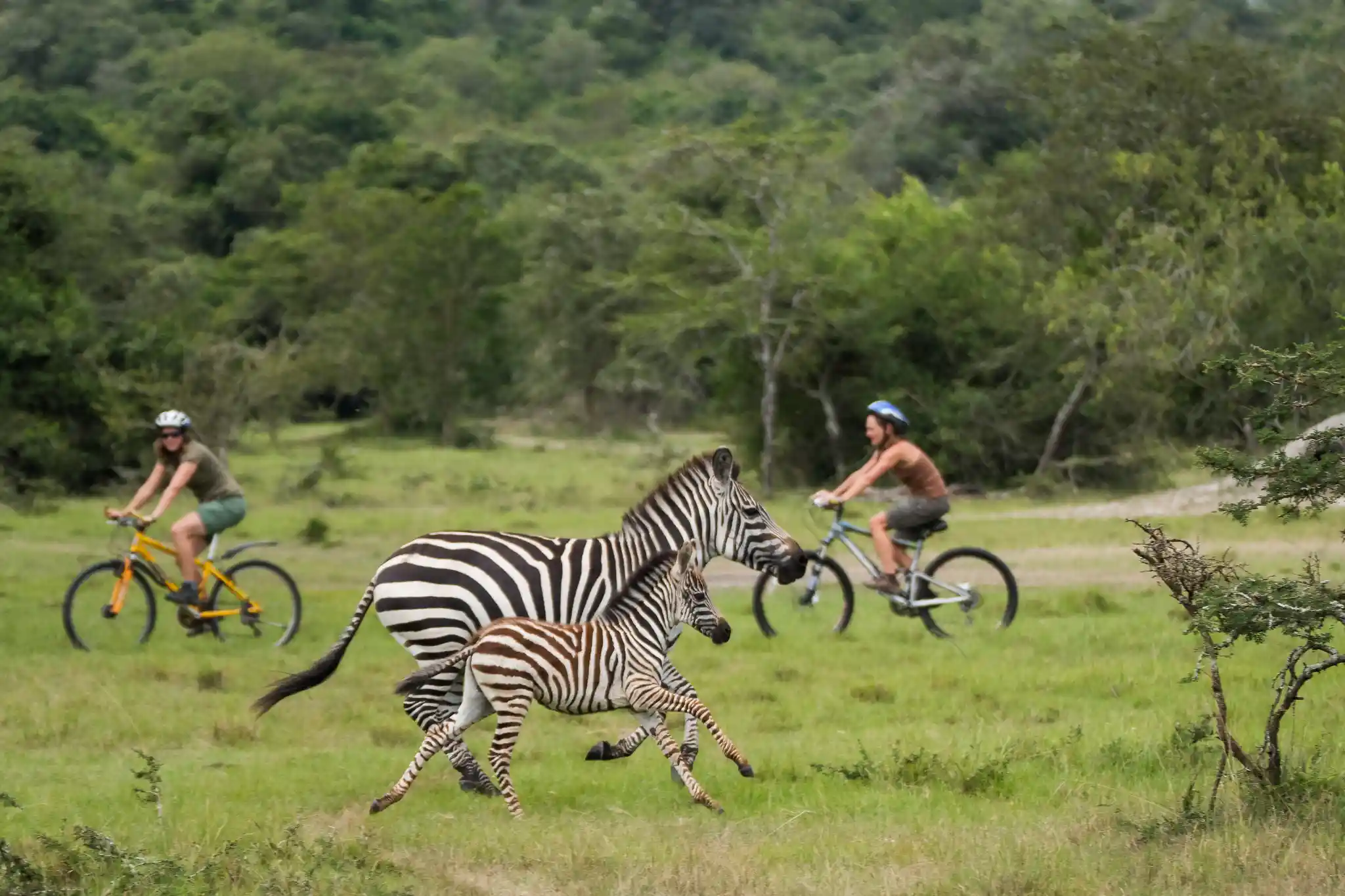
Cycling Through Zebra Country
Lake Mburo’s cycling safaris run through primarily flat valley-bottom terrain where wildlife visibility tends to be strongest, with routes tailored to riders’ preferences and always accompanied by a guide. Trail lengths range from a casual hour-long ride to considerably longer outings for cyclists wanting a fuller day on two wheels, and the park offers enough varied, occasionally challenging terrain to interest mountain bikers specifically, not just casual pedallers.
What Cycling Adds That a Game Drive Can’t
Moving through the landscape at cycling pace and under your own power creates a noticeably more intimate wildlife encounter than a vehicle allows — you hear the park rather than just seeing it through a window, and the physical effort of the ride itself becomes part of the overall experience rather than incidental to it.
Walking Safaris and Nature Walks
Guided walking safaris round out Lake Mburo’s non-vehicle activity roster, offered alongside the park’s more conventional day and night game drives, boat trips and birding. Walking here puts visitors at genuine eye level with the park’s zebra and antelope populations, an experience simply unavailable from inside a safari vehicle regardless of how close a driver manages to get.
What Wildlife to Expect
None of these activities are marketed around predator sightings, and that’s precisely the point — Lake Mburo’s relatively low big-cat density is what makes horseback riding, cycling and walking legally and practically viable here. Expect zebra in genuinely large numbers, a strong roster of antelope species, buffalo, and some of Uganda’s best general birding, rather than the lion and leopard encounters that headline a Queen Elizabeth or Murchison Falls game drive.
What to Pack and Practical Preparation
Closed, sturdy footwear matters for both walking safaris and cycling here, and riders joining a horseback safari should wear long trousers regardless of the weather, given the terrain and time spent in the saddle. Sun protection is worth taking seriously across all three activities, since none of them offer the shade a vehicle roof provides during a standard game drive, and a hat plus high-SPF sunscreen are genuinely more important here than on a typical drive-based safari day. A refillable water bottle is worth carrying on any walking or cycling outing too, since breaks to restock water are less convenient away from a vehicle.
Fitness Considerations
None of these activities demand elite fitness, but a reasonable baseline matters more than it would for a seated game drive — walking safaris cover real distance on foot, cycling routes can run for hours depending on how far you choose to ride, and even a beginner-paced horseback outing involves several hours in the saddle. Being honest with your guide or lodge about your fitness level and riding experience beforehand helps them match you to an appropriately paced activity rather than over- or under-estimating what you can comfortably manage, and it makes for a noticeably better day out on all three fronts.
Where to Stay
Mihingo Lodge, sitting just outside the park’s eastern boundary, is the natural base for travellers prioritising the horseback safari specifically, given its exclusive access to that activity. Other lodges and campsites inside and around the park support the cycling and walking safaris equally well, giving visitors flexibility in how they structure a stay depending on which of the three activities matters most to their trip, from budget-friendly campsites to more established mid-range and higher-end options scattered around the park’s boundaries.
Planning Your Visit
Getting There
Lake Mburo sits conveniently close to the Kampala-Mbarara highway, making it one of the more accessible parks in Uganda’s western circuit and a natural stop for travellers driving toward Bwindi or Queen Elizabeth rather than requiring a dedicated detour.
Best Time for These Activities
All three activities run reasonably well year-round, though the dry seasons offer firmer underfoot and under-hoof conditions for walking and horseback riding specifically, along with generally easier cycling terrain when trails aren’t softened by recent rain.
Frequently Asked Questions
Do I need horse-riding experience for the Lake Mburo horseback safari?
No. Beginners are accommodated at a walking pace, while more experienced riders can join longer, faster rides through the park’s interior. Mihingo Lodge assesses rider experience before matching you to an appropriate ride, so being upfront about your actual comfort level in the saddle, rather than overstating it, helps them put you on the right route from the start.
Is it actually safe to cycle or walk among wildlife at Lake Mburo?
These activities are permitted specifically because Lake Mburo’s predator density is low enough to make them reasonably safe under proper guiding, unlike Uganda’s larger predator-dense parks. All walking, cycling and horseback activities are still accompanied by an experienced guide who manages route choice and any wildlife encounters, and that guiding is exactly what makes the difference between a genuinely safe close-encounter activity and an unsupervised risk.
Can I combine horseback riding, cycling and walking in a single visit?
Yes, and many visitors do exactly that over a two- or three-day stay, sampling each activity rather than committing to just one. Each offers a genuinely different pace and perspective on the same landscape, and spreading them across a two- or three-day stay rather than cramming all three into one packed day generally makes for a more enjoyable, less exhausting visit overall.
Why doesn’t Uganda allow horseback safaris in its other national parks?
Larger predator populations, particularly lions, in parks like Queen Elizabeth and Murchison Falls make horseback riding an unacceptable safety risk there. Lake Mburo’s different ecological profile is specifically what makes this activity possible here and nowhere else in the country.
Recommended Safaris
Lake Mburo works well as a stop on the route toward Bwindi or Queen Elizabeth National Park. Our 8-day Uganda Primates & Wildlife Group Safari routes through this part of western Uganda with room to add these non-vehicle activities. Ready to build a horseback, cycling or walking safari into your own Lake Mburo visit, alongside the rest of your western Uganda route? Reach our team through our Book Now page and we’ll plan it around your dates and your comfort level with each activity.

No comment