

Kibale Forest National Park holds one of the highest concentrations and diversity of primates found anywhere in Africa, thirteen species packed into a single tract of Ugandan rainforest, with the park’s chimpanzee community as the headline draw. This complete guide covers everything worth knowing before you go: chimp trekking and habituation, the park’s other primates, the Bigodi Wetland Sanctuary next door, and the practical logistics of fitting Kibale into a wider Uganda itinerary.
Key Highlights
- 776 square kilometers of moist tropical forest holding 13 primate species, one of the highest primate diversities anywhere in Africa
- Home to habituated chimpanzee communities, alongside the Uganda mangabey, Ugandan red colobus, and L’Hoest’s monkey
- Connected to Queen Elizabeth National Park by a continuous 180-kilometer forest corridor that elephants actively migrate along
- The Bigodi Wetland Sanctuary next door offers community-run birding and primate walks as a low-cost add-on
- 229 recorded tree species and 325 bird species, including the Kibale ground thrush, found nowhere else
Africa’s Primate Capital
Thirteen Species in One Forest
Kibale Forest National Park covers 776 square kilometers of western Uganda at elevations between 1,100 and 1,600 meters, and within that footprint holds thirteen primate species, a concentration and diversity that ranks among the highest anywhere on the continent. Beyond the chimpanzees that headline most visitor itineraries, the park supports the Uganda mangabey, Ugandan red colobus, and L’Hoest’s monkey, species that draw dedicated primatologists and serious wildlife photographers as much as first-time safari travelers. It’s a park built for slowing down and looking up, rather than covering ground quickly the way an open-plains game drive does.
From Logged Forest Reserve to National Park
The forest was first gazetted as a reserve in 1932, primarily to manage timber extraction, and wasn’t formally established as a national park until 1993, when conservation priorities shifted decisively away from logging. That history left a legacy of roughly 229 recorded tree species in the park today, including endangered timber species like Entandrophragma angolense and Lovoa swynnertonii, alongside the shade-tolerant shrubs, herbs, and ferns that fill out the forest understory.
Chimpanzee Trekking and Habituation
Standard Chimp Trekking
A standard chimpanzee trekking permit costs 250 US dollars per person for foreign non-residents, covering a guided search through the forest and up to an hour with the chimps once located, broadly comparable in structure to gorilla trekking but built around a genuinely different, more vocal and active animal. Booking well ahead matters at Kibale Forest National Park just as it does for gorilla permits, since demand during peak dry-season months can sell out available slots weeks in advance.
What a Trekking Day Actually Looks Like
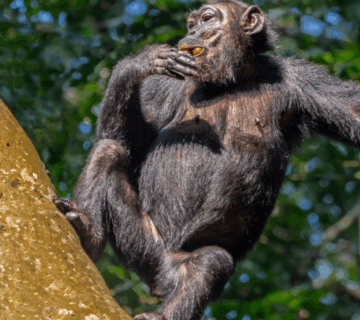
Trekkers gather at Kanyanchu Visitor Centre early in the morning for registration and a briefing before splitting into small groups with an assigned ranger guide. Kibale’s chimps are considerably more active and vocal than gorillas, ranging widely through the canopy and calling to each other across long distances, which means a trek here often involves more walking and less of the sedentary, settled viewing typical of a gorilla encounter. Once the group is found, visitors get a strict one-hour window to watch, photograph, and simply take in the chaos of chimp social behavior before heading back out.
The Chimpanzee Habituation Experience
For travelers who want more time and a deeper look at the habituation process itself, Kibale’s chimpanzee habituation experience runs 300 US dollars for foreign non-residents, 250 for foreign residents, and 250,000 Ugandan shillings for East African citizens, and allows up to four hours with the chimps rather than the standard hour. The day starts with a briefing at Kanyanchu headquarters before heading into the forest alongside researchers actively working to habituate the community to human presence, a genuinely different pace and depth of encounter than the standard trek.
Beyond the Chimps
The Bigodi Wetland Sanctuary
Right next to the park, the Bigodi Wetland Sanctuary offers a lower-cost, community-run alternative or addition to a Kibale visit, roughly 10 US dollars per person, managed by the Kibale Association for Rural and Environmental Development. Guided walks through the wetland turn up excellent birding and primate sightings, including species that don’t always show up on the main forest trails, and the entry fee goes directly to the local community organization rather than the national park system.
The Corridor to Queen Elizabeth National Park
Kibale connects to Queen Elizabeth National Park through a continuous forest corridor stretching roughly 180 kilometers, a genuine wildlife highway that elephants actively use to move between the two protected areas. That connectivity matters conservation-wise as much as it does for trip planning, since it keeps Kibale’s elephant population linked to a much larger gene pool rather than isolated in a forest island.
Beyond Primates
Kibale’s wildlife list extends well past its famous monkeys and apes: duikers, bushpigs, giant forest hogs, leopards, African golden cats, and occasional lion sightings round out the park’s mammal count, while 325 recorded bird species, including the Kibale ground thrush found nowhere else on earth, make it a genuine birding destination in its own right.
A Forest That Survived Real Logging Pressure
Because Kibale spent six decades as a working forest reserve before national park status arrived in 1993, parts of it show the visible legacy of past commercial logging, regenerating secondary forest alongside untouched primary stands. That mixed history is actually part of what makes the park scientifically interesting: researchers have used Kibale for decades to study how primate communities recover and adapt in logged versus undisturbed forest, work that has shaped conservation policy well beyond Uganda’s borders.
Planning Your Visit
Getting There
Kibale Forest National Park sits near Fort Portal in western Uganda, a natural base for the park and a common stop on itineraries that also include Queen Elizabeth National Park, Semuliki, or the Rwenzori Mountains. Most travelers reach Kibale by road from Kampala, typically as part of a longer western Uganda circuit rather than a standalone round trip.
Best Time to Visit
Chimp trekking runs year-round, but the drier months, roughly June through September and December through February, offer firmer forest trails and generally easier walking conditions. Kibale’s forest stays green regardless of season, so visiting in the wetter months is entirely workable, just pack for mud and humidity.
Where to Stay
Accommodation clusters mainly around Kanyanchu and along the Fort Portal road, ranging from Primate Lodge, built directly inside the forest for guests who want to wake up to chimp calls, down to more affordable guesthouses and campsites in Fort Portal itself for travelers on a tighter budget. Because the park is compact, even a Fort Portal base keeps you within easy striking distance of an early trekking start.
Frequently Asked Questions
What’s the difference between chimp trekking and the habituation experience?
Standard trekking gives you up to one hour with the chimps once found; the habituation experience extends that to four hours and puts you alongside researchers actively working to habituate the community, at a higher price point.
Can I combine Kibale with gorilla trekking on the same trip?
Yes, and many itineraries do exactly that, pairing Kibale’s chimp trekking with gorilla trekking in Bwindi or Mgahinga as part of a broader western Uganda primate-focused circuit.
Is the Bigodi Wetland Sanctuary worth visiting separately from the park?
Yes, it’s a genuinely worthwhile lower-cost add-on with strong birding and primate sightings of its own, and the fee directly supports the local community organization managing it.
How difficult is chimp trekking in Kibale compared to gorilla trekking?
Generally comparable in physical demand, guided forest walking rather than technical climbing, though chimps move faster and range more widely than gorillas, which can mean more walking on any given day.
Which is better, Kibale or a chimp sanctuary like Ngamba Island?
They’re genuinely different experiences. Kibale offers wild, free-ranging chimp trekking in real forest habitat, while Ngamba Island is a protected sanctuary for orphaned, non-releasable chimps viewed from a platform. Kibale is the choice for a true wild trekking experience, while Ngamba Island suits travelers who want a guaranteed, gentler encounter without a forest hike involved.
Do I need a separate permit for the Bigodi Wetland Sanctuary?
Yes, it’s managed and ticketed separately from the national park by the local community organization KAFRED, at a considerably lower cost than a chimp trekking permit.
Recommended Safaris
Kibale pairs naturally with the rest of western Uganda’s primate and wildlife circuit. See our Semuliki National Park guide for a nearby destination worth combining on the same trip, and our Bwindi Impenetrable National Park guide for pairing chimp and gorilla trekking. Travelers building a longer itinerary should also look at the Uganda Gorilla Habituation Experience and the 7 Days Serengeti and Bwindi Gorillas itinerary. When you are ready to plan a Kibale trip, get in touch with our team and we will help you work out permits and logistics from Fort Portal.

No comment