
Mgahinga Gorilla National Park: The Complete Guide
Mgahinga Gorilla National Park sits tucked into the far southwestern corner of Uganda, where the border folds into Rwanda and the Democratic Republic of Congo, and it packs an outsized list of experiences into a park you could walk across in an afternoon. This guide covers what actually matters if you are planning a visit: gorilla and golden monkey permits and what they cost in 2026, the three volcano hikes, the Batwa Trail, and the practical details of getting there, timing your trip, and booking it properly.
Key Highlights
- Uganda’s smallest national park at roughly 34 square kilometers, part of the wider Virunga Conservation Area shared with Rwanda and the DRC
- Home to the Nyakagezi gorilla family, the only habituated group in the park, with just 8 trekking permits issued per day
- One of only two places in the world, alongside Rwanda’s Volcanoes National Park, offering both gorilla trekking and golden monkey trekking in the same park
- Three climbable extinct volcanoes: Muhabura, Gahinga, and Sabyinyo, the last of which straddles Uganda, Rwanda, and the DRC at its summit
- A living cultural trail led by the Batwa community, ending at Garama Cave
Where Mgahinga Gorilla National Park Is and Why It Exists
Location, Size, and History
Mgahinga Gorilla National Park lies about 10 kilometers south of Kisoro town, in Uganda’s Kisoro District, hard against the borders with Rwanda and the DRC. At roughly 34 square kilometers, it is Uganda’s smallest national park by a wide margin, small enough that a single guided walk can cross a meaningful share of its terrain. The park takes its name from the Kinyarwanda word “gahinga,” referring to the small volcanic stones that farmers still clear from gardens on the lower slopes. It was gazetted as a national park in 1991, upgraded from a game reserve specifically to protect the mountain gorillas that were increasingly coming into contact, and conflict, with the farming communities pressed against its boundary.
The Virunga Landscape It Shares With Rwanda and Congo
Mgahinga Gorilla National Park forms the Ugandan third of the Virunga Massif, a chain of eight volcanoes that also includes Rwanda’s Volcanoes National Park and the DRC’s Virunga National Park. Wildlife, gorillas included, moves across these unmarked borders more or less freely, which is why conservation here has always depended on cooperation between the three countries rather than any one park acting alone. Inside Uganda’s slice of that massif, the terrain runs from bamboo forest and montane woodland on the lower slopes up through Afro-alpine moorland near the volcanic summits, a compressed version of the altitude zones you would otherwise need several parks to see.
Gorilla Trekking With the Nyakagezi Family

Meet the Nyakagezi Family
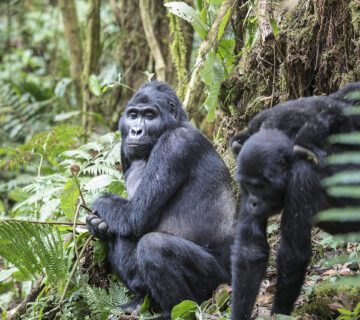
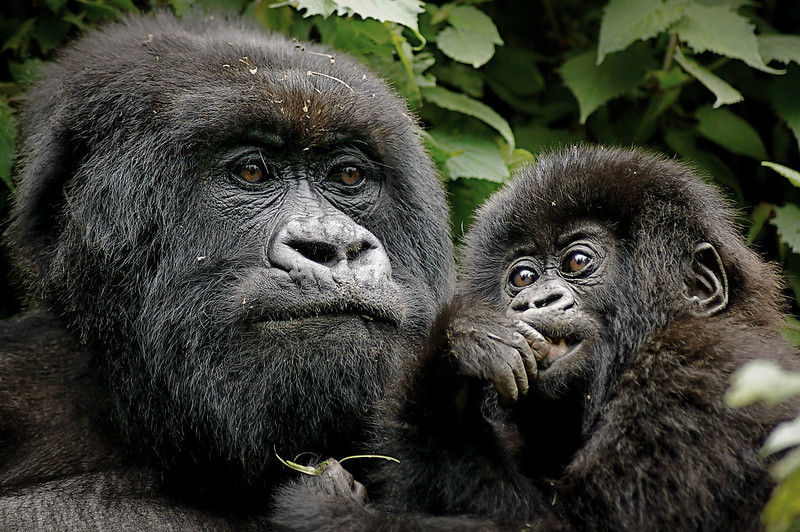
Mgahinga Gorilla National Park has exactly one habituated gorilla group available for trekking, the Nyakagezi family, and that scarcity is precisely what draws serious primate travelers here rather than to Uganda’s larger gorilla destination, Bwindi. As of 2026 the family numbers 11 individuals and is unusual for containing five adult silverbacks living together in relative peace under a dominant male, rather than the single-silverback structure typical of most gorilla groups. Because only one family treks, Uganda Wildlife Authority issues just 8 gorilla permits for Mgahinga each day, which makes an already exclusive experience feel genuinely intimate: on any given morning, you are one of a small handful of people on the mountain at all.
Permit Prices and What They Include
A gorilla trekking permit for Mgahinga Gorilla National Park costs 800 US dollars per person for foreign non-residents, 700 US dollars for foreign residents living in East Africa, and 300,000 Ugandan shillings for East African Community citizens, figures that match the standard Uganda-wide gorilla permit pricing rather than a separate Mgahinga rate. The fee covers park entry for trekking day, a ranger-guide, trackers, and the hour you are permitted to spend with the gorillas once found. Uganda Wildlife Authority has in recent years trialed a reduced permit price during quieter months, so it is worth asking your operator whether a low-season rate applies to your travel dates, though the standard price should be your budgeting baseline. One booking change worth knowing about: since March 2026, UWA has dropped the old seven-day reservation hold, which means permits now require full payment at the time of booking rather than a deposit followed by a grace period, so confirm your dates and travel plans before you pay.
What a Trekking Day Actually Looks Like
Trekkers gather at Ntebeko Gate early in the morning for a briefing, group assignment, and a short walk to the trailhead. Because the Nyakagezi family tends to range on the lower, gentler slopes of the volcanoes rather than deep into the high bamboo zones, treks here are frequently shorter and less physically demanding than the multi-hour slogs sometimes required in Bwindi’s steeper sectors, though the family does occasionally cross into Rwanda, in which case Uganda-based treks are simply rescheduled or the day is spent on an alternative activity. Once the trackers locate the gorillas, visitors get a strict one-hour encounter at a required distance, enough time to watch the interplay between the resident silverbacks and take in a level of gorilla behavior few other trekking sites can offer, given the family’s unusual multi-male structure.
Golden Monkey Trekking, Mgahinga’s Other Headline Activity

Permit Price and Encounter Rules
Golden monkeys are an endangered primate found almost nowhere else on earth outside the Virunga volcanoes, and Mgahinga Gorilla National Park is one of the very few places you can track them on the Uganda side of the border. A golden monkey trekking permit costs 60 US dollars for both foreign non-residents and residents, and 40,000 Ugandan shillings for East African Community citizens, a fraction of the gorilla permit price. That fee covers park entrance, a guide, and roughly an hour with a habituated troop, typically moving fast through the bamboo as they feed on shoots, leaves, and bamboo sap, closer in energy to a lively bird-watching outing than the more measured pace of a gorilla trek.
Golden Monkey Habituation Experience
Beyond the standard hour-long trek, Mgahinga also offers a golden monkey habituation experience for travelers who want more time with the troop and a closer look at the habituation process itself, spending several hours alongside researchers and guides rather than the single scheduled hour. It is a good option to combine with a Mgahinga gorilla permit on a multi-day itinerary, since golden monkey permits are far easier to obtain on short notice than gorilla permits and rarely need to be booked as far in advance.
Hiking the Three Virunga Volcanoes
Mount Sabyinyo, the Saddleback Climb
Sabyinyo, at 3,645 meters, is widely considered one of the toughest day hikes in Uganda and the most dramatic of the three. Its name means “old man’s teeth” in Kinyarwanda, a reference to the jagged, eroded peaks along its ridge, and the climb involves ladders and narrow saddleback ridges where, at the third and highest peak, you can stand with one foot in Uganda, one in Rwanda, and the DRC visible just beyond, the only point in Africa where three countries meet on a single mountain summit. Expect a full day out, with the reward of one of the more unusual geopolitical photo opportunities on the continent.
Mount Gahinga and Mount Muhabura
Gahinga, at 3,474 meters, is the gentlest of the three climbs and the shortest, with a crater lake and a swampy bog near its summit that gives the hike a very different character from Sabyinyo’s exposed ridgelines. Muhabura, the tallest at 4,127 meters, is the long haul of the group, typically an eight-hour round trip, but it rewards climbers with sweeping views across the Virunga volcano chain into both Rwanda and the DRC on a clear day. None of the three climbs require technical climbing experience, but all three demand a reasonable level of fitness, proper boots, and layered clothing for the temperature swing between the park gate and the exposed upper slopes.
The Batwa Trail and Garama Cave
What the Batwa Trail Covers
The Batwa Trail runs across the lower slopes of Muhabura and Gahinga and is led by members of the Batwa community, the original forest-dwelling inhabitants of this region before it became a protected park. Over roughly four to five hours, guides demonstrate how their ancestors harvested medicinal herbs, gathered wild honey, drew water using hollowed bamboo, and built the grass-thatched huts that once stood in these forests, offering a version of cultural tourism grounded in lived history rather than staged performance.
Garama Cave and the Cultural Performance
The trail ends at Garama Cave, a 342-meter-long lava tube roughly 14 meters deep near the park’s northern edge, which the Batwa once used as shelter and, according to local accounts, as a defensive retreat during conflict with neighboring kingdoms. The visit typically closes with a cultural performance of song and dance at the cave entrance, a site still regarded as ceremonial ground by Batwa community leaders today. It pairs naturally with a gorilla or golden monkey trek on a multi-day Mgahinga itinerary, since it requires no separate wildlife permit and can usually be arranged with a day or two of notice.

Planning Your Visit to Mgahinga Gorilla National Park
Best Time to Go
Gorilla and golden monkey trekking run year-round in Mgahinga, since permits are capped by group size rather than season, but the driest windows, roughly June through September and December through February, make for easier underfoot conditions on both the primate treks and the volcano hikes. Visiting during the wetter months is entirely workable and tends to mean fewer other travelers on the mountain, but pack for mud on the trails and expect the volcano climbs in particular to take longer in slippery conditions.
Getting to Mgahinga Gorilla National Park from Kisoro, Kigali, and Entebbe
The drive from Kampala to Kisoro covers roughly 510 kilometers and takes most of a day, with good tarmac as far as Kabale and a winding, increasingly paved mountain road for the final stretch into Kisoro town, from which Ntebeko Gate is a short onward drive. Travelers short on time often fly instead, with charter flights from Entebbe to the airstrip near Kisoro cutting the journey to under two hours. For those combining Uganda and Rwanda on one trip, Kigali is the closer gateway, with the drive to Kisoro taking roughly two and a half to three hours, which makes Mgahinga a genuinely practical add-on to a Rwanda-based gorilla or golden monkey itinerary rather than a detour.
Where to Stay
Accommodation near Mgahinga Gorilla National Park sits mostly just outside the park boundary around Kisoro and along the road toward Ntebeko Gate, ranging from established mid-range and upmarket lodges with volcano views, Mount Gahinga Lodge among the better known, down to simpler guesthouses in Kisoro town itself for travelers on a tighter budget. Because the park is so compact, even budget accommodation in Kisoro puts you within a short drive of the gate on trekking morning, so the choice usually comes down to comfort and view rather than convenience.
Permit Booking Timeline and Rules
Gorilla permits for Mgahinga Gorilla National Park should be booked three to six months ahead of your travel dates where possible, since the daily cap of 8 is small enough to sell out even outside peak season. Golden monkey permits are considerably more flexible and can usually be arranged with much shorter notice. Uganda Wildlife Authority is the sole issuer of both permit types, but foreign visitors are required to book through a licensed Ugandan tour operator rather than purchasing directly, and, as noted above, full payment is now due at the time of booking rather than after a holding period, so confirm your itinerary before committing funds.
Frequently Asked Questions
How many gorilla permits are available in Mgahinga Gorilla National Park each day?
Only 8, since the Nyakagezi family is the sole habituated gorilla group in the park. That is far fewer than Bwindi, which spreads permits across multiple gorilla families and sectors.
Can I see golden monkeys and gorillas on the same trip to Mgahinga?
Yes, and many visitors do exactly that, often trekking gorillas one morning and golden monkeys the next, since the two permits are booked and issued separately and the activities do not compete for the same time slot.
How difficult is gorilla trekking in Mgahinga compared to Bwindi?
It varies by day, but the Nyakagezi family generally stays on lower, less steep terrain than gorilla families in Bwindi’s more rugged sectors, so Mgahinga treks are often, though not always, shorter and less strenuous. Fitness for uneven forest terrain is still required either way.
What is the best time of year to visit Mgahinga Gorilla National Park?
The driest months, June through September and December through February, offer the easiest trail conditions for both primate trekking and the volcano hikes, but trekking permits are valid year-round and the wetter months bring fewer crowds.
Do I need a visa for both Uganda and Rwanda if I want to see all three Virunga volcanoes?
If your itinerary crosses into Rwanda to climb or trek on that side of the border, yes, you will need a valid Rwandan visa in addition to your Ugandan one. The East Africa Tourist Visa, when applicable, can simplify travel across Uganda, Rwanda, and Kenya on a single permit, so check current eligibility before you travel.
Recommended Safaris
If Mgahinga’s gorillas and golden monkeys have you planning a trip, a good starting point is our dedicated Gorilla Trekking Uganda page, which lays out how Mgahinga compares with Uganda’s other trekking destinations. Travelers who want more time with a family than the standard hour allows should look at the Uganda Gorilla Habituation Experience, while those looking to pair primates with Uganda’s other icons might prefer the 4 Days Shoebill Tracking and Gorilla Trekking Safari. For a longer East Africa combination, the 7 Days Serengeti and Bwindi Gorillas itinerary pairs the Serengeti’s plains with Uganda’s forests, and travelers wanting to see both sides of the Virunga volcanoes can look at the 10-Day Rwanda & Uganda Gorilla Adventure Group Safari. You can also read more on our dedicated Mgahinga Gorilla National Park page, and for background on the neighboring reserve, our guide to Bwindi Impenetrable National Park is worth a look too. For the latest official permit information, Uganda Wildlife Authority’s own site at ugandawildlife.org is the authoritative source. When you are ready to build an itinerary around Mgahinga, get in touch with our team and we will help you plan it from permits through to logistics.
![Gorilla Trekking Uganda vs Rwanda vs Congo [Which Is Better]](https://www.allinafricasafaris.com/wp-content/uploads/2025/01/Gorilla-Trekking-Uganda-vs-Rwanda-vs-Congo-Which-Is-Better-360x320.jpg)

No comment