

Lions of Ngorongoro Crater
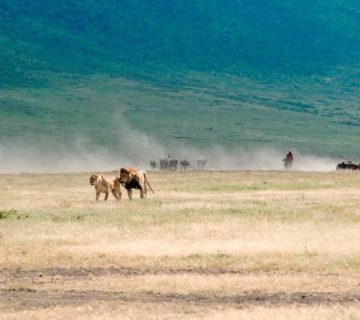
Ngorongoro Crater holds one of the highest lion densities documented anywhere in Africa, with an estimated 60 to 70 individuals living within the crater floor’s roughly 260 square kilometres, a population made unusually visible by the crater’s contained, bowl-shaped geography that concentrates both predators and prey within clear sight of visiting safari vehicles throughout the day.
Why the Crater’s Contained Geography Makes Lion Sightings So Reliable
Formed when a massive volcano collapsed inward roughly two to three million years ago, the crater’s steep, unbroken walls prevent most large mammals from migrating in or out, meaning the resident lion population, unlike the more nomadic prides of the neighbouring Serengeti, stays within a fixed, relatively compact area year-round regardless of season.
The crater walls rise roughly 600 metres above the floor at their highest points, a formidable barrier that, combined with the considerable distance to the nearest comparable ecosystem, means the crater functions almost like a natural wildlife enclosure without any artificial fencing required. This geography produces one of the most concentrated Big Five ecosystems on the continent, with the same confined area supporting healthy resident populations of elephant, buffalo, rhino, and leopard alongside the crater’s lions.
How Decades of Inbreeding Created a Documented Genetic Bottleneck Within the Crater Population
Researchers have documented reduced genetic diversity among Ngorongoro’s lions, traced to a combination of the population’s physical isolation and a devastating 1962 outbreak of stable flies that killed a large share of the resident pride, after which the surviving population rebuilt largely through breeding among close relatives, a genuine cautionary case study in the risks small, enclosed wildlife populations face.
This genetic bottleneck remains an active area of research, with periodic natural immigration of new males occasionally crossing the crater rim helping to introduce fresh genetic material, though this influx happens considerably less often than the free gene flow a fully open ecosystem like the Serengeti allows.
Long-term monitoring has documented measurably lower sperm counts and considerably higher rates of abnormal sperm morphology among Ngorongoro males compared to their Serengeti counterparts, findings researchers link directly to the population’s restricted genetic diversity. Despite these documented fertility challenges, the population has remained stable in overall numbers for decades, a resilience researchers attribute to the crater’s exceptional prey density offsetting the reproductive disadvantages inbreeding otherwise imposes.

Why Ngorongoro’s Lions Show Less Fear of Vehicles Than Prides Elsewhere
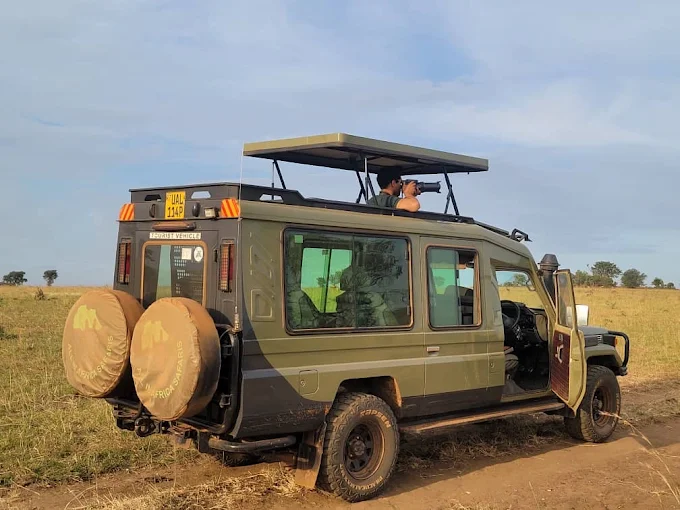
Given the sheer, sustained volume of tourist vehicles the crater receives daily, resident lions have habituated to close vehicle proximity to a degree considerably beyond what prides in less-visited parks typically display, meaning sightings here often involve closer, more relaxed encounters than a comparable pride elsewhere might tolerate.
This habituation developed gradually over decades of consistent, predictable tourist traffic following established road networks that avoid disrupting hunting or denning areas, a managed balance park authorities actively maintain rather than an accident of overcrowding. Guides operating within the crater follow strict protocols limiting how many vehicles can gather at a single sighting, a rule that helps preserve both the animals’ comfort and the overall quality of the visitor experience.
How the Crater’s Permanent Water and Grassland Sustain Dense Resident Prey
Lake Magadi and the surrounding Lerai Forest and open grassland provide year-round water and grazing for the crater’s substantial wildebeest, zebra, and buffalo populations, and this dense, largely non-migratory prey base explains why lion density here runs considerably higher than the wider Serengeti average despite the crater’s comparatively small total area. The buffalo herds our guide on defensive circle formations covers represent one of the crater’s most consistently visible prey species alongside these resident lion prides.
Why Competition Between Rival Prides Runs Higher Within the Crater’s Fixed Boundaries
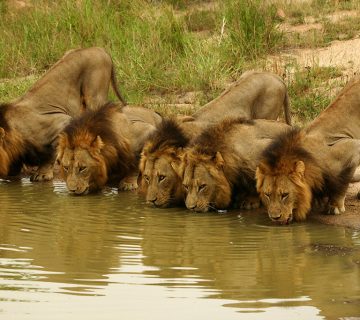
Because the crater’s finite space limits how far a pride can expand its territory, competition between Ngorongoro’s five to seven resident prides runs more intense than in open ecosystems where a struggling pride can simply relocate, meaning territorial disputes and male takeover attempts happen with notable frequency within this contained population.
Researchers have documented individual pride turnover happening considerably faster within the crater than in the open Serengeti, with successful coalitions typically holding a given pride’s territory for a shorter average period before a rival coalition mounts a successful challenge, a direct consequence of the unusually dense concentration of competing males the crater’s small total area forces into close proximity.
How Researchers Use the Crater as a Natural Laboratory for Lion Population Studies
Given the population’s genuine isolation and manageable, well-defined size, researchers have used Ngorongoro as an unusually controlled natural setting for studying lion social structure, disease transmission, and long-term population dynamics, since the crater’s fixed boundaries make comprehensive population counts and individual tracking considerably more feasible than across the open, far larger Serengeti ecosystem nearby. This same research value parallels the long-running dataset our guide on male lion pride dynamics covers, though Ngorongoro’s contained population has been studied for different reasons than the open, migratory Serengeti ecosystem.
Why Lion Sightings in Ngorongoro Run Reliable Almost Regardless of Season
Unlike the seasonal migration-driven sightings typical of the neighbouring Serengeti, Ngorongoro’s resident, non-migratory population means visitors encounter strong lion-viewing odds across virtually any month of the year, a genuine practical advantage for travelers with fixed, inflexible travel dates who cannot easily plan around a migration calendar.
How a Single Day Suffices for Strong Ngorongoro Lion Sightings
Given the crater’s compact size relative to its considerable wildlife density, most visitors complete a full crater floor game drive within a single day, descending via one of two access roads before returning to a rim-side lodge that evening, a considerably more time-efficient wildlife experience than the multi-day exploration larger parks typically require. Our guide on the region’s best lion-viewing parks covers how this efficiency compares to the considerably longer visits other top destinations typically warrant.
Getting to Ngorongoro Crater
Most visitors reach the crater by road from Arusha or as part of a wider northern circuit itinerary connecting with Arusha National Park and the Serengeti, with rim-side lodges providing the most common overnight base before a full-day descent onto the crater floor itself.
The descent road itself drops roughly 600 metres over a relatively short distance, a steep, switchbacking route that offers dramatic views over the crater floor before vehicles reach the flatter terrain below, meaning the journey down becomes part of the overall wildlife-viewing experience itself, rather than simply a transit leg between two separate destinations.
Photographing Ngorongoro’s Lions
The crater’s open grassland and relatively close vehicle proximity to resident prides create strong conditions for detailed lion photography. See our camera gear guide for lens recommendations suited to this kind of closer-range wildlife photography.
The crater’s consistent morning mist, which typically burns off within the first hour or two after sunrise, creates a distinctive soft-light window photographers specifically time their descent around, since this brief atmospheric condition rarely persists much later in the day once the sun climbs considerably higher above the surrounding crater rim.
What to Pack for a Ngorongoro Crater Safari
Given the genuine temperature difference between the cooler crater rim and the warmer floor below, layered clothing matters considerably more here than in a single-elevation park. See our gorilla trekking packing list for broader safari packing guidance that applies well here too.
The rim sits at roughly 2,300 metres elevation, considerably cooler than the crater floor’s warmer, more sheltered microclimate, meaning a warm jacket for rim-side mornings and evenings matters considerably, even though the day’s actual game drive itself typically takes place in comparatively mild conditions down below.
Combining Ngorongoro Lion Viewing With a Wider Tanzania Circuit
Ngorongoro pairs naturally with the Serengeti and Tarangire within a classic northern circuit itinerary, and the elephant herds our guide on long-distance communication covers share this same crater ecosystem alongside the resident lion prides.
Frequently Asked Questions
How many lions live in Ngorongoro Crater?
An estimated 60 to 70 individuals live within the crater floor’s roughly 260 square kilometres of grassland.
Why does Ngorongoro have such a genetic bottleneck?
A 1962 stable fly outbreak devastated the population, and survivors rebuilt largely through breeding among close relatives.
Is Ngorongoro reliable for lion sightings year-round?
Yes – the resident, non-migratory population means strong odds regardless of season.
How many prides live within the crater?
Researchers document five to seven resident prides competing within the crater’s fixed boundaries.
Do Ngorongoro’s lions behave differently around vehicles?
Yes – sustained tourist traffic has made them considerably more habituated to close vehicle proximity than prides elsewhere.
Ready to Plan Your Tanzania Safari?
Whether prioritising Ngorongoro’s reliable lion density, a wider northern circuit itinerary, or specific conservation interests, our team can build a trip matched to your interests. Get in touch with our team below today and let’s start planning your complete Tanzania safari itinerary together.

No comment