Gates of Murchison Falls National Park.
Gates of Murchison Falls National Park: With a total area of over 3,893 square kilometers, Murchison Falls National Park is the oldest and largest national park in Uganda. The northwest region of Uganda, which includes the districts of Kiryandongo, Masindi, Nwoya, and Bilisa, is home to this breathtaking natural beauty.
Elephants, buffaloes, lions, and leopards are among the roughly 76 animal species that can be seen on wildlife tours at Uganda’s Murchison Falls National Park. The park is home to about 450 different species of birds. The park is home to reptiles, butterflies, aquatic animals, and many more. The park is home to some of the most beautiful waterfalls in the world.
The main metropolis and capital of Uganda, Kampala, is roughly 305 kilometers away from the national park. When driving from Kampala to Murchison Falls National Park, it takes roughly six to seven hours. In order to see the rhinos, tourists can also choose to make a visit at the Ziwa Rhino Sanctuary. In addition, visitors who prefer a more opulent mode of transportation have the option of flying into Murchison Falls National Park.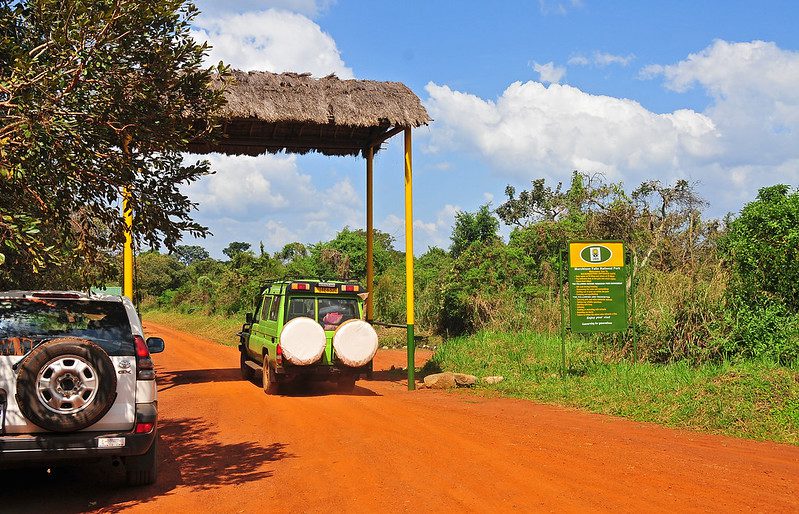
Fly from Kampala-Kajjassi or Entebbe International Airport to Pakuba Airfield, which is close to Murchison Falls National Park, for a one-of-a-kind adventure. Entebbe International offers chartered flights to Pakuba Airfield, which is 16 km from Paraa. To have everything planned for you, including transfers from the airport and to your lodging at the park, you can book the flight through a tour operator.
The eight gates that lead to various areas of Murchison Falls National Park are one of its most notable characteristics. In order to control tourist access and guarantee the security and preservation of the park’s natural resources, these gates are essential. There are special chances to explore the park and see the wildlife in its natural environment at each gate.
Murchison Falls National Park’s entrance.
The gate of the River Nile
The park’s main entrance is the River Nile gate, which is close to Murchison Falls. From here, tourists can take advantage of boat safaris on the Nile River, where they can see some of the amazing wildlife, including as crocodiles, hippos, and various bird species, while also admiring the stunning vistas of the falls.
The gate of Tangai
The Tangai gate provides entry to the park’s Tangai region, which is renowned for its varied fauna, which includes antelopes, elephants, and more. To discover the area’s hidden gems and get a close-up look at the animals, visitors can go on a game drive or guided walks.
The Gate of Budongo
Another significant park entrance is the Budongo gate, which provides access to the Budongo woodland reserve. This region is well-liked for game viewing because it is home to a wide range of species, including buffaloes, chimps, lions, and leopards.
The gate of Kichumbanyobo
Chimpanzees and other primates can be found in the pristine Budongo Forest Reserve, which is close to the Kichumbanyobo gate. To witness these amazing creatures and understand their behavior, visitors can go tracking in the forest.
The gate of Wankar
The park’s Wankar regions, renowned for their breathtaking scenery and plethora of wildlife, are accessible through the Wankar gate. Numerous bird species, including the endangered shoebill stork, can be seen here by birdwatchers.
The gate of Pakuba
The northern portion of the park is home to the Pakuba gate, which provides entrance to the Pakuba region, which is well-known for its sizable herds of giraffes and elephants. To see these magnificent creatures up close, tourists can take boat excursions or game drives.
The gate of Chobe
The Chobe gate, which provides access to the Chobe wildlife reserve, including Paraa, is situated in the park’s eastern section. The gate is roughly two kilometers north of Karuma Bridge and close to Pakwach. This region is a great place to see game because of its biodiversity, which includes lions, hyenas, and leopards, among others.
The Gate of Kaniyo Pabidi
The park’s Kaniyo Pabidi area, which offers chimpanzee monitoring and a pristine forest habitat, is accessible through the Kaniyo Pabidi Gate. To see these bright primates in their natural environment, visitors can hike into the forest with knowledgeable guides.
Time of year that is ideal for visiting Murchison Falls National Park
The dry season, which lasts from December to late February and subsequently from June to August, is the ideal time of year to explore Murchison Falls National Park. Because there is little to no rainfall at this time of year, it is an exciting time to see animals because they tend to congregate around the water’s edge. But the greatest time to go birdwatching is between January and March, when there are many different kinds of birds and it’s usually less crowded.
Safari lodging in Murchison Falls National Park
Paraa Safari Lodge, Geo Lodges, Nile Safari Lodge, Red Chilli Rest Camp, Sambiya River Lodge, Yebo Safari Camp, UWA Campsite, Murchison Safari Lodge, Chobe Safari Lodge, Budongo Ecolodge, Boomu Women’s Group Bandas, and Global Village Guest House are just a few of the many upscale, mid-range, and affordable lodging options available in Murchison Falls National Park for your self-drive safari. Travelers can enjoy the greatest and most soothing dampness at these gorgeous lodgings.
Why Understanding Each of the Eight Gates Genuinely Helps Travelers Plan a More Targeted Park Itinerary
Since each gate genuinely provides access to a distinct region with its own signature wildlife and activities, travelers who research these differences in advance genuinely can prioritize the specific gates matching their interests rather than entering the park without a plan. All in Africa Safaris can design a gate-by-gate itinerary matched to your priorities.
How the River Nile Gate’s Boat Safaris Genuinely Offer the Park’s Most Iconic Wildlife and Scenery Combination
Since this entrance genuinely sits closest to the falls themselves, boat safaris launched here genuinely combine crocodile and hippo sightings with dramatic waterfall views that no other gate in the park can replicate.
Why Choosing Between Budongo and Kaniyo Pabidi Genuinely Comes Down to Preferred Chimp Tracking Style
Since both gates genuinely offer access to chimpanzee tracking within different sections of forest, travelers genuinely should compare specific trail conditions and group sizes at each before deciding which entrance best suits their tracking preferences. All in Africa Safaris can help you choose between Budongo and Kaniyo Pabidi for chimp tracking.
How the Wankar Gate’s Shoebill Stork Access Genuinely Makes It a Priority Stop for Dedicated Birders
Since this elusive species genuinely draws visitors from around the world specifically seeking a sighting, birders genuinely should prioritize the Wankar gate above other entrances when shoebill spotting tops their trip goals.
Why the Pakuba Gate’s Giraffe and Elephant Herds Genuinely Reward Travelers With a More Northern Perspective
Since this region genuinely sits in the park’s northern section away from the more heavily visited southern areas, travelers entering through Pakuba genuinely encounter large herds in a comparatively less crowded setting. All in Africa Safaris can arrange a northern Murchison itinerary through the Pakuba gate.
How Flying Into Pakuba Airfield Genuinely Transforms a Multi-Hour Drive Into a Short, Scenic Flight
Since the alternative overland journey genuinely takes six to seven hours from Kampala, travelers on tighter schedules genuinely find the chartered flight option preserves far more time for actual park activities.
Why Combining a Ziwa Rhino Sanctuary Stop Genuinely Adds a Species Unavailable Within Murchison Itself
Since rhinos genuinely don’t roam free within Murchison Falls National Park itself, travelers genuinely need this separate sanctuary stop specifically to see these animals as part of a broader Murchison-area itinerary. All in Africa Safaris can combine Ziwa Rhino Sanctuary with your Murchison Falls safari.
How the Chobe Gate’s Proximity to Karuma Bridge Genuinely Makes It a Natural Entry Point From Eastern Uganda
Since this gate genuinely sits just two kilometers from a major bridge crossing, travelers approaching from eastern Uganda genuinely find Chobe the most logical and convenient entrance for their specific route.
Why Timing Your Visit to the Dry Season Genuinely Improves Wildlife Concentration Near Water Sources
Since animals genuinely gather more predictably around remaining water during December-through-February and June-through-August, travelers prioritizing dense sightings genuinely benefit from timing their entrance through any gate to this drier window. All in Africa Safaris can time your Murchison Falls visit for peak dry-season wildlife viewing.
How the January-to-March Birding Window Genuinely Rewards Visitors With Both Variety and Fewer Crowds
Since this specific period genuinely combines strong species diversity with lower visitor numbers, birders genuinely find this narrower window offers a more rewarding experience than the broader dry season alone would suggest.
Why the Park’s Status as Uganda’s Oldest and Largest Genuinely Reflects Decades of Sustained Conservation Investment
Since Murchison Falls genuinely predates most other protected areas in the country, its long conservation history genuinely explains why the park supports such a dense concentration of large mammal and bird species across its nearly 3,900 square kilometers. All in Africa Safaris can share more of the park’s conservation history during your visit.
Planning Your Murchison Falls National Park Adventure
From the River Nile gate to Kaniyo Pabidi, genuinely each entrance to Murchison Falls offers its own distinct wildlife experience. All in Africa Safaris can turn this overview into a fully confirmed itinerary tailored to your travel dates.