
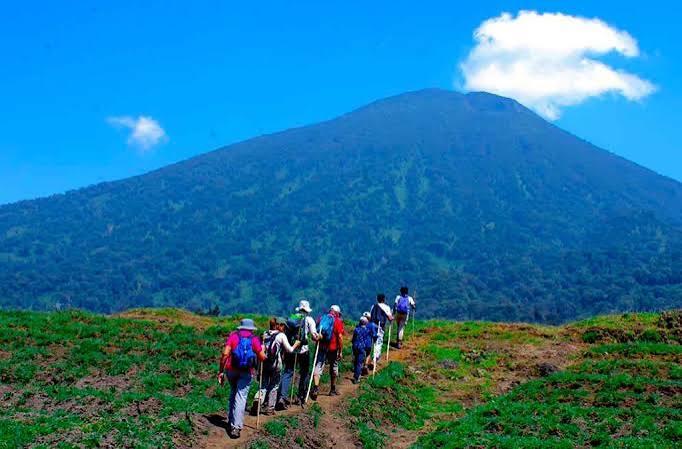
Hiking Mount Karisimbi: Rwanda’s Highest Volcano Overnight Trek
Gorilla trekking draws the overwhelming majority of visitors into Volcanoes National Park, but the park’s true physical challenge lies elsewhere: Mount Karisimbi, Rwanda’s highest peak at 4,507 metres, and the demanding two-day overnight trek required to reach its summit. This isn’t a casual add-on to a gorilla permit; it’s a genuinely strenuous mountaineering-adjacent hike that rewards serious physical preparation with one of East Africa’s most dramatic high-altitude experiences.
Key Highlights
- Mount Karisimbi, at 4,507 metres, is the tallest of the Virunga volcanoes and Rwanda’s highest point
- The standard trek runs two days, with an overnight camp at roughly 3,700 metres
- Day one covers six to seven hours of climbing from the park base to the high-altitude camp
- The summit push on day two takes up to seven hours round trip, with a demanding final hour
- No technical climbing skills are required, but a genuinely high level of physical fitness is essential
- Weather at altitude changes rapidly, and proper cold-weather gear is non-negotiable
Understanding Karisimbi’s Place in the Virunga Range
Karisimbi anchors the western end of the Virunga volcanic chain, the same range that includes Mount Bisoke and forms the mountainous core of Volcanoes National Park’s gorilla trekking territory. Its name, drawn from Kinyarwanda, references the white frost (「amasimbiã€) occasionally visible on its upper slopes, a detail that hints at just how dramatically the climate shifts between the park’s forested lower elevations and Karisimbi’s cold, exposed summit zone.
How Karisimbi Compares to Mount Bisoke
Travellers weighing Karisimbi against the park’s other popular hiking option, Mount Bisoke, should understand these are fundamentally different undertakings. Bisoke is a demanding but achievable single-day hike; Karisimbi is a two-day, overnight, considerably higher-altitude expedition requiring an entirely different level of preparation, gear and time commitment.
Day One: The Climb to High Camp
The trek begins at the park boundary and climbs steadily through Volcanoes National Park’s forest zones toward the overnight camp, positioned at roughly 3,700 metres. This first day typically takes six to seven hours of sustained hiking, gaining substantial elevation through changing vegetation zones before arriving at a basic high-altitude camp equipped with small backpacking-style tents.
What the Overnight Camp Is Actually Like
Conditions at 3,700 metres are genuinely cold, particularly after sunset, and camp facilities are intentionally minimal rather than resembling a standard safari lodge setup. Porters typically assist with carrying camp equipment and supplies up the mountain, a service worth budgeting for given how much it reduces the physical burden of an already demanding two-day climb.
Day Two: The Summit Push
The second day’s push to Karisimbi’s 4,507-metre summit takes up to seven hours round trip from high camp, with the final hour widely regarded as the most physically demanding stretch of the entire trek, steep terrain combined with genuinely thin air at extreme altitude. Reaching the top rewards climbers with sweeping views across the Virunga range and, on clear days, visibility extending well into neighbouring Democratic Republic of Congo and Uganda.
Managing Altitude on the Final Ascent
Thin air at these elevations means pacing matters more on Karisimbi’s summit push than almost anywhere else in Rwanda’s standard hiking circuit; rushing the final ascent significantly increases the risk of altitude-related discomfort. Guides experienced with the route typically set a deliberately measured pace precisely to manage this risk across the group.
Fitness and Preparation
Karisimbi doesn’t require technical mountaineering skills, ropes, or climbing experience, but it absolutely demands a high baseline level of physical fitness, built ideally through weeks of cardiovascular training and, where possible, some hiking at elevation before arriving in Rwanda. Underestimating this requirement is the single most common reason climbers struggle badly partway through the trek.
What to Pack
Layered, genuinely warm clothing is essential given how sharply temperatures drop at the overnight camp and summit, alongside sturdy waterproof hiking boots, rain protection, and a proper sleeping bag rated for cold, high-altitude conditions. This is not a trek where underpacking for cold weather is a minor inconvenience; it’s a real safety consideration given how quickly Virunga weather can shift.
Permits and Booking
Karisimbi treks require advance booking through Rwanda Development Board channels or an experienced local tour operator, with permit availability considerably less constrained than gorilla trekking permits but still worth securing well ahead of a planned trip date. Most operators bundle porter services, camping equipment and guide fees into a single package price, simplifying logistics for climbers unfamiliar with high-altitude camping requirements.
Combining Karisimbi With Gorilla Trekking
Given the physical demands of both activities, most experienced guides recommend against attempting Karisimbi and a gorilla trek on immediately consecutive days; spacing the two activities apart, or tackling Karisimbi before a gorilla permit day rather than immediately after, gives the body meaningful recovery time between two genuinely different kinds of physical exertion.
What You’ll See Along the Way
The route up Karisimbi passes through several distinct vegetation zones, each with its own character: dense montane forest at lower elevations, gradually thinning bamboo and heather zones as altitude increases, and finally the sparse, otherworldly Afro-alpine vegetation that dominates the upper slopes near the summit. This progression through changing ecological zones is, for many climbers, as memorable as the summit itself, a genuinely rare opportunity to experience several distinct African high-altitude ecosystems within a single trek.
Wildlife on the Slopes
While Karisimbi’s forested lower slopes fall within the same broader ecosystem that supports Volcanoes National Park’s mountain gorilla population, gorilla sightings are not part of a standard Karisimbi trek, which follows a dedicated hiking route separate from gorilla tracking trails. Golden monkeys, various forest bird species and, at higher elevations, occasional buffalo signs are more realistic wildlife encounters along the climbing route itself.
Karisimbi’s Volcanic Crater
Unlike some of the Virunga range’s more visually dramatic volcanic features, Karisimbi’s summit crater is relatively subtle, a broad, shallow depression rather than a sharply defined caldera, reflecting the mountain’s status as a long-dormant volcano rather than one with recent visible activity. Climbers reaching the summit are rewarded less by dramatic crater views and more by the sheer scale of the panorama, the surrounding Virunga peaks, Lake Kivu in the distance on clear days, and the DRC and Ugandan borders visible from Rwanda’s single highest vantage point.
A Site of Scientific History
Karisimbi holds genuine significance in primate research history, having hosted early high-altitude research stations connected to the broader Karisoke research tradition established in the region, adding a layer of scientific and conservation history to what is already a physically striking climb.
Working With Guides and Porters
Every Karisimbi trek is accompanied by park-assigned guides with direct experience on the route, essential given the trail’s demanding terrain, shifting weather, and the genuine value of local knowledge in pacing an ascent safely at altitude. Hiring a porter, widely available and genuinely affordable relative to the physical relief it provides, is strongly recommended for all but the most experienced high-altitude hikers, freeing climbers to focus entirely on managing their own pace and breathing rather than carrying a full overnight pack.
Group Size and Pacing
Groups typically move at the pace of their slowest member, a deliberate safety practice rather than an inconvenience, since rushing ahead at altitude carries real risk. Climbers travelling with companions of noticeably different fitness levels should discuss pacing expectations with their guide before setting out, rather than assuming the group will simply sort itself out on the mountain.
Best Time of Year to Attempt the Climb
Rwanda’s dry seasons, roughly June through September and December through February, offer the most reliable conditions for a Karisimbi attempt, with firmer trail conditions and a somewhat lower chance of the heavy rain that can make the upper slopes genuinely treacherous. Attempting the climb during the wetter months isn’t impossible, but it meaningfully raises both difficulty and risk.
Is Karisimbi Right for Your Trip?
Karisimbi suits travellers who’ve already built genuine hiking fitness, ideally with some prior high-altitude experience, and who want Rwanda’s most physically demanding legal trekking challenge rather than a gentler add-on to a standard safari itinerary. It’s not the right choice for travellers seeking a relaxed, low-effort mountain view, nor for anyone without adequate cardiovascular preparation, since underestimating the climb’s demands is far more likely to result in a genuinely miserable, cut-short attempt than a memorable summit.
Setting Realistic Expectations
Even well-prepared, genuinely fit climbers should expect Karisimbi to feel considerably harder than its statistics alone suggest; altitude affects different bodies unpredictably, and a trek that looks entirely manageable on paper can still demand real mental resilience on the final summit push. Building in a buffer day either side of the climb, rather than scheduling it tightly between other activities, gives the trip enough flexibility to accommodate an unexpectedly slow pace without cascading into the rest of your Rwanda itinerary.
Frequently Asked Questions
Do I need prior mountaineering experience to hike Karisimbi?
No technical climbing skills are required, but a genuinely high level of cardiovascular fitness is essential; this isn’t a trek suited to casual, unprepared hikers.
How cold does it get at the overnight camp?
Temperatures at 3,700 metres regularly drop close to or below freezing overnight, making proper cold-weather gear and a suitably rated sleeping bag essential rather than optional.
Can I do Karisimbi as a single-day trek instead of two days?
No, the standard and only practical route requires an overnight camp given the elevation gain and distance involved; a single-day attempt isn’t a realistic or safe option.
Is altitude sickness a real risk on this trek?
Yes, at 4,507 metres altitude-related discomfort is a genuine possibility, which is why guides maintain a deliberately measured pace, particularly during the final summit push.
How does the cost of a Karisimbi permit compare to gorilla trekking?
Considerably lower than a gorilla trekking permit, though exact pricing including porter and camping fees is best confirmed directly with a local operator at the time of booking.
Recommended Safaris
Karisimbi pairs naturally with a wider Volcanoes National Park stay. Our piece on Mount Bisoke covers the park’s other major hiking option in depth. Ready to plan a high-altitude Rwanda adventure alongside your gorilla trekking permit? Reach our team through our Book Now page and we’ll plan it around your dates.

No comment