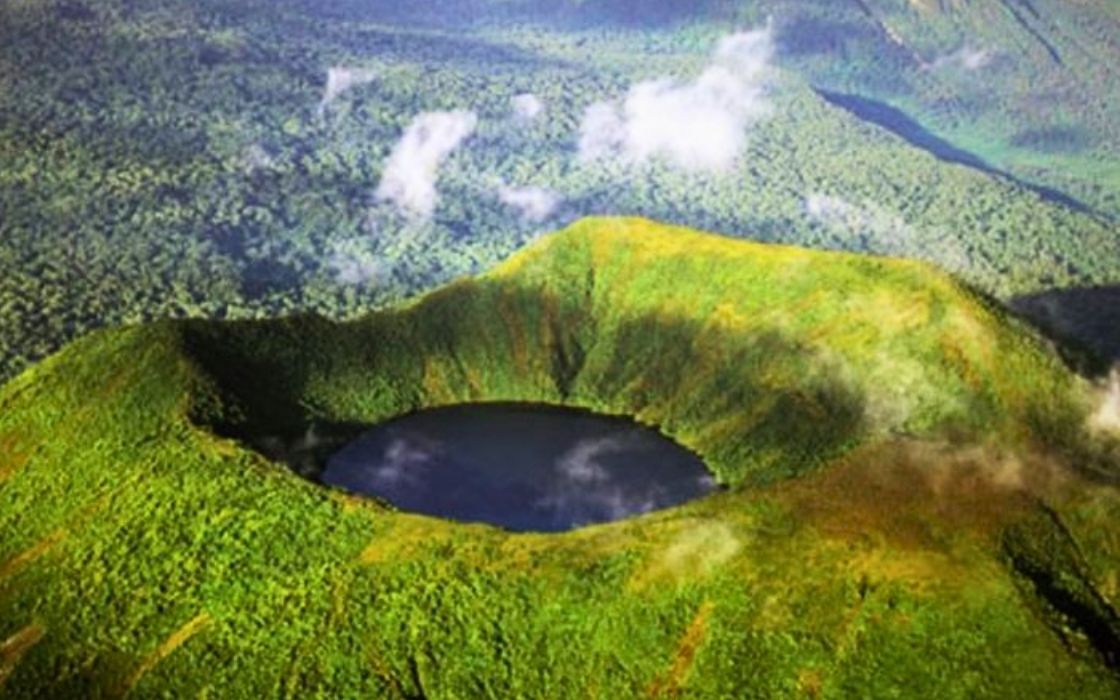
Mountain Bisoke is unmatched by the magical views overlooking the beautiful Crater Lake. This is located in North West of Rwanda and is among the mountain which makes up the Virunga Mountain Ranges situated on the borders of Rwanda, Congo, and Uganda, where its biggest part is found in Rwanda in Volcano National Park plus its two crater lakes and the peak.
The name “Bisoke” means soaked with water which is a Swahili word and it was formed by the local people referring to the two lakes amazing crater lakes that soak in Volcano ranges
These two crater lakes which found in Bisoke Mountain, one is situated on the peak of the Volcano with approximately 400 meters in size and over 100 meters deep, whereas the second Crater Lake has resulted in sides of the Volcano and offers you a stunning view of the lush slopes of the Sabinyo Volcano Mountain.
The Volcano ranges is spread with green vegetation zone ranging from Hagenia forest up to the sub-alpine to alpine which hosts the un common amazing beautiful wildlife species such as Forest Elephants, Buffaloes, Mountain Gorillas, Golden monkeys including the unique flora and fauna scattered along the Virunga ranges with rare bird species that found with the forest and vegetation along the Volcano National Park
Hiking Mountain Bisoke is one of the amazing adventure activities one can take while on your safari in Rwanda, hiking up to the top of the peak takes about 6 hours plus 2 hours descending down to the starting point, while at the peak it offers a spectacular view of the amazing crater lakes which one found on the top of the peak while another situated beside the mountain as well viewing the 5 Virunga volcanoes shared on the Rwanda side and also offer insight on what to expect during the hike. The experienced mountain rangers can take less than 5 hours and 6 hours to hike on top as well descending down to the starting point. Visit and explore the towering Bisoke Mountains, a journey here is Aw-inspiring.
What to Expect on the Trail
The Bisoke hike climbs steadily through dense Hagenia and bamboo forest before opening into higher-altitude vegetation zones as you near the crater rim, a genuinely varied trail rather than a single unchanging climb. The path is well-maintained by park rangers but steep and often muddy, particularly in the upper sections, and porters are available to hire at the trailhead for those who want extra support on the ascent. Reaching the crater rim rewards the effort with a near-perfectly circular lake filling the volcano’s summit, often wreathed in cloud that clears and reforms throughout the day.
Permits and Booking
Bisoke hiking permits are issued separately from gorilla trekking permits through the Rwanda Development Board, and while less tightly capped than gorilla permits, they should still be booked in advance, particularly during peak season. Many travelers combine a Bisoke hike with gorilla trekking on the same trip, since both start from trailheads within Volcanoes National Park and share the same general logistics for transport and park entry.
Fitness Requirements
At around six hours up and two hours down, Bisoke is a genuinely demanding full-day hike, more strenuous than a standard gorilla trek, given the sustained climb and the altitude, which reaches roughly 3,700 meters at the summit. A reasonable level of cardiovascular fitness matters here more than on most other Rwanda activities, and travelers with any underlying health concerns, particularly related to altitude, should consult a doctor before booking.
What to Pack for the Climb
Layered clothing is essential, temperatures at the crater rim are significantly cooler than at the base, often accompanied by wind and mist. Waterproof hiking boots with solid ankle support, a rain jacket regardless of season, gardening-style gloves for gripping vegetation on steep sections, and plenty of water and energy snacks for the six-hour ascent round out a sensible packing list. A walking stick, provided by many porters or available to hire locally, is genuinely useful on the steeper, muddier stretches.
Bisoke vs. Karisimbi: Choosing Your Virunga Peak
Bisoke is the more popular and more manageable of the Virunga hiking options, achievable as a single very long day trip, while neighboring Karisimbi, the tallest of the range, requires an overnight camp partway up and a two-day itinerary to reach its higher, more remote summit. Travelers with limited time or a preference for a demanding but achievable single-day hike consistently choose Bisoke, while those seeking a longer wilderness trekking experience, and willing to camp at altitude, opt for Karisimbi instead.
Combining Bisoke With Gorilla Trekking
Because both activities depart from Volcanoes National Park’s headquarters at Kinigi, many itineraries schedule Bisoke and gorilla trekking on consecutive days, though given how physically demanding both are, spacing them a day apart with a rest day in between is worth considering rather than back-to-back. All in Africa Safaris can help build a Volcanoes National Park itinerary that fits Bisoke hiking, gorilla trekking, and golden monkey tracking into a well-paced trip.
The Twin Crater Lakes Explained
Bisoke’s summit crater lake, filling the volcano’s caldera at roughly 400 meters across, is the hike’s signature reward, its still, often mist-wrapped surface a striking contrast to the exposed, wind-scoured rim surrounding it. The second, smaller crater lake sits lower on the mountain’s flank rather than at the true summit, formed by a separate volcanic vent, and offers hikers a different vantage point over the surrounding Virunga landscape, including views toward neighboring Sabinyo’s jagged, three-country peak. Both lakes are protected within Volcanoes National Park and, unlike the summit crater, the lower lake is visible from parts of the trail well before you reach the top, giving hikers a preview of what awaits at the peak.
Wildlife You Might Encounter En Route
While Bisoke isn’t a dedicated wildlife-viewing hike the way gorilla trekking is, the trail passes through genuine gorilla and golden monkey habitat, and encounters, while not guaranteed, do happen, particularly in the lower forest zones. Buffalo and forest elephant sign, tracks, dung, browsed vegetation, are commonly visible along the lower trail even without a direct sighting, a reminder that you’re hiking through the same forest ecosystem that supports the Virunga’s more famous primate populations. Birders should keep an eye out for Albertine Rift endemics as the trail climbs through changing vegetation zones, each hosting a somewhat different bird community.
How Bisoke Compares to a Gorilla Trek Physically
Where gorilla trekking involves an unpredictable duration, followed by a fixed one-hour encounter, Bisoke is the reverse: a known, sustained climb with no equivalent “reward pause,” which makes the physical demand feel more continuous and, for many hikers, more taxing overall despite gorilla treks sometimes covering rougher terrain. Travelers planning both activities on the same trip often find doing Bisoke first, before legs are tired from a strenuous gorilla trek, makes for a more comfortable pairing than the reverse order.
Weather and Best Time to Hike
Bisoke’s summit sits high enough to generate its own weather, mist and light rain are common even during Rwanda’s broader dry seasons, so a clear, view-filled summit is a genuine bonus rather than something to expect as standard. The two dry windows, June to September and December to February, still offer meaningfully better trail conditions and marginally better odds of clear summit views than the wetter months, when the upper trail can become genuinely slippery and more physically demanding.
Guides, Rangers, and Group Size
Bisoke hikes are led by armed park rangers, a standard precaution given the presence of forest elephant and buffalo along the lower trail, alongside a guide who narrates the ecology and geology of the volcano as you climb. Group sizes are generally larger than gorilla trekking’s tightly capped eight-person limit, since Bisoke hiking doesn’t carry the same disease-transmission concerns around a specific habituated animal family, though the trail’s narrow, sometimes single-file sections still mean a naturally paced, unhurried group experience.
Why Bisoke Rewards Repeat Rwanda Visitors
Travelers who’ve already done gorilla trekking on a previous Rwanda trip often return specifically for Bisoke or Karisimbi, looking for a different kind of challenge within the same national park rather than repeating an experience they’ve already had. The volcano hiking options give Volcanoes National Park a genuine second act beyond primates, appealing to hikers and adventure travelers who want their Rwanda itinerary to include a genuine physical achievement alongside the wildlife encounters that first drew them to the country.
Booking Bisoke Through a Tour Operator
While it’s possible to arrange a Bisoke permit directly through the Rwanda Development Board, most travelers book through an established operator who can bundle the hike with transport, a porter, and accommodation near the Kinigi park headquarters, simplifying logistics considerably given the early departure time and the physical demands of the day. All in Africa Safaris can arrange your Bisoke permit alongside the rest of your Volcanoes National Park itinerary, timed to fit comfortably around gorilla trekking and golden monkey tracking dates.
A Realistic Timeline for the Full Day
Most Bisoke hikers depart the Kinigi park headquarters around 7:00am after a briefing similar in format to the gorilla trekking briefing, covering safety, pace expectations, and what to do if you need to turn back partway up. Allowing for the roughly six-hour ascent, time at the summit for photos and rest, and the two-hour descent, most hikers are back at the trailhead by mid-to-late afternoon, making it a genuinely full day rather than a half-day add-on. Travelers should plan their following day, whether that’s rest, gorilla trekking, or departure, with this in mind, since fatigue from the climb is real and shouldn’t be underestimated when scheduling back-to-back activities.