
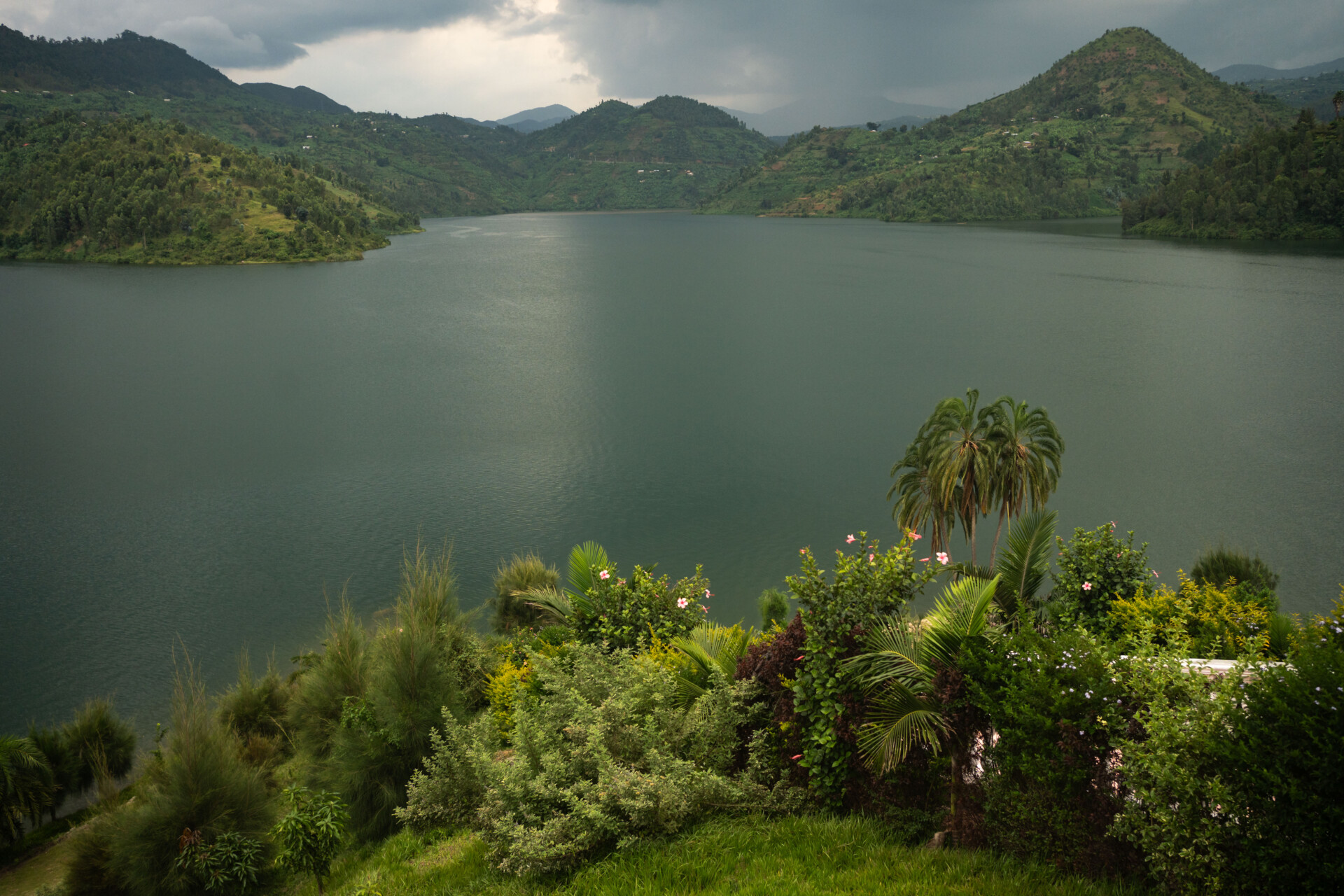
Gisenyi and Rubavu on Lake Kivu: Beaches, Volcano Views and Coffee
Gisenyi and Rubavu are among Rwanda’s most relaxing lakeside destinations. Located on the northern shore of Lake Kivu in Western Province, the town offers sandy beaches, palm-lined waterfronts, scenic boat trips, coffee-growing hills and views of the volcanic landscape surrounding the lake. It is a popular place to slow down after visiting Rwanda’s national parks, particularly Volcanoes National Park, which lies within convenient driving distance.
The names Gisenyi and Rubavu often cause confusion among visitors. Gisenyi is the historic name of the lakeside town, while Rubavu is the name now commonly used for the town and its wider administrative area. Both names refer to the same destination in everyday travel conversations.
Unlike Rwanda’s mountain forests and savannah landscapes, Rubavu has a relaxed resort atmosphere. Days often revolve around the water, with visitors swimming, kayaking, taking boat excursions or enjoying freshly prepared fish at lakeside restaurants. Inland, green hills support coffee farms and small communities, while the nearby volcanic mountains create a dramatic backdrop.
Whether you are planning a short break, a family holiday or a longer journey along Lake Kivu, Gisenyi and Rubavu offer several experiences worth including in your Rwanda itinerary.
Where are Gisenyi and Rubavu located?
Gisenyi and Rubavu sit at the northern end of Lake Kivu, one of Africa’s Great Lakes. The town is in northwestern Rwanda, close to the border with the Democratic Republic of Congo. Across the border lies Goma, a large Congolese city situated near the active Mount Nyiragongo volcano.
The location makes Rubavu an important stop on Rwanda’s western travel circuit. Visitors can reach it from Kigali by road, usually through Musanze, and continue south along Lake Kivu towards destinations such as Karongi and Rusizi. The journey from Kigali takes several hours, depending on traffic and road conditions.
Rubavu is also a convenient destination for visitors travelling between Volcanoes National Park and the lake. After gorilla trekking in the Virunga Mountains, many travellers appreciate spending time beside Lake Kivu before returning to Kigali or continuing towards Nyungwe Forest National Park.
The town has a mixture of residential neighbourhoods, commercial streets, hotels, restaurants and older lakeside buildings. Its waterfront is the main attraction, but the surrounding countryside offers additional opportunities for walking, cycling and cultural visits.
Lake Kivu beaches and lakeside relaxation
The beaches are among the main reasons travellers visit Gisenyi and Rubavu. Lake Kivu has a long shoreline, and the northern section around Rubavu includes sandy stretches where visitors can relax, swim and enjoy the scenery.
Some beaches are connected to hotels and resorts, while others are public areas used by residents and visitors. The atmosphere varies according to the location and day of the week. Weekends and public holidays can be busier, particularly when visitors from Kigali arrive for a short break.
A beach visit can be as simple as finding a comfortable place beside the water, enjoying a drink and watching boats move across the lake. Some visitors prefer to spend several hours swimming and sunbathing, while others combine the beach with lunch at a lakeside restaurant.
Lake Kivu is a freshwater lake, and swimming is a popular activity around suitable beaches. However, you should use established swimming areas and follow local guidance. Water conditions can change, and not every section of the shoreline has the same depth, access or facilities. Avoid swimming near boat traffic, fishing operations or areas where local authorities advise against entering the water.
The beaches also provide good opportunities for photography. Palm trees, fishing boats, green hills and the distant mountains create varied scenery throughout the day. Early mornings are usually quieter, while late afternoons are suitable for enjoying the changing light over the lake.
Volcano views across the lake
The volcanic landscape gives Rubavu a distinctive setting. The town lies within the wider Virunga region, where a chain of volcanic mountains stretches across Rwanda, Uganda and the Democratic Republic of Congo.
On clear days, visitors can see parts of the surrounding volcanic landscape from the lakeshore. The mountains form an impressive background to the blue and green waters of Lake Kivu, particularly when clouds move across their slopes.
Mount Nyiragongo, on the Congolese side of the border, is one of the region’s best-known volcanoes. It has a large summit crater and a history of volcanic activity. Mount Nyamuragira is another major volcano in the wider Virunga area. Travellers should remember that these mountains are in the Democratic Republic of Congo, and access depends on current security conditions, official travel advice and park arrangements.
Rwanda’s own Volcanoes National Park is located further north, around the Virunga Mountains. It protects mountain gorillas, golden monkeys and important montane forest habitats. Although Rubavu is not inside the national park, its location makes it a useful addition to a gorilla trekking itinerary.
You can enjoy the volcanic scenery without attempting a mountain expedition. A lakeside walk, a boat excursion or a drive through the surrounding hills can provide excellent views. Visibility depends on the weather, so allow some flexibility if mountain photography is important to your trip.
Coffee experiences around Lake Kivu
Coffee is one of Rwanda’s important agricultural products, and the hills around Lake Kivu support farms that produce high-quality Arabica beans. Visiting a coffee farm or washing station gives travellers a chance to understand how coffee moves from smallholder farms to the final cup.
Rwanda is particularly associated with the Bourbon variety of Arabica coffee. Many small-scale farmers grow coffee on modest plots, often alongside other crops. During the harvest season, ripe red cherries are collected and delivered to washing stations for processing.
A coffee visit can introduce you to the different stages of production. You may learn how farmers select ripe cherries, how workers sort and pulp them, and how fermentation and washing prepare the beans for drying. Raised drying beds are commonly used to allow air to circulate around the coffee as it dries.
One of the well-known coffee destinations south of Gisenyi is Kinunu Washing Station. Located along the Lake Kivu shoreline, it is recognised for its coffee production and scenic setting. Visitors can arrange a tour to learn about the processing stages and enjoy views across the lake. The experience can also be combined with a boat trip or a section of the Congo Nile Trail.
Coffee tours are particularly interesting for travellers who want to understand Rwanda beyond its wildlife attractions. They provide contact with local agricultural communities and explain how an important export crop supports rural livelihoods.
The harvest season generally falls around February to May, although exact timing varies with local conditions and altitude. Visiting during this period may offer a better chance of seeing fresh coffee cherries being delivered and processed. Outside the main harvest, some washing stations may still arrange educational visits, but the activities available can differ.
You should arrange visits in advance through a suitable local operator or the relevant coffee organisation. Not every farm or washing station accepts unannounced visitors, and some activities depend on the production schedule.
Boat trips and island excursions
A boat trip is one of the most enjoyable ways to experience Lake Kivu. From Rubavu, visitors can arrange excursions along the northern shoreline, passing small settlements, fishing areas and green hills.
The lake is large, and the scenery changes as you move away from the developed waterfront. A short excursion can provide a different view of the town, while a longer trip may include stops at selected lakeside locations or islands, depending on the operator and agreed route.
Boat trips are suitable for couples, families and small groups. Some visitors choose a relaxed sightseeing cruise, while others prefer a more active experience that includes swimming or kayaking at suitable locations.
Sunset trips are particularly popular. The light changes over the water as the sun moves towards the horizon, and the surrounding hills create an attractive setting for photographs. If you want a quieter experience, ask your operator about departure times outside the busiest periods.
Before boarding, check that the boat has appropriate safety equipment, including life jackets for everyone. Confirm the expected duration, route and price before departure. Weather conditions can affect lake activities, so operators may change or cancel trips when conditions are unsuitable.
The Nyamyumba hot springs
The Nyamyumba area, south of central Rubavu, is known for natural hot springs. Locally associated with the name Amashyuza, these geothermal waters attract residents and visitors interested in seeing another side of the Lake Kivu landscape.
The springs are formed by geothermal activity beneath the earth’s surface. Water emerges naturally at different temperatures, and some areas can be extremely hot. Visitors should never assume that all pools or water outlets are safe for bathing.
If you plan to visit, use designated areas and follow local instructions. Avoid touching or entering water that is too hot, and do not allow children to approach unprotected outlets. Facilities and visitor arrangements can vary, so it is sensible to confirm access conditions before travelling.
A visit to the hot springs can be combined with a lakeside excursion or a drive along the shoreline. It offers a different experience from swimming in Lake Kivu and helps explain the geological activity that shapes this part of Rwanda.
Walking and cycling the Congo Nile Trail
Rubavu is the northern starting point of the Congo Nile Trail, a long-distance route that follows Rwanda’s Lake Kivu region towards Rusizi in the south. The trail covers approximately 227 kilometres and passes through hills, villages, agricultural land and lakeside scenery.
The route is suitable for travellers interested in hiking, mountain biking and community-based experiences. You do not need to complete the entire trail to enjoy it. Several sections can be explored as shorter excursions from Rubavu or other lakeside communities.
Walking gives you time to observe everyday life in the countryside. You may pass coffee farms, banana plantations, small trading centres and homes overlooking the lake. The views change as the trail moves between higher ground and the shoreline.
Cycling is another option, particularly for visitors who want to cover more distance in a limited period. Some sections involve steep climbs and uneven surfaces, so a reasonable level of fitness is useful. You should also arrange suitable bicycles, helmets, water and local guidance before setting out.
Travellers planning a multi-day journey should organise accommodation, luggage transfers and route support in advance. The trail passes through rural areas where services may be limited, and mobile network coverage can vary.
Even a short walk or cycle outside central Rubavu can provide a rewarding introduction to the landscape around Lake Kivu.
Fresh fish and lakeside dining
Food is an important part of the experience in Gisenyi and Rubavu. Restaurants along the waterfront serve a mixture of Rwandan dishes, regional meals and international options. Fresh fish is among the most popular choices, particularly tilapia caught from Lake Kivu.
Grilled tilapia is often served with chips, vegetables, plantains or other local accompaniments. Depending on the restaurant, you may also find fish prepared with onions, tomatoes and spices. It is a practical choice for visitors who want to enjoy local food while overlooking the lake.
Other meals may include brochettes, beans, rice, potatoes, matoke and seasonal vegetables. Rwandan cuisine often uses straightforward ingredients prepared in filling portions, making it suitable for travellers looking for a relaxed meal after outdoor activities.
Lakeside restaurants are particularly attractive in the late afternoon and evening. You can enjoy a meal while watching boats return towards shore and the light fade over the water. Some establishments have outdoor seating, while others provide views from indoor dining areas.
If you have dietary requirements, explain them clearly when ordering. Vegetarian options are available in many restaurants, although the range can vary between establishments. Travellers with allergies should confirm ingredients and preparation methods directly with the staff.
Gisenyi town, markets and local culture
Although many visitors spend most of their time beside Lake Kivu, central Rubavu is worth exploring. The town has busy commercial streets, local shops, markets and neighbourhoods that reveal everyday life in this part of Rwanda.
A walk through the town can introduce you to the local food trade, small businesses and transport activity. Markets are useful places to observe how residents buy and sell fresh produce, household goods and other everyday products.
The historic lakeside area also reflects the town’s past as a resort destination. Older buildings and established hotels sit alongside newer developments, giving parts of the waterfront a mixture of architectural styles.
Rubavu’s location beside Goma gives it a distinct cross-border character. The two cities are close to one another, and movement between them is part of the region’s commercial and social life. However, travellers should treat the international border as an official crossing point rather than a sightseeing attraction. If you intend to cross into the Democratic Republic of Congo, check current entry requirements and security advice before making arrangements.
For visitors staying in Rwanda, exploring the town from the Rwandan side is straightforward. You can enjoy the markets, restaurants and waterfront without needing to cross the border.
A relaxing stop after gorilla trekking
Rubavu works particularly well as a relaxation stop after visiting Volcanoes National Park. Gorilla trekking can involve an early start, several hours of walking and changing conditions in the forest. Spending a night or two beside Lake Kivu provides a slower pace after the physical demands of the trek.
The drive from the Volcanoes National Park area to Rubavu is relatively convenient compared with travelling back to Kigali first. This makes the town a useful addition to itineraries that combine Rwanda’s mountain forests with its western lakeshore.
A practical plan is to complete gorilla trekking, travel to Rubavu and spend the following day enjoying the lake. You could arrange a boat trip in the morning, have lunch beside the water and spend the afternoon relaxing at the beach. A coffee visit or a short walk along the Congo Nile Trail can be added if you want more activity.
Rubavu can also be included before a journey south towards Karongi or Nyungwe Forest National Park. Travellers with enough time can follow the Lake Kivu shoreline and experience several different communities along the route.
Where to stay in Gisenyi and Rubavu
Accommodation in Rubavu ranges from simple guesthouses to established hotels and lakeside resorts. Your choice will depend on your budget, preferred facilities and how much time you intend to spend beside the water.
Lakeside accommodation is a good option if you want direct access to the waterfront, views of Lake Kivu and convenient access to restaurants or boat activities. Some properties have gardens, terraces, swimming pools or private sections of shoreline.
Hotels closer to the town centre may be more practical if you want to visit markets, use local transport or keep accommodation costs lower. They can still provide access to the lake, although you may need to walk or take a short ride to reach the main beach areas.
For a romantic break, consider a property with lake-facing rooms or outdoor dining. Families may prefer accommodation with larger rooms, secure outdoor areas and easy access to restaurants. Travellers planning to hike or cycle the Congo Nile Trail should ask whether the hotel can help with guides, bicycle arrangements or luggage storage.
It is worth booking ahead during busy weekends and holiday periods. Rubavu attracts visitors from Kigali and other parts of Rwanda, so popular lakeside properties can fill up quickly.
How to get to Gisenyi and Rubavu
Most international visitors reach Rubavu by road from Kigali. The journey passes through Rwanda’s rolling countryside and can be combined with stops in Musanze or other places along the route.
Private transport is convenient for travellers with a planned itinerary. It allows you to stop for photographs, visit attractions along the way and travel according to your preferred schedule. A driver-guide can also help organise local activities after arrival.
Public buses connect Kigali with Rubavu and are a practical option for independent travellers. They are generally more affordable than private transfers, although you should allow time for the journey and local transport between the bus terminal and your accommodation.
Visitors coming from Musanze can travel west towards Rubavu. This route is particularly useful after gorilla trekking or golden monkey tracking in Volcanoes National Park. Road conditions and journey times can vary, so confirm your transfer arrangements before departure.
Once in town, you can use local taxis, motorcycle taxis and private transfers to reach different parts of the waterfront. Some hotels and attractions are within walking distance of one another, but distances can be greater when visiting coffee stations or locations outside the town centre.
Best time to visit Gisenyi and Rubavu
Gisenyi and Rubavu can be visited throughout the year. Lake Kivu provides a warm lakeside environment, and the town remains active during both the dry and rainy seasons.
The drier periods are generally convenient for beach activities, boat trips, walking and cycling. Rwanda typically experiences a longer dry season around June to September and a shorter dry period around December to February. These months can offer favourable conditions for exploring the surrounding countryside.
The rainy seasons usually occur around March to May and October to November. Rain can affect outdoor activities, road conditions and visibility, especially in the hills. However, the countryside can look particularly green, and coffee-growing areas may be attractive during the growing season.
If coffee production is a priority, consider travelling during the main harvest period, which commonly falls between February and May. The exact timing depends on the location and growing conditions. Arrange your visit in advance to avoid arriving when a washing station has limited activity or cannot receive visitors.
For a quieter beach experience, consider visiting outside major holiday periods and busy weekends. If you are travelling during a public holiday, reserve accommodation and boat activities early.
How long should you stay in Rubavu?
One or two nights are enough for visitors who want to enjoy the beach, take a short boat trip and explore the town. This works well for travellers adding Rubavu to a wider Rwanda itinerary.
Three nights provide more time for a coffee tour, the Nyamyumba hot springs, a section of the Congo Nile Trail and relaxed afternoons beside the lake. This is a better option if you want to avoid rushing between activities.
Travellers interested in a longer walking or cycling holiday can spend additional time in the region and use Rubavu as the starting point for a journey along the Congo Nile Trail.
The right length of stay depends on your travel priorities. If you mainly want to rest after gorilla trekking, two nights may be sufficient. If you want to explore coffee production and the surrounding countryside, allow extra time.
Practical tips for visiting Gisenyi and Rubavu
Pack swimwear, comfortable walking shoes, sunscreen, a hat and light clothing. The lakeside environment can feel warm, but evenings may be cooler, particularly when clouds or rain move across the area.
Bring some cash for small purchases, local transport and activities that may not accept card payments. Larger hotels and established restaurants may offer card facilities, but it is sensible to confirm before relying on them.
Arrange boat trips with recognised operators and check safety equipment before departure. If you plan to swim, use suitable beaches and follow local advice. Avoid entering the water during storms or when conditions are rough.
For coffee visits, contact the relevant washing station or arrange the experience through a local tour operator. Advance planning is important because some facilities are active only during particular stages of the coffee season.
If you intend to hike or cycle the Congo Nile Trail, plan your route carefully. Carry enough drinking water, use appropriate footwear or cycling equipment and consider hiring a local guide who understands the route.
Travellers should also check current travel advice before making plans near the border with the Democratic Republic of Congo. Conditions in the wider region can change, and border procedures may be affected by security or administrative decisions.
Is Gisenyi and Rubavu worth visiting?
Gisenyi and Rubavu offer a different experience from Rwanda’s best-known wildlife destinations. The beaches of Lake Kivu provide space to swim and relax, the surrounding hills introduce visitors to Rwanda’s coffee-growing communities, and the volcanic landscape gives the northern shoreline a memorable setting.
The destination suits travellers who want a few quiet days between more demanding activities. You can spend the morning on a boat, visit a coffee washing station in the afternoon and enjoy fresh fish beside the lake in the evening. If you prefer active travel, the Congo Nile Trail offers opportunities for walking and cycling through villages and beautiful lakeside scenery.
For visitors exploring Rwanda, Rubavu is a worthwhile addition to an itinerary that includes Volcanoes National Park, Musanze or the wider Lake Kivu region. It provides a chance to experience the country at a slower pace while enjoying its beaches, coffee culture and western highland scenery.






No comment