
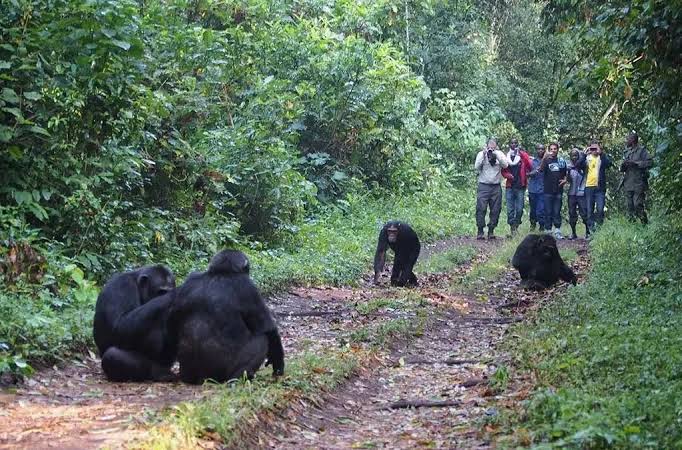
Full-Day Chimpanzee Habituation in Kibale
Imagine entering Uganda’s Kibale Forest shortly after sunrise, surrounded by the calls of birds and the movement of monkeys high in the trees. Somewhere ahead, a community of wild chimpanzees is waking up, searching for food and preparing for another day in the forest. Your ranger listens carefully before leading you along a narrow trail towards their location.
Full-day chimpanzee habituation in Kibale offers one of Uganda’s most rewarding primate experiences. Unlike ordinary chimpanzee tracking, which allows a maximum of one hour with the animals, habituation offers up to four hours of direct observation within a longer forest excursion.
This experience is particularly suitable for wildlife enthusiasts, photographers and travellers interested in chimpanzee behaviour. You can observe feeding, grooming, social interactions and movement through the forest while learning about conservation and primate research.
What Is Chimpanzee Habituation?
Chimpanzee habituation is the gradual process of helping wild chimpanzees become accustomed to the controlled presence of people without encouraging dependency or changing their natural behaviour.
The process is managed by trained conservation personnel and can take several years.
During the habituation experience, visitors accompany authorised guides and may observe chimpanzees that are still becoming familiar with human presence.
Because these chimpanzees are not necessarily as accustomed to visitors as fully habituated groups, encounters can be less predictable.
The experience allows you to learn how researchers and trackers observe chimpanzee behaviour while following strict wildlife protection rules.
Why Choose Kibale National Park?
Kibale National Park is located in western Uganda, near Fort Portal.
The park protects tropical forest, woodland and other habitats supporting numerous primate species.
It is especially well known for its chimpanzee population and established primate tourism activities.
Beyond chimpanzees, Kibale supports red colobus monkeys, black-and-white colobus monkeys, red-tailed monkeys, L’Hoest’s monkeys and other wildlife.
Birdwatchers can also enjoy forest species that are difficult to observe in open savannah habitats.
The combination of primate diversity, experienced rangers and established visitor facilities makes Kibale an excellent destination for chimpanzee habituation.
How a Full-Day Chimpanzee Habituation Experience Works
The experience normally begins early in the morning, with Uganda Wildlife Authority guidelines specifying a 6:30 am start.
Visitors attend a briefing before entering the forest with authorised personnel.
You should expect several hours of walking, although the exact duration depends on chimpanzee movements, weather and trail conditions.
Early Morning: Entering the Forest
Your day begins with a briefing covering safety precautions, chimpanzee behaviour and forest regulations.
Afterwards, your group follows the ranger into the forest.
Chimpanzees may still be near their overnight nesting area, or they may already have started moving.
Their calls sometimes help trackers determine where a community is located.
Morning: Finding the Chimpanzees
Once the trackers locate the chimpanzees, you begin observing their natural activities.
Some individuals may be feeding in trees while others move along the forest floor.
Chimpanzees are active, intelligent animals, and their behaviour can change quickly.
You may need to walk further as the group moves through the forest.
Late Morning: Observing Social Behaviour
Chimpanzees live in complex social communities.
During your observation period, you may see grooming, play, feeding or interactions between adults and younger chimpanzees.
Grooming is particularly interesting because it helps maintain social relationships.
Rangers explain these behaviours while ensuring visitors maintain the required viewing distance.
The permitted close-observation period is limited to a maximum of four hours, not an unrestricted full day with the animals.
Afternoon: Returning From the Forest
After your authorised observation period, you follow the ranger back towards the briefing point.
Depending on the location of the chimpanzees and your walking route, the return journey can take additional time.
You can then return to your accommodation for lunch or relaxation, depending on the day’s arrangements.
Full-Day Habituation vs Ordinary Chimpanzee Tracking
Both experiences allow visitors to observe wild chimpanzees, but they differ in duration and approach.
| Feature | Chimpanzee Habituation | Ordinary Tracking |
|---|---|---|
| Time with chimpanzees | Up to 4 hours | Up to 1 hour |
| Starting time | Around 6:30 am | Morning or afternoon session |
| Walking duration | Potentially longer | Variable |
| Chimpanzee behaviour | May be less accustomed to visitors | Fully habituated group |
| Experience focus | Extended behavioural observation | Finding and viewing chimpanzees |
| Physical demands | Generally greater | Variable |
Habituation suits travellers who want additional observation time and are comfortable spending longer in the forest.
Ordinary tracking may be preferable if you have limited time or want a shorter activity.
How Much Does Chimpanzee Habituation Cost in Kibale?
Chimpanzee habituation requires a permit issued through the Uganda Wildlife Authority.
For foreign non-resident visitors, the published 2026 rate is USD 300 per person.
A revised rate of USD 400 is scheduled to take effect on 1 January 2027.
These figures apply to the habituation experience, not ordinary chimpanzee tracking.
| Permit | 2026 Foreign Non-Resident Rate | From January 2027 |
|---|---|---|
| Chimpanzee habituation | USD 300 | USD 400 |
| Ordinary chimpanzee tracking | USD 250 | USD 300 |
The published Kibale habituation permit includes ranger guiding and park entrance fees for the activity.
Transport, accommodation, meals and personal expenses are generally arranged separately.
Confirm the applicable rate and permit availability before payment because tariffs can change.
Best Time for Chimpanzee Habituation in Kibale
Chimpanzee habituation is available throughout the year.
However, seasonal weather can affect forest conditions and walking comfort.
Uganda commonly experiences relatively drier periods around December to February and June to August.
These months may provide less muddy trails, although rainfall remains possible.
March to May and September to November generally bring wetter conditions.
During rainy periods, forest vegetation becomes lush, and chimpanzees may find food in different locations.
There is no guaranteed easiest month for finding chimpanzees because their movements depend on food availability and other natural factors.
What Should You Pack?
Preparation makes the experience more comfortable.
Carry essential items without overloading your backpack.
Recommended equipment includes:
- Waterproof hiking boots with good grip.
- Long trousers and a long-sleeved shirt.
- Lightweight rain jacket.
- Drinking water and packed food.
- Small backpack.
- Insect repellent.
- Camera without flash.
- Protective cover for electronic equipment.
- Gardening gloves for holding vegetation where appropriate.
Neutral-coloured clothing is practical for forest activities.
A walking stick may also help on slippery trails.
Rules for Chimpanzee Habituation
Chimpanzees are vulnerable to human illnesses, making visitor health precautions essential.
Follow all ranger instructions throughout the experience.
Important rules include maintaining the required viewing distance, avoiding flash photography and never feeding or touching chimpanzees.
Do not visit if you have a contagious illness or symptoms that could place the animals at risk.
Avoid loud conversations and sudden movements.
Uganda Wildlife Authority may update its health and visitor procedures, so follow the briefing provided on your trekking day.
How Difficult Is Chimpanzee Habituation?
Full-day chimpanzee habituation can be physically demanding.
You may walk along uneven forest trails, climb slopes and move through muddy vegetation.
Chimpanzees can travel quickly, meaning the walking distance is difficult to predict.
A reasonable level of fitness is helpful.
Travellers with mobility limitations should discuss their needs with the safari operator before booking.
Because conditions vary, nobody can guarantee a short or easy trek.
How to Get to Kibale National Park
Kibale National Park is accessible by road from Kampala or Entebbe through western Uganda.
The journey commonly takes approximately five to seven hours, depending on your departure point, route and road conditions.
Many travellers stay near Fort Portal or the Kanyanchu area before their activity.
Arriving the previous day is advisable because chimpanzee habituation begins early.
Kibale can also be combined with Queen Elizabeth National Park, Bigodi Wetland Sanctuary and other western Uganda attractions.
Is Full-Day Chimpanzee Habituation Worth It?
For travellers interested in primates, extended observation can be highly rewarding.
The experience provides more time to appreciate chimpanzee behaviour than ordinary tracking.
You may observe interactions that would be difficult to notice during a shorter visit.
However, longer viewing time does not guarantee better photographs or particular behaviours.
The value comes from spending time in the forest, learning from experienced guides and understanding chimpanzees in their natural habitat.
Full-day chimpanzee habituation in Kibale offers an opportunity to understand one of Africa’s most intelligent primates.
With up to four hours of chimpanzee observation, visitors can learn about feeding, grooming, communication and social behaviour.
Prepare for an early start, potentially challenging walking conditions and unpredictable wildlife movements.
Whether you are visiting Uganda for the first time or returning for another primate safari, Kibale provides a memorable forest experience.
The best part of chimpanzee habituation is watching wild chimpanzees behave naturally while learning how their forest habitat is protected.



No comment