
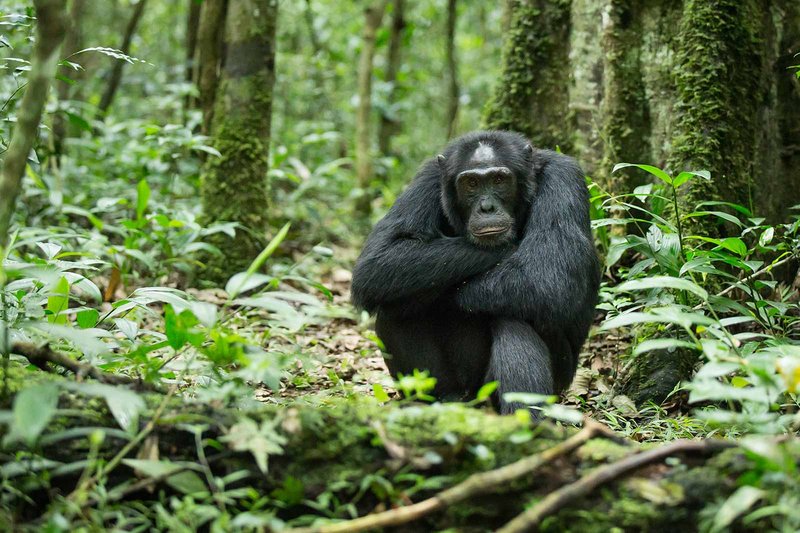
Camera Settings for Wildlife Photography in Kibale Forest National Park
Kibale Forest National Park in western Uganda is one of East Africa’s premier destinations for primate photography, home to habituated chimpanzee communities, thirteen other primate species, and a dense tropical canopy that filters light in ways very different from the open savannah most safari photographers are used to. Getting strong images here means adjusting your approach before you even step into the forest, because the low light, constant movement, and tight framing of rainforest trekking punish settings that work perfectly well on a Serengeti game drive.
A Quick Introduction to Kibale Forest National Park
Kibale Forest sits in western Uganda near Fort Portal, covering roughly 795 square kilometers of moist evergreen rainforest that connects, through a wildlife corridor, to Queen Elizabeth National Park to the south. The park is best known for its chimpanzee population, one of the largest and most habituated in East Africa, but its dense, layered forest structure is what shapes almost every photography decision you will make once you’re on the trail.
Understanding Kibale’s Light Conditions
Unlike open grassland parks, Kibale’s canopy blocks a large share of available light even at midday, and that light changes constantly as clouds and leaf cover shift overhead. Early morning treks, when chimpanzee groups are typically located shortly after they leave their night nests, often mean shooting in conditions equivalent to indoor lighting. Photographers who arrive expecting savannah-bright conditions are usually the ones who come home with blurry or noisy images, so the first adjustment is mental: plan your settings around dim, dappled light rather than bright sun.
Recommended Camera Gear for Kibale
Lens Choice
A fast telephoto zoom in the 70-200mm range with a wide maximum aperture, ideally f/2.8 or f/4, is the most versatile option for chimpanzee trekking, since subjects can appear anywhere from a few meters away to deep in the understory. Prime lenses with very wide apertures (f/1.8 or f/1.4) in the 85mm to 135mm range are excellent for portrait-style primate shots when light is especially poor, though their fixed focal length can be limiting when a chimpanzee suddenly moves closer or farther away.
Camera Body Considerations
A camera body with strong high-ISO performance matters more in Kibale than almost any other feature. Modern mirrorless bodies with good low-light autofocus and in-body image stabilization make a noticeable difference on the trail, where you rarely have time to set up a tripod and often shoot handheld while moving through undergrowth.
Aperture Settings for Forest Wildlife Photography
Shoot as wide open as your lens allows in most Kibale conditions, typically f/2.8 to f/5.6, to pull in as much light as possible and to blur the tangle of leaves and branches that often clutter the background. A wide aperture also helps separate your subject from Kibale’s famously busy understory, since a blown-out or softly blurred green background reads far better than a sharp, distracting one. The trade-off is a shallow depth of field, so when photographing a group of chimpanzees at different distances, stopping down slightly to f/5.6 or f/6.3 can keep more of the scene in focus without sacrificing too much light.
Shutter Speed for Fast-Moving Primates
Chimpanzees move quickly and unpredictably, swinging through branches, grooming each other, or breaking into short chases, so a minimum shutter speed of 1/500s is a reasonable baseline for handheld shots, and 1/1000s or faster is safer when animals are actively moving. For calmer moments, such as a chimpanzee resting or feeding, you can drop to 1/250s if your lens or body has strong stabilization, which buys you extra room to keep ISO lower in dim light. Continuous or burst shooting modes are worth using throughout, since primate behavior changes in fractions of a second and the best expression or gesture is easy to miss with single-shot capture.
ISO Considerations in Low Canopy Light
Don’t be afraid of high ISO in Kibale. Given the forest’s dim, shifting light, ISO 1600 to 6400 is common territory for a usable shutter speed and aperture combination, and a slightly noisy but sharp, well-exposed image is almost always more usable than a clean but blurred one. Shooting in RAW format gives you meaningfully more flexibility to manage noise and recover shadow detail in post-processing than JPEG does, which matters a great deal when working in Kibale’s contrasty, patchy light.
Autofocus Modes That Work Best in Dense Forest
Continuous autofocus (AF-C or AI Servo, depending on your camera brand) is essential for tracking moving primates, paired with a focus mode that lets you select a single point or small zone rather than relying on wide-area autofocus, which tends to lock onto foreground branches and leaves instead of the animal itself. Many modern cameras offer animal or eye-detection autofocus, and this feature performs surprisingly well on primates specifically, making it worth enabling for the duration of your trek.
Photographing Chimpanzees Specifically
Uganda Wildlife Authority rules prohibit flash photography around chimpanzees, both because it can startle or distress the animals and because it is simply ineffective at the distances involved, so all of the low-light strategies above matter even more here than in most other photography settings. Aim to photograph at eye level where possible, since shooting downward at a seated or resting chimpanzee tends to produce less compelling images than a composition that meets the animal’s gaze directly. Patience pays off during chimpanzee trekking more than technical settings do, since the best expressions and interactions often happen in quiet stretches between the more dramatic movement.
Capturing Kibale’s Other Wildlife and Birds
Beyond chimpanzees, Kibale is home to red colobus monkeys, L’Hoest’s monkeys, grey-cheeked mangabeys, and a rich variety of forest birds, all of which reward the same low-light, fast-shutter approach described above. Birds in particular move even faster than primates and are often smaller in the frame, so a longer focal length, ideally 300mm or more with a teleconverter if needed, becomes valuable if birding is part of your Kibale itinerary alongside chimpanzee tracking.
Practical Rules and Etiquette During Trekking
Camera bags and gear should be packed light and accessible, since Kibale’s trails can be muddy and uneven and you will often need to raise your camera quickly. A lens cloth is essential for wiping condensation and moisture that builds up quickly in the humid forest air, and a rain cover or dry bag protects gear during Kibale’s frequent, sudden showers. Group sizes on chimpanzee treks are kept small and time with any one chimpanzee group is limited, so having your settings dialed in before the encounter begins, rather than fumbling with menus once chimpanzees are in view, makes a real difference to your results.
Memory Cards, Batteries, and Backup Gear
Burst shooting in continuous autofocus mode fills memory cards fast, so carry at least two high-speed cards with plenty of spare capacity rather than relying on a single card you swap mid-trek. Chimpanzee permits allow limited time with a habituated group, so a dead battery or full card partway through is a loss you cannot easily recover from, making a charged spare battery and a second card genuinely essential rather than optional. Humidity inside the forest can also affect electronics, so silica gel packets in your camera bag and a habit of keeping gear sealed when not shooting help protect against condensation-related faults over a multi-day Uganda itinerary.
Working With Your Guide and Ranger During the Shoot
Your ranger guide sets the pace of a Kibale trek and often has a good sense of where a chimpanzee group is likely to move next, so staying close and communicating quietly about your photography goals, whether that is portraits, action shots, or wider habitat scenes, can help the guide position the group in a way that works in your favor. Rangers also know which individual chimpanzees tend to pose calmly versus which ones move constantly, and asking about this at the start of the trek can save you from chasing the wrong subject through dense undergrowth. Since talking loudly or making sudden movements can disturb the group, quiet hand signals with your guide about repositioning tend to work far better than verbal requests once you are close to the chimpanzees.
Best Time of Year for Photography in Kibale
The drier months, roughly December through February and June through August, offer slightly better light and drier trails, though Kibale remains a rainforest year-round and some cloud cover should always be expected. Overcast conditions are not necessarily bad for photography here, since diffused light reduces harsh shadows on the forest floor and can produce more even skin and fur tones on primates than harsh, direct sun would.
Planning Your Kibale Forest Photography Safari
Kibale rewards photographers who prepare for its low light and fast-moving subjects rather than relying on settings built for open savannah. All in Africa Safaris can build a Kibale Forest itinerary around chimpanzee trekking and birding timed to the conditions that suit your photography goals, or you can get in touch to talk through gear, timing, and permits before your trip.

No comment