
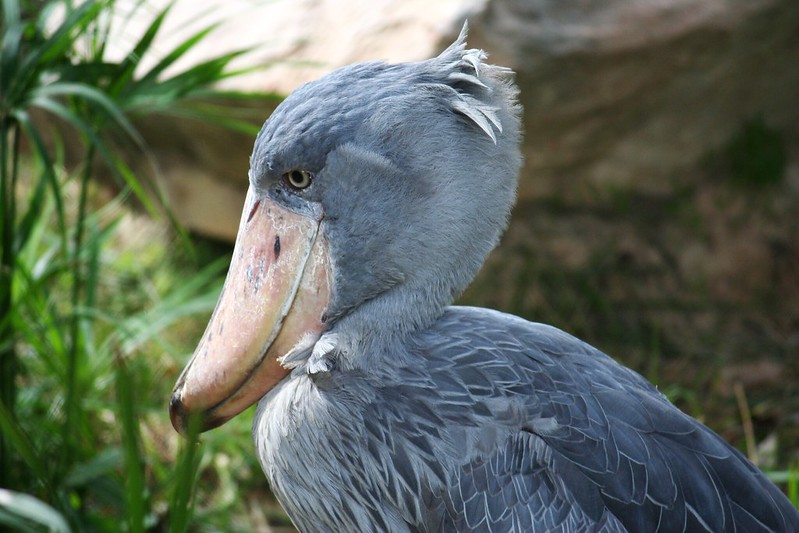
The Shoebill stork is one of the many bird species that may be seen in Uganda’s tourism areas, but it is also the most sought-after bird. The unique bird known as the shoebill stock gets its name from the fact that its face resembles a shoe. There is just one uncommon and severely endangered bird in the world, with a reported population of fewer than 5000 in the wild. Its distinctive traits are what set this bird apart and make it highly sought-after.
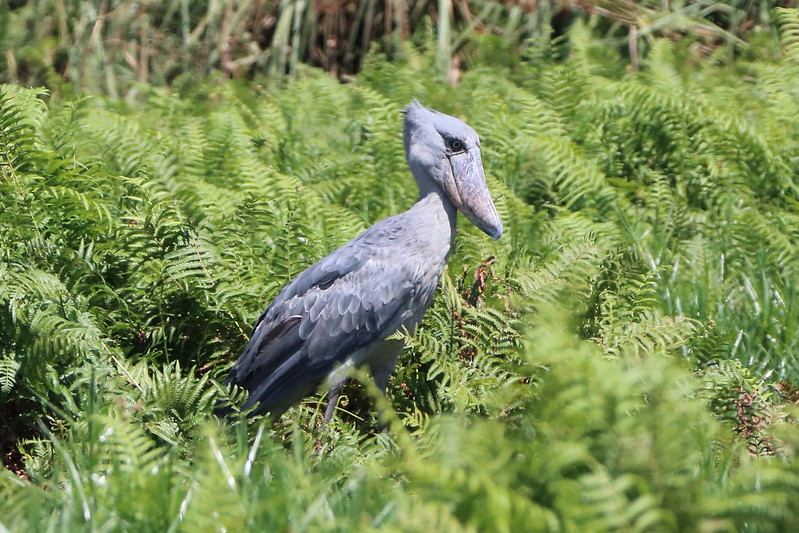 Its 55-inch height and long, slender blue legs complement its grey-blue plumage. Its huge beak resembles a shoe more than any tool a bird could use to consume its own food. This challenging bird avoids social situations and is a mystery individual who only interacts with others during the breeding season.
Only found in muddy and swampy places, shoebill stork birds have an ideal structure for spotting their prey in shallow waters. They are carnivores who have a voracious taste for lungfish, catfish, snakes, and maybe small crocodiles. Every time it strikes, the curled bird at the tip of its shoe-shaped beak delivers a lethal blow. It terrorizes a marsh for twenty-five years.
Even though the shoebill stork is endangered, Uganda is the easiest place in Africa to locate this bird. About a thousand shoebill storks can be seen in Uganda’s flooded tourism areas. These fascinating birds can be found in locations like the Mabamba swamp on an island in Lake Victoria, the Murchison Falls National Park at the delta, the Ziwa Rhino Sanctuary, the Ishasha sector of Queen Elizabeth National Park, Lake Kyoga, the Semliki Wildlife Reserve, and possibly Lake Mburo National Park. These locations are ideal for tourists visiting Uganda. It is well worth your time and money to visit the shoebill shoe, a magnificent bird, during your safari vacation in Uganda.
The “Statue Bird”: How Shoebills Hunt
What makes the shoebill so captivating to watch isn’t speed, it’s patience. A shoebill will stand motionless in shallow water for what can feel like an eternity, sometimes over an hour, waiting for a lungfish or catfish to surface for air. When prey finally appears, the strike is explosive: the bird collapses forward onto the target with its entire body weight, using its massive hooked bill to pin and often decapitate the catch in one motion. This ambush style, more heron-like patience than eagle-like speed, is part of why guides describe shoebill sightings as some of the most rewarding in African birding, the payoff for a long, quiet wait.
Conservation Status and Threats
The shoebill is classified as Vulnerable by the IUCN, with global estimates ranging from roughly 5,000 to 8,000 individuals spread across swamps in East and Central Africa, from South Sudan and the DRC through Uganda, Rwanda, Tanzania, and Zambia. Habitat loss from wetland drainage and agricultural expansion is the primary long-term threat, compounded by disturbance from unregulated tourism and, in some areas, egg collection. Uganda’s wetlands, particularly the protected swamps around Lake Victoria and within national parks, represent some of the best-managed shoebill habitat left on the continent, which is a major reason the country has become the species’ most reliable viewing destination.
Best Time of Year to See Shoebills
Shoebills are resident birds that don’t migrate, so sightings are possible year-round, but the dry season, roughly June to September and December to February, tends to concentrate them around shrinking pools of water, making them easier to locate. Early morning outings, before the heat of the day sets in and while the birds are most actively hunting, consistently produce the best sightings, particularly at Mabamba Swamp, where canoe trips typically depart at first light.
How Shoebill Trips Actually Work
At Mabamba Swamp, the most popular and accessible shoebill site given its proximity to Kampala and Entebbe, visitors are paddled through papyrus channels in a traditional dugout canoe, keeping noise and disturbance to a minimum. At Murchison Falls, shoebill sightings typically happen during a boat cruise on the Victoria Nile delta, combined with general game viewing along the riverbanks. Both approaches rely on quiet, patient movement, motorized speed and noise scare shoebills off well before you’re close enough to get a good look.
Photography Tips for a Shoebill Encounter
A telephoto lens in the 300mm-plus range makes a real difference, since boats and canoes generally keep a respectful distance to avoid flushing the bird. Because shoebills spend long stretches standing still, a lower shutter speed than you’d use for a bird in flight is often fine, but keep your camera ready for the strike, it happens in a fraction of a second and rarely repeats within the same viewing window. Overcast mornings, common during Uganda’s dry-season starts, actually help here, softening harsh light on the bird’s pale plumage.
Comparing the Main Viewing Sites
Mabamba Swamp is the site most visitors choose first, and for good reason: it sits close enough to Kampala and Entebbe for a half-day trip, sightings are reliable year-round, and the canoe-based approach keeps costs low. Murchison Falls National Park offers a different experience entirely, shoebill sightings there happen as part of a broader boat cruise that also delivers hippos, crocodiles, and elephants along the riverbank, so it suits travelers who want the shoebill as one highlight among several rather than the single focus of a trip. Queen Elizabeth National Park’s Ishasha sector and the wider park add a third option, useful if your itinerary is already built around that region for tree-climbing lions and other savanna wildlife. Semliki Wildlife Reserve and Lake Mburo are less consistent for shoebills specifically but worth checking with your guide if they already fall on your route.
What Makes the Shoebill’s Anatomy So Unusual
Beyond the shoe-shaped bill that gives the species its name, shoebills have several genuinely odd anatomical traits. Their eyes sit close together at the front of the face, giving them strong binocular vision for judging distance to prey, unusual among wading birds, most of which have eyes positioned more to the sides of the head for wider peripheral awareness. The bill itself, despite looking clumsy, has a sharp hooked tip and serrated edges capable of slicing through the tough scales of a lungfish, and its enormous size, one of the largest bills of any living bird, lets the shoebill swallow prey other wading birds simply couldn’t manage. Juveniles hatch with a much smaller, more conventional-looking bill that develops its full shoe shape only as they mature.
A Note on the Bird’s Reputation
The shoebill has picked up something of a reputation online for its intense, unblinking stare and prehistoric appearance, closer in feel to a dinosaur than a typical bird, and that reputation isn’t far off. Genetic studies place shoebills in their own unique family, more closely related to pelicans than to storks despite the common name, and fossil relatives suggest the lineage has looked roughly this unusual for a very long time. For birders, that combination of rarity, strange biology, and genuinely striking appearance is exactly what makes a successful sighting feel like such an event rather than just another checklist tick.
How Long a Shoebill Excursion Takes
A Mabamba Swamp outing typically runs two to three hours door to door from Kampala or Entebbe, including the drive, the canoe trip itself, and time back on land, making it a genuinely feasible half-day addition even for travelers with a tight itinerary or a layover before a flight. At Murchison Falls, the shoebill sighting is folded into a longer Nile delta boat cruise, usually two to three hours on the water, shared with general wildlife viewing rather than a dedicated shoebill-only trip. Either way, guides recommend building in some flexibility, shoebills don’t appear on a schedule, and a patient guide who’s willing to wait quietly for twenty extra minutes often makes the difference between a sighting and a near-miss.
Combining a Shoebill Trip With the Rest of Your Uganda Safari
Because a shoebill outing is relatively short, it fits naturally at either end of a longer itinerary rather than requiring a dedicated day. Travelers flying into Entebbe often schedule a Mabamba Swamp visit on their arrival or departure day, before or after the main safari circuit begins. Those heading to Murchison Falls or Queen Elizabeth for broader game viewing get the shoebill essentially built into the itinerary as one stop among several, no extra travel days required. It’s one of the easiest “bucket list” species to add to an existing Uganda trip rather than a reason to build a trip around on its own.
Ready to add a shoebill outing to your Uganda itinerary? All in Africa Safaris can build it around Mabamba Swamp, Murchison Falls, or Queen Elizabeth National Park depending on the rest of your route.
Local Guides and Community Benefit
Most shoebill excursions, particularly at Mabamba Swamp, are led by local community guides and canoe operators rather than large tour companies, meaning your visit directly supports the fishing village bordering the wetland. This community-guiding model has also proven to be one of the more effective ways of protecting shoebill habitat, since local livelihoods now depend in part on the bird’s continued presence, giving communities a direct incentive to discourage wetland drainage and disturbance.


No comment