
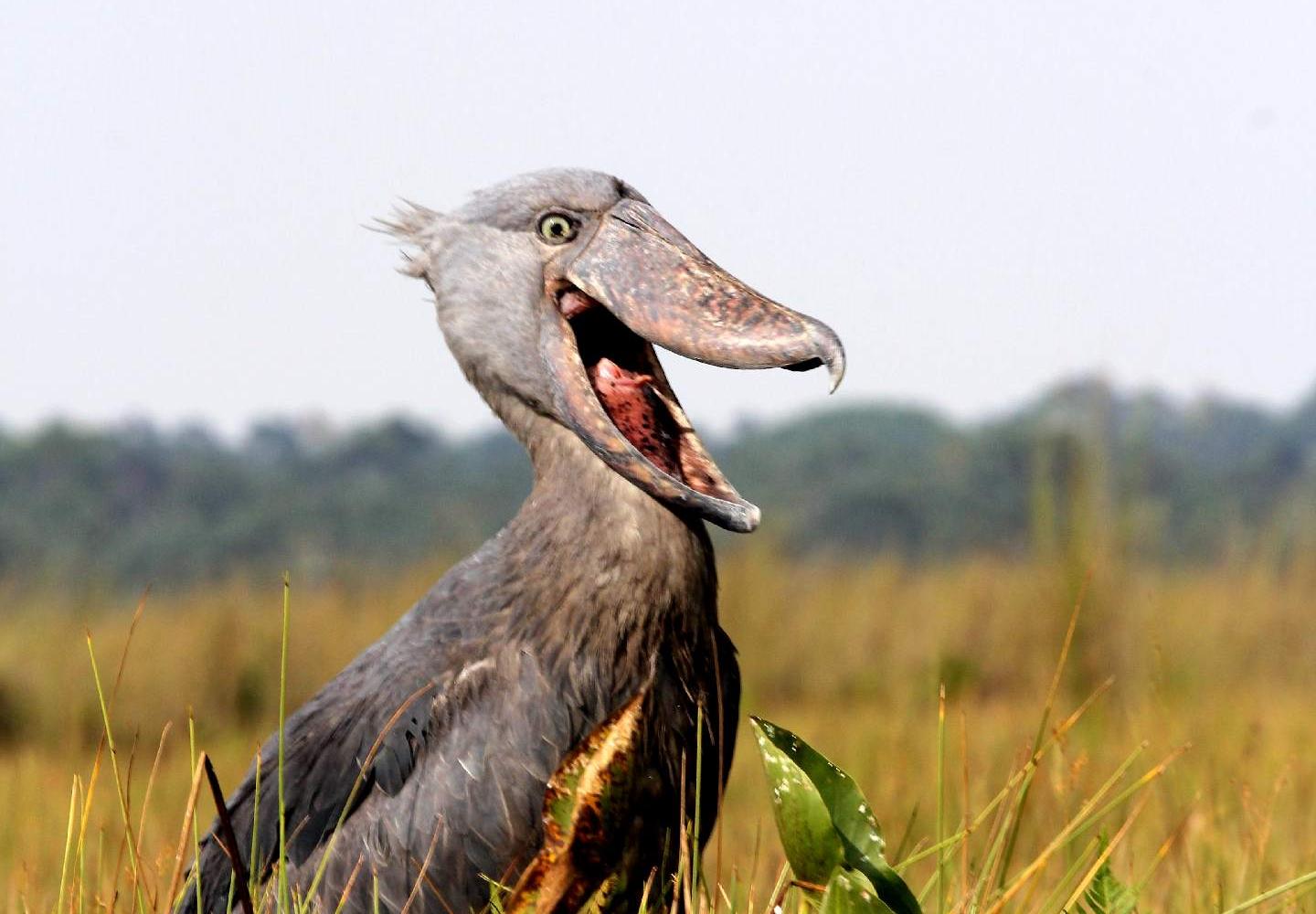
Where to see shoebills outside Uganda: Other options in East Africa
Uganda is widely regarded as one of the easiest countries in Africa for seeing the shoebill in the wild. Mabamba Wetland, the Nile Delta in Murchison Falls National Park and several other Ugandan wetlands attract birdwatchers hoping to find this unusual bird. However, Uganda is not the only country where shoebills occur.
The species has a wider but fragmented distribution across East and Central Africa. It inhabits large freshwater swamps, papyrus wetlands, floodplains and the edges of shallow lakes. Outside Uganda, important populations and suitable habitats occur in South Sudan, western Tanzania, Rwanda, eastern Democratic Republic of Congo and western Ethiopia. Zambia also supports a significant population, although it is farther south.
For travellers looking beyond Uganda, the strongest options include Akagera National Park in Rwanda, the extensive wetlands of western Tanzania and the Sudd in South Sudan. These destinations differ considerably in accessibility and the likelihood of arranging a dedicated shoebill excursion. Some have established wildlife tourism facilities, while others are remote conservation landscapes with limited visitor infrastructure.
Kenya and Burundi have also recorded shoebills, but they should not be treated as dependable destinations for this species. Understanding the difference between a resident population, an occasional visitor and a confirmed sighting is important when planning a birdwatching trip.
Akagera National Park, Rwanda
<PRIVATE_PERSON> Akagera National Park is the most practical alternative to Uganda for travellers hoping to see a shoebill in East Africa. Located in eastern Rwanda along the border with Tanzania, the park protects a landscape of savanna, lakes, papyrus swamps and wetlands.
The shoebill is associated with the park’s wetland habitats, particularly areas with extensive papyrus and shallow freshwater. These environments provide suitable conditions for hunting fish, amphibians and other aquatic prey.
Akagera is better known for its Big Five wildlife, including lions, elephants, leopards, buffaloes and rhinoceroses. However, its birdlife is another important attraction. The park contains lakes and marshes that support numerous waterbirds, making it interesting for visitors who want to combine conventional wildlife viewing with specialist birdwatching.
Shoebills are not as predictable in Akagera as they are at Uganda’s established viewing locations. Their presence has been documented, but the park does not offer the same level of regular, dedicated shoebill encounters that visitors may expect from Mabamba Wetland or the Nile Delta.
If you are planning a visit specifically for this bird, contact the park or your safari operator before travelling. Ask about recent sightings, the wetland areas being monitored and whether a guide with experience in shoebill searches is available.
Akagera can be included in a Rwanda itinerary with Kigali, Lake Ihema and the park’s savanna wildlife areas. It is also a useful option for travellers who want to explore Rwanda without concentrating entirely on gorilla trekking in Volcanoes National Park.
Western Tanzania: Malagarasi wetlands
Western Tanzania contains some of the most important shoebill habitats outside Uganda. The Malagarasi wetland system is an extensive network of rivers, floodplains, swamps and seasonally flooded grasslands. It lies in a relatively remote part of the country and supports a variety of waterbirds.
Shoebills use the wetland environment to hunt in shallow water and among aquatic vegetation. Their preferred habitat includes areas where fish are accessible, particularly in marshes with papyrus, reeds and open channels.
The Malagarasi wetlands are important because they form part of a wider landscape that supports resident shoebills. They are not simply an area where an occasional bird might wander through. However, the region is not a conventional safari destination, and arranging a dedicated wildlife excursion can be more complicated than visiting a national park.
Travellers should also understand that the Malagarasi is a large wetland system rather than a single visitor site. A sighting depends on the precise location, water levels, local knowledge and access arrangements.
If you are interested in exploring this region, work with a specialist birdwatching guide or conservation organisation familiar with western Tanzania. Ask about current shoebill records and whether boat access is available in the relevant wetland areas.
The wider region offers opportunities to observe other wetland birds and experience a less-visited part of Tanzania. It is particularly suitable for experienced birdwatchers who are comfortable with flexible travel arrangements and destinations with limited tourism infrastructure.
Moyowosi and Kigosi Game Reserves, Tanzania
The Moyowosi-Kigosi wetland landscape is another important area for shoebills in western Tanzania. These protected areas contain extensive swamps, rivers, floodplains and woodland habitats.
The wetlands provide suitable conditions for shoebills, which depend on shallow freshwater environments with enough fish and aquatic prey. The birds can stand motionless for long periods while watching the water before making a rapid strike with their large bills.
The Moyowosi and Kigosi landscape is also important for other wildlife. Depending on the habitat and season, visitors may encounter hippos, crocodiles, antelopes and a variety of waterbirds.
This is a more specialised destination than Tanzania’s northern safari circuit. Most international visitors are familiar with the Serengeti, Ngorongoro, Tarangire and Lake Manyara, but western Tanzania receives far fewer conventional safari visitors.
That relative remoteness can appeal to experienced birdwatchers. However, it also means that transport, accommodation, guiding and access to particular wetlands require careful planning.
Do not assume that a standard game drive will produce a shoebill sighting. The species spends much of its time in wetland habitats that may not be accessible by ordinary safari vehicle. A targeted excursion with local knowledge is essential.
Before booking, ask your operator to confirm whether the proposed route includes suitable wetland habitat and whether shoebills have been recorded there recently. A general visit to Moyowosi or Kigosi should not be advertised as a guaranteed shoebill encounter.
Lake Victoria wetlands in Tanzania
The Tanzanian side of Lake Victoria contains extensive shoreline wetlands, marshes and papyrus vegetation. These habitats are part of the wider Lake Victoria basin, which supports a diverse community of freshwater birds.
Shoebills have been recorded around the Lake Victoria fringes, although sightings are less predictable than at Uganda’s established locations. The species may use suitable marshes and shallow-water habitats where fish are available.
Rubondo Island National Park is one of the best-known protected areas in the Tanzanian part of Lake Victoria. It is famous for its forest, island wildlife and birdlife. The surrounding lake environment includes suitable aquatic habitats, but visitors should not assume that shoebills are a regular attraction on standard Rubondo excursions.
The wider lake basin also contains wetlands that are important for fishing communities and other waterbirds. Some areas are remote or difficult to access, and not all have facilities for organised birdwatching.
If you are considering Rubondo or another Lake Victoria destination, ask local guides about recent confirmed shoebill records. This is particularly important because historical distribution records do not always indicate that a bird is currently present at a particular site.
Rubondo can still be a worthwhile destination for a wider nature trip, especially if you are interested in island ecosystems and freshwater wildlife. However, it should be treated as a possible shoebill location rather than a reliable substitute for Mabamba.
The Sudd, South Sudan
The Sudd is one of Africa’s largest freshwater wetland systems and a major stronghold for shoebills. Located along the White Nile in South Sudan, it contains enormous areas of marsh, papyrus, reeds, seasonally flooded grassland and open water.
The wetland provides extensive feeding and breeding habitat. Shoebills occur in the wider White Nile basin, where they hunt fish and other aquatic animals in shallow water.
The Sudd is particularly significant because South Sudan supports a substantial proportion of the global shoebill population. Its immense size and relatively limited development have allowed important wetland habitats to remain in place, although the ecosystem faces pressure from human activities and changes to water management.
For birdwatchers, the Sudd is an important destination from a conservation and distribution perspective. However, it is not an easy place to visit.
Access is challenging because of the wetland’s size, limited infrastructure, seasonal flooding and security conditions. Travel in South Sudan requires careful attention to current government travel advice, local security information and the availability of experienced operators. Conditions can change, and a trip should never be planned around wildlife viewing alone without checking the safety situation.
Even when travel is possible, visitors need specialist logistical arrangements. Boat transport, local permissions, accommodation and guides may all require advance coordination.
The Sudd is therefore better suited to specialist expeditions and experienced birdwatchers than ordinary safari travellers. It offers an opportunity to explore one of the most important wetland ecosystems in Africa, but it is not a straightforward alternative to Uganda.
Eastern Democratic Republic of Congo
The eastern Democratic Republic of Congo has records of shoebills associated with the western sides of Lakes Albert and Edward and their surrounding wetland systems. These areas form part of the wider Albertine Rift and Great Lakes landscape.
Shoebills depend on suitable freshwater marshes and shallow-water habitats around these lakes. They may use papyrus swamps, river mouths and floodplain vegetation where fish and other aquatic prey are available.
The region is ecologically connected to western Uganda. Lake Albert and Lake Edward extend across national boundaries, and wetlands on the Congolese side form part of the same broader freshwater system.
However, the existence of suitable habitat does not make every location a practical birdwatching destination. Access in eastern Democratic Republic of Congo can be severely affected by security conditions, infrastructure limitations and restrictions on movement.
Travellers should not attempt to reach remote wetlands without checking current official travel advice and arranging appropriate local support. Some areas may be inaccessible or unsuitable for tourism at particular times.
For most visitors, Uganda remains the more practical gateway to the Lake Albert and Lake Edward wetland landscapes. The Congolese side is of interest mainly to specialist researchers and experienced conservation travellers with appropriate access arrangements.
Burundi: Occasional shoebill records
Burundi is sometimes included in discussions of the shoebill’s East African distribution because birds have been recorded in the Malagarazi wetland region. However, the species is not considered a dependable resident attraction for ordinary visitors there.
The Malagarazi wetlands lie in the eastern part of Burundi and form part of a wider freshwater landscape connected to western Tanzania. They contain marshes, rivers and seasonally flooded habitats that can support shoebills.
Historical and occasional records indicate that individual birds may visit the area. This is different from having a well-established population that visitors can regularly search for.
If you are travelling to Burundi for birdwatching, the wetlands may be worth exploring for their wider birdlife. However, a shoebill sighting should be considered a possibility rather than a realistic expectation for a short visit.
This distinction is important when planning a specialist birding holiday. A destination can fall within a species’ wider range without offering a reliable opportunity to see it.
Kenya: Why shoebill sightings are uncertain
Kenya is a major birdwatching destination, with famous locations such as Lake Baringo, Lake Naivasha, Lake Victoria, Kakamega Forest and the Maasai Mara. It supports an impressive range of wetland and grassland birds, but it is not a dependable destination for shoebills.
The species has been recorded occasionally in Kenya, but these records are limited compared with its better-established populations in Uganda, South Sudan, Rwanda and Tanzania.
The Lake Victoria region and suitable freshwater wetlands may appear promising because they contain habitats that shoebills use elsewhere. However, habitat suitability alone does not confirm that birds are present in a location.
Travellers should avoid booking a Kenya safari on the assumption that a shoebill will be seen at a particular lake or national park. If a recent, verified sighting is reported, a local bird guide may be able to investigate whether the bird remains in the area.
Kenya is still an excellent country for birdwatching. You can search for flamingos, pelicans, storks, eagles, hornbills, bee-eaters and many other species. For a shoebill-focused trip, however, Rwanda or Tanzania offers a stronger basis for planning.
What habitat should you look for?
Shoebills are specialised wetland birds. They are associated with large freshwater swamps, particularly those containing papyrus, reeds, floating vegetation and shallow channels.
They are usually found in wetlands with relatively undisturbed feeding areas. The bird often stands motionless in shallow water, waiting for fish to approach. Its large bill and powerful neck allow it to capture prey with a sudden forward movement.
Lungfish are an important part of its diet in many areas. It also feeds on other fish, amphibians, water snakes and occasionally small reptiles and other aquatic animals.
The species does not usually hunt by continuously flying over water. Instead, it spends long periods standing or moving slowly through suitable feeding habitat. This behaviour can make it difficult to spot among dense vegetation.
A good shoebill search therefore depends on more than visiting a lake. Guides need to understand where open channels meet papyrus, where fish are concentrated and where birds have been observed recently.
The most useful habitats are often quiet wetlands with a combination of shallow water, open patches and dense vegetation. Areas disturbed by heavy boat traffic, fishing activity or drainage may be less suitable.
When is the best time to look for shoebills outside Uganda?
Shoebills are resident birds across much of their range. They do not follow the same long-distance migration patterns as many seasonal waterbirds, although they may move locally as water levels and food availability change.
The best time to visit depends on the wetland and the local rainfall pattern. In some places, receding water levels make fish easier to locate and can concentrate birds around remaining channels. In others, seasonal flooding may create additional feeding habitat.
For western Tanzania, local advice is particularly important because the Malagarasi and Moyowosi-Kigosi wetlands change considerably with the seasons. A guide familiar with current water conditions can recommend the most suitable areas.
In Rwanda, check recent records in Akagera before choosing your travel dates. The park’s wider wildlife viewing seasons may help with general safari planning, but they do not guarantee shoebill sightings.
For the Sudd, seasonal flooding and travel conditions can affect access. Security must remain the first consideration, regardless of the time of year.
Early morning is generally a useful period for wetland birdwatching. Shoebills may be active around feeding areas, and softer light makes photography easier. However, birds can remain in suitable habitat throughout the day, so a longer search may be more productive than relying on a short morning excursion.
How to photograph a shoebill outside Uganda
Shoebills are large birds, but they can be surprisingly difficult to photograph. They often stand among tall papyrus or reeds, and the boat may need to remain at a distance to avoid disturbing them.
A telephoto lens of around 300mm or longer is useful. A 400mm or 500mm lens can provide more flexibility when the bird is far away or partly hidden by vegetation.
Use a fast shutter speed if the bird is moving or taking off. Around 1/1000 second is a useful starting point for general wildlife photography, while faster speeds may be necessary for flight. For a stationary bird, you can use a slower shutter speed if the boat is stable and the light is good.
Autofocus tracking can help when the bird moves its head or changes position. Focus on the eye, especially when photographing the bird’s large bill and facial features.
Boat movement is another challenge. Keep your equipment secure and avoid leaning over the side to obtain a better angle. Follow the guide’s instructions and never ask a boat operator to move too close to a feeding or nesting bird.
The most useful photographs often show the shoebill in its natural wetland environment. A picture that includes papyrus, shallow water and surrounding vegetation helps explain why this habitat is important to the species.
Responsible shoebill watching
Shoebills are vulnerable to wetland disturbance, habitat loss and illegal capture. Responsible tourism can support local conservation, but poor wildlife viewing practices can create additional pressure.
Choose guides who understand the bird’s behaviour and maintain a respectful distance. Avoid operators who chase shoebills with boats, surround them or encourage visitors to approach nesting sites.
Do not use flash photography at close range or play recorded calls to attract the bird. Shoebills may remain still for long periods, but this does not mean they are comfortable with nearby people.
Support local guides and conservation initiatives that protect wetlands and involve surrounding communities. Wetland conservation benefits many other species, including fish, amphibians, waterbirds and mammals.
It is also important to respect access restrictions. Some wetlands are breeding areas or protected conservation zones where visitor activity may be limited. A responsible guide will explain where you can travel and which areas should remain undisturbed.
Which destination should you choose outside Uganda?
Rwanda’s Akagera National Park is the most practical option for many travellers. It combines established safari facilities with suitable shoebill habitat, although sightings are less predictable than at Uganda’s main viewing sites.
Western Tanzania is important for the species, particularly the Malagarasi and Moyowosi-Kigosi wetland systems. These areas are more appropriate for specialist birdwatchers who can arrange experienced guides and flexible travel.
South Sudan’s Sudd is a major shoebill stronghold, but security and access challenges make it unsuitable for many ordinary tourism itineraries. The eastern Democratic Republic of Congo also has relevant wetland habitat, although travel conditions require careful assessment.
Burundi and Kenya have occasional records, but neither should be treated as a reliable shoebill destination.
If you want to see a shoebill outside Uganda, start by checking recent records in Akagera or consulting a specialist birdwatching operator familiar with western Tanzania. The most successful trips depend on current sightings, access to suitable wetlands and guides who know how to search without disturbing the birds.



No comment