
Why do hippos leave the water at night? A guide to their daily routine
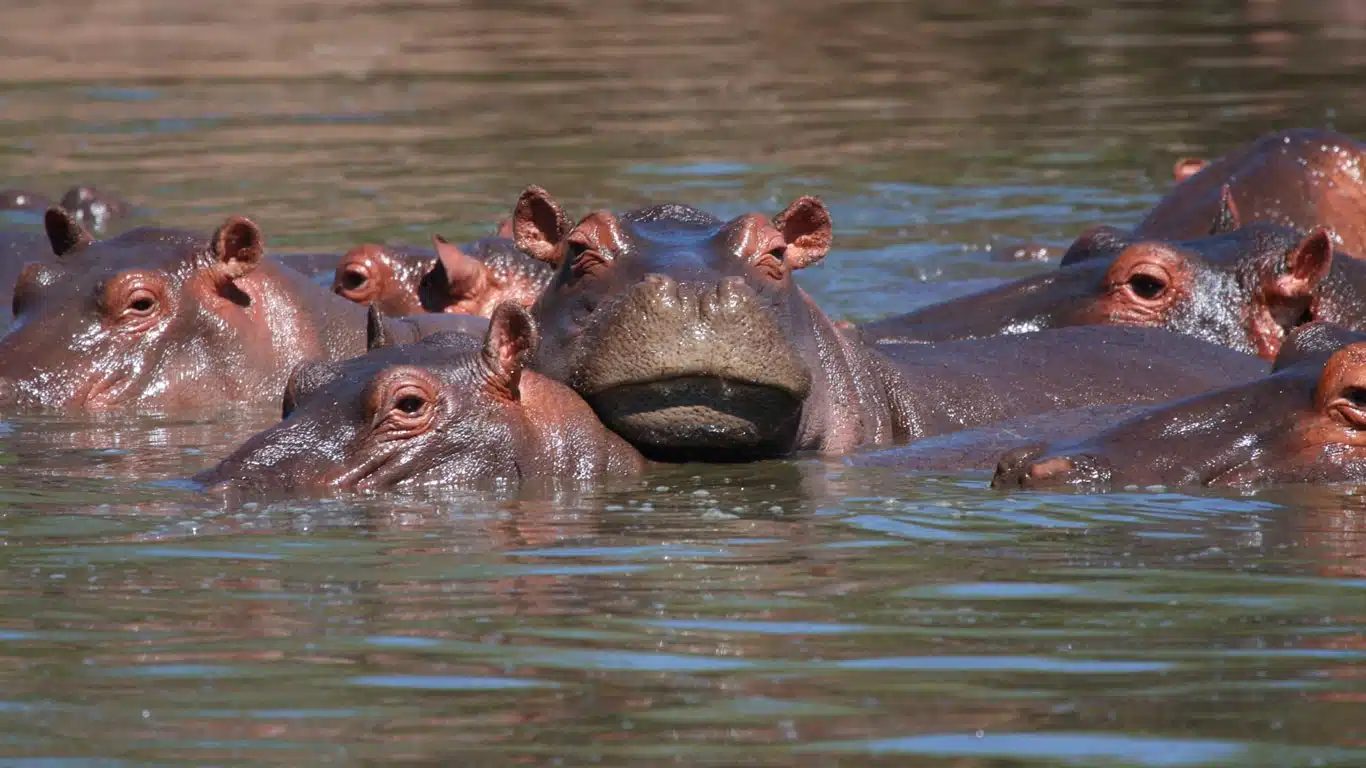
Hippopotamuses spend much of the day in rivers, lakes and pools, often appearing to do very little. They gather in groups, submerge their enormous bodies and rest with only their eyes, ears and nostrils visible above the water. As evening approaches, however, their behaviour begins to change. Some climb out of the water, follow familiar paths along the riverbanks and move into nearby grasslands to feed.
This nightly movement is one of the most recognisable features of hippo behaviour. Although hippos are among Africa’s largest land mammals, they depend heavily on aquatic habitats to manage their body temperature and protect their sensitive skin. They leave the water mainly to find food, particularly fresh grass, which is their principal source of nutrition.
Their daily routine involves more than simply sleeping during the day and eating throughout the night. Hippos rest, socialise, move between water and land, defend territories and respond to changing environmental conditions. Their activity also varies with the season, water availability and local habitat.
Understanding this routine helps explain why hippos are often seen in rivers during daytime game drives but are much harder to observe on land. It also gives safari visitors a better appreciation of their behaviour in destinations such as Queen Elizabeth National Park, Murchison Falls National Park, the Serengeti and Kruger National Park.
Why do hippos leave the water at night?
The main reason hippos leave the water is to feed. Common hippos are primarily herbivores that graze on grasses growing along riverbanks, floodplains and nearby grasslands.
Their large bodies require a regular supply of food, but they do not need to spend the entire day eating. Hippos have relatively low energy requirements compared with many other large mammals of similar size because they spend much of their time resting.
They usually begin moving onto land around sunset or after dark, when temperatures are lower. This allows them to search for food without exposing themselves to the intense daytime heat for extended periods.
A hippo may follow a familiar route from its resting pool to a grazing area several kilometres away. These routes often become well-established paths through vegetation, sometimes called hippo paths. Repeated movement by large animals can create visible tracks leading from the water to feeding grounds.
Once they reach suitable grassland, hippos generally graze for several hours. They use their broad, muscular lips to pull up grass and move it towards the back of the mouth, where their molars grind the food.
They do not usually feed in large coordinated groups on land. Although several hippos may leave the same water pool, individuals commonly spread out while grazing. Mothers may remain close to their calves.
Why do hippos spend so much time in water during the day?
Hippos spend much of the daytime in water because it helps them regulate their body temperature and protect their skin.
Despite their enormous size, hippos are vulnerable to overheating. Their skin is relatively sensitive to prolonged exposure to strong sunlight, and they do not cool themselves through ordinary sweating in the way humans do.
Water provides an effective environment for controlling body temperature. By remaining submerged or partly submerged, hippos reduce their exposure to direct sunlight and avoid excessive heat.
Their skin also produces a reddish secretion often called blood sweat. Despite its appearance, this substance is not blood or ordinary sweat. It contains pigments that help protect the skin from ultraviolet radiation and may provide antimicrobial benefits.
Hippos also use mud wallows and shallow water to keep their bodies cool. When water levels are suitable, they can remain submerged for long periods while breathing at regular intervals.
This explains why a hippo may spend most of a hot afternoon resting in a river before becoming more active as the sun goes down.
What time do hippos leave the water?
Hippos commonly begin leaving their resting pools around sunset, although the exact timing varies between locations and individuals.
Some animals may start moving before it becomes completely dark, while others remain in the water for longer. The availability of food, weather conditions, disturbance and social behaviour can influence when they emerge.
In many areas, hippos follow established paths between their resting pools and nearby grazing grounds. They may leave individually or in small groups rather than all moving out at exactly the same time.
A herd can therefore appear to empty gradually as different animals begin their nightly movements.
The timing also changes with the seasons. During periods of intense heat, hippos may remain in the water longer. When temperatures are cooler, their activity patterns may differ.
It is important to remember that hippos do not follow a strict timetable. Their movements are influenced by local conditions, and different populations can behave differently.
How far do hippos travel when grazing?
Hippos usually feed within a few kilometres of their daytime resting water. However, the distance they travel depends on the availability of suitable grass and the surrounding landscape.
Many animals follow regular paths to nearby grazing areas, sometimes travelling approximately 3 to 5 kilometres from the water. Some can travel farther when food is limited or grazing grounds become less productive.
Their movements may cover several kilometres during a single night. In some circumstances, particularly when water or food becomes scarce, hippos can travel much greater distances.
Their large bodies may make them appear slow and awkward on land, but they can walk efficiently over suitable terrain. They are also capable of moving surprisingly quickly over short distances.
Hippos generally prefer to remain close to water because it provides a safe resting environment during the day. Travelling too far from their usual pools can expose them to greater risks, particularly when they need to return before temperatures rise.
What do hippos eat when they leave the water?
Common hippos are mainly grazers. Their preferred food consists of short, fresh grasses found near rivers, lakes and floodplains.
They use their wide lips to gather grass and pull it into their mouths. Their large incisors and canines are not primarily used for chewing vegetation. The molars at the back of the mouth do most of the grinding.
An adult hippo may consume approximately 30 to 40 kilograms of grass in a night, although the amount varies with body size, food availability and environmental conditions.
Despite their size, hippos do not need to eat as much as some other large herbivores relative to their body weight. Their relatively inactive lifestyle helps reduce their energy requirements.
They generally prefer grazing close to their water sources, but may select different grass species depending on what is available.
Hippos are not strict grass specialists in every situation. Their diet can vary, and some may consume other plant material when conditions require it. However, grass remains the main food for the common hippopotamus.
How do hippos find their way back to the water?
Hippos often use familiar paths when moving between their daytime resting pools and nighttime feeding grounds.
These routes can become clearly visible over time because large animals repeatedly walk along the same sections of vegetation. They may pass through gaps in bushes, cross open ground and follow natural depressions in the landscape.
The animals also rely on their familiarity with the surrounding environment. A hippo living in the same area for many years may know where suitable grazing grounds are located and which routes provide access to them.
They commonly return to the water before or around sunrise, although movements vary.
Some hippos enter the water at the same point they used when leaving. Others may use a different nearby route depending on where they have been feeding.
These repeated movements create a connection between aquatic resting areas and terrestrial feeding grounds. Both habitats are essential to the animal’s survival.
Do hippos graze alone or in groups?
Hippos are highly social animals, particularly when resting in water. Groups can contain several individuals or dozens of animals, depending on the size of the water body and local conditions.
During the day, they often gather in shared pools where adults, females and calves remain close together. Dominant males may defend sections of the water as territories, particularly where females are present.
Their behaviour changes when they leave the water to feed. Hippos commonly spread out across grazing areas rather than remaining in a closely organised herd.
This reduces competition for food and allows individuals to select suitable patches of grass.
Mothers with young calves may remain closer together, as calves depend on their mothers for protection and care.
Although hippos are generally social, their relationships can involve aggression. Adult males may fight over access to water territories, and disputes can result in serious injuries.
The grazing areas on land are generally not defended in the same way as resting territories in the water. Different individuals may use the same feeding grounds on separate nights.
What happens to hippos during the middle of the night?
A common description of hippo behaviour suggests that they spend the entire day resting in water and the whole night grazing on land. In reality, their daily routine is more varied.
Hippos may spend several hours feeding after leaving the water, but they do not necessarily graze continuously until sunrise. Some return to the water earlier, while others rest on land before moving again.
Recent research in Botswana has provided further evidence that hippo activity is more complex than the traditional description suggests. Researchers observed that feeding took up only part of the night, with animals also resting and engaging in other activities. The study also recorded daytime feeding and resting on land in some locations.
These findings show that hippo behaviour can vary according to habitat, season, water conditions and individual circumstances.
During the middle of the night, a hippo may continue grazing, rest in a sheltered area or move towards another feeding location. Others may already have returned to the water.
This variation is one reason why observing wild hippos over a complete 24-hour period can reveal much more than a daytime game drive.
Why do hippos return to the water before sunrise?
Hippos generally return to their resting pools around dawn because the water provides protection from rising temperatures and direct sunlight.
As daylight increases, the surrounding land becomes warmer. Remaining in the water helps them avoid excessive heat and reduces the risk of prolonged sun exposure.
The water also provides a familiar resting environment where they can remain close to other members of their group.
Once they return, hippos may submerge, rest near the surface or position themselves in shallow areas where they can stand comfortably.
They do not always remain completely still. Some individuals move around, interact with others or briefly leave the water during the day.
The timing of their return varies, and some populations show more daytime activity than others.
Can hippos sleep underwater?
Yes. Hippos can rest and sleep while submerged in water, thanks to an automatic breathing response.
They can hold their breath for approximately three to five minutes, sometimes longer. When they need air, they rise to the surface, breathe and can sink again without fully waking.
This ability allows them to rest in water without constantly remaining above the surface.
Hippos do not need to stay completely submerged throughout the day. They often position themselves so that their eyes, ears and nostrils remain above the water, allowing them to monitor their surroundings while resting.
Their bodies are adapted to an aquatic lifestyle. Their nostrils and ears can close underwater, helping prevent water from entering when they submerge.
Although hippos are strong swimmers in some conditions, they do not usually swim in the same way as fish or other aquatic animals. They often walk, push off or move along the bottom of rivers and lakes.
Why do hippos sometimes leave the water during the day?
Although hippos are commonly described as nocturnal grazers, they do sometimes leave the water during daylight hours.
They may climb onto riverbanks to bask in the sun, move between resting areas or reach different parts of a water body. In cooler weather, some individuals may spend more time on land.
Food availability can also influence daytime behaviour. If suitable vegetation is limited in nearby grazing areas, hippos may adjust their feeding patterns.
Recent observations have challenged the assumption that all hippos spend nearly every daytime hour submerged. Their behaviour is more flexible than earlier descriptions suggested.
However, daytime movement does not mean that they no longer depend on water. Access to suitable aquatic resting areas remains important for common hippos, particularly in hot environments.
Are hippos dangerous when they are grazing at night?
Yes. Hippos can be extremely dangerous, whether they are in water or on land.
They are large, powerful animals with strong jaws, enormous canine teeth and the ability to move quickly over short distances. Their behaviour can become aggressive when they feel threatened or when their route to water is blocked.
A hippo grazing at night may be difficult to see because of poor lighting and thick vegetation. It may react defensively if a person approaches unexpectedly.
One important risk occurs when people walk between a hippo and its water source. The animal may perceive the route as blocked and become aggressive while attempting to return.
Hippos also use established paths between water and grazing areas. People living near rivers and lakes should avoid walking along these routes, especially after dark.
For safari visitors, it is important to follow the guide’s instructions and remain inside authorised vehicles. Never approach a hippo on foot, attempt to photograph it at close range or position yourself between the animal and the water.
Even when a hippo appears calm, its behaviour can change quickly.
How does the daily routine of hippos affect their habitat?
Hippos play an important ecological role in African rivers, lakes and surrounding grasslands.
Their grazing activities influence the vegetation around water bodies. By repeatedly feeding on short grass, they can maintain open grazing areas known as hippo lawns.
Their movements also connect aquatic and terrestrial environments. They consume vegetation on land and return to the water, where their waste contributes nutrients to aquatic systems.
Hippos can transport substantial quantities of organic material between grasslands and water bodies. This influences nutrient cycling and can affect the organisms living in rivers and lakes.
However, their impact depends on population size, water conditions and the surrounding ecosystem. Large concentrations of hippos in restricted water bodies can contribute to poor water quality through the accumulation of waste.
Their ecological role is therefore complex. They influence vegetation, nutrient movement and the relationships between aquatic and terrestrial habitats.
Where can you observe hippos during the day on an African safari?
Many national parks in East and Southern Africa provide excellent opportunities to see hippos resting in rivers, lakes and pools.
Queen Elizabeth National Park, Uganda
Queen Elizabeth National Park is one of Uganda’s best-known destinations for observing hippos. The Kazinga Channel connects Lake Edward and Lake George and supports large concentrations of hippos.
Boat cruises along the channel offer opportunities to see them resting in the water, interacting with one another and occasionally opening their enormous mouths.
Visitors may also encounter elephants, buffaloes, crocodiles and numerous waterbirds along the banks.
Murchison Falls National Park, Uganda
The Nile River provides important habitat for hippos in Murchison Falls National Park. Boat trips towards the base of the falls offer excellent opportunities to observe hippos in the water.
They are often seen gathered along riverbanks, with only their heads and backs visible above the surface.
The surrounding area also supports elephants, crocodiles, buffaloes and a variety of bird species.
Serengeti National Park, Tanzania
The Serengeti has several rivers and pools where hippos gather during the day. The Retina Hippo Pool in the northern Serengeti is a well-known location for observing groups of hippos in a concentrated water area.
Visitors can watch their social behaviour, vocalisations and interactions from designated viewing locations.
Kruger National Park, South Africa
Kruger has hippos in many of its rivers and water bodies. The Sabie River is particularly well known for wildlife viewing, and visitors may spot hippos resting in deeper pools.
The park’s extensive road network allows visitors to explore different river systems and look for wildlife throughout the day.
Lake Naivasha, Kenya
Lake Naivasha supports a notable population of hippos. Boat trips provide opportunities to observe them in the water, although visitors must maintain a safe distance.
Hippos may also leave the lake at night to graze on surrounding grasslands.
What is the difference between common hippos and pygmy hippos?
Africa has two living hippo species: the common hippopotamus and the pygmy hippopotamus.
The common hippo is the large species most visitors recognise from African rivers and lakes. It is highly social and often lives in groups around permanent water bodies.
The pygmy hippo is much smaller and has a different lifestyle. It is native to the forests and wetlands of West Africa, particularly countries such as Liberia, with smaller populations in neighbouring areas.
Unlike common hippos, pygmy hippos are generally solitary and spend much of their time hidden in forest vegetation, swamps and streams.
They are also mainly nocturnal, leaving sheltered resting places to feed after dark. Their diet includes leaves, roots, fruits, ferns and other forest vegetation rather than relying mainly on grazing.
The two species share an association with water, but their habitats, social behaviour and feeding patterns differ considerably.
Understanding the hippo’s daily routine
Hippos leave the water at night mainly to find food. Cooler temperatures allow them to graze on nearby grasslands while reducing their exposure to intense sunlight. They follow familiar routes, feed for several hours and generally return to their resting pools around dawn.
During the day, they spend much of their time resting in water, where they regulate their body temperature and protect their sensitive skin. However, their behaviour is flexible, and some individuals also feed or rest on land during daylight hours.
For safari visitors, this daily routine explains why hippos are usually easier to observe in rivers and lakes during daytime boat trips. Their nighttime movements are harder to witness, but they are an important part of how these animals survive in Africa’s varied landscapes.

No comment