

Gombe Stream National Park: Walking in Jane Goodall’s Forest
Hidden along the eastern shores of Lake Tanganyika in western Tanzania, Gombe Stream National Park offers one of Africa’s most remarkable wildlife experiences. Unlike the wide grasslands of the Serengeti, Gombe is a landscape of forested hills, narrow valleys and winding trails where wild chimpanzees have been studied for more than six decades.
Gombe Stream National Park chimpanzee trekking allows visitors to explore the forest where renowned primatologist Jane Goodall began her pioneering research in 1960. Her discoveries transformed scientific understanding of chimpanzee intelligence, social relationships and tool use.
Today, travellers can follow authorised forest trails, observe wild chimpanzees and learn about the conservation work protecting these endangered primates. For anyone interested in wildlife behaviour, conservation history and quieter Tanzanian destinations, Gombe offers an unforgettable experience.
Where Is Gombe Stream National Park?
Gombe Stream National Park lies in Tanzania’s Kigoma Region, along the eastern shore of Lake Tanganyika, close to the border with the Democratic Republic of Congo.
The park covers approximately 35 square kilometres, making it one of Tanzania’s smallest national parks.
Despite its limited size, Gombe supports forest habitats, streams, steep valleys and numerous wildlife species.
Unlike most famous Tanzanian safari destinations, Gombe cannot be reached directly by road. Visitors normally travel to Kigoma before taking a boat to the park.
Its remote location has helped preserve the forest environment that made Jane Goodall’s chimpanzee research possible.
Jane Goodall’s Historic Arrival in Gombe
In July 1960, a 26-year-old Jane Goodall arrived at what was then Gombe Stream Game Reserve to study wild chimpanzees.
Accompanied initially by her mother, Vanne, Goodall began observing animals that were largely unfamiliar with close human presence.
The early months were challenging. Chimpanzees frequently moved away when they noticed her, making detailed observation difficult.
Through patience and repeated visits, she gradually learned to recognise individual chimpanzees and document their behaviour.
Her research became one of the world’s longest-running studies of wild chimpanzees.
The Gombe Stream Research Centre, formally established in 1965, continues this scientific work.
How Jane Goodall Changed Our Understanding of Chimpanzees
Before Goodall’s research, scientists had limited information about the daily lives of wild chimpanzees.
Her observations revealed behaviour that challenged established assumptions.
Chimpanzees Use Tools
One famous discovery involved a chimpanzee named David Greybeard.
Goodall observed chimpanzees modifying grass stems and twigs to extract termites from their nests.
This demonstrated that wild chimpanzees could make and use tools, a behaviour once considered uniquely human.
Chimpanzees Eat Meat
Goodall also documented chimpanzees hunting and eating other animals.
These observations challenged the assumption that chimpanzees were exclusively vegetarian.
Chimpanzees Have Complex Social Relationships
Her long-term studies revealed individual personalities, maternal relationships, social alliances and territorial conflicts.
Researchers continue investigating these behaviours today.
Visiting Gombe gives travellers an opportunity to appreciate the forest where many of these important discoveries occurred.
Chimpanzee Trekking in Gombe Stream National Park
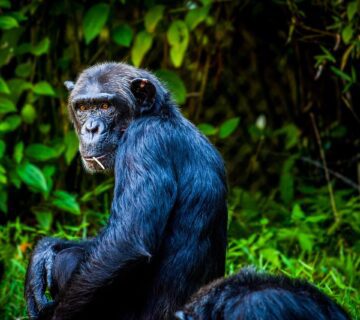
Chimpanzee trekking is the main visitor activity in Gombe.
The experience begins with a briefing from authorised park personnel, followed by a guided walk into the forest.
Rangers search for chimpanzees using recent observations, vocalisations and knowledge of their movements.
You may hear loud pant-hoots echoing through the forest before seeing the animals.
Once chimpanzees are located, visitors can observe them under the park’s wildlife viewing regulations.
What Can You See During Trekking?
Depending on the animals’ activities, you may observe:
- Chimpanzees feeding on fruits and leaves.
- Mothers caring for their young.
- Individuals grooming each other.
- Young chimpanzees playing.
- Chimpanzees climbing and travelling.
- Social interactions between community members.
Sightings are never guaranteed because the chimpanzees move freely.
However, experienced rangers help visitors understand the animals’ behaviour and forest habitat.
How Difficult Is Chimpanzee Trekking in Gombe?
Gombe’s forest contains steep slopes, narrow paths and uneven ground.
Some trekking routes can be physically demanding, especially after rainfall.
Chimpanzees may remain relatively close to established trails or travel into more difficult terrain.
Walking duration therefore varies.
Visitors should be comfortable with moderate hiking and prepared for potentially challenging conditions.
If you have mobility concerns, discuss them with your safari operator before booking.
The terrain makes sturdy walking shoes particularly important.
Other Wildlife Found in Gombe
Although chimpanzees are the main attraction, Gombe supports other interesting wildlife.
Visitors may encounter olive baboons, red-tailed monkeys and red colobus monkeys.
The forest also supports numerous birds, butterflies and smaller animals.
| Wildlife | Where You May Encounter It |
|---|---|
| Chimpanzees | Forest trails and wooded valleys |
| Olive baboons | Forest edges and open areas |
| Red-tailed monkeys | Forest canopy |
| Red colobus monkeys | Forested habitats |
| Forest birds | Trees, streams and woodland |
| Butterflies | Forest clearings and vegetation |
Your guide can help identify animals and explain their relationships within the ecosystem.
Lake Tanganyika: Another Reason to Visit Gombe
Gombe’s location beside Lake Tanganyika adds to its appeal.
The lake is one of the world’s deepest freshwater lakes and forms an important part of the surrounding landscape.
After trekking, visitors can enjoy views of the water and forest-covered hills.
Some accommodation arrangements may include opportunities for swimming or boat activities, subject to safety guidance and local conditions.
Always follow instructions from authorised operators before entering the water.
The lake also provides beautiful photographic opportunities, particularly during late afternoon.
How to Get to Gombe Stream National Park
Most visitors begin their journey in Kigoma, which is accessible through domestic transport connections from other parts of Tanzania.
From Kigoma, travellers take a boat along Lake Tanganyika to Gombe.
The journey commonly takes approximately one to two hours by motorboat, depending on the vessel, departure point and lake conditions.
Public boats may follow different schedules and take longer.
Private boat arrangements are available through some safari operators.
Gombe Travel Overview
| Travel Detail | Information |
|---|---|
| Country | Tanzania |
| Region | Kigoma |
| Nearest major town | Kigoma |
| Main access | Boat from Kigoma |
| Main activity | Chimpanzee trekking |
| Recommended stay | 2–3 days |
| Additional interests | Forest walks, birdwatching, Lake Tanganyika |
Book transport in advance because lake conditions and boat availability can affect departure arrangements.
Best Time to Visit Gombe Stream National Park
Gombe can be visited throughout the year, although weather conditions influence trekking comfort.
The relatively dry season, generally June to October, often provides more manageable forest trails.
During wetter months, vegetation becomes lush, but paths may be muddy and slippery.
Chimpanzee movements change according to food availability, meaning sightings can vary throughout the year.
For many travellers, the drier months are convenient for hiking.
However, visiting during greener periods can also provide rewarding forest scenery and birdwatching.
Where to Stay When Visiting Gombe
Accommodation options around Gombe are more limited than those found in Tanzania’s major northern safari destinations.
Visitors can consider accommodation within or near the park where authorised facilities are operating.
Kigoma also offers hotels and guesthouses suitable for travellers arranging boat excursions.
When choosing accommodation, confirm:
- Distance from the chimpanzee trekking starting point.
- Boat transfer arrangements.
- Meal availability.
- Electricity and charging facilities.
- Park fees and activity reservations.
- Applicable accommodation and cancellation policies.
Booking early is advisable because the park receives fewer visitors and has limited facilities.
What Should You Pack for Gombe?
Gombe’s terrain and tropical conditions require practical preparation.
Recommended items include:
- Comfortable hiking boots with good grip.
- Long trousers and long-sleeved shirts.
- Lightweight rain jacket.
- Drinking water.
- Small daypack.
- Insect repellent.
- Hat and sunscreen.
- Camera without flash.
- Waterproof protection for electronic equipment.
Carry only what you need for trekking.
Your guide can advise whether additional equipment is necessary for current trail conditions.
Chimpanzee Trekking Rules in Gombe
Chimpanzees are vulnerable to diseases transmitted by humans.
For this reason, visitors must follow park health and wildlife protection regulations.
Maintain the required viewing distance and avoid direct contact.
Never feed chimpanzees or imitate their calls.
Flash photography should be avoided, and visitors must follow any mask requirements communicated by park staff.
Do not participate in chimpanzee trekking when experiencing symptoms of contagious illness.
Respecting these rules protects the animals and supports responsible wildlife tourism.
Gombe vs Mahale Mountains National Park
Tanzania offers another famous chimpanzee destination along Lake Tanganyika: Mahale Mountains National Park.
Both parks provide forest-based chimpanzee experiences, but they differ in character.
| Feature | Gombe Stream | Mahale Mountains |
|---|---|---|
| Main attraction | Chimpanzees | Chimpanzees |
| Historical importance | Jane Goodall’s research | Long-term Japanese-led chimpanzee research |
| Landscape | Forested hills and valleys | Mountains and lakeside forest |
| Access | Boat from Kigoma | Boat-based access |
| Experience | Research history and trekking | Remote forest trekking |
Gombe is particularly attractive to visitors interested in Jane Goodall’s scientific legacy.
Mahale appeals to travellers seeking a different remote chimpanzee habitat.
Why Gombe’s Conservation Work Matters
Chimpanzees face threats from habitat loss, disease and human activities.
Gombe’s small size makes conservation beyond the park boundary especially important.
Research organisations and local communities work together to protect forest habitats and improve conservation outcomes.
The Jane Goodall Institute continues supporting chimpanzee research, habitat protection and community-centred conservation activities.
Visitors contribute through responsible tourism and support for authorised conservation programmes.
Walking in Jane Goodall’s Forest
Gombe Stream National Park offers a rare opportunity to explore the forest where Jane Goodall began her pioneering chimpanzee research.
Its steep trails, wild chimpanzees and Lake Tanganyika scenery create a distinctive safari experience.
Unlike Tanzania’s famous savannah parks, Gombe encourages visitors to slow down, listen to forest sounds and observe the complex behaviour of one of humanity’s closest living relatives.
Whether you are a wildlife enthusiast, photographer or traveller interested in conservation history, Gombe deserves consideration.
Walking through Gombe is an opportunity to experience the landscape that changed our understanding of chimpanzees and continues to inspire wildlife conservation.


No comment