
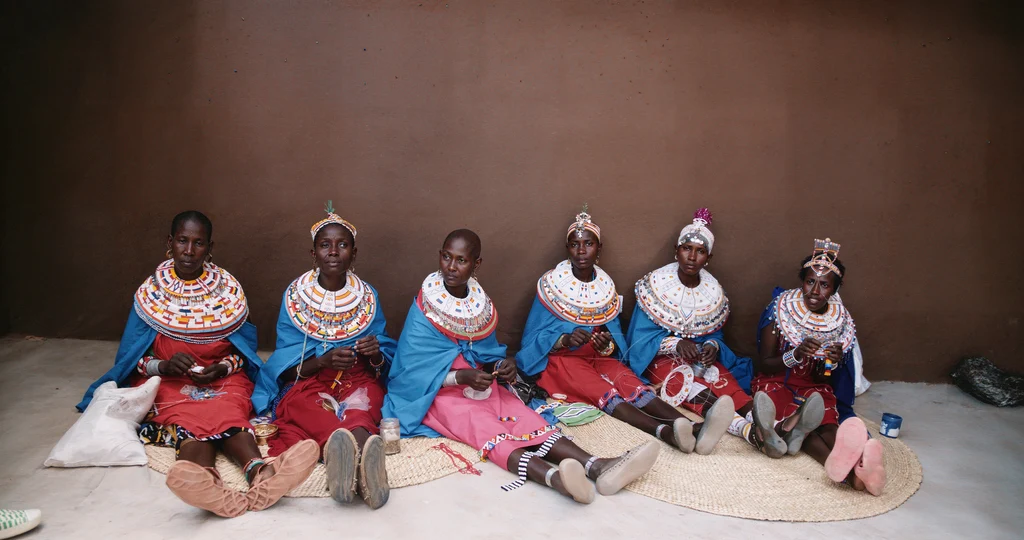
The Samburu and Their Beaded Adornments
Walk through a Samburu village in northern Kenya and colour immediately overwhelms the senses, elaborate beaded necklaces, bracelets and headpieces transforming everyday dress into a genuinely sophisticated visual language communicating age, marital status and social standing at a glance. Samburu beaded adornments represent considerably more than decorative craft, each specific colour combination and design carrying genuine cultural meaning refined across generations of traditional practice.
Key Highlights
- Samburu beadwork communicates age-set status, marital standing and social position through specific patterns
- Married women traditionally wear distinctive multi-layered beaded collars called mporo
- Specific colours carry symbolic meaning, including red for bravery and blue for the sky and energy
- Young warriors, or morans, wear specific beaded adornments marking their distinct social status
- Beadwork skills pass down through generations, primarily taught among Samburu women
- Tourism has created new economic opportunities for Samburu beadwork while raising authenticity questions
A Visual Language of Social Status
Samburu beadwork functions as a genuinely sophisticated visual communication system, specific patterns, colours and the sheer quantity of beads worn immediately conveying information about a person’s age-set status, marital standing and broader social position within the community to anyone familiar with reading these established visual codes. This system means experienced observers can determine considerable social information about a Samburu individual simply through careful observation of their specific beaded adornment, a form of non-verbal communication embedded directly into traditional dress rather than requiring explicit verbal explanation.
Why This System Developed
This beadwork-based status communication system likely developed as a practical, immediately visible way to convey important social information within a community where age-set structure and marital status carry genuine practical significance for social interaction, marriage eligibility and community role expectations.
The Married Woman’s Mporo Collar
Married Samburu women traditionally wear a distinctive multi-layered beaded collar called the mporo, an elaborate, often quite heavy adornment immediately signalling marital status to anyone familiar with Samburu visual customs, the collar’s considerable size and craftsmanship reflecting genuine significance attached to marriage within the broader social structure. This specific collar style differs clearly from the beadwork patterns worn by unmarried women, creating an immediately recognisable visual distinction that communicates marital status without requiring any verbal inquiry or explanation within the community context.
Crafting the Mporo
Creating a proper mporo collar requires genuinely considerable skill and time investment, experienced beadworkers carefully selecting colours and patterns according to established traditional convention while producing a piece substantial enough to carry the visual weight appropriate to marking this significant life status change.
Colour Symbolism in Samburu Beadwork
Specific colours within Samburu beadwork carry genuine symbolic meaning, red traditionally associated with bravery and strength, blue representing the sky and divine energy, white symbolising purity and peace, and various other colours carrying their own specific traditional associations that skilled beadworkers incorporate deliberately into their designs. Understanding this colour symbolism transforms casual observation of Samburu beadwork into genuinely richer appreciation, specific colour combinations communicating intentional meaning rather than purely aesthetic choice alone.
How Colours Combine for Specific Messages
Skilled beadworkers combine specific colours deliberately to create particular symbolic messages within a single piece, the resulting combination carrying considerably more nuanced meaning than any single colour could convey independently, a genuinely sophisticated design consideration requiring deep traditional knowledge.
Moran Warriors and Their Distinctive Adornments
Young Samburu men within the moran warrior age-set wear specific beaded adornments distinct from both younger boys and older married men, these warrior-specific decorations marking their particular social status and life stage within the community’s broader age-set system governing social progression and responsibility. This warrior-specific beadwork, often incorporating particular colours and arrangements associated specifically with the moran stage, represents a genuinely important visual marker during what traditionally constitutes a significant, clearly defined life period within Samburu social structure.
The Moran Age-Set System
The moran stage represents a specific, clearly defined period within Samburu male social progression, young men holding this status for a defined number of years before transitioning to elder status, their distinctive beaded adornments marking this particular life stage visually throughout its duration.
Learning Beadwork Across Generations
Beadwork skills traditionally pass down through generations primarily among Samburu women, younger girls learning techniques, colour symbolism and pattern conventions through direct observation and guided practice alongside mothers, aunts and other experienced community beadworkers across many years of gradual skill development. This generational transmission ensures genuine continuity of both technical skill and the deeper symbolic knowledge underlying specific design choices, younger beadworkers gradually absorbing not just how to create beadwork but why specific traditional choices carry the meaning they do.
Why Oral Transmission Matters
Because beadwork symbolism and technique transmit primarily through direct oral and observational teaching rather than written documentation, maintaining active intergenerational teaching relationships remains genuinely essential for preserving this knowledge accurately across successive generations.
Tourism’s Impact on Traditional Beadwork
Growing tourism interest in Samburu culture has created genuine new economic opportunities for traditional beadworkers, visitors purchasing beaded items providing meaningful income supplementing traditional pastoral livelihoods, though this commercial dimension has also raised legitimate questions about whether tourism-driven production maintains the same authentic symbolic integrity as beadwork created purely for traditional community use. Responsible visitors should seek out beadwork from reputable sources that genuinely support Samburu artisans fairly, ideally purchasing pieces where the specific cultural meaning and craftsmanship quality remain genuinely intact rather than simplified purely for faster tourist-market production.
Supporting Authentic Craftsmanship
Purchasing beadwork directly from Samburu communities or through established fair-trade programmes helps ensure genuine economic benefit reaches actual artisans while supporting continued authentic craftsmanship rather than purely commercial, meaning-stripped tourist production.
Experiencing Samburu Culture Respectfully
Visitors interested in learning more about Samburu beadwork and broader culture should approach community visits with genuine curiosity and respect, asking questions about specific symbolic meanings and supporting authentic artisans through fair, direct purchasing when genuine interest in acquiring beadwork pieces exists. This respectful engagement transforms a simple visual appreciation of colourful adornment into considerably deeper cultural understanding, Samburu beadwork offering a genuinely accessible entry point into broader understanding of this community’s rich social structure and traditional values.
Beadwork Materials: Traditional and Modern
Traditional Samburu beadwork historically used materials sourced directly from the local environment, including seeds, shells and carved bone, before glass trade beads introduced through coastal trading networks gradually became the dominant material still used extensively today across contemporary Samburu beadwork production. This material evolution reflects genuine historical trading connections extending well beyond Samburu territory itself, glass beads’ introduction representing one of many examples of how outside trade goods became deeply integrated into traditional African craft practices while still maintaining genuinely indigenous design conventions and symbolic meaning.
Why Glass Beads Became Dominant
Glass trade beads offered considerably more consistent colour, size and durability than traditional natural materials, practical advantages that led Samburu artisans to adopt them enthusiastically while still applying thoroughly traditional design principles and symbolic conventions to this relatively newer imported material.
Beadwork Beyond Jewellery
Beyond personal adornment like necklaces and collars, Samburu beadwork extends to decorating various other items, including traditional gourds, clothing accents and ceremonial objects, demonstrating that this decorative tradition extends considerably beyond simple jewellery into broader material culture and everyday object decoration. This broader application illustrates how thoroughly beadwork has become integrated into general Samburu aesthetic sensibility, the same symbolic colour conventions and skilled craftsmanship techniques appearing across a genuinely wide range of traditional objects beyond personal adornment alone.
Ceremonial Objects and Special Occasions
Specific ceremonial objects receive particularly elaborate beadwork decoration reserved for significant occasions, these pieces often representing some of the most skilled and symbolically rich examples of Samburu beadwork craftsmanship, reflecting the genuine importance of the specific ceremonies they’re created to accompany.
Samburu Beadwork Compared to Maasai Traditions
Visitors familiar with Maasai beadwork from elsewhere in Kenya and Tanzania often notice genuine similarities with Samburu traditions, both communities sharing broadly related cultural and linguistic heritage, though each maintains distinct specific patterns, colour preferences and symbolic conventions reflecting their own particular cultural development. Learning to distinguish between these related but genuinely distinct beadwork traditions rewards visitors with a more nuanced appreciation of East Africa’s broader pastoralist cultural diversity, rather than conflating related but meaningfully different communities into a single generic category.
Why Related Cultures Developed Distinct Traditions
Despite sharing broader cultural and linguistic roots, Samburu and Maasai communities developed along somewhat separate historical paths across considerable time, allowing each to cultivate genuinely distinct specific beadwork conventions even while maintaining recognisable broader similarities reflecting their shared heritage.
Frequently Asked Questions
What does Samburu beadwork actually communicate?
Specific patterns and colours convey age-set status, marital standing and social position to anyone familiar with reading these visual codes.
What is the mporo collar?
A distinctive, multi-layered beaded collar traditionally worn by married Samburu women, immediately signalling their marital status.
Do specific bead colours have particular meanings?
Yes, red traditionally represents bravery, blue the sky and divine energy, and white purity and peace, among other symbolic associations.
Who traditionally creates Samburu beadwork?
Primarily women, with skills and symbolic knowledge passed down through generations via direct teaching and observation.
How can I support authentic Samburu beadwork as a visitor?
Purchase directly from Samburu communities or established fair-trade programmes to ensure genuine economic benefit reaches artisans.
Recommended Safaris
Discovering Samburu beadwork adds genuine cultural richness to any northern Kenya itinerary. Ready to explore this remarkable visual tradition for yourself? Reach our team through our Book Now page and we’ll plan it around your dates.






No comment