
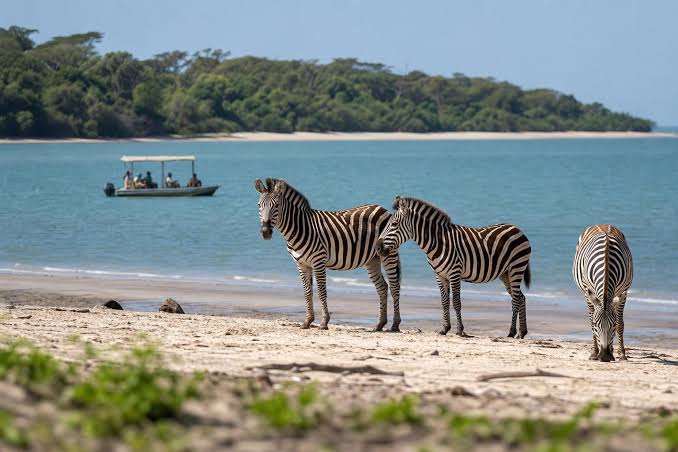
Saadani National Park: Where the Bush Meets the Beach
Nowhere else in East Africa can you watch elephants wander onto an Indian Ocean beach or spot lion tracks in the sand within sight of breaking waves. Saadani National Park, Tanzania’s youngest national park and the only wildlife sanctuary on East Africa’s entire coastline, delivers a genuinely unusual combination: classic savanna safari wildlife and an unspoiled tropical beach, both within the boundaries of a single, compact protected area.
Key Highlights
- Saadani covers roughly 1,150 square kilometres north of Dar es Salaam, Tanzania’s youngest national park
- The only national park in East Africa where savanna wildlife habitat meets an Indian Ocean beachfront directly
- The Wami River forms the park’s southern boundary, offering boat safaris with hippos and crocodiles
- Four of the Big Five are present: lion, elephant, buffalo and leopard
- Saadani’s beaches rank among mainland Tanzania’s last major green turtle nesting sites
- Activities include game drives, guided walking safaris, and Wami River boat trips
Where the Bush Genuinely Meets the Beach
Saadani’s defining feature is right there in its geography: savanna and coastal woodland habitat running directly to an undeveloped stretch of Indian Ocean shoreline, with no comparable park anywhere else in East Africa offering quite the same combination. Elephants and other wildlife occasionally wander onto the beach itself, a sight that consistently surprises first-time visitors more accustomed to thinking of “beach” and “safari” as entirely separate categories of Tanzania trip.
Why This Combination Is So Rare
Most of East Africa’s coastline sits well outside any protected wildlife area, while its major savanna parks lie deep inland, far from any ocean access. Saadani’s compact size and specific coastal location make it a genuine geographic anomaly, one park delivering both experiences without requiring a separate multi-hour transfer between a safari lodge and a beach resort.
The Wami River: Saadani’s Second Signature Feature
Forming the park’s southern boundary, the Wami River offers boat safaris that regularly produce sightings of hippo pods, basking Nile crocodiles, Angolan colobus monkeys moving through the riverside canopy, and mangrove kingfishers hunting along the banks. A typical river excursion runs two to three hours, and the transition from open sea into the river mouth, passing directly from saltwater coastline into a wildlife-dense river system within minutes, is one of the more distinctive short safari activities available anywhere in Tanzania.
What Makes the River Trip Worthwhile
Unlike a standard game drive, the Wami River boat safari offers close, low-disturbance wildlife viewing from the water, particularly rewarding for photography given how close boats can approach basking crocodiles and hippo pods without disturbing their behaviour.
Wildlife at Saadani
Saadani supports four of the Big Five, lion, African bush elephant, Cape buffalo and leopard, alongside a range of plains game adapted to the park’s mix of savanna, coastal woodland and wetland habitat. While overall wildlife density runs lower than Tanzania’s flagship northern parks, sightings at Saadani come with a genuinely different, quieter character given the park’s low visitor numbers relative to the Serengeti-Ngorongoro circuit.
Green Turtle Nesting
Saadani’s beaches rank among the last major green turtle nesting sites remaining on mainland Tanzania, adding a genuinely significant marine conservation dimension to a park otherwise defined by its terrestrial and river wildlife. Visitors timing a trip around nesting season have a real chance at witnessing this increasingly rare coastal wildlife event.
Activities Beyond Game Drives
Saadani offers guided walking safaris across its salt flats, a genuinely distinctive activity unavailable in many of Tanzania’s larger, vehicle-focused parks, giving visitors direct, on-foot access to the park’s coastal terrain. Combined with standard game drives and the Wami River boat safari, a Saadani stay offers meaningfully more activity variety per day than a typical single-format safari park.
Fishing and Beach Time
Several lodges operating in and around Saadani offer fishing excursions and straightforward beach relaxation alongside the park’s wildlife activities, letting visitors genuinely alternate between safari mode and coastal downtime within a single trip, rather than needing to choose one or the other.
Getting There
Saadani’s proximity to Dar es Salaam, considerably closer than Tanzania’s northern circuit parks, makes it a realistic short add-on for travellers with limited time who still want a genuine safari experience alongside a beach stay, whether arriving by road or via a short charter flight from Dar es Salaam or Zanzibar.
Combining Saadani With Zanzibar
Saadani’s coastal location and proximity to Zanzibar make it a natural pairing for travellers building an itinerary that includes both a beach-focused Zanzibar stay and a shorter, more accessible safari component, without the longer transfer times a northern-circuit park would require.
Best Time to Visit
Tanzania’s dry season, June through September, offers Saadani’s clearest wildlife viewing conditions, with thinner vegetation concentrating animals around remaining water sources and generally more reliable road conditions throughout the park. The park remains accessible outside this window too, though wildlife viewing becomes somewhat less predictable during the wetter months.
How Long to Spend at Saadani
Two to three nights is generally enough to experience Saadani’s full range of activities, a game drive or two, the Wami River boat safari, and some genuine beach downtime, without feeling rushed through any single element. Travellers treating Saadani purely as a brief add-on to a longer Zanzibar or northern-circuit itinerary can still get a meaningful taste of the park in a single overnight stay, though this compresses the experience considerably compared to a fuller multi-night visit.
Where to Stay
Saadani’s accommodation options remain considerably more limited and intimate than Tanzania’s larger, more established safari circuits, a handful of lodges and tented camps positioned to take advantage of both the park’s wildlife areas and its beachfront, offering a genuinely low-key, uncrowded base for exploring both sides of what the park offers.
The Park’s History and Formation
Saadani was formally gazetted as a national park in 2005, uniting several previously separate protected areas, including the old Saadani Game Reserve and Mkwaja Ranch, into a single, more coherently managed conservation area. This relatively recent formation, considerably later than Tanzania’s older, more established parks, explains much of Saadani’s lower profile among visitors despite the genuine distinctiveness of what it offers.
The Village of Saadani
The park takes its name from Saadani village, a small coastal settlement with its own considerably older history as a former Swahili trading town, predating the national park itself by well over a century. Visitors interested in the region’s deeper cultural history can combine wildlife viewing with a stop at the village, adding a genuine historical dimension to what might otherwise be a purely wildlife-focused visit.
Ecology: A Mosaic of Habitats
Saadani’s relatively compact size belies a genuinely varied mix of habitats packed within its boundaries: open grassland savanna, coastal woodland, mangrove-lined river systems along the Wami, and the beach and dune ecosystem running along its Indian Ocean edge. This habitat diversity within a single small park is a large part of why Saadani supports such a varied range of wildlife activities, from classic game drives to river boat safaris to coastal walks, despite covering considerably less ground than Tanzania’s larger northern parks.
Birdlife Across the Habitat Mix
This same habitat diversity supports a genuinely rich bird community, savanna species alongside river and mangrove specialists and coastal shorebirds, giving Saadani real appeal for visitors with a dedicated interest in birding alongside its larger-mammal safari draw.
Responsible Tourism and Community Connection
Saadani’s development as a national park has involved considerably more direct engagement with surrounding local communities than some of Tanzania’s older, more established parks, reflecting a more contemporary approach to conservation that treats community involvement as central rather than peripheral to the park’s long-term success. Visitors choosing lodges and operators that actively support this community-inclusive model contribute directly to that ongoing relationship between the park and the people living around it.
Packing for a Beach-and-Bush Trip
Saadani’s dual character calls for a genuinely different packing approach than a standard inland safari: swimwear and light beach wear alongside the usual neutral-toned safari clothing, sun protection suited to both open savanna and unshaded beach exposure, and binoculars for both game drives and the river boat safari. Few Tanzania destinations demand quite this specific a packing mix, and travellers who plan for both sides of the experience get considerably more out of a Saadani stay than those who arrive prepared for only one.
Sun and Insect Protection
Strong, reef-safe sun protection matters more at Saadani than at most inland parks given the added beach and boat-based sun exposure, and standard insect protection remains just as relevant here as at any other Tanzania wildlife destination, particularly around the river and mangrove areas in the early morning and evening.
Frequently Asked Questions
Can I really see elephants on the beach at Saadani?
Yes, while not a guaranteed daily occurrence, wildlife including elephants occasionally moving onto the beach is a genuine, well-documented feature of this specific park.
How far is Saadani from Dar es Salaam?
Saadani sits considerably closer to Dar es Salaam than Tanzania’s northern circuit parks, making it accessible by road or a short charter flight, a realistic option for travellers with limited time.
Is Saadani a good choice for a first-time Tanzania safari?
It works well as a shorter add-on to a longer itinerary or a beach-and-safari combination trip, though travellers wanting maximum wildlife density on a single, standalone safari may prefer Tanzania’s larger northern parks.
Can I combine a Saadani visit with Zanzibar?
Yes, the two destinations pair naturally given their coastal proximity, a popular combination for travellers wanting both beach time and a genuine safari experience without extensive additional travel.
What’s the best activity to prioritise at Saadani?
The Wami River boat safari is widely considered the park’s signature activity, offering close wildlife viewing unavailable through standard game drives alone.
Recommended Safaris
Saadani pairs naturally with a Zanzibar beach stay or a shorter northern Tanzania circuit. Ready to combine a genuine safari with beach time in a single Tanzania itinerary? Reach our team through our Book Now page and we’ll plan it around your dates.

No comment