
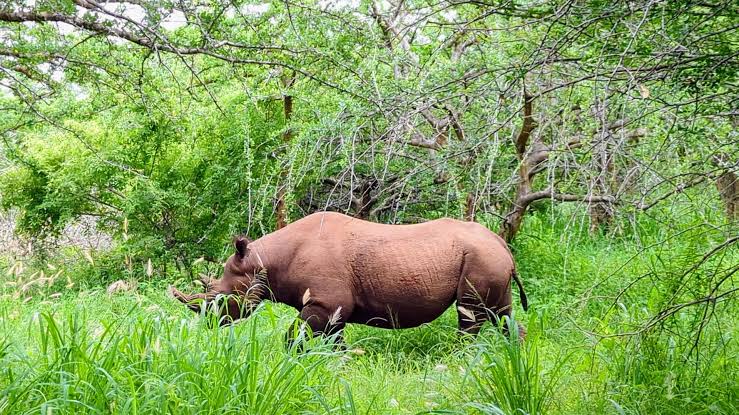
Mkomazi National Park: Black Rhino Sanctuary and Wild Dog Refuge
Tucked against Tanzania’s border with Kenya’s Tsavo ecosystem, Mkomazi National Park rarely appears on a first-time visitor’s safari shortlist, yet it holds one of East Africa’s most important conservation success stories: a heavily guarded black rhino sanctuary and one of the region’s most significant African wild dog breeding programmes, both built from near-total local extinction back to genuine, self-sustaining populations.
Key Highlights
- Mkomazi sits in Tanzania’s Kilimanjaro and Tanga regions, contiguous with Kenya’s Tsavo ecosystem across the border
- Established as a game reserve in 1951, upgraded to full national park status in 2006
- The park’s black rhino sanctuary protects a heavily guarded, fenced population reintroduced after local extinction by the late 1980s
- African wild dogs were successfully bred and reintroduced here starting in the 1990s
- Over 450 recorded bird species, plus distinctive dry-country species like beisa oryx and gerenuk
- The George Adamson Wildlife Preservation Trust has led decades of restoration work in the park
A Park Built Around Conservation Recovery
Mkomazi’s modern identity is inseparable from its conservation history. Black rhinos once numbered more than 400 across the reserve in the 1960s, but poaching pressure drove the population to local extinction by the late 1980s, a near-total collapse mirrored across much of East Africa’s rhino range during that era. What makes Mkomazi genuinely distinctive is how thoroughly that story has been reversed since.
From Game Reserve to National Park
Established as a game reserve in 1951, Mkomazi’s protected status was upgraded to full national park designation in 2006, a change that reflected both the success of its recovering wildlife populations and a formal commitment to stronger long-term protection following decades of restoration work.
The Black Rhino Sanctuary
Reintroduced black rhinos now live within a heavily guarded, fenced sanctuary inside the park, a deliberate security measure given the intense poaching pressure that drove the species to local extinction in the first place. This fenced approach, while it limits rhinos to a defined section of the park rather than roaming its full extent, has proven essential to giving the reintroduced population a genuine chance to establish and grow without the poaching risk that ended the original population decades earlier.
Why the Fence Matters
Visitors sometimes arrive expecting an open, unrestricted rhino-viewing experience similar to other East African parks, and understanding the fenced sanctuary’s purpose in advance, active protection against a very real ongoing poaching threat, helps set realistic expectations for what a Mkomazi rhino sighting actually involves.
African Wild Dogs: A Genuine Breeding Success
Alongside its rhino programme, Mkomazi hosts one of the region’s most significant African wild dog conservation efforts, a dedicated breeding centre that has bred and released wild dogs into the wider park ecosystem since the 1990s. African wild dogs remain one of Africa’s most endangered large carnivores, and Mkomazi’s sustained breeding and release programme represents a genuinely meaningful contribution to the species’ broader survival prospects across the region.
Spotting Wild Dogs on a Visit
Unlike the fenced rhino sanctuary, wild dogs released into Mkomazi’s wider landscape roam more freely, meaning sightings, while never guaranteed given the species’ large territorial ranges and naturally low densities, offer visitors a genuine chance at observing one of Africa’s rarest predators in a comparatively uncrowded setting.
The Conservation Trust Behind the Recovery
Much of Mkomazi’s restoration has been driven by the George Adamson Wildlife Preservation Trust, a British conservation charity working alongside its American sister organisation to fund and coordinate the rhino and wild dog programmes that define the park today. This sustained, decades-long institutional commitment is a large part of why Mkomazi’s recovery has proven durable rather than a brief, unsustained conservation gesture.
A Model for Other Recovery Projects
Mkomazi’s approach, combining fenced sanctuary protection for the most vulnerable species with wider-ranging release programmes for others, offers a genuinely instructive model that has informed conservation thinking at other East African reserves facing similar recovery challenges.
Beyond Rhinos and Wild Dogs: What Else Lives Here
Mkomazi’s dry, semi-arid landscape supports a distinctive set of species adapted to its acacia-scrub and savanna terrain, including beisa oryx and gerenuk, two striking dry-country antelope species less commonly seen in Tanzania’s wetter, more famous parks further south and west. This ecological distinctiveness gives Mkomazi genuine appeal beyond its flagship conservation programmes, offering visitors a different wildlife-viewing character than the Serengeti-Ngorongoro circuit most first-time Tanzania visitors default to.
A Birdwatcher’s Park
With more than 450 recorded bird species, Mkomazi ranks among Tanzania’s stronger birdwatching destinations, its dry-country habitat supporting a genuinely different bird community than the wetter parks further south, making it a worthwhile addition to a longer, more specialised Tanzania birding itinerary.
Connection to Kenya’s Tsavo Ecosystem
Mkomazi sits directly contiguous with Kenya’s Tsavo ecosystem across the international border, part of a single larger cross-border landscape that supports wildlife movement between the two countries’ protected areas. This ecological continuity matters for the park’s larger-ranging species, giving populations access to a considerably larger combined habitat than Mkomazi’s own boundaries alone would provide.
Planning a Visit
Getting There
Mkomazi is most commonly reached by road from Moshi or Arusha, making it a realistic add-on for travellers already in northern Tanzania for Kilimanjaro or the broader northern safari circuit, rather than requiring an entirely separate trip.
Best Time to Visit
Tanzania’s dry season, roughly June through October, offers the clearest wildlife viewing conditions at Mkomazi, with vegetation thinned back and animals more reliably concentrated around remaining water sources.
Where to Stay
Accommodation options in and around Mkomazi remain considerably more modest than the lodge-dense northern circuit parks, reflecting the park’s lower visitor volumes and more specialised appeal. A small number of tented camps and lodges operate in or near the park, offering a genuinely intimate, low-crowd safari base for travellers prioritising a quieter experience over extensive luxury infrastructure.
Camping Options for Independent Travellers
Basic public campsites are available for self-driving or budget-conscious travellers comfortable with a more independent style of visit, a realistic option given Mkomazi’s proximity to the Moshi-Arusha road network and the relative ease of a self-organised overland trip compared to Tanzania’s more remote southern circuit parks.
How Mkomazi Compares to Other Rhino Sanctuaries in the Region
Mkomazi’s fenced rhino sanctuary model sits alongside a small number of similar protected rhino programmes across East Africa, each built around the same core logic: intensive, guarded protection as the only realistic way to give reintroduced or surviving rhino populations genuine security against poaching pressure. What distinguishes Mkomazi within this group is the combination of its rhino work with an equally significant wild dog programme, giving the park a dual conservation identity relatively few comparable sanctuaries can match.
Why This Combination Matters
Running both a rhino sanctuary and a wild dog breeding programme within a single park reflects a genuinely ambitious conservation mandate, one requiring sustained funding, security infrastructure and institutional commitment well beyond what a single-species programme demands. Mkomazi’s ability to sustain both efforts simultaneously over multiple decades is itself part of the park’s broader conservation significance.
A Quieter Alternative to Tanzania’s Busier Parks
Visitor numbers at Mkomazi remain considerably lower than at Serengeti, Ngorongoro or even Tarangire, a direct consequence of its more specialised conservation focus and comparatively limited accommodation infrastructure. For travellers who’ve already experienced Tanzania’s headline parks and are specifically seeking a quieter, less crowded safari environment, or those with a genuine interest in conservation work itself rather than simply high wildlife-viewing volume, that lower visitor density is a meaningful point in Mkomazi’s favour rather than a drawback.
Why Mkomazi Deserves a Place on a Longer Tanzania Itinerary
Mkomazi won’t suit travellers seeking the sheer volume and density of wildlife found in the Serengeti or Ngorongoro Crater, but for those specifically interested in conservation success stories, distinctive dry-country species, or simply a genuinely uncrowded safari experience away from the northern circuit’s crowds, it offers something those better-known parks fundamentally can’t: a direct, tangible window into how dedicated conservation work rebuilds a species population from near-total collapse.
What Visiting Mkomazi Says About Responsible Safari Travel
Choosing to spend safari time and budget at a park like Mkomazi, rather than exclusively at Tanzania’s already heavily visited flagship destinations, directly supports the kind of sustained conservation funding that made its rhino and wild dog recovery possible in the first place. Tourism revenue plays a genuine, practical role in sustaining the security and breeding infrastructure both programmes depend on, making a Mkomazi visit a meaningful contribution rather than simply an alternative itinerary choice.
Setting Expectations Before You Go
Travellers should approach Mkomazi understanding it primarily as a conservation-focused destination rather than a big-game-density park in the Serengeti mould; wildlife densities are genuinely lower, but the specific species and conservation story on offer are unavailable in quite the same form anywhere else in Tanzania.
Frequently Asked Questions
Is Mkomazi worth visiting on a first Tanzania safari?
It’s better suited to a second or longer trip, or as an add-on for travellers already in northern Tanzania, than as a standalone first-safari destination given its more specialised wildlife focus.
Are black rhino sightings guaranteed at Mkomazi?
No sighting is ever guaranteed, but the fenced sanctuary considerably improves the odds compared to searching for rhinos across an unfenced park.
How does Mkomazi compare to Kenya’s Tsavo parks?
The two share a contiguous ecosystem and similar dry-country landscape, though Mkomazi’s rhino sanctuary and wild dog programme give it a distinct conservation identity of its own.
Is Mkomazi a good destination for birdwatchers?
Yes, with over 450 recorded species and a distinctive dry-country bird community, it’s a worthwhile stop for a dedicated Tanzania birding itinerary.
How many days should I spend at Mkomazi?
One to two days is generally sufficient to cover the park’s main highlights, making it a practical short add-on to a longer northern Tanzania itinerary.
Recommended Safaris
Mkomazi pairs naturally with a wider northern Tanzania itinerary built around Kilimanjaro and Arusha. Ready to add this rarely visited conservation success story to your Tanzania safari? Reach our team through our Book Now page and we’ll plan it around your dates.

No comment