
Kyambura Wildlife Reserve vs Kyambura Gorge: Clearing Up the Confusion
Search for “Kyambura” and you’ll find the name attached to a wildlife reserve, a gorge, and a nickname — “Valley of the Apes” — used almost interchangeably across tour operator websites and trip itineraries. It’s genuinely confusing until someone lays out how the three actually relate, which is simpler than the overlapping terminology suggests: Kyambura Wildlife Reserve is the protected area, Kyambura Gorge is the specific geographic feature inside it, and Valley of the Apes is just the gorge’s nickname. One place, three names, each describing a different layer of the same location.
Key Highlights
- Kyambura Wildlife Reserve: a 156 square kilometre buffer zone established in 1965, adjoining Queen Elizabeth National Park’s eastern boundary
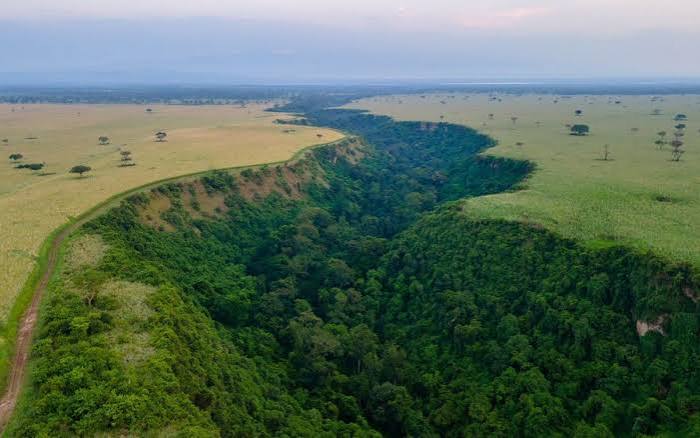
- Kyambura Gorge: the specific canyon feature inside the reserve, roughly 11 kilometres long (extending to about 16 km to the park’s eastern boundary) and up to 100 metres deep at the Kichwamba Escarpment
- “Valley of the Apes”: a nickname for the gorge specifically, not a separate location, earned from its concentration of primates
- The gorge is the only place inside Queen Elizabeth National Park’s wider ecosystem with habituated chimpanzees available for tracking
- All three terms are frequently used interchangeably by tour operators, which is the actual source of the confusion
- Chimpanzee tracking is the reserve’s primary visitor activity, conducted specifically within the gorge itself
The Reserve: A 1965 Buffer Zone
Kyambura Wildlife Reserve was established in 1965 as a 156 square kilometre buffer zone adjoining Queen Elizabeth National Park, created specifically to protect the ecological transition area between the park’s core and the surrounding agricultural land. As a buffer zone rather than a core national park area, the reserve has historically operated under somewhat different management arrangements than Queen Elizabeth proper, though it functions in practice as an extension of the same broader protected ecosystem most visitors experience as a single trip.
Why “Reserve” and “Park” Aren’t the Same Designation
The distinction between a wildlife reserve and a national park matters administratively even when it barely registers for a visiting traveller: Queen Elizabeth National Park carries full national park protections and status, while Kyambura Wildlife Reserve, as a buffer zone, has its own separate designation and history. In practice, both are marketed and visited as part of the same regional safari circuit, which is part of why the naming has blurred together over the decades since the reserve’s founding.
The Gorge: The Feature Everyone Actually Means
When someone says they’re going chimp trekking “at Kyambura,” they almost always mean Kyambura Gorge specifically — a dramatic river-carved canyon running roughly 11 kilometres through the reserve, reaching depths of up to 100 metres at its most striking point near the Kichwamba Escarpment, and extending some 16 kilometres to the park’s eastern boundary. The gorge’s steep walls and dense riverine forest create a self-contained microhabitat distinct from the open savanna characterizing most of Queen Elizabeth National Park above it.
Why the Gorge, Not the Wider Reserve, Holds the Chimps
The gorge’s habituated chimpanzee community lives specifically within this canyon’s forest, not scattered across the reserve’s wider buffer-zone area, because the gorge’s riverine forest provides the canopy cover and food sources chimps need in a landscape otherwise dominated by open grassland. This is genuinely the only place within the broader Queen Elizabeth ecosystem where chimpanzee tracking is offered, which is exactly why “Kyambura Gorge” and “chimp trekking here” have become functionally synonymous in most trip planning conversations, even when the reserve technically encompasses a much larger area around it.
Where “Valley of the Apes” Fits In
“Valley of the Apes” isn’t a fourth location at all — it’s simply the gorge’s popular nickname, earned from the concentration of chimpanzees and other primates within its walls. Tour operators and marketing materials use it more or less interchangeably with “Kyambura Gorge,” and travellers researching a trip will encounter both names describing the identical canyon and chimp-tracking experience.
How the Gorge Was Actually Carved
Kyambura Gorge owes its dramatic depth to the Kyambura River, which has cut steadily down through the Kichwamba Escarpment over a very long geological timescale, carving a canyon whose steep, forested walls sit in sharp visual contrast to the flat savanna stretching away above it on both sides. Standing at the gorge’s rim and looking down into that sudden drop is, for many visitors, as memorable as the chimp trekking itself — a landscape feature dramatic enough that some travellers visit primarily for the geology and views rather than the primates.
A Self-Contained Microclimate
Because the gorge sits well below the surrounding plateau, it holds a noticeably different, more humid microclimate than the open savanna above, sustaining the riverine forest that makes chimpanzee habitation possible in the first place. This vertical separation, savanna above, forest canyon below, is part of what makes the gorge feel like a genuinely distinct ecosystem rather than simply a lower-lying patch of the same landscape.
Uganda Has More Than One Confusingly-Named Pair Like This
Kyambura isn’t the only case in Uganda where two adjoining but distinct protected areas share enough of a name to cause genuine confusion. Toro-Semliki Wildlife Reserve and Semuliki National Park sit on opposite sides of the same rift valley and are routinely mixed up by travellers expecting one to be the other — our guide to Toro-Semliki Wildlife Reserve untangles that pair the same way this piece untangles Kyambura’s. It’s worth double-checking terminology on any Uganda itinerary featuring a park-and-reserve pairing with overlapping names, rather than assuming they’re simply two ways of describing the same place.
Why This Confusion Actually Matters for Trip Planning
Getting the terminology straight matters less for understanding geography and more for making sure a safari quote or itinerary actually includes what you think it does. A quote listing “Kyambura Wildlife Reserve” as an activity, without specifying the gorge or chimp trekking directly, is worth double-checking — the reserve is a large area, and the actual draw for most visitors is specifically the gorge’s guided chimp-tracking experience, not a generic visit to the wider buffer zone. Confirming that “Kyambura” on any itinerary specifically means the gorge trekking activity avoids the disappointment of arriving expecting chimps and finding a broader, less focused wildlife drive instead. The same applies in reverse: a quote that specifically names Kyambura Gorge or Valley of the Apes gives you reasonable confidence chimp trekking is genuinely included, since neither term is used for anything else across this site or the wider safari industry covering this part of Uganda.
For the Full Trekking Experience
This piece exists to clear up the naming, not to duplicate the practical trekking details already covered elsewhere on our site. For the complete picture of what a Kyambura Gorge chimp trek actually involves — permit costs, trekking difficulty, wildlife beyond the chimps, and full planning details — see our complete guide to Kyambura Gorge, Uganda’s Valley of the Apes, which goes deep into the trekking experience itself.
Frequently Asked Questions
If I book “Kyambura Wildlife Reserve” on an itinerary, am I getting chimp trekking?
Usually yes, since the gorge’s chimp trekking is the reserve’s primary visitor draw, but it’s always worth confirming explicitly with your operator that the itinerary includes the gorge trekking activity specifically rather than a general reserve visit.
Is Kyambura Gorge part of Queen Elizabeth National Park itself?
It sits within Kyambura Wildlife Reserve, which functions as a buffer zone adjoining Queen Elizabeth National Park rather than being formally inside the park’s own boundaries, though in practice both are visited together as part of the same regional circuit.
Why is it sometimes called “Valley of the Apes” instead of Kyambura Gorge?
They’re the same place — Valley of the Apes is simply the gorge’s popular nickname, used by tour operators and travellers largely interchangeably with the formal name Kyambura Gorge.
Does the wider Kyambura Wildlife Reserve offer activities beyond gorge trekking?
The reserve’s primary organised visitor activity is chimpanzee tracking within the gorge itself; it isn’t typically marketed as a separate game-drive destination in the way the main sections of Queen Elizabeth National Park are. Most operators, ours included, treat a Kyambura visit as functionally synonymous with the gorge trekking experience for exactly this reason, which is part of why the terminology has blurred together so thoroughly over the decades since the reserve was first established.
Should I book Kyambura Gorge on its own, or combine it with the rest of Queen Elizabeth?
Most travellers combine it, given how close the gorge sits to the rest of the park’s main circuit. A standalone Kyambura-only visit is possible but less common, since the wider park’s game drives and boat cruises are usually part of the same trip regardless.
Recommended Safaris
For the full Kyambura chimp-trekking experience this naming explainer points toward, see our complete guide to Kyambura Gorge, and our Queen Elizabeth National Park page for the wider park this reserve borders. Ready to confirm exactly what a Kyambura itinerary includes before you book? Reach our team through our Book Now page and we’ll clarify the details for your trip.



No comment