
Kyambura Gorge, Uganda’s Valley of the Apes: A Full Guide
Kyambura Gorge cuts an 11-kilometer scar into the open savannah of Queen Elizabeth National Park, a forested ravine so sudden and so deep that the BBC once called it “The Lost Valley.” Locally and among travelers it goes by a more evocative name, the Valley of the Apes, and this guide covers everything worth knowing before you go: what the gorge actually is, how chimpanzee trekking here works, what else lives down in it, and how to fit it into a wider Queen Elizabeth itinerary.
Key Highlights
- An 11-kilometer, up to 100-meter-deep gorge cut into the floor of Queen Elizabeth National Park, formed by secondary faulting within the Albertine Rift
- The only place inside Queen Elizabeth National Park’s protected area where chimpanzees can be tracked on foot
- Treks run in small groups of just 4 people, twice a day, keeping the experience genuinely intimate
- Home to black-and-white colobus, red-tailed monkeys, baboons, and occasional visits from lions, elephants, and buffalo
- A realistic half-day add-on to a Queen Elizabeth game drive or boat cruise itinerary, not a standalone destination

What Kyambura Gorge Actually Is
A Rift Valley Gash in the Savannah
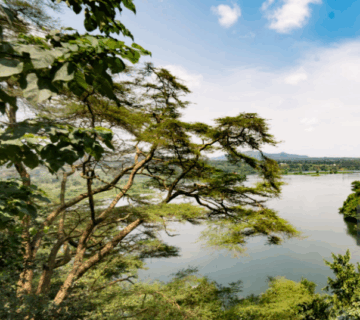
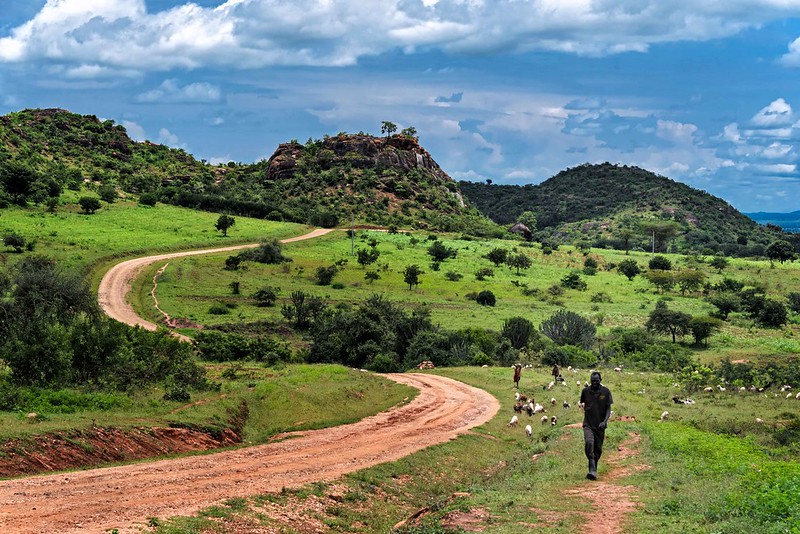
Kyambura Gorge sits within the Kyambura Wildlife Reserve, adjoining Queen Elizabeth National Park near Kasese in western Uganda, and the contrast it creates is what makes it so striking: flat, golden savannah stretches away on both sides, then drops without warning into a green, forested ravine roughly 11 kilometers long, up to a kilometer wide in places, and around 100 meters deep at its most dramatic points. Geologists attribute the gorge to secondary faulting on the floor of the Albertine Rift, the same tectonic system responsible for the Rwenzori Mountains and the great lakes strung along Uganda’s western border, rather than to river erosion alone.
The ecology inside the gorge is as sharp a contrast as its shape. Above the rim, the grassland is classic Queen Elizabeth savannah, open, sun-baked, and grazed by kob and buffalo. Below it, the Kyambura River has carved out a strip of riverine forest that stays cooler and more humid year-round, supporting a canopy dense enough to hold a resident primate population in what would otherwise be unbroken plains habitat. That microclimate is really the whole reason the gorge functions as an ecological island, a narrow ribbon of forest cover surrounded on all sides by grassland that could not support the same species.
Why It’s Called the Valley of the Apes
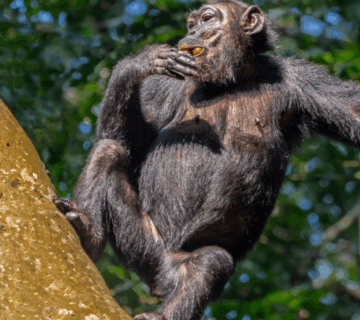
The nickname comes directly from what lives inside it: a habituated community of chimpanzees that makes Kyambura Gorge the only spot within Queen Elizabeth National Park’s protected area where visitors can track chimps on foot, distinct from the much larger chimp population at Kibale Forest further north. Dropping down into the gorge from open grassland into dense riverine forest in the space of a few hundred meters is part of the experience, a sudden shift in temperature, light, and sound that makes the “lost valley” description feel earned rather than promotional.
Chimpanzee Trekking in Kyambura Gorge
How the Trek Works
Treks begin at Fig Tree Camp on the gorge’s edge, with sessions organized twice daily, an early group setting off around 8am and an afternoon group around 1pm. Each session takes just two groups of four people, an intentionally small number that keeps the whole outing feeling more like a private forest walk than a queued attraction. From the rim, the descent runs roughly 200 meters down a forested slope to the Kyambura River at the valley floor, and the full activity, descent, tracking, and the climb back out, typically takes two to three hours depending on how far the chimps have ranged that morning.
What to Expect on the Descent
The change happens fast. One minute you are standing on open grassland with a view across the whole gorge; a few switchbacks later, the temperature drops, the light dims under the canopy, and the savannah noise gives way to birdcalls and the occasional crash of a monkey moving through the branches overhead. Guides track fresh signs, footprints, feeding remains, and calls, to locate the chimp community, and once they are found, visitors get a limited window to observe them at a respectful distance before beginning the climb back to the rim. It is a shorter, steeper walk than a Kibale chimp trek, and that compactness is part of the appeal for travelers who want the experience without committing a full day to it.
Permit Prices
A chimpanzee trekking permit for Kyambura Gorge costs 100 US dollars for foreign non-residents, 80 US dollars for foreign residents, and 50,000 Ugandan shillings for East African Community citizens, booked through Uganda Wildlife Authority or, more commonly for foreign visitors, through a licensed tour operator. That price sits well below Uganda’s flagship chimp-trekking permit at Kibale Forest, which makes Kyambura an appealing lower-cost way to add chimpanzee tracking onto a Queen Elizabeth itinerary rather than routing a separate trip north.
Wildlife Beyond the Chimpanzees
Other Primates and Regulars
The gorge’s forest canopy supports black-and-white colobus monkeys, red-tailed monkeys, vervet monkeys, and baboons alongside the resident chimp community, and the Kyambura River running along the valley floor draws hippos and antelope down from the surrounding savannah. It is a genuinely layered wildlife experience for a single short activity, primates overhead, river wildlife at ground level, and open-plain species visible again the moment you climb back out onto the rim.
Occasional Big Game and Birdlife
Lions, hyenas, buffalo, and leopards move through the gorge from time to time, following the same river corridor that draws smaller wildlife, though none of them are a reliable daily sighting the way the chimps are. Birders should keep an eye out too: the gorge has turned up African broadbills and martial eagles, and the Kyambura River has occasionally produced sightings of the shoebill stork, a genuine rarity this far from its usual swamp habitat in Uganda’s north.
Kyambura Gorge’s Chimpanzees and Conservation
A Smaller, More Vulnerable Community
The gorge’s chimpanzee community is notably smaller than the population at Kibale Forest, and that scale brings real conservation pressure with it: a narrow forest corridor surrounded by farmland and open savannah leaves far less room for the community to expand or connect with other chimp groups than a large contiguous forest block would. Researchers and conservation groups have worked for years on maintaining and, where possible, extending corridor habitat linking Kyambura’s forest to other patches nearby, precisely because isolated small populations are more vulnerable to disease and inbreeding over the long term.
Why Responsible Trekking Matters Here
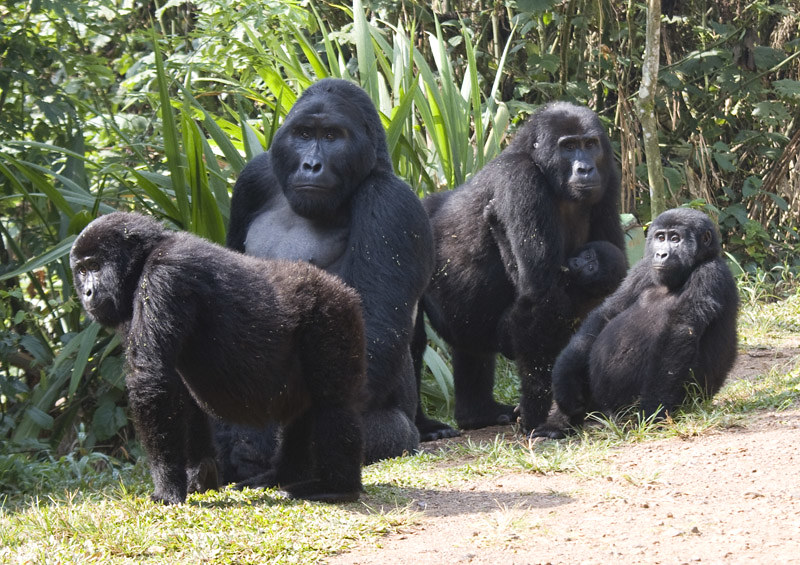
The same rules that apply to gorilla trekking broadly apply here too: keep a respectful distance, avoid trekking if you are unwell, and follow your guide’s instructions on movement and noise. Given how small and geographically isolated this particular chimp community is, the stakes of introducing human disease or unnecessary stress are, if anything, higher than at a larger, more resilient population elsewhere in Uganda.
Planning Your Visit
Where to Stay

Kyambura Gorge Lodge sits directly on the rim, built into a former coffee store overlooking the ravine, and is the obvious choice for travelers who want to wake up, walk to the trailhead, and be down in the gorge before the day heats up. It is a smaller, more intimate property than the bigger lodges elsewhere in Queen Elizabeth National Park, which suits the scale of the activity itself. Travelers based elsewhere in the park, around Mweya or Kasenyi, can still reach Kyambura Gorge as a half-day excursion without needing to relocate.
Combining It With the Rest of Queen Elizabeth National Park
Most itineraries treat Kyambura Gorge as a half-day add-on rather than a full standalone stop, pairing a morning or afternoon chimp trek with a game drive on the Kasenyi plains or a launch cruise along the Kazinga Channel on the same trip. That combination gives you primates, big game, and water-based wildlife viewing inside a single park visit, which is exactly the pitch that makes Queen Elizabeth one of Uganda’s more efficient safari stops for travelers on a tighter schedule.
A realistic two-day sample looks like this: arrive and settle in on day one, with an afternoon game drive across the Kasenyi plains where lion sightings are common; day two starts with the early chimp trek, descending before the morning heat sets in, followed by lunch back at the lodge and an afternoon boat cruise along the Kazinga Channel, which reliably turns up some of the highest hippo and elephant densities in East Africa along its banks. Travelers with a third day free often use it for the Ishasha sector’s tree-climbing lions before continuing on toward Bwindi.
Best Time to Go
Chimpanzee trekking here runs year-round, but the drier months broadly mirror the rest of Uganda’s trekking calendar, June through September and December through February, when the steep descent into the gorge is less slippery and the forest floor is easier underfoot. Visiting in the wetter months is still workable and tends to mean fewer other trekkers on the trail, but budget extra time for the climb back out.
Frequently Asked Questions
Is Kyambura Gorge the same as Kibale Forest for chimp trekking?
No. They are separate chimp populations in separate parks. Kyambura Gorge is inside Queen Elizabeth National Park’s protected area and is smaller and cheaper to permit; Kibale Forest, further north, is Uganda’s primary chimp-trekking destination with a larger habituated population.
How difficult is the Kyambura Gorge trek?
The descent and climb back out, roughly 200 meters of elevation change on forest slopes, is the main physical demand. It suits most reasonably fit travelers but is steeper and more strenuous than a flat game drive.
Can you see chimpanzees with certainty in Kyambura Gorge?
Sightings are good but, as with any wild primate tracking, never guaranteed. The habituated community is regularly found within the gorge’s forest, and guides track fresh signs each morning before groups descend.
How long does the whole activity take?
Budget two to three hours door to door, covering the descent, the time spent with the chimps once located, and the climb back to the rim.
Can I combine Kyambura Gorge with a Kazinga Channel boat cruise on the same day?
Yes, and many itineraries do exactly that, since both activities sit within the same broader Queen Elizabeth National Park visit and can be scheduled as a morning trek followed by an afternoon cruise, or the reverse.
What should I pack for the trek?
Sturdy closed shoes with real grip, since the descent and climb are on loose forest soil rather than a maintained path, plus a light rain jacket, insect repellent, and a bottle of water. A telephoto lens helps for chimp photos in the low canopy light, but keep the flash off out of respect for the animals.
Recommended Safaris
Kyambura Gorge fits naturally into a wider Queen Elizabeth National Park itinerary, and our Gorilla Trekking Uganda page is a good starting point for travelers combining chimp and gorilla tracking on the same trip. For a longer western Uganda circuit, the 4 Days Shoebill Tracking and Gorilla Trekking Safari covers similar ground, and the 7 Days Serengeti and Bwindi Gorillas itinerary is worth a look for a broader East Africa combination. Travelers wanting to pair chimp trekking with the region’s other primates should also see the Uganda Gorilla Habituation Experience page, and our guide to Bwindi Impenetrable National Park for background on Uganda’s other major primate destination. When you are ready to build a Queen Elizabeth itinerary around Kyambura Gorge, get in touch with our team and we will help you plan the logistics from permits through to lodge choice.

No comment